yahoo Press
US-India Trade Deal Sparks Farmer Fury, Political Backlash
Images
1 / 8
2 / 8

3 / 8

4 / 8
5 / 8

6 / 8

7 / 8

8 / 8
When the United States declared in early February that it would end its eye-watering 50 percent tariff on most Indian imports, the immediate emotion appeared to be one of relief. The precipitous drop in duties, from 50 percent to 18 percent, aligned India’s tax rate more closely with those of regional rivals like Pakistan and Sri Lanka. Writing on social media, India’s prime minister, Narendra Modi, hailed the decision for “unlock[ing] immense opportunities for mutually beneficial cooperation.”

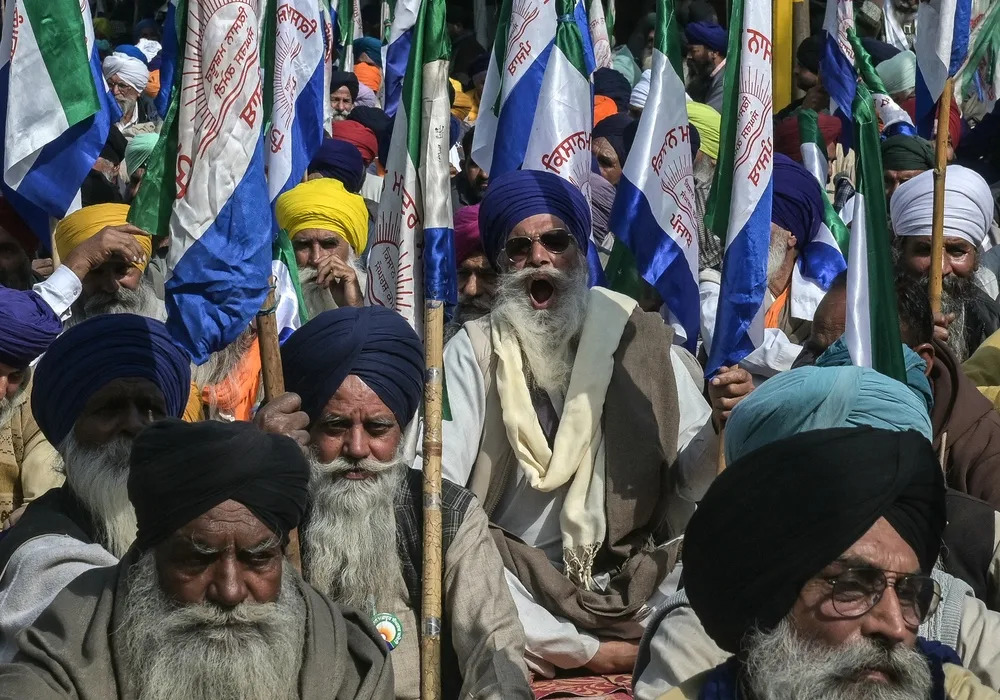
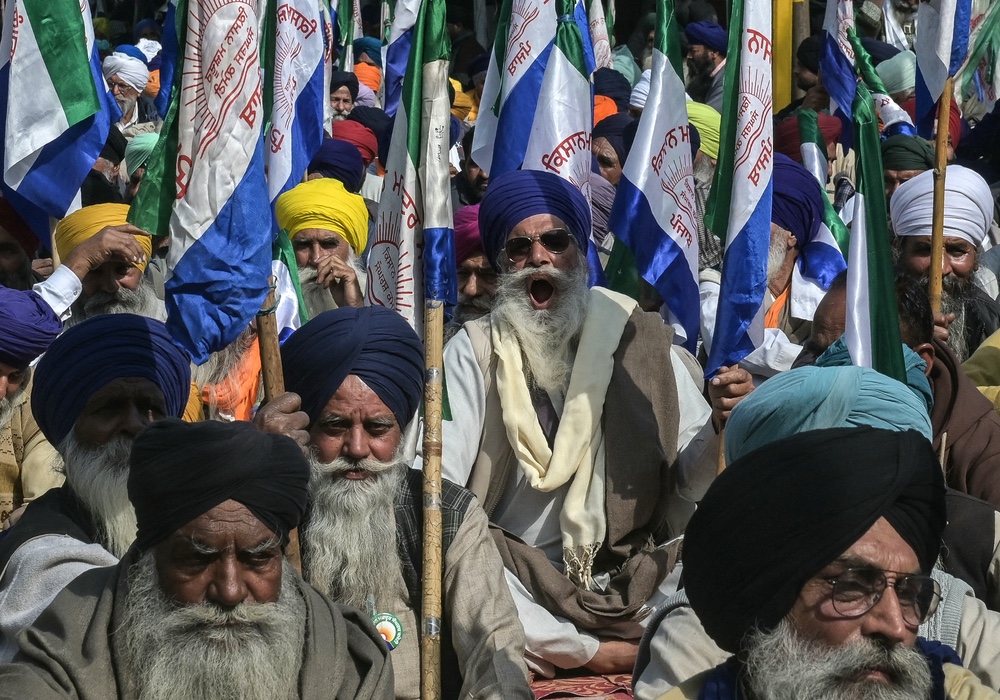
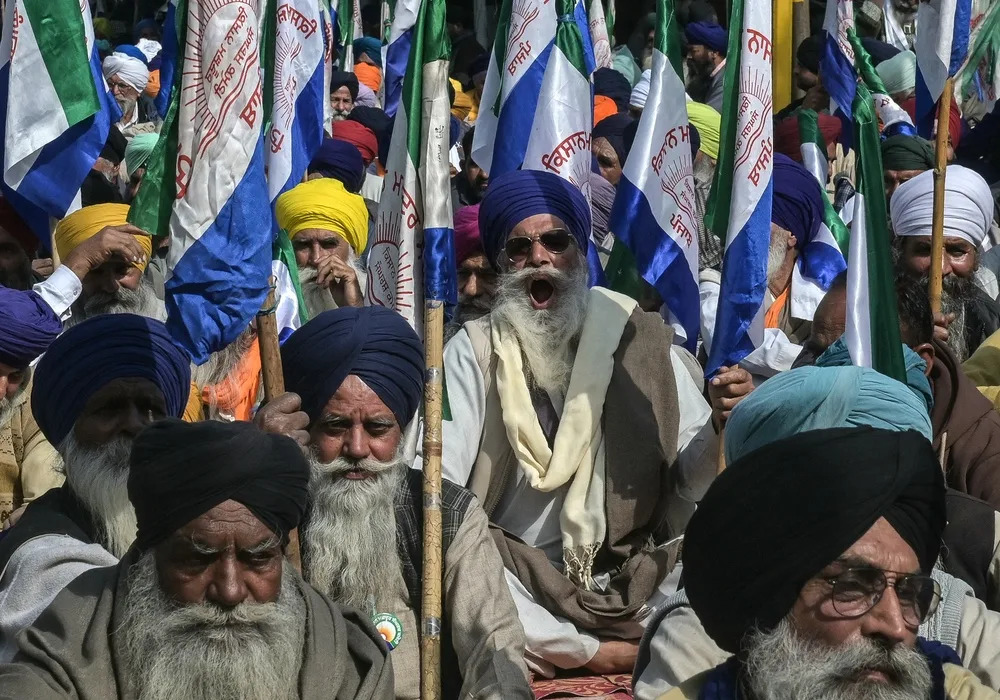
But India’s farmers are taking a dim view of the development. Last week, a coalition of trade unions and farmers’ groups organized a nationwide strike in protest of what they contend is an agreement that undercuts the interests of India’s 700-million-strong agricultural workforce. The Samyukt Kisan Morcha, which represents 100 farmers’ groups, went so far as to call it a “total surrender” of Indian agriculture to American corporate giants.

More from Sourcing Journal

Port of LA Volumes Sink 12%, but Advance Purchase Orders 'Looking Stable'

CBP Cites Customs Bond Insufficiencies As Importers Struggle Under Weight of Tariffs

US-Taiwan Trade Agreement Slashes Tariffs and Boosts Investment

“SKM demands the president of India to sack Commerce Minister Piyush Goyal, who played the role of a traitor to open the agriculture and dairy sector to MNCs and surrender the self-reliance and sovereignty of India,” the Samyukt Kisan Morcha wrote in a statement on Tuesday, using acronyms for its name and multinational corporations. “It also urges Prime Minister Narendra Modi not to sign the ‘anti-people’ U.S. trade deal.”

Indeed, what seemed like a win-win partnership at first blush is now raising questions—and concerns. The terms of trade that coalesced after the announcement included an “intention” by India to purchase $500 billion worth of U.S. goods, such as energy products, aircraft and aircraft parts, precious metals, technology products and coking coal, over the next five years—a goal that would require doubling the subcontinent’s current imports of roughly $45 billion per year.

The deal also requires India to eliminate or reduce tariffs on a broad range of U.S. food and agricultural commodities, including dried distillers’ grains, red sorghum used for animal feed, tree nuts, fresh and processed fruit, soybean oil, wine and spirits and “additional products.”

“Lower tariffs on U.S.-origin soybean oil and DDGS may diversify supplies and reduce feed costs for poultry and dairy, potentially easing food inflation. However, these gains come with trade-offs,” Suresh Motwani, general manager at Solidaridad Network, a nonprofit that focuses on ethical supply chains, wrote on LinkedIn. “Cheaper imports could displace domestic crushing, solvent extraction and oilmeal production, affecting millions of farmers and processors who depend on soybean and feed value chains. India is not only an importer of oils but also a significant producer and exporter of soymeal and feed products; if local processing weakens, export competitiveness and rural incomes may suffer.”

The main opposition to the National Democratic Alliance government’s Bharatiya Janata Party has also stepped into the fray, with Rahul Gandhi of the Indian National Congress accusing the government of “cheating India’s cotton farmers and textile exporters through the India-US trade deal.”

Writing on X, Gandhi questioned if India was “allowing another country to establish a long-term grip over [its] agricultural sector.” He questioned, in particular, what “additional products” meant.

“When you say ‘additional products,’ what exactly is included?” he wrote. “Is this a signal that over time there will be pressure to open up pulses and other crops to American imports? Once this door is opened, how will we stop it from being opened wider every year? Will there be any safeguards, or will more and more crops be quietly placed on the table in every successive deal?”

Gandhi also criticized the commerce ministry’s recent announcement that India is expected to receive zero-tariff benefits on garments made with U.S.-grown cotton much like in Bangladesh.

“After the announcement of an 18 percent tariff on Indian garments, when I raised the question in Parliament about the special concession being given to Bangladesh, the reply from a minister of the Modi government was: ‘If we also want the same benefit, we will have to import cotton from America,’” he said. “Why was this fact hidden from the country till now? Is this really any kind of choice—or is it a trap designed to push us into a “well in front, ditch behind” situation? If we import American cotton, our own farmers will be ruined. If we don’t import it, our textile industry will lag behind and get destroyed. And now Bangladesh is also giving signals that it may reduce or even stop importing cotton from India.”

On Sunday, Amit Shah, India’s minister of home affairs, accused Gandhi and his party of “spreading lies” and calling it “laughable” that the deal would harm the nation’s farmers.

“I feel like laughing when Congress’s Shahzada Rahul Gandhi stands in Parliament and talks about protecting farmers,” he said in an address after launching India’s first Central Bank Digital Currency-based distribution system. “The Congress has a long history of misleading the country and now they are spreading lies about trade deals. I want to assure the farmers, cattle-rearers and fishermen of this country that their interests have been fully protected in every agreement signed by PM Modi. There is no need to worry.”

Still, farmer groups are planning to ramp up their objections, with a three-day protest planned from Feb. 23-25 in the city of Kurukshetra, where they will gather outside the home of Nayab Singh Saini, chief minister of the agricultural state of Haryana. In Sirsa on Tuesday, they burned effigies of Modi, Saini—and President Donald Trump.

“Import of raw cotton from the U.S. will further reduce the already low domestic price, and the crisis-ridden cotton fields will witness intensifying indebtedness as well as greater peasant suicides,” the All India Kisan Sabha, India’s largest peasant organization, said in a statement. “The commerce minister’s declaration on raw cotton import exposed the lies that agriculture is out of the ambit of the U.S. trade deal and the prime minister will never compromise the interests of the farmers, and substantiates the criticism that the FTAs signed by the BJP-led NDA Government represent total capitulation before U.S. imperialism.”