yahoo Press
Tariff ruling live coverage: Trump attacks Supreme Court after tariffs truck down
Images
1 / 7

2 / 7

3 / 7

4 / 7

5 / 7

6 / 7

7 / 7
The Supreme Court scrambled the US trade landscape Friday when it struck down the centerpiece of President Trump’s second-term tariff program, ruling 6-3 that his sweeping blanket tariffs are illegal.

The ruling came just over one year into Trump’s second term and after skeptical questioning from key justices during oral arguments last November and appears set to immediately halt a massive section of Trump’s tariffs. Those tariffs were first announced last year on “Liberation Day” using a 1977 law called the International Emergency Economic Powers Act (IEEPA).

“IEEPA does not authorize the President to impose tariffs,” read the decision, written by Chief Justice John Roberts.

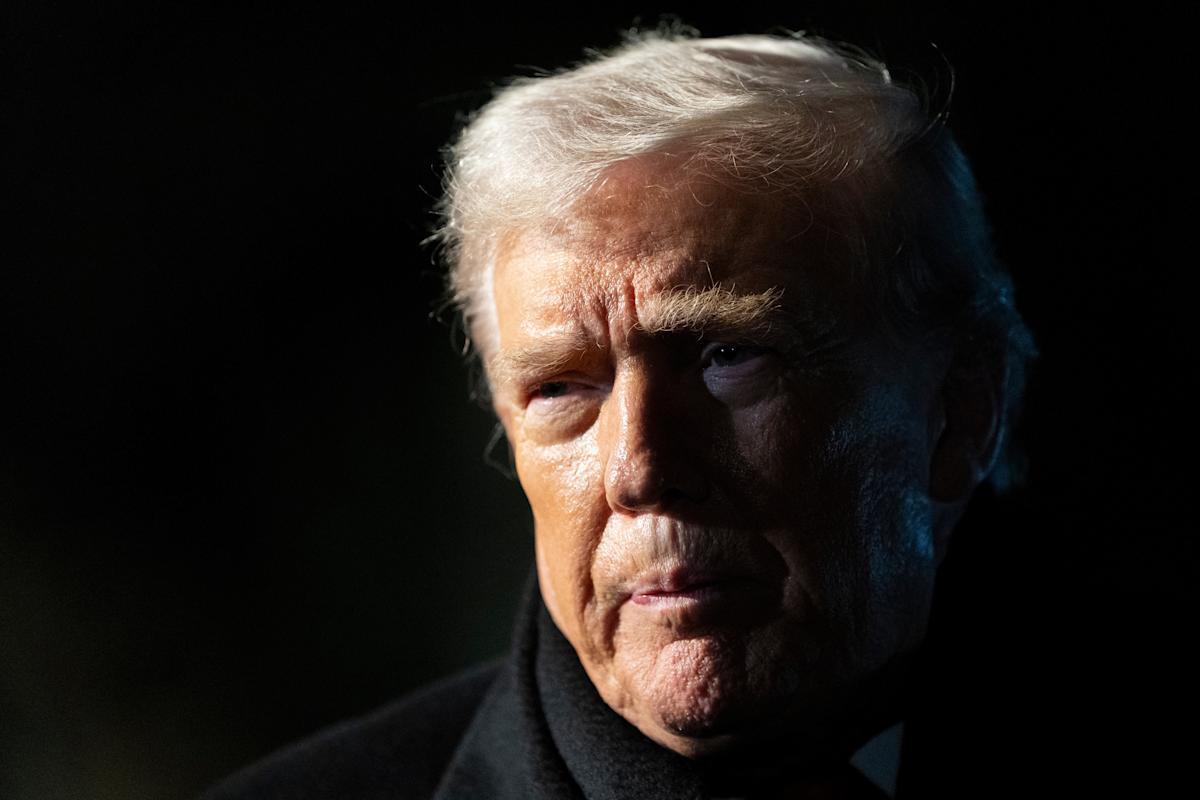
Trump attacked the high court in his first response Friday, particularly the justices in the majority, saying they were a "disgrace to our nation." He hinted that the administration would pursue alternative methods toward implementing its trade goals.

The ruling also raised the question of refunds, which could return an estimated $129 billion to importers in the months ahead. It upholds two lower courts — including the US Court of International Trade — that previously found Trump did not have the authority to impose global tariffs using the 1977 law.

The decision will likely have wide-ranging ramifications, affecting global trade, consumers, companies, inflation and the pocketbooks of every American. In recent weeks, Trump has already made plans to roll back some tariffs on metals, including on steel and aluminum goods, as he and his administration seek to battle an affordability crisis ahead of the midterm elections.

Read more: What Trump promised with his 'Liberation Day' tariffs — and what he delivered

The US Supreme Court changed the US trade agenda on Friday, ruling that blanket tariffs are illegal and striking down President Trump's most sweeping tariffs.

In a 6-3 decision, the court held that the 1977 International Emergency Powers ACT (IEEPA) does not give Trump the authority to impose taxes without approval from Congress.

This ruling will mean that much of the administration's current tariff agenda will be brought to a halt, especially those tariffs first announced in April last year, on what has come to be known as Trump's "Liberation Day" tariffs.

Today, economists at Penn-Wharton said that over $175 billion in tariff revenue may need to be refunded if the Supreme Court rules against Trump's tariffs.

However, according to SCOTUSblog, the court mentioned nothing about whether the government should go about returning the billions of dollars it made from importers.

Justices Clarence Thomas, Brett Kavanaugh, and Samuel Alito all dissented.

Justice Kavanaugh, in his dissent, said, "The United States may be required to refund billions of dollars to importers who paid the IEEPA tariffs, even though some importers may have already passed on costs to consumers or others."

The Supreme Court majority that struck down President Trump's ability to issue blanket tariffs on US trading partners did not address the issue of refunds — that is, will companies be able to get them for the duties they paid ... that are now ruled unconstitutional?

From Bloomberg:

Though the Supreme Court majority didn't address it, the dissenting minority did. Justice Brett Kavanaugh, who authored the dissent, noted that the process could be a "mess" for the US Treasury to navigate.

Read more.

After the US Supreme Court struck down President Trump's tariffs, what are his options?

Trump himself has said previously that the law he used to implement the tariffs is an essential tool in his toolbox. But other members of the administration have suggested that the White House could simply rebuild his tariff regime through other — albeit more cumbersome — methods.

The Associated Press has a good rundown of his options:

They run through them all here — read more.

US stocks rose in the immediate aftermath of the Supreme Court's decision to strike down President Trump's most sweeping tariffs. The Nasdaq Composite (^IXIC) led gains.

Sectors with more exposure to tariffs saw a bigger bounce. The Dow Jones Transportation Average (^DJT) popped around 1%. Abercrombie & Fitch (ANF) saw outsize gains, as did Stanley Black & Decker (SWK).

Head over to our markets blog for full coverage of the stock market's reaction to the ruling.

Reuters reports:

Read more here.

Novartis (NVS) CEO Vas Narasimhan met with President Trump at the White House on Wednesday, where the president said the company is set to build 11 plants in the US.

Trump hit Switzerland with 39% tariffs last year, but then agreed to cut the duties to 15% in November. Last month, Novartis said it expected to be protected from tariffs under some agreements with the US and strong domestic manufacturing.

Reuters reports:

Read more here.

Reuters reports:

Read more here.

The Trump administration is pushing back on claims from the New York Federal Reserve that US consumers and businesses are bearing the brunt of higher costs due to President Trump's tariffs.

"The paper is an embarrassment," National Economic Council Director Kevin Hassett told CNBC on Wednesday. "I think it's the worst paper I've ever seen in the history of the Federal Reserve System.

However, data from the JPMorgan Chase Institute, released Thursday, also found that tariffs paid by midsize US businesses tripled in 2025.

Yahoo Finance's Jennifer Schonberger reports on the latest news on Trump's tariffs:

Read more here.

Reuters reports:

Read more here.

Reuters reports:

Read more here.

Bloomberg News reports:

Read more here.

Japan plans to invest up to $36 billion in US oil, gas, and critical mineral projects, part of Tokyo's $550 billion commitment under the trade agreement it struck with President Trump last year.

“Our MASSIVE Trade Deal with Japan has just launched!” Trump posted on Tuesday on social media. “The scale of these projects are so large, and could not be done without one very special word, TARIFFS.”

Japan's Prime Minister Sanae Takaichi said that the projects will help build more resilient supply chains through partnerships in crucial areas for economic security.

Bloomberg News reports:

Read more here.

Reuters reports:

Read more here.

Bloomberg News reports:

Read more here.

From Reuters:

Read more.

The Supreme Court has added next Friday, Feb. 20, as a decision day, the first time in weeks it could potentially issue a verdict on the closely watched case involving President Trump's tariffs.

Next Friday is listed as a non-argument session and conference day on the high court's calendar.

The high court heard arguments on the tariff case in November on an expedited basis, and both liberal- and conservative-leaning justices asked skeptical questions about Trump's authority to impose the tariffs.

The duties at issue are Trump's "Liberation Day" tariffs, in which the president slapped levies ranging from 10% to 50% on imports from virtually all US trading partners. The Trump administration has said a defeat at the Supreme Court would only prompt it to impose the duties via other legal means — though Trump himself has said those processes would be more cumbersome and has implored the court to uphold the tariffs.

Reuters reports:

Read more here.

On Wednesday night, President Trump pressured House Republicans to support his tariffs, even though rising living costs have upset many voters.

While six Republicans voted against his current tariffs on Canadian goods, 210 others remained loyal to Trump. But experts say this could harm them in the upcoming midterm elections, as many voters remain concerned about rising prices.

Financial Times reports:

Read more here.

A report from the Federal Reserve Bank of New York argues that Americans are paying for almost all of the additional costs from President Donald Trump's tariffs.

Reuters reports:

Read more from Reuters.

Reuters reports:

Read more here.