buzzfeed Press
Holocaust Violins In Minnesota Bring Powerful Warning About History Repeating
Images
1 / 6
2 / 6

3 / 6
4 / 6
5 / 6
6 / 6
“Listening to the news from Minnesota, I wondered if anyone recognized the signs.”

One hundred and twenty people packed the Chabad. As they trudged in, stamping snow from their boots and unwinding woolen scarves, I realized I wouldn’t find a bigger gathering of Jewish people anywhere in my Wisconsin town. And there I was, a Christian woman at the keyboard, with a group of musicians playing Jewish songs.

The violinists, seated so close to me that I could have plucked their strings, cradled instruments that were almost a century old. The violins were once owned and played by Jewish people during the Holocaust. Rescued as part of the Violins of Hope project, they now toured the world as both summons and warning: Remember, or history repeats.

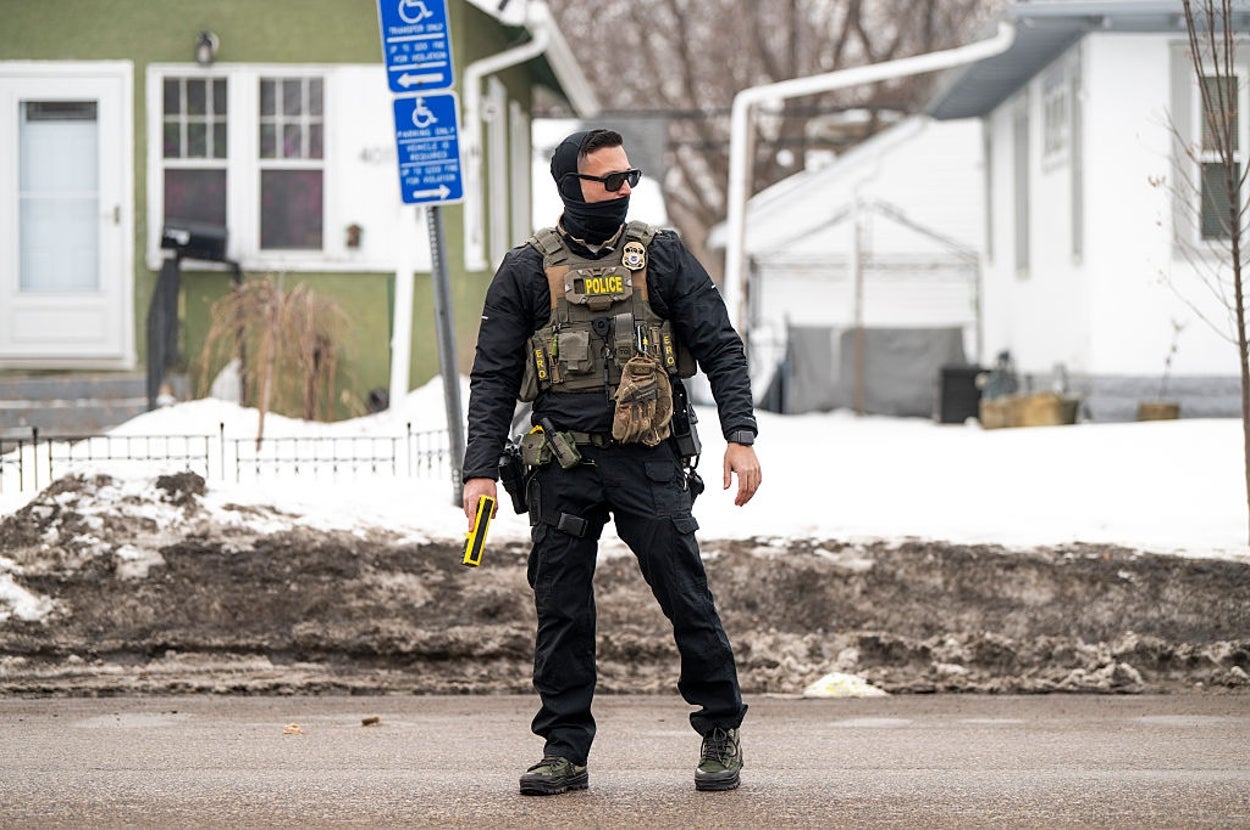
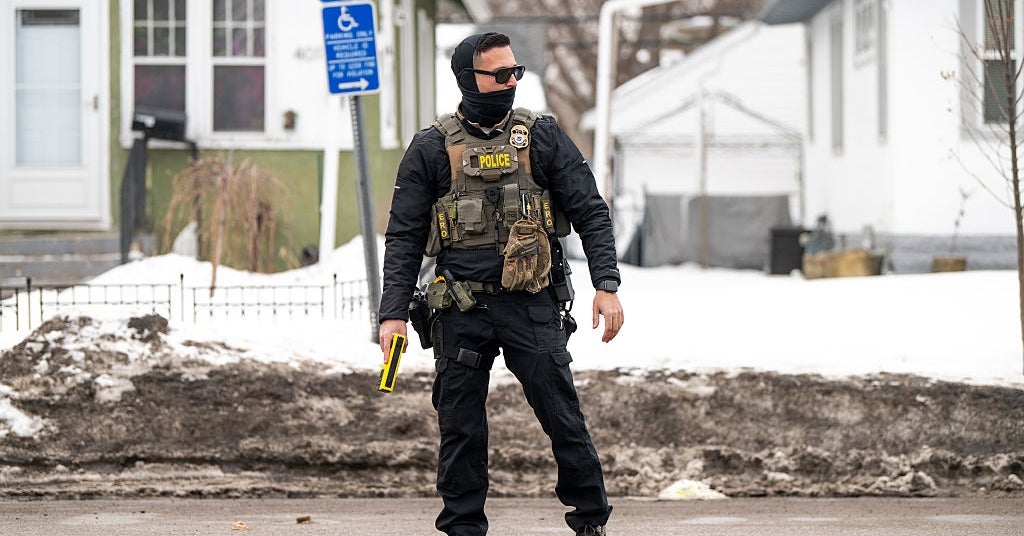
I had carpooled to the concert with my friend Hal, who would direct, emcee, and play trumpet. On the drive, we discussed ICE in neighboring Minnesota, where a woman lost her life protesting their presence. We talked about leaders blaming immigrants for America’s problems, and about armed agents marching city streets. Was it already too late to prevent repeating history?

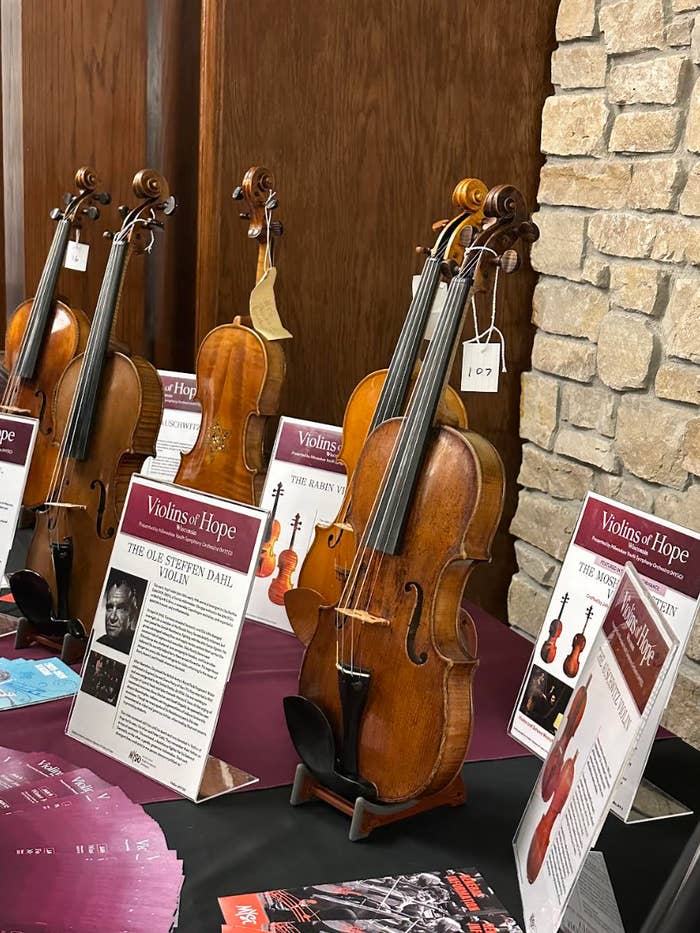
Violins of Hope displayed before the concert. Each instrument was owned by a Jewish person before or during the Holocaust and restored to be played in remembrance of the musicians who once owned them.

Several years ago, I sent my spit to a genealogy company and learned that I’m 9% Ashkenazi Jewish, likely inherited from a grandparent or great-grandparent. I called my brother. We searched our DNA relatives and traced this heritage to my father’s side, but the people who could have told us more about our heritage died long ago.

Raised Catholic, I studied piano with the nuns and played hymns for Sunday Mass. But I wasn’t just Catholic. My hands, familiar with the chords of “Hava Nagila,” carried Jewish genes too. It felt like inheriting a work of art without knowing how my family came to own it.

As the crowd quieted, the rabbi came forward. He spoke about traditions as his wife lit candles at the end of each row. He asked the audience to pass the flame, one candle to the next.

“The most beautiful thing about light,” he said, “is you can share it and it won’t diminish anything from you.”

Then he sang, and voices, quietly, joined each time he returned to the refrain. Dai, dai, dai, dai, dai…

Hal stood to play his shofar, and I realized he was wearing his yarmulke. We rehearse together often, and he never wears it. I assumed tonight it felt necessary. Hal grew up in a Jewish community, listening to their music. His father came from Bialystok, Poland, where there once were 55,000 Jews, but now there are only 2,000. His uncle survived Auschwitz, but an aunt and cousin did not. Hal held the ram’s horn high, his breath coursing through it. Raw notes echoed through the hall, a tradition meant to shake people out of complacency. This music was personal for him.

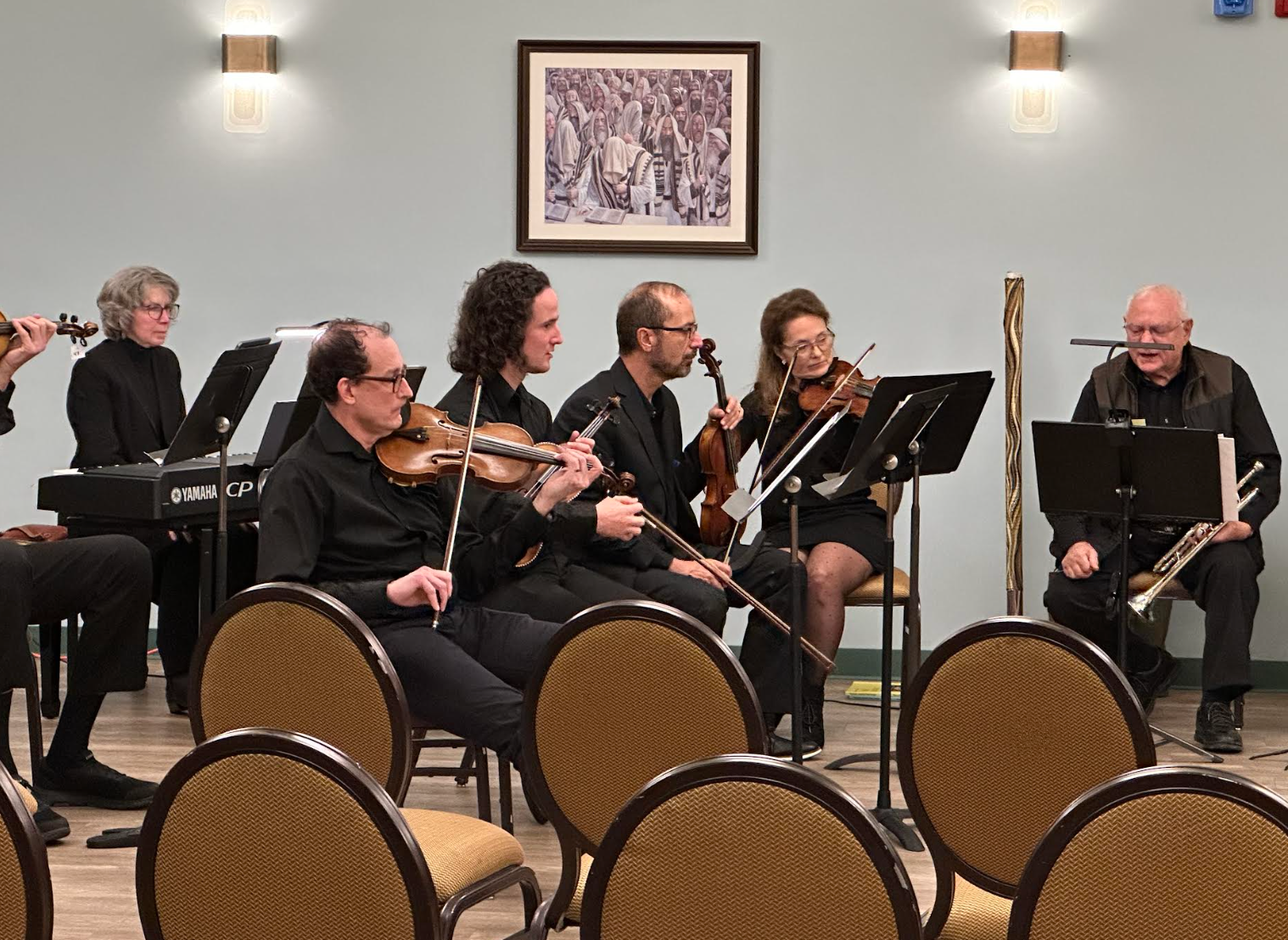
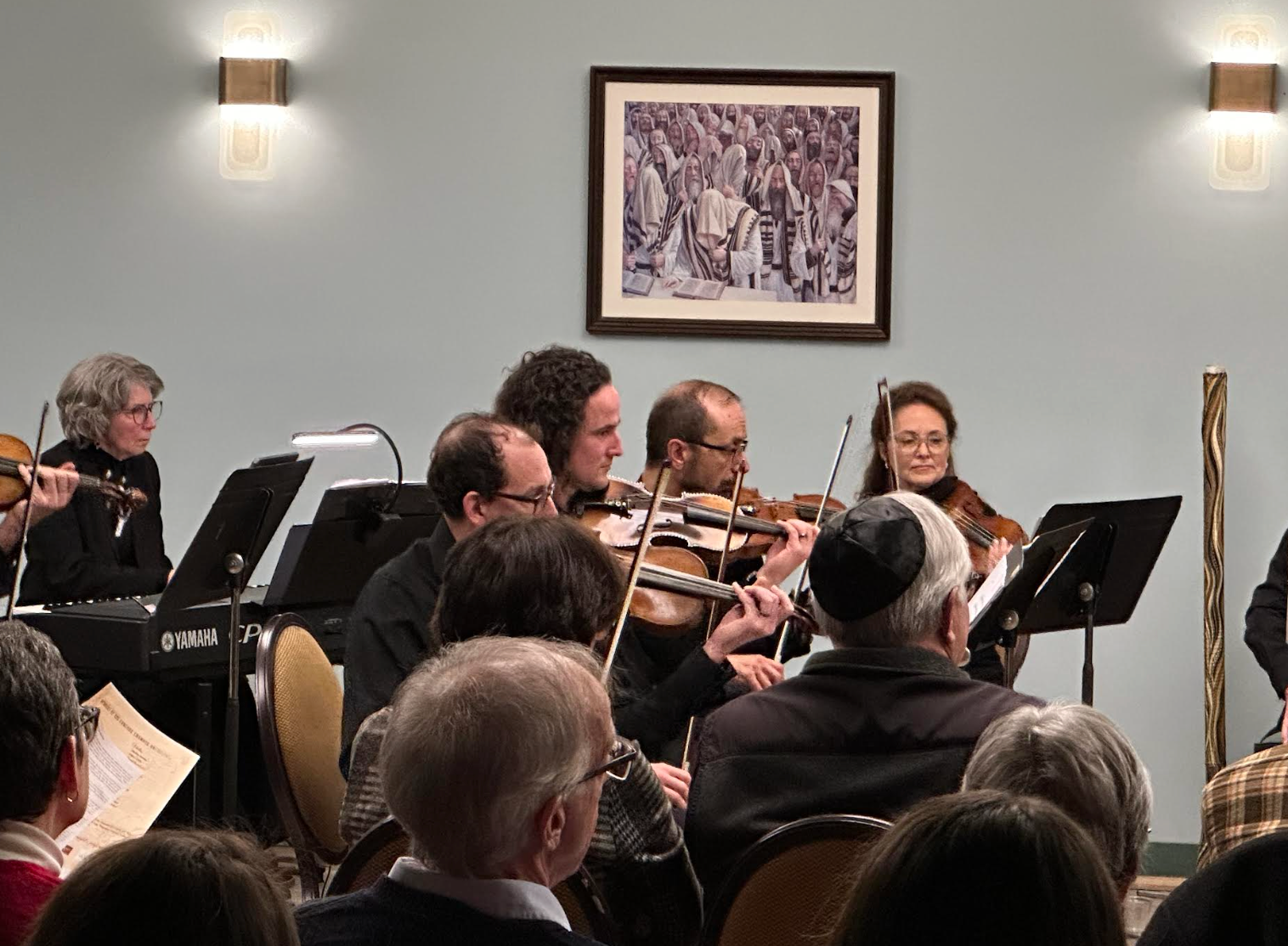
The author (far left) and and other musicians rehearse before a Violins of Hope concert under the direction of arranger and conductor Hal Kacanek.

As unison violins played “Osie Shalom,” each note leaned on the next like family. The sound grew as the clarinets joined, then the trumpet, cellos, and bass, and I remembered that these strings had once been silenced.

We played love songs and wedding songs. Folk songs and dance tunes. A violinist who sat close to me said she’d requested the ¾ size violin. As she drew the bow across her strings, I wondered what little Jewish boy or girl twisted those same tuning pegs and pressed their little fingers on that fingerboard.

A single violist opened “Hine Ma Tov,” and as the rest of us added on, I appreciated the heated hall and bountiful buffet of soups, appetizers, and sweets we enjoyed pre-concert. An image came to me of a black-and-white photo I’d once seen. Of musicians in a camp ensemble, in the brutal cold, perhaps playing this very song, and the irony of its words: “How good and how pleasant it is for brothers and sisters to dwell together in unity.”

We played 12 pieces, and then the final number began with Hal on trumpet. Like joining hands, the clarinet added, followed by bass clarinet, cellos, my part, and finally strings.

The Violins of Hope could be admired in a museum for their design: curved lines and refurbished finishes, inlaid stars of David. But as a living artifact, they speak the story of those who kept music alive, even when the world went dark.

The author (far left) playing at a Violins of Hope concert, directed and arranged by Hal Kacanek, and featuring instruments that survived the Holocaust.

One week after the concert, I carpooled with Hal to another musical event. We talked about the news we’d both watched that day. There was another protester’s death in Minneapolis, close enough that I’d driven those streets myself. A man was dead, someone who attended high school just hours from my home.

I thought about the remarks at our Violins of Hope concert, that the instruments were not only history, but warning. The Holocaust didn’t begin with camps and death. It began with language, with blame, with the normalization of cruelty. Listening to the news from Minnesota, I wondered if anyone recognized the signs or believed we might be repeating mistakes.

The Violins of Hope have left my state now, lovingly packed in their cases, waiting to be nestled under new chins in new places. I envision the next players turning pegs, sweeping bows across strings, carrying forward a message of hope.

Starting May 1, they will be in Minnesota.

This article originally appeared on HuffPost in February 2026.