yahoo Press
Idaho is in a severe snow drought, experts say. Here’s why and what to expect
Images
1 / 17
2 / 17

3 / 17

4 / 17

5 / 17

6 / 17
7 / 17
8 / 17
9 / 17
10 / 17
11 / 17
12 / 17
13 / 17
14 / 17

15 / 17

16 / 17

17 / 17
Idaho’s warm winter weather has brought on one of the most severe snow droughts in state history.

Record-high winter temperatures have been paired with “significant precipitation,” according to David Hoekema, a hydrologist with the Idaho Department of Water Resources,.

So far this season, the Gem State has seen unexpectedly large amounts of rain and unseasonably low snowfall, Hoekema told the Idaho Statesman.

That’s prompted experts to declare a snow drought, which happens when the levels of snow water equivalent — the amount of liquid water contained in snow — in a region are at or below 20% of historical data averages.

Here’s what that means for Idaho residents:

According to one expert, Idaho weather conditions in 2026 are comparable to those during two significant drought years: 1977 and 2015.

In 1977, drought conditions across the West caused wells to run dry as early as April and reservoir water levels to reach record lows, the Idaho Statesman reported at the time.

The “significant economic losses and human suffering” caused President Jimmy Carter to sign the Emergency Drought Act into law.

In 2015, low snowpack and early runoff put all of Idaho in a state of drought.

“The conditions this year are significantly different than 2015 in that we have had significant precipitation and have a strong high-elevation snowpack,” Hoekema told the Statesman. “This year is a combo of 2015, which was hot and dry, and 1977, which was a year with what was likely the lowest snowpack in our lifetimes.”

Idaho also saw extreme drought conditions in 2021 and 2022.

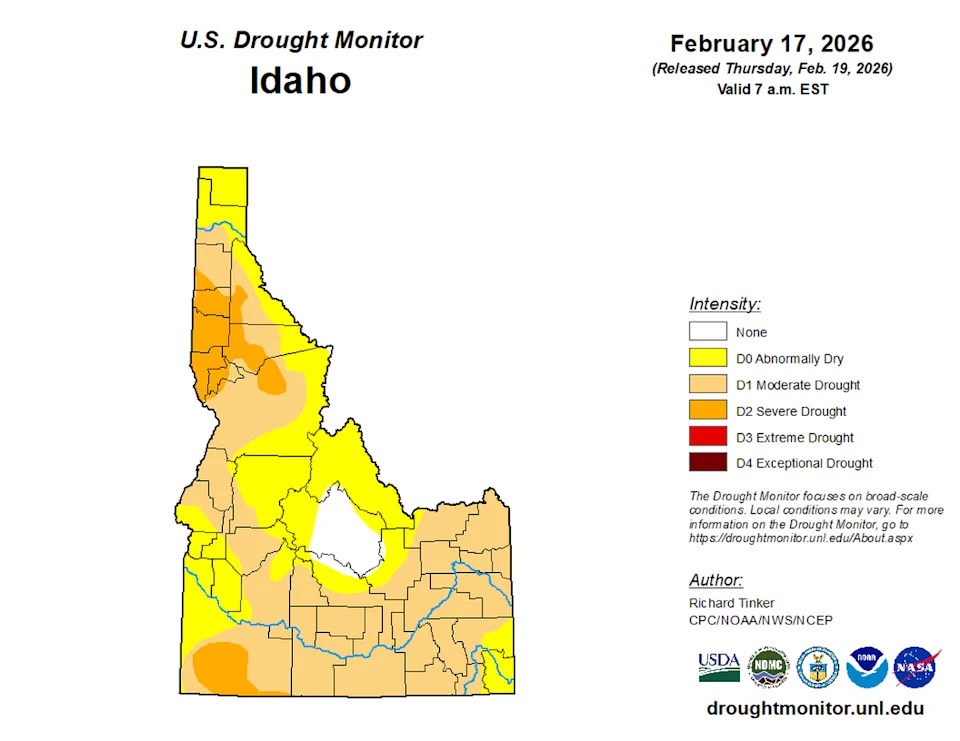
About 95% of Idaho was “abnormally dry” or worse as of Feb. 17, according to the most recent data available from the U.S. Drought Monitor.

Nearly 62% of the state was experiencing “severe drought” conditions, while about 9% of severe areas were under an “extreme” drought, the drought monitor said, adding that drought conditions can lead to low crop yields, water shortages and “elevated” risks for wildfires.

A total of 836,524 people in Idaho were living under drought conditions, the drought monitor said.

Part of the Gem State has been affected by some level of drought since December 2019, according to U.S. Drought Monitor data.

Historically, Jan. 10 through Feb. 14 is the period of greatest snowpack growth in the Pacific Northwest, including Idaho.

During that time in 2026, the Pacific Northwest has experienced its warmest period on record, particularly at higher elevations, according to Larry O’Neill, Oregon climatologist with the National Integrated Drought Information System.

“January 2026 featured an intense and long-lasting ridge of high pressure which diverted storms away from the Pacific Northwest and caused strong inversions,” O’Neill said at a National Integrated Drought Information System conference on Monday. “The mountain snowpack in nearly every basin of the Pacific Northwest is well below normal.”

However, the snowpack is still strong in some of Idaho’s higher-elevation mountain ranges.

“The Upper Snake (River) is following climatology over the last week and the Big Lost (River) is nearly to a full annual snowpack,” Hoekema told the Statesman in an email.

A wet spring season can only reduce the lasting effects of the snow drought, not end them, according to Hoekema.

With enough precipitation over the coming months, the Upper Snake River may receive enough water to “reduce drought impacts to minimal on the Boise and Payette” rivers, Hoekema said.

Drought is anticipated to be extreme across the southern border of Idaho, even with heavy precipitation in the spring.

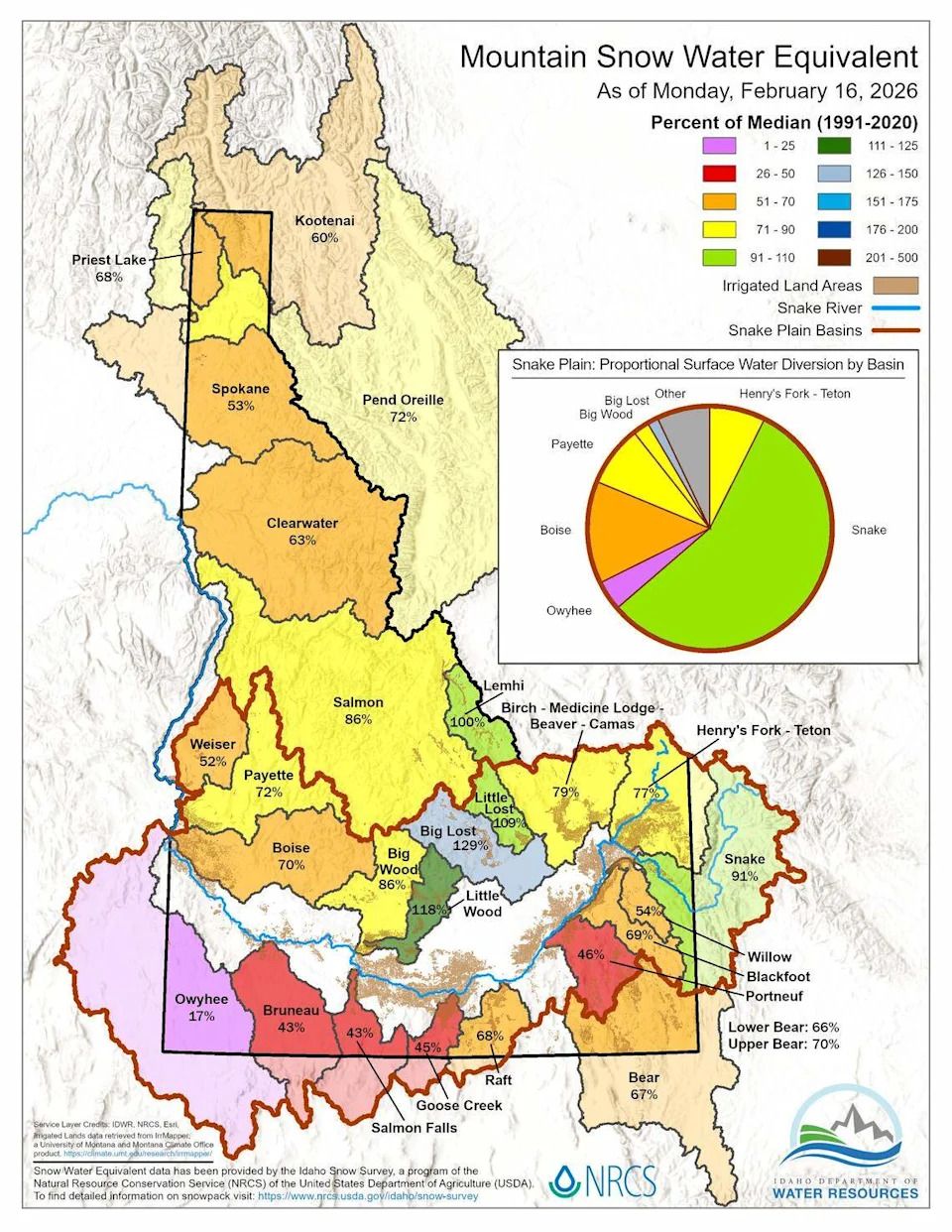
The Bruneau, Owyhee and Weiser river basins “are not going to recover from drought this year,” Hoekema said, nor are the Goose Creek and Salmon Falls Creek Reservoir basins in south central Idaho.

The hydrologist added that the Payette and Boise river basins have only a 10% chance of recovery.

“A wet spring or cool summer could greatly reduce shortages,” Hoekema said. “A hot and dry spring and summer could produce significant shortages.”

“At this point we are mostly concerned about the severity of water shortages,” Hoekema said.

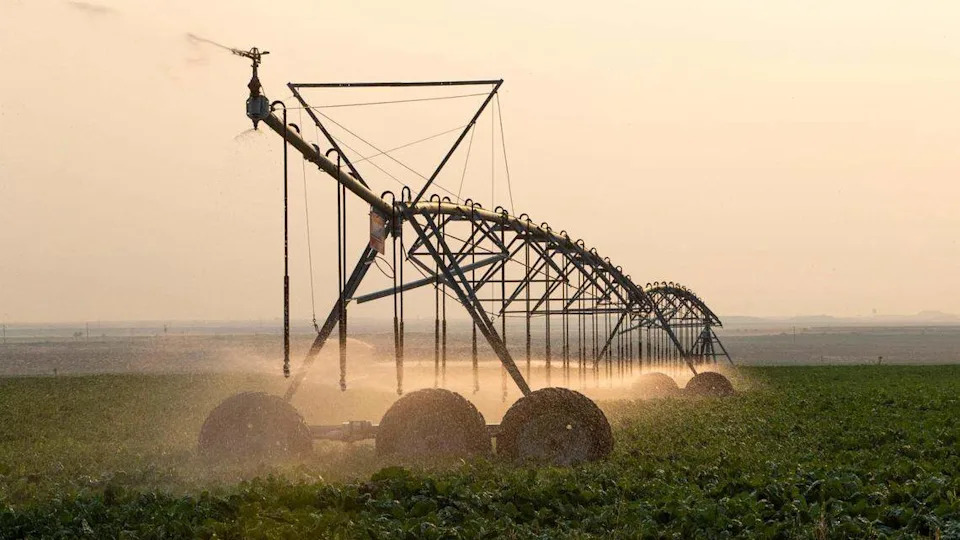
Drought can have significant impacts on irrigation, which in turn affects Idaho agriculture and residents. In past drought years, irrigation districts have shut off water early or urged water users to implement a watering schedule to limit their consumption.

Idaho Water Users Association officials have told the Statesman in the past that farmers will plant fewer crops during drought years in anticipation of water shortages or perhaps choose less lucrative crops that are less water intensive.

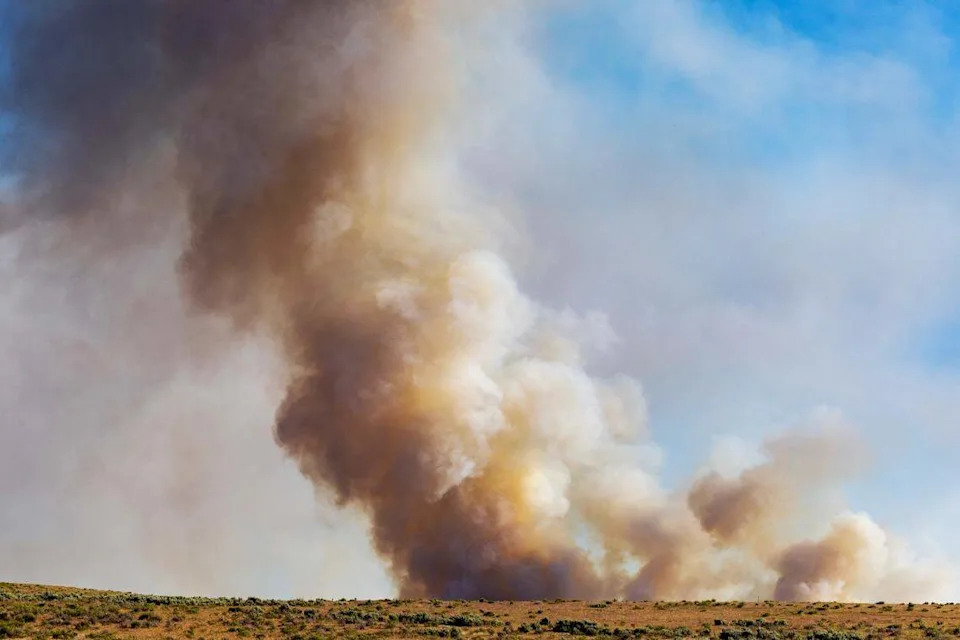
Drought conditions also impact wildfire conditions, as dry vegetation can become prime fuel to feed fast-moving blazes.

It’s too early for fire officials to forecast how current drought conditions may impact the coming fire season, according to Sharla Arledge, spokesperson for the Idaho Department of Lands. The agency handles fire suppression on state endowment lands.

The Boise-based National Interagency Fire Center, which coordinates wildfire response across multiple federal agencies, has “significant wildfire potential” maps with predictions through May.

While the National Interagency Fire Center’s maps show significant fire potential in other drought-stricken areas such as Florida and Texas, Idaho is not flagged for significant wildfire potential through May.

Idaho’s snowmelt usually peaks around the same time that fire season begins.

“Snowmelt typically begins slowly in March, ramps up in April and then peaks in May or June depending on the elevation of the basin and the springtime temperature,” Hoekema said.

This year, Idaho may experience a change in the timing of the state’s typical snowmelt patterns.

“We might see a slower increase in runoff since the low elevation snow is mostly missing,” the hydrologist said. “Timing will depend on springtime temperatures.”

According to the National Integrated Drought Information System, Idaho isn’t the only state experiencing a snow drought.

Jason Gerlich, regional drought information coordinator for the National Integrated Drought Information System, said in a Feb. 10 conference that the Pacific Northwest region, including Idaho, Oregon and Washington state, is in a severe snow drought.

“Critical water supply basins like the Willamette, Deschutes, Yakima, Boise, and Spokane are also all experiencing severe snow drought,” Gerlich said.

“We are seeing a warming trend,” Hoekema said.

Due to increased temperatures, Hoekema told the Statesman that droughts “will increase as long as the climate continues to warm.”

“Warm winters reduce snowpack and warm summers increase demand,” Hoekema said.