buzzfeed Press
I Googled My Long-Lost Father's Name. My Stomach Dropped When I Saw What He'd Done.
Images
1 / 5
2 / 5

3 / 5
4 / 5
5 / 5
"I didn't want to click the photo. I hoped it wasn't him. But I clicked."

For most of my life, I pretended not to care about not knowing my dad. But I did. I cared a lot.

I had one photo of him for years. He is 17 or 18, shirtless on a couch in what looked like a cluttered apartment. There was a bowl of cereal on the table, but also a bottle of vodka, leaving you to wonder if it was morning or afternoon. I learned later that days frequently ran together for him, so it could have been either.

In the photo, he’s wearing a straw hat and has a sly little smile, staring right at the camera with these bright, almost sapphire-blue eyes. Even in that faded photo, they sparkled.

That photo disappeared somewhere along the way, but the image has never left me. Neither did the desire to understand the man in it.

In 1982, I was 12 years old. My mom and the man who would become my adoptive father had hired a private detective to find my birth dad. They needed him to sign away his parental rights to finalize the adoption.

He did. Gladly. He put up no fight, and apparently, he had no hesitation. The detective said he had a new baby girl and was ready to start fresh. Signing me away was just paperwork — and a way to avoid child support.

And just like that, I knew three things:

I think that’s when I started saying out loud that I didn’t care. It was easier to pretend I never wanted him either. If I didn’t want him first, I won. At least that’s what I told myself.

I developed a game. I’d scan the crowd in airports or at malls and wonder, Is that guy my dad?

I had a recurring dream about him for years. He would call me, and we’d talk like I imagined a real father and son would talk. Then he would suddenly change. He’d forget who I was or get angry and ask why I was calling him. At some point, I trained myself to wake up before we got to that part. Eventually, I would learn not to answer the phone in that dream. One day, those dreams stopped altogether.

I was never angry at him — not really — until I became a father myself. When my daughter was born, I realized I had no idea how to be a dad. When my son came along, it hit even harder. I had no model, no blueprint. I had to figure it out as I went, and I resented the hell out of that. For the first time in my life, I was angry at him. Really angry.

When the internet showed up, I started hunting for him — late-night web searches that never led anywhere.

Then one night, years later, I saw a guy on TV with the same name as my dad. He was too young to be him, but it triggered the desire to search again.

I Googled his name and up popped a listing on the Sex Offender Registry database. My stomach dropped.

It was the same name as my dad but the birthdate was a year off. I didn’t want to click the photo. I hoped it wasn’t him. But I clicked.

It was him. Older. Heavier. Balding a little. But there were those blue eyes.

He was listed as a “violent sexual offender” and was wanted for violating parole. His last known address was the streets of Los Angeles.

That was worse than anything I’d imagined. Suddenly, the man I had romanticized as a wandering soul or misunderstood rebel was just … broken. Possibly dangerous. Definitely lost.

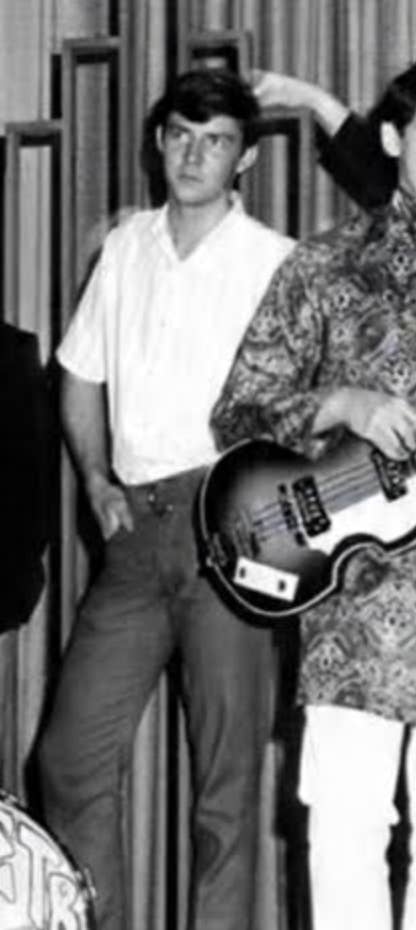
The author's father. "He was a musician," he writes, "and this is a photo from when he was in a band."

“That’s him,” she texted. “But please don’t ever think this means you’ll become him. You aren’t him.”

I hadn’t even thought of that. But I needed to hear it.

What had he done? Whom had he hurt? Was the daughter I heard about the victim? If so, then I’d failed her, too — this sister I had never even met but always felt protective of.

At that point, I stopped searching for him. Now I was searching for her.

DNA test kits were becoming popular, so I got one for myself and my kids. What came back surprised me: not just ethnic roots or migration patterns, but people. Relatives. Real ones. Right below my mom and my kids was a match: half-brother. Then another half-brother. Then two nieces. Then a few more connections. All of them were private accounts.

I messaged them and started scouring Facebook for clues. One cousin messaged back. His dad was my dad’s brother. And then … I found my sister.

Her name was Christy. She was the oldest of three kids, including the two brothers that had shown up in my DNA test. None of them had ever heard of me.

Christy and I messaged constantly that first day. I had waited 40 years to find her. She had only just learned I existed.

She told me our dad had been present during her early years. They had run carnival games and lived in Southern California. Then came the tragedy: Her baby sister died of SIDS. Our dad tried to save her by rushing her to the hospital, but the police were waiting. A miscommunication during the panic of trying to call for help led the authorities to think our dad had hurt her and they took him into custody as he was trying to get his daughter into the ER.

Christy said he hadn’t hurt her sister, but it didn’t matter. The baby was gone, and the damage was done. And that’s when everything came apart.

I learned that while my dad had always dabbled in drugs, they became a large part of his life. To support his addiction, he turned to petty crimes — dumb small-time thefts and burglaries. Just enough to pay for the drugs.

The final blow came one night while he was working at a carnival. As the story was told to my sister, who eventually told me, our dad accidentally brushed the chest of a teenage girl. She and her mother returned with the police. Despite his wife and a few others arguing that it had been an innocent accident, our dad was arrested on a sexual assault charge. He pleaded guilty to get out of jail and get drugs back in his system, and became a registered sex offender. He vanished soon after that.

By the time I found Christy, no one had seen or heard from our dad in years. She knew he was a registered sex offender but didn’t know where the “violent” part came from. As far as she knew, he had never been a violent person — just one with a lot of problems.

Christy welcomed me into her world, but it was hard. I looked just like him. And I wanted to talk about him — ask questions, fill holes, make sense of it all. For her, that meant reopening wounds. The man I spent a lifetime searching for had been her trauma.

I didn’t realize how much I was overwhelming her until it was too late. The messages slowed. Then stopped.

I understand now. She didn’t get to make up stories about our dad as I did. She had to live with the truth.

It wasn’t until a few years later that I heard from Christy again. She messaged me to let me know our dad had died in a nursing home in Sun City, California. He was 73 years old. She had been listed as “next of kin” and the nursing home had called her with the news.

Somehow, even though he apparently knew how to contact her, he died alone. We don’t know where he had been after burning his brother for some money — the last of his family to take him in — several years earlier. But we both finally knew where he was now.

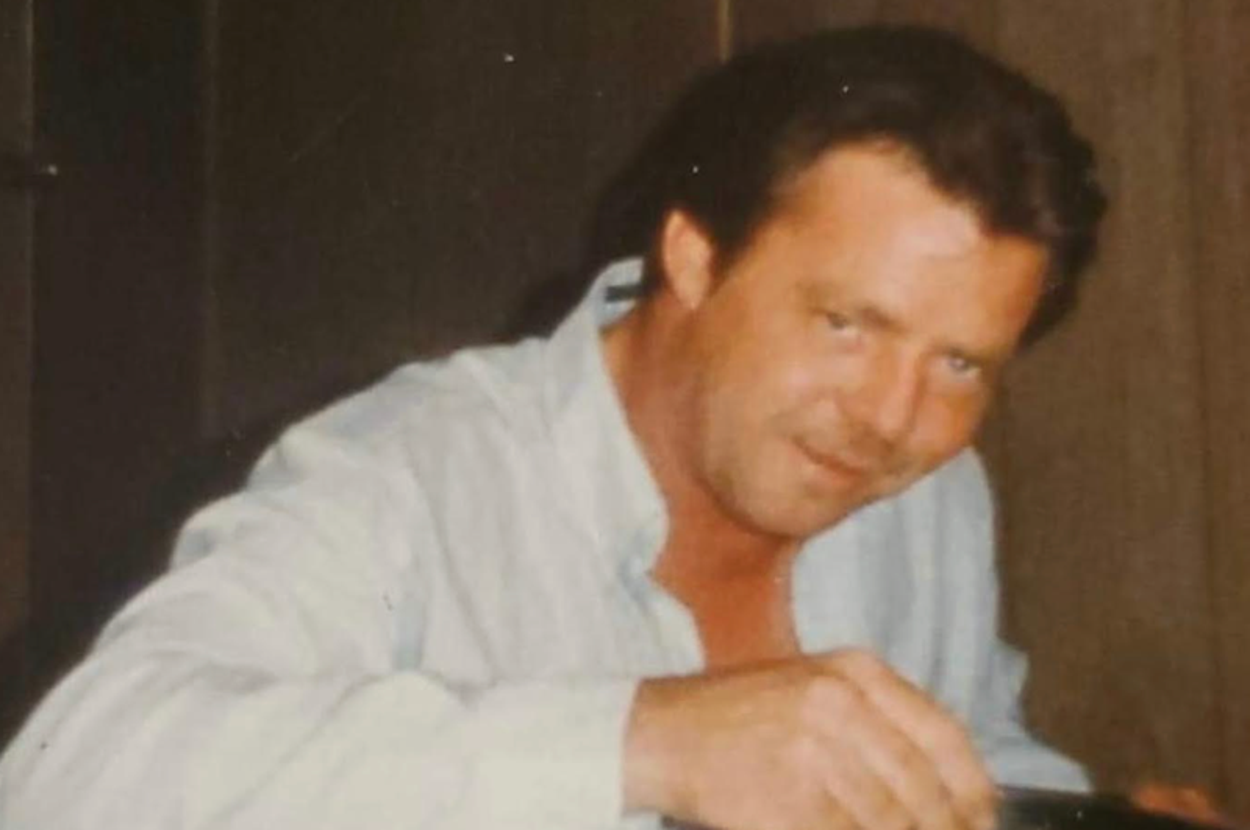
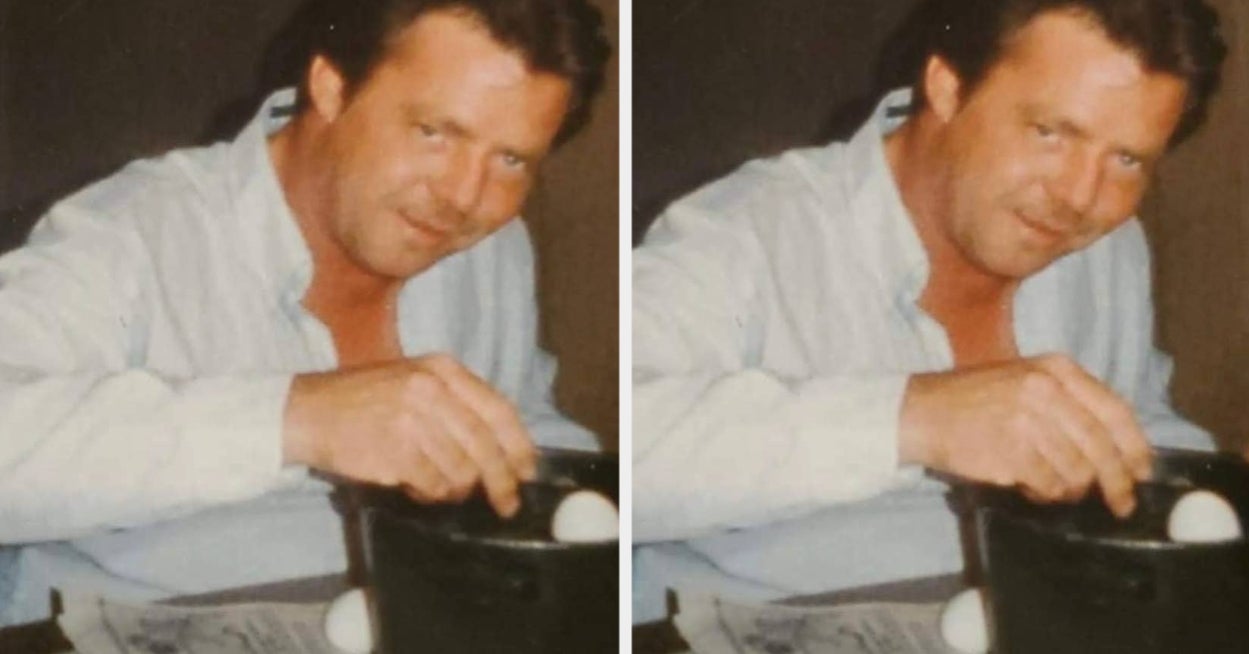
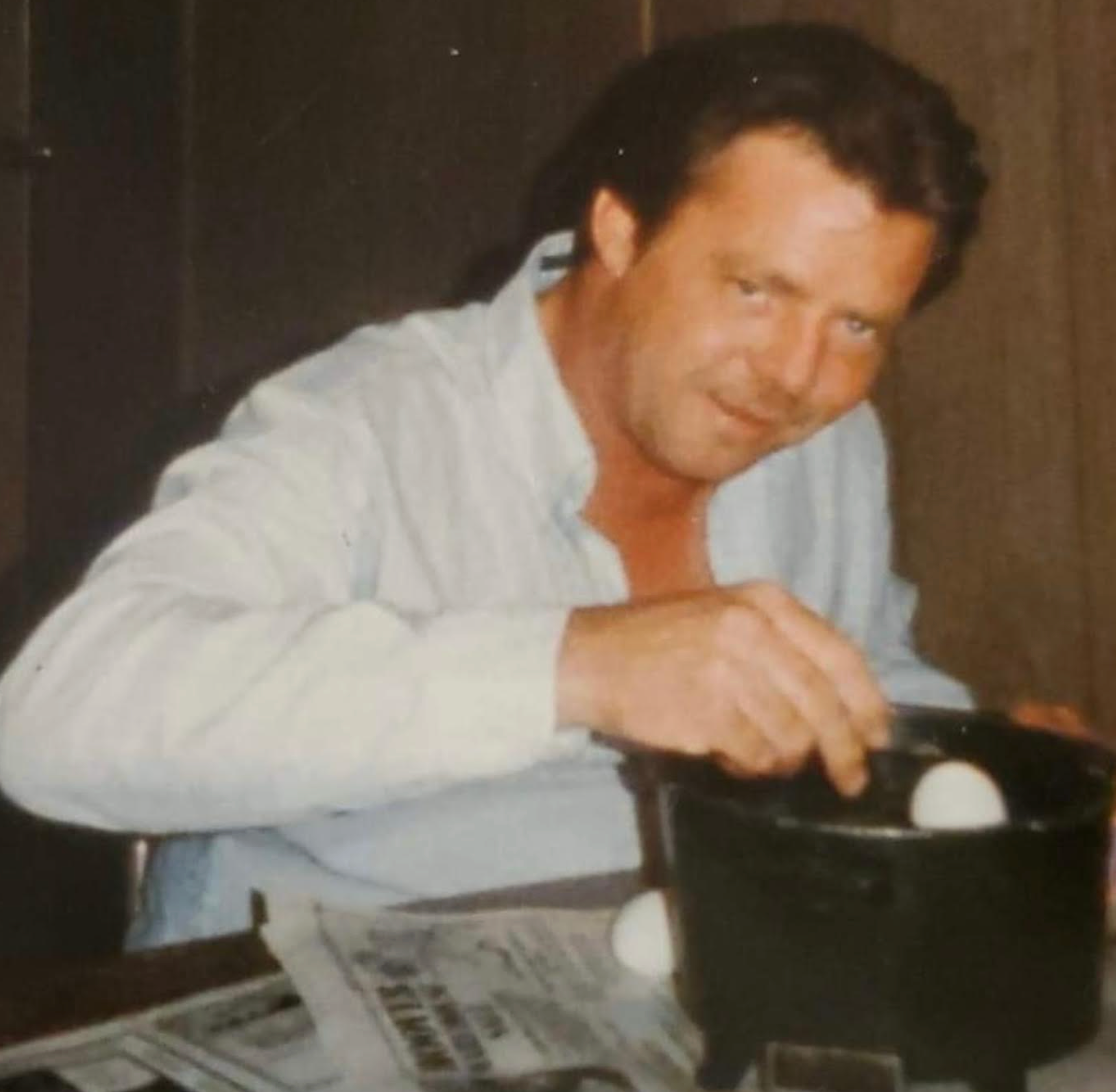
The author's father. "This was right about the time his baby daughter died and things went downhill," he writes.

Christy and I eventually restarted our relationship — albeit at a much slower pace. We still haven’t met face to face, but even so, I’m very proud of my little sister. She’s an amazing mom to two great kids.

I’ve talked to her brothers a few times and they’re also both very cool people. We just haven’t connected like I did with her. After all, I’d been protective of her since I was 12. We were connected long before she ever knew I existed.

While I never met my dad, I did learn a lot from him — mostly what not to do.

I never left my kids, even when things got tough. I showed up. I’ve been there every first and last day of school. Every soccer, baseball, football and volleyball game. Hours upon hours, miles upon miles — from school events to birthday parties and back — 35 years of putting parenting first.

If not for knowing what it felt like to miss that person in my life, maybe I would have missed a game or two. A play. A recital. But I didn’t. I saw everything.

Later, through DNA matches, I found three more of my dad’s children. None of them ever knew who he was. There are seven kids in total — four of us always wondering what our dad was really like, and three who never got to wonder.

We “wonderers” were allowed to make up our own stories. Some days, I even pretended he was a hero. The ones who really knew him didn’t get to do that. They got to love him, and on the good days, he was a hero — just by being a dad. But they also had to lose him, and they knew exactly why. That had to cut deeper than any wondering ever could.

I realize now that sometimes we’re certain of what we want or need, and it feels like a crushing loss when we don’t get it. But sometimes that loss is the gift.

Some names and identifying details have been changed to protect the privacy of individuals mentioned in this essay.

Chuck Hawley is a children’s author, public speaker, and accidental mental health advocate. That journey began the day he rescued a tiny kitten that had been glued to a road. That kitten — named Sticky — inspired the Sticky the Kitty children’s book series, now available in 23 countries and used in classrooms, therapy offices, and homes to help kids understand feelings, kindness, and the strength it takes to ask for help. Chuck now visits schools, libraries, and community programs across the nation. He writes for both kids and the grown-ups they become, using humor, vulnerability and storytelling to open conversations that often feel too heavy to start alone. Chuck lives in Oregon, surrounded by rescued animals, strong coffee, and a growing community built on compassion, honesty and connection.

This article originally appeared on HuffPost in February 2026.