yahoo Press
Oil Armada Heads to Red Sea as Saudis Divert From Hormuz
Images
1 / 5
2 / 5

3 / 5

4 / 5
5 / 5
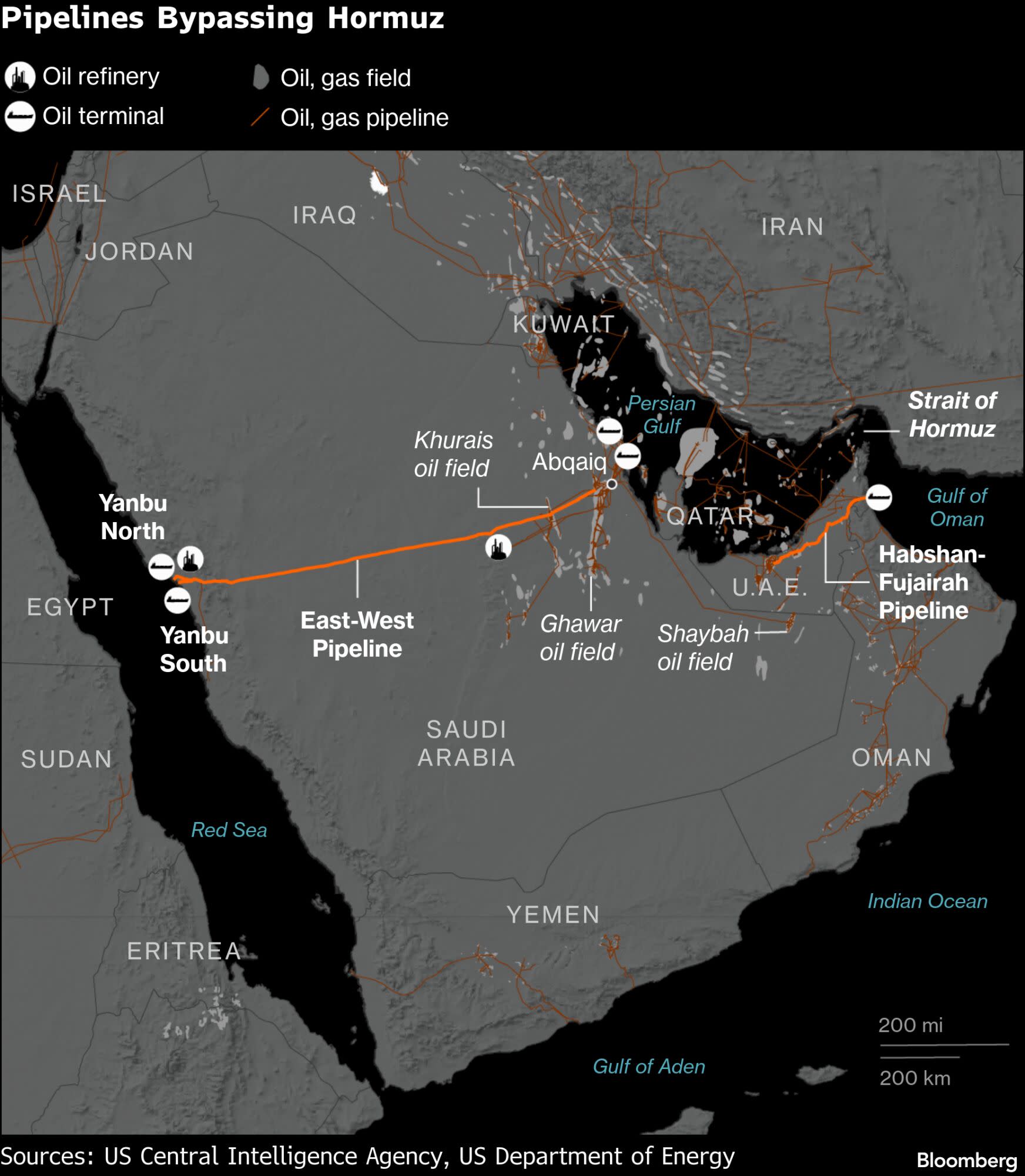
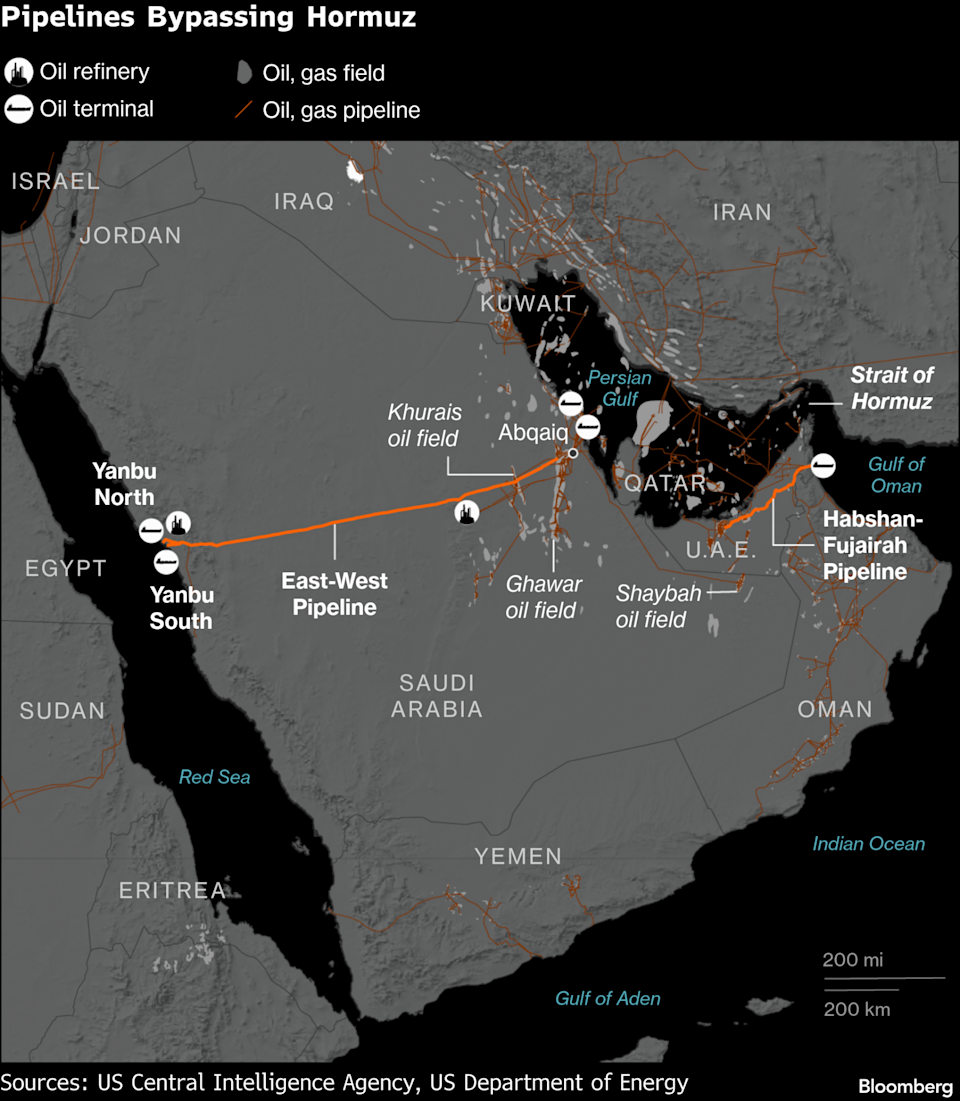
(Bloomberg) -- A flotilla of at least 25 supertankers is heading to Saudi Arabia’s Red Sea port of Yanbu as the kingdom races to get its oil to market after the Iran war halted shipping through the Strait of Hormuz.

The fleet would give the kingdom the capacity to ship 50 million barrels of oil from the port, based on ship-tracking data compiled by Bloomberg. Assuming they successfully load these cargoes, it would be a vital mitigation to the unprecedented disruption to energy supplies from the Persian Gulf.

Most Read from Bloomberg

Greek Oil Tanker Exits Strait of Hormuz With Its Signal Off

Trump Signals Possible End to War, Floats Removing Oil Sanctions

US Planes Fly Out of Korea as Asset Redeployment Reports Grow

Rokos Joins Hedge Funds Losing Money Last Week, Jain Gains

Market Cracks Widen as War, AI and Credit Fears Collide at Once

Riyadh is rushing to ramp up flows through an export route that avoids the Strait Hormuz, through which it and other Gulf producers have been mostly unable to ship crude since the US and Israel launched their war with Iran. With drones and missiles striking targets every day across the Persian Gulf, transit through the narrow waterway at its mouth is deemed to be too risky for most shipowners.

The conflict has cut global oil output by about 6% as countries including Iraq and Kuwait have been forced to halt fields that have nowhere to send their crude. While Saudi Arabia and the United Arab Emirates have also adjusted production levels, they remain uniquely positioned to bypass the Strait of Hormuz by using pipeline networks connecting to the Red Sea and Fujairah, respectively.

Saudi Aramco Chief Executive Officer Amin Nasser said on Tuesday that the company is ramping up crude flows through its east-west pipeline, which should reach full daily capacity of 7 million barrels within a few days.

“It’s all building on the repositioning of tankers from the east to the west,” Nasser said.

The data compiled by Bloomberg cover vessels that have signaled Yanbu as their destination in the last two days. The true size of the fleet might be higher as tankers sometimes don’t reveal their destinations for safety reasons, especially at times of conflict.

The United Arab Emirates is also working to export more crude through a pipeline from its main fields to the port of Fujairah, bypassing the Strait of Hormuz. Figures from Kpler and tanker-tracking data compiled by Bloomberg show that exports from the terminal have surged to about 1.6 million barrels a day so far this month, significantly higher than the average of 1.1 million observed in recent months.

--With assistance from Alex Longley.

Most Read from Bloomberg Businessweek

China’s Gen Z Day Traders Trust in Chatbots and Move Markets

This Maker of $4 Million Sports Cars Is Weighing an IPO

Gas Prices Are Rising—and So Are the Iran War Stakes for Trump

How Data Centers Became a Casualty of War

How Swig Turned Dirty Soda Into a National Obsession

©2026 Bloomberg L.P.