yahoo Press
Wall Street warns TACO traders as Iran begins laying mines
Images
1 / 4
2 / 4

3 / 4

4 / 4
The situation in the Middle East is getting more expensive for the rest of the world.

After Iran elected Mojtaba Khamenei — the son of their former leader — oil prices climbed above $100 a barrel. While the White House has used strong words in response, the stock market hasn't fallen apart yet.

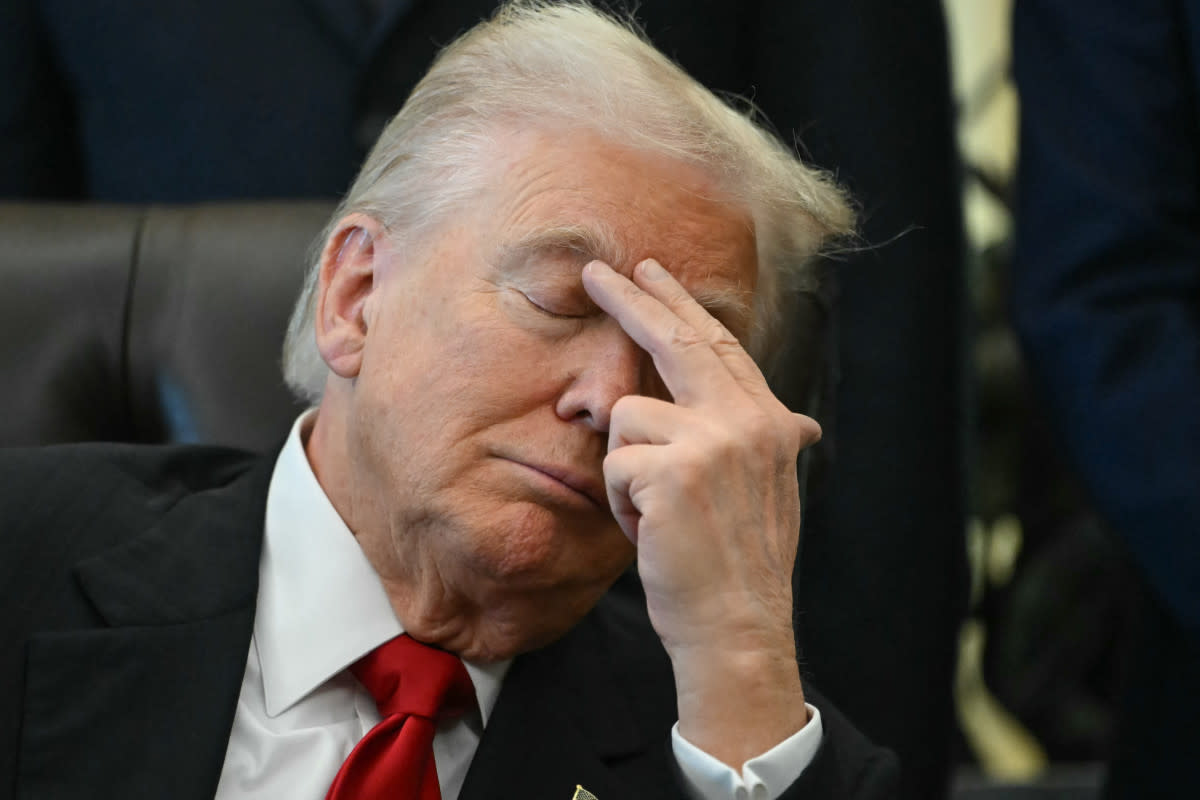
Most investors are holding onto a specific timeline. U.S. President Donald Trump suggested the military action would last about four or five weeks.

Because of this, many people on Wall Street are making a bet they call "TACO," which stands for "Trump Always Chickens Out."

Related: Trump says Iran war Is 'pretty much over' but night traders aren’t convinced

They believe President Trump will eventually back down or make a quick deal, just as he has done before with trade taxes and foreign policy.

However, this outlook faces new pressure as Iran begins laying mines in the Strait of Hormuz. This critical chokepoint carries one-fifth of the world’s crude oil, and intelligence reports suggest a few dozen mines have already been placed.

While the activity is not yet extensive, the Islamic Revolutionary Guard Corps (IRGC) still holds up to 90% of its mine-laying boats and could feasibly deploy hundreds more in the channel now described as a “death valley.”

On Tuesday, March 10, President Donald Trump demanded on Truth Social that any mines be removed “IMMEDIATELY.”

He warned that if they are not cleared forthwith, Iran will face military consequences at a level never seen before.

Although US officials confirmed the Navy has not yet escorted vessels through the closed strait, the President noted that removing the mines would be a giant step in the right direction.

Ripple executive touts one-stop shop for XRP ecosystem

BitGo CEO says Bitcoin’s scarcity remains its most important feature

Dubai issues cease-and-desist notice to crypto exchange

For some investors, this conflict looks like a "buy-the-dip" opportunity. This means they buy stocks while people are panicking and prices are low, hoping that everything will return to normal in a month.

However, Jacob Manoukian, a top strategist at JPMorgan Private Bank, says this is a complicated move.

In an interview with Fortune, he explained that while a deal is possible, these global events can take unpredictable turns.

“As a strategist, the risk case that we’re worried about is that there’s a lot of potential paths that this can take, that are out of the control of one party or another,” Manoukian said.

He warned that Wall Street is trying to figure out a situation where nobody is quite sure how things will end.

Related: Oil becomes second-most traded asset on popular crypto exchange

Even with the risks, JPMorgan still believes a deal could happen in two or three weeks.

There are two main reasons for this:

First, President Trump likely wants to stop oil prices from rising too high before the midterm elections.

Second, both Iran and nearby countries have a limited supply of weapons.

As Manoukian put it, “There’s a timeline here where this probably can’t continue forever, and the duration is likely to be limited. But we just don’t know that and it’s hard to be certain.”

Because of this "we just don't know" factor, the bank is telling its traders to be very careful.

Instead of guessing when the war will end, Manoukian suggests looking at "infrastructure" assets—things like power plants, roads, and bridges.

A recent report found that 80% of wealthy "family offices" don't own any of these.

In a world where supply chains and energy are at risk, these assets can keep a portfolio strong. Manoukian believes infrastructure is a “prime example” of a smart investment during scary times in the market.

While these investments can be hard to understand, new ways to invest are making them easier to access. He noted that more clients are starting to see why they are important for long-term safety.

Investor sentiment shifted quickly on Tuesday as Bitcoin climbed back above $70,000. This recovery followed comments from President Trump, who stated that the Iran conflict would resolve “very soon.”

Bitcoin rose 2.32% to reach $70,581, while other assets like Ether, XRP, and Solana also posted gains.

This optimism spread to Asian stock markets, where Japan’s Nikkei 225 jumped more than 3% following a sharp sell-off on Monday (March 9).

As investors returned to stocks and crypto, pressure on energy prices eased. Brent crude dropped 7.7% to $91.37 a barrel after earlier rising to $119.50. The market rebound suggests many investors are now betting on a quick diplomatic resolution.

Related: Jim Cramer sees no path to de-escalation in U.S.-Iran war

This story was originally published by TheStreet on Mar 10, 2026, where it first appeared in the MARKETS section. Add TheStreet as a Preferred Source by clicking here.