yahoo Press
Tech stocks today: Anthropic announces new capability for Claude, SK Hynix places $8 billion ASML order
Images
1 / 7

2 / 7

3 / 7

4 / 7

5 / 7

6 / 7

7 / 7
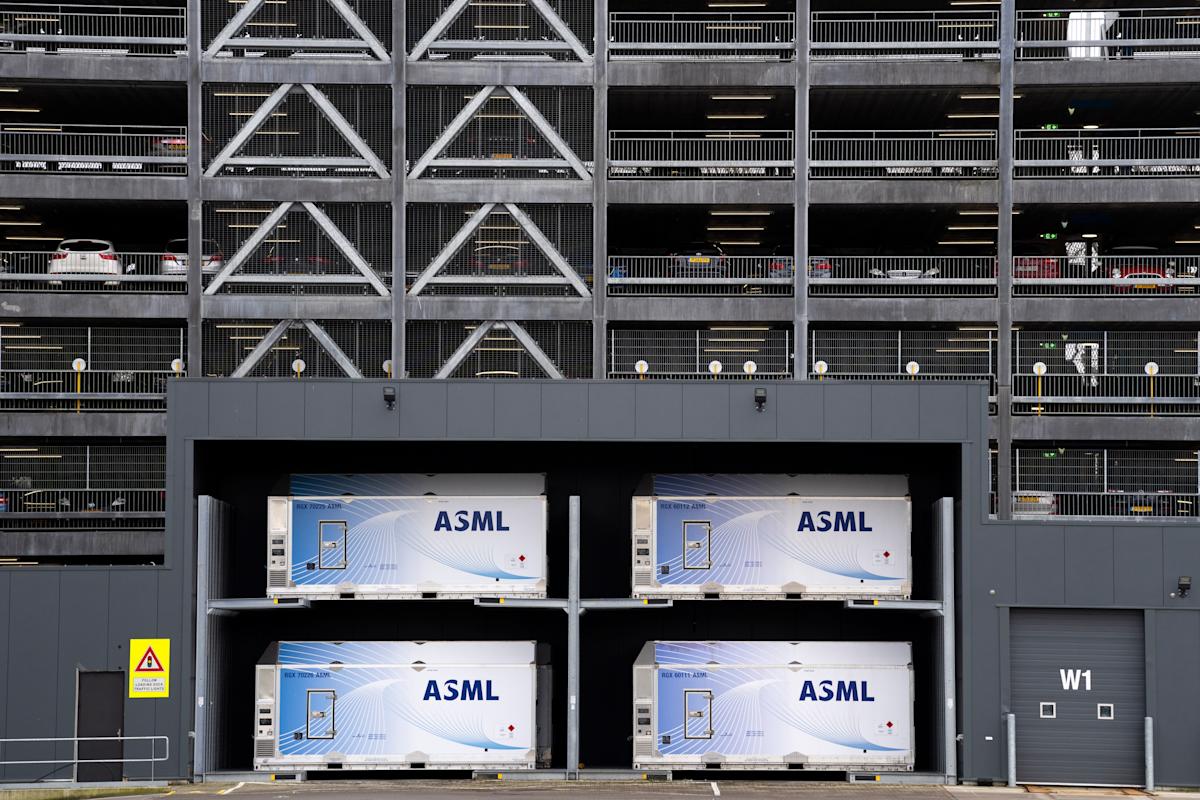
Tech stocks were muted on Tuesday after markets rebounded on hopes of talks between the US and Iran that could ease tensions. SK Hynix (000660.KS) shares popped after the South Korean chipmaker said it would place an $8 billion order for ASML’s cutting-edge tools as it looks to meet the booming demand for memory chips. Meanwhile, investors continue to evaluate Nvidia’s artificial intelligence offerings after the company unveiled new AI chips and an agentic AI platform at its developer conference last week. At the GTC event, CEO Jensen Huang forecast that AI chip sales would surpass $1 trillion by 2027. In other tech news, Alphabet’s (GOOG, GOOGL) drone delivery company Wing will expand drone deliveries to San Francisco in the near future, Cisco (CSCO) showed off new security offerings for AI agents, and Apple (AAPL) CEO Tim Cook said the company is seeing strong enthusiasm for its new, low-cost MacBook. There’s a bright spot in Tesla’s (TSLA) core auto sales, with a slight reversal of fortune in greater Europe. According to the European Automobile Manufacturers' Association (ACEA), Tesla electric vehicle registrations (a proxy for sales) in Europe rose to 17,664 units in February, an 11.8% gain compared to a year ago. In January, sales dipped 17%, the last month of a losing streak that had been ongoing since December 2024. While this February saw a sales jump, it came against a weak February in 2025. Last year, Tesla’s European sales tumbled 27%. Tesla’s recent losing streak occurred against the backdrop of rising EV sales in the greater Europe region. Total EV registrations in the region, which includes the UK and the European Free Trade Association, rose 15.8% in February, with overall registrations regardless of powertrain up only 1.7%. While EV sales have slumped somewhat in the US, cheap EVs and hybrids are flourishing in the EU, especially from Chinese automakers like BYD and Li Auto, as buyers across the pond embrace Asian imports. Read more here. The race to make increasingly advanced AI agents is heating up thanks to the release of OpenClaw in November, and now Anthropic (ANTH.PVT) is joining the action. The company announced its new capability for its Claude Cowork productivity tool and Claude Code coding feature, giving both the ability to do things like access different apps, point and click with your mouse, type, and browse the web and your files. Anthropic is also careful to point out that it’s putting certain safeguards into place to prevent malicious actors from exploiting its advanced agentic abilities, a big fear with these kinds of agents. High-powered AI features like Anthropic’s aren’t entirely new, but they gained increased traction with the debut of OpenClaw, which allows users to run custom AI agents on their desktop systems, giving the bots control over their data and programs. Cybersecurity experts have raised alarms that OpenClaw could be a security nightmare, but companies like Nvidia (NVDA) and Cisco (CSCO) are jumping on board, releasing their own apps to put guardrails around the agents. In February, an AI safety and alignment worker in Meta’s Superintelligence Lab posted on X that her own OpenClaw agent bulk deleted her email without her permission. Chipmaker SK Hynix (000660.KS) plans to purchase 11.95 trillion won ($7.97 billion) worth of ASML's (ASML) advanced EUV lithography tools in the largest single order for ASML of its kind. Reuters reports: Read more here. Amazon (AMZN) said on Monday that Amazon Web Services has been "disrupted" in Bahrain amid the current conflict in the Middle East. The disruption is due to drone activity in the area, an Amazon spokesperson told Reuters. From Reuters: Read more here. OpenClaw, the popular AI agent platform, is a massive hit among the techy set. Developed by Peter Steinberger, who has since joined OpenAI (OPAI.PVT), OpenClaw allows users to set up their own AI agent that can run on their computers, performing tasks ranging from checking email and replying to messages to managing system files. And while those capabilities are impressive, they’re also a potential security nightmare. That’s because you’re giving an AI model the ability to control your computer. And while that’s great when it works, it can lead to major issues, whether that’s permanently deleting important emails or entire programs from your system. And that becomes an even bigger problem for companies testing OpenClaw on their enterprise devices. To that end, Cisco (CSCO), on Monday, showed off a number of new security offerings designed to protect against rogue AI agents. Read more here. Apple (AAPL) on Monday said it will host its annual Worldwide Developers Conference (WWDC) on June 8 at its headquarters in Cupertino, Calif. The company uses the yearly event to showcase the latest software updates to its iOS and macOS lines, among others. This year will be particularly important, as Apple is widely expected to provide more information about its planned AI overhaul of Siri, which has run into repeated delays, as well as deeper insights into its broader AI strategy. The iPhone maker’s Apple Intelligence platform has fallen behind Google’s and Samsung’s offerings, driving Apple to enter into an agreement with Google to use that company’s Gemini AI models to power its own services. Despite that, Apple posted record revenue in its most recent quarter on all-time high iPhone sales, showing that consumers aren’t penalizing Apple for its AI shortfalls. CEO Tim Cook did, however, warn that the global memory shortage caused by the ongoing AI data center build-out will likely hurt Apple’s margins in the coming quarters. The company’s stock price is down more than 7.7% year to date but up nearly 15% over the last 12 months. Over the weekend, Tesla (TSLA) and SpaceX (SPAX.PVT) CEO Elon Musk unveiled what might be his grandest vision for his companies' future: a massive chip factory located in Austin, Texas. Tesla stock rose 3% on Monday. Read more here. Yahoo Finance’s Pras Subramanian reports: Alphabet’s (GOOG, GOOGL) drone delivery company Wing will begin shipping products through the air to homes around San Francisco in the near future. Reuters reports: Read more here. The New York Times’ Kevin Roose reports: Earlier this week, one of our favorite tech substacks — The Pragmatic Engineer — which Roose quotes in his story, asked in a post whether AI agents were actually slowing down software development. And agents, as Roose notes, are really the source of massive token usage, in some cases running around the clock to constantly iterate on some task. “When it comes to AI agents and AI tooling, most of the discussion focuses on their potential boosts for efficiency, faster iteration, and the pushing out of more code, faster,” wrote Gergely Orosz, author of the Pragmatic Engineer. “Last week, we took an inside look into how Uber is adopting AI, internally. The rideshare giant has built close to a dozen internal systems to deal with code generated by AI agents. “However, when quantifying the impact of AI, the focus was on how much output has increased, and how devs who use more AI also generate more pull requests; these are the ‘power user’ devs who generate 52% more [pull requests] than devs who use AI less. There was no mention of product quality — at all!” Social media sites shouldn’t be used by kids under 16, according to Pinterest (PINS) CEO Bill Ready. In an essay published in TIME on Friday, the executive said the new ban on social media sites for users under 16 recently enacted in Australia sets a standard that should be applied more broadly around the world. “As both a tech CEO and parent, I know legal compliance is not the same as safety,” Ready wrote. “And I understand broad restrictions come with difficult tradeoffs. But social media, as it’s configured today, is not safe for young people under 16.” Ready compares his proposal that social media use be more broadly restricted to other age-restricted activities, like drinking, driving, and smoking. “Imperfect protection is better than none,” Ready added. “When we make excuses for not acting in the public’s best interest, tech CEOs sound like 20th-century tobacco executives who had to be shamed and sued into submission.” In his essay, Ready links out to an op-ed published by Snap CEO Evan Spiegel in the Financial Times last month, who said of Australia’s ban, “I don’t believe cutting teens off from these relationships makes them safer or advances their wellbeing.” US lawmakers have in recent years sought to advance legislation that would restrict social media use by users under 13, and some states have tightened rules for accounts. Earlier this month, Apple announced its first-ever low-cost MacBook, the MacBook Neo. The move appears to be bringing new users into its ecosystem. In a post on X on Friday, Apple CEO Tim Cook said the company just had its best week ever for first-time Mac users. Apple’s MacBook Neo went on sale on March 11 and starts at $599. Reuters reports: Read more here. The US has charged a Supermicro Computer (SMCI) co-founder — a US citizen — with smuggling Nvidia (NVDA)-powered servers to China, contravening restrictions on the AI technology. California-based Supermicro is a key assembler of AI servers based on Nvidia components, and it accounts for about 9% of the chip giant's revenue, per Bloomberg. Shares of Supermicro plunged over 20% in premarket trading after three arrests linked to the case. Bloomberg reports: Read more here. OpenAI (OPAI.PVT) said on Thursday that it is acquiring Astral, a company that develops tools to help working with the popular Python coding language, as the AI giant looks to boost its Codex AI coding tool’s capabilities. According to OpenAI, the deal will see the Astral team join its Codex group and will integrate Astral’s technology into Codex. “Our goal with Codex is to move beyond AI that simply generates code and toward systems that can participate in the entire development workflow —helping plan changes, modify codebases, run tools, verify results, and maintain software over time. Astral’s developer tools sit directly in that workflow,” OpenAI said in a statement. “By integrating these systems with Codex after closing, we will enable AI agents to work more directly with the tools developers already rely on every day.” The companies didn’t disclose the terms of the deal. OpenAI is working to catch up to rival Anthropic’s popular Claude Code AI coding tool. Micron (MU) stock fell more than 4% in early trading Thursday, despite posting better-than-anticipated second quarter earnings after the bell on Wednesday. The company also provided strong guidance for the current quarter, topping Wall Street estimates. According to William Blair analyst Sebastien Naji, the market reaction is likely the result of fears that Micron won’t be able to continue its torrid growth rate. Micron stock is up more than 342% over the last 12 months and 58% year-to-date. For Q2, the company reported earnings per share (EPS) of $12.20 on revenue of $23.86 billion. That amounts to an EPS increase of 682% year-over-year and a revenue jump of 196%. Wall Street was anticipating EPS of $9.00 on revenue of $19.7 billion year over year. Micron also said it expects Q3 revenue above analysts’ estimates. Despite the initial market reaction, Naji, in a note to investors, wrote that Micron stock is trading at a price-to-earnings multiple of 6 times William Blair’s 2026 estimates calendar 2026 estimate—below its historical multiple. Read more here. Figma (FIG) stock continued to slide, adding to losses of around 8% on Wednesday, after Alphabet’s (GOOG, GOOGL) Google Labs updated its Stitch design platform that directly competes with Figma’s and Adobe’s (ADBE) design tools. Google introduced voice capabilities to Stitch, which it says allows anyone to “vibe design” user interfaces. Google says designers can receive design critiques and give Stitch commands, such as “show me this screen in different color palettes,” and it will carry them out. The new AI-native design canvas also features an agent-friendly markdown file that allows users to export or import their design rules to or from other design and coding tools. It also lets users interact with prototypes and click “Play” to quickly preview their app’s flow. Figma stock fell 1.5% on Thursday morning, while Adobe fell 0.4%. Google stock also fell 1% amid broad market selling. In another big move in the robotaxi space, Rivian (RIVN) will supply Uber (UBER) with up to 50,000 fully autonomous robotaxis in exchange for up to $1.25 billion in funding. Uber and its fleet partners will purchase 10,000 Rivian R2 robotaxis, with an option to purchase 40,000 more in 2030. Initial deployments will start in San Francisco and Miami in 2028, with plans to scale to 25 cities by 2031. Uber’s $1.25 billion investment is subject to certain autonomous milestones, though an initial $300 million investment has been committed, subject to regulatory approval. Rivian stock surged in early trading. Read more here. Micron (MU) reported its second quarter earnings after the closing bell on Wednesday, beating expectations on the top and bottom lines and providing Q3 guidance well above estimates, as the AI market continues to drive massive demand for memory chips around the world. For the quarter, Micron reported earnings per share (EPS) of $12.20 on revenue of $23.86 billion. Wall Street was anticipating EPS of $9.00 on revenue of $19.7 billion, year over year. Memory, or RAM, is an integral component of data center servers for both GPU-based systems by Nvidia (NVDA) and CPU-based systems by the likes of Intel (INTC) and AMD (AMD). The explosion in AI training and inferencing and the broader push into agentic AI is driving a dearth of available memory supplies, raising prices and impacting the cost of consumer and enterprise electronics. In February, market research firm Gartner said the memory shortage will cause PC shipments to drop 10.4% in 2026 and smartphone shipments to decline 8.4%. Read more here Nvidia’s (NVDA) chips are known for their general-purpose use. They can train and run AI models, power robots, and serve as the backbone of self-driving cars. And while the company’s offerings are still the industry standard, upstart chip firm’s like Cerebras and Groq have begun designing and rolling out processors geared specifically toward running AI models, creating a potential threat to Nvidia’s formidable AI moat. CEO Jensen Huang and company answered those concerns at the company’s GTC event on Monday with a slew of announcements meant to prove Nvidia is the inferencing leader to beat, including the debut of its Groq 3 chip and rack system. “They are evolving in a big way,” TECHnalysis Research founder and chief analyst Bob O’Donnell told Yahoo Finance. Read more here: Arizona Attorney General Kris Mayes filed criminal charges against Kalshi on Tuesday, accusing the prediction market operator of “illegal gambling” without a license and “election wagering.” This is the first time Kalshi has faced criminal charges — marking an escalation in its legal troubles — though several states have filed civil lawsuits against the company. "Kalshi may brand itself as a 'prediction market,' but what it's actually doing is running an illegal gambling operation and taking bets on Arizona elections, both of which violate Arizona law," Mayes said. "No company gets to decide for itself which laws to follow." A Kalshi spokesperson denied the charges and told the New York Times that they are “meritless.” Kalshi also preemptively sued Arizona’s Department of Gaming on March 12. Scrutiny of prediction markets has intensified alongside the industry’s explosive growth since the Supreme Court struck down a federal ban on sports betting in 2018. According to the blockchain security firm CertiK, trading on prediction markets quadrupled from $15.8 billion in 2024 to about $63.5 billion in 2025, with most of the volume coalescing in Kalshi, Polymarket, and Opinion. (Disclosure: Yahoo Finance has a partnership with Polymarket.)