yahoo Press
A Florida Trucking Company Raised $158 Million From 2,000 Investors by Promising 200% Monthly Returns – Here Is Exactly How It Worked and Why Every Small Carrier Needs to Read It
Images
1 / 6
2 / 6

3 / 6

4 / 6
5 / 6
6 / 6
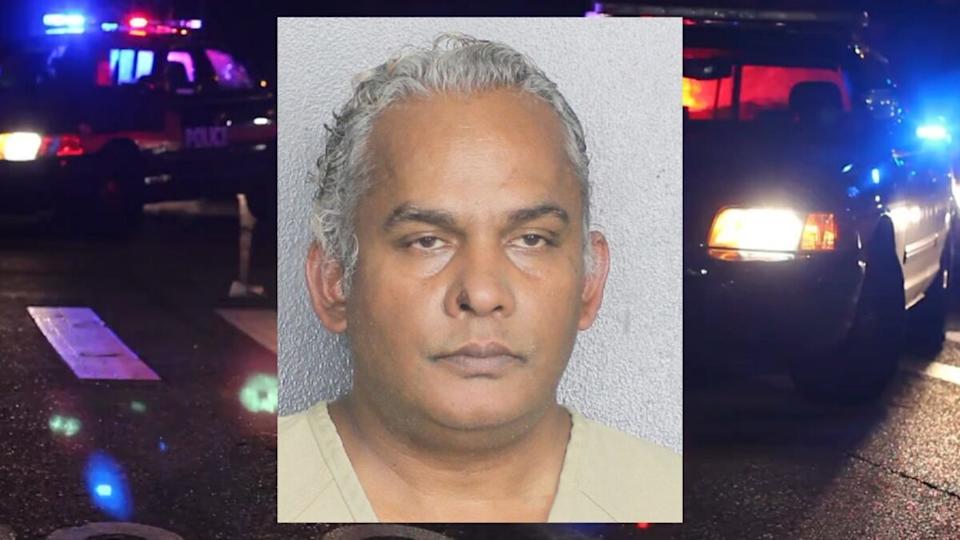
Sanjay Singh founded Royal Bengal Logistics, Inc. in 2018 in Coral Springs, Florida. He built a website that described a company with 250 employees, a fleet of over 200 semi-trucks and growing, and revenue of $1 million per month. He held annual investor banquets in hotel ballrooms. He posted a video of himself onstage announcing he was awarding his “driver of the year” any truck worth up to $75,000. He offered investment programs with structured tiers, written contracts, and regular return payments that arrived reliably in the early months of the operation — building the kind of credibility that makes a fraud sustainable long enough to grow.

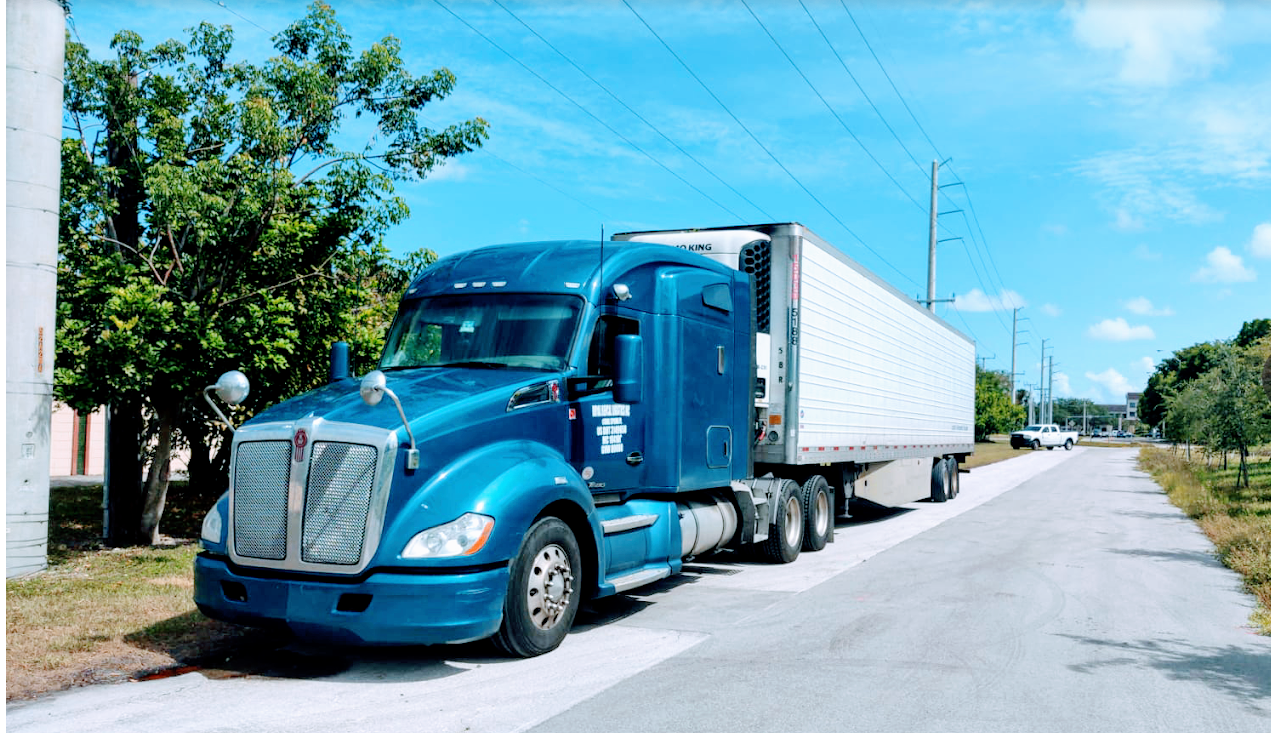
By the time federal investigators shut it down in June 2023, Royal Bengal Logistics had raised $158 million from approximately 2,000 investors. The company’s actual trucking business was losing money from the beginning. The trucks purchased with investor funds were described in court documents as old vehicles with high mileage, many of which were eventually cannibalized for parts at a junkyard in Lubbock, Texas. The investor-purchased fleet that Singh described to new investors as evidence of company growth was largely composed of vehicles belonging to independent contractors who drove their own trucks under the Royal Bengal name — trucks Singh had no ownership interest in.

On November 8, 2024, a federal jury convicted Singh on all eight counts of an indictment charging conspiracy to commit wire fraud, wire fraud, and engaging in transactions in unlawful proceeds. On May 30, 2025, U.S. District Judge Raag Singhal sentenced him to 276 months — 23 years — in federal prison. On February 9, 2026, the court ordered Singh to pay $51,199,671 in judgment and restitution to his victims.

The full story of how this scheme operated is worth reading in detail — not because fraud cases are entertainment, but because the specific mechanics of how Singh sold the Royal Bengal investment to thousands of people contain lessons that apply directly to the decisions small carriers, owner-operators, and their communities make every day.

Royal Bengal Logistics offered investors four distinct investment programs, each structured to look like a legitimate business contract and each premised on the same false representation: that the company was profitable, growing, and capable of generating the returns it promised.

The Truck Program — minimum investment $55,000. Under this arrangement, an investor’s funds were used to purchase a semi-truck that would be titled in the investor’s name and operated by Royal Bengal Logistics as part of its fleet. The investor would receive monthly returns on their investment. Singh and his representatives told investors the returns on the truck program exceeded 200% monthly. To be precise about what that means: an investor who put in $55,000 was told they would receive back more than $110,000 per month. That math requires the truck to generate gross revenue so astronomical that it is impossible in any real trucking operation. A well-run owner-operator truck generates gross revenue of roughly $10,000 to $20,000 per month under favorable market conditions. A 200% monthly return on a $55,000 investment is not trucking. It is fabrication.

The Long-Term Owner Financing Program — minimum investment $60,000. This program offered returns in the range of 20% to 40% and was framed as a longer-term financing arrangement tied to the company’s fleet operations.

The Short-Term Investment Program — minimum investment $25,000. Framed as a shorter commitment with returns in the same 20% to 40% range.

The Trailer Sponsorship Program — minimum investment $50,000. This program was tied to what Singh described as Royal Bengal’s trailer manufacturing operation in India, with finished trailers to be shipped to the United States for deployment in the company’s fleet. Investors were told their funds would finance trailer construction and they would receive guaranteed returns from the trailer’s subsequent use.

Across all four programs, Singh and his co-conspirators made three consistent representations: the investments were safe, the principal was guaranteed, and Royal Bengal was a thriving, profitable business. The SEC later established that from at least August 2019, the company had been operating at a loss, and that by February 2023, Royal Bengal’s bank accounts had declined to approximately $2.1 million — against obligations to hundreds of investors that could not be met without fresh capital from new victims.

Royal Bengal Logistics did not operate as a pure fiction. The company had real USDOT authority. It had real drivers. It was listed on FMCSA’s SAFER database with 91 drivers and 166 power units before its operating authority was involuntarily revoked after Singh’s arrest. It held annual investor events, awarded actual prizes, maintained a professional website, and paid out returns consistently to investors in the early stages of the operation.

That operational reality — a functioning company that appeared to be doing what it said — is what made the scheme work as long as it did. This is the structure of affinity fraud: build credibility with a real-looking operation, target a specific community where trust and word-of-mouth referral networks are strong, pay early investors reliably to generate testimonials and referrals, and use the influx of new capital to fund both the returns to existing investors and your own personal expenses while the underlying business bleeds cash.

Judge David Leibowitz, who presided over the case, addressed the affinity fraud dimension directly at sentencing. He said: “Part of what can’t be captured in the evidence in affinity frauds like this Ponzi scheme is how they make you feel like I’m a sucker for believing it. At the time, it looks legitimate. There are hallmarks of legitimacy.”

Singh’s co-conspirators further extended the scheme’s reach. Ricardi Celicourt, Royal Bengal’s vice president of business development and investor relations, and Brisly Guillaume, the company’s director of business development and investor relations, were charged by the SEC with acting as unregistered brokers — selling the investment programs to the public without being registered or associated with a registered broker-dealer. Court documents state that Celicourt and Guillaume received approximately $1.3 million in transaction-based bonuses for their roles in raising capital from investors. Both face ongoing SEC civil proceedings.

To conceal the movement of money, Singh eventually asked investors to switch from sending funds and receiving returns in their own names to using companies they had already incorporated. By routing transactions through these separate corporate entities, Singh was able to obscure the source and nature of funds flowing in and out of Royal Bengal’s bank accounts — a money laundering structure that became one of the criminal counts against him.

The Justice Department’s sentencing memorandum contains the most detailed accounting of how the $158 million was actually deployed, and it is worth reading in full because it is the gap between the investment pitch and the reality.

The trucking business was losing money from the beginning. Royal Bengal did not earn sufficient revenue from its operations to cover costs, let alone service the extraordinary return obligations it had made to investors. As new investor money came in, it was used to pay returns to existing investors — the defining mechanic of a Ponzi scheme. That structure is inherently unsustainable. The pool of new investors necessary to fund returns to existing investors must grow continuously, and it must grow faster than the obligations it creates. When the growth slows or stops, the scheme collapses.

Singh personally extracted funds from the company throughout. The sentencing memorandum describes him as having “pillaged Royal Bengal Logistics’ bank accounts and the investors’ funds therein gambling it away in the stock market.” Specifically, federal prosecutors stated Singh exposed approximately $40 million in investor funds to speculative stock trading — primarily meme stocks traded on margin — and lost more than $12 million of investor money through those trades. The stock accounts he controlled saw hundreds of millions of dollars in trading activity financed by investor capital.

Personal use of funds included mortgage payments on his home, home renovation costs, personal expenses, and funding multiple brokerage accounts used as collateral for the margin stock trading. Singh also sent millions of dollars overseas to family members in India — a fact prosecutors cited when they successfully opposed his release on bond after conviction, noting that the money already transferred internationally was “more than enough to sustain him if he fled.”

The receiver appointed by the court — Paul O. Lopez of Tripp Scott PA — conducted an investor claims verification process that established at least 1,688 confirmed victims who paid approximately $92 million for big rig investments. After accounting for payments made back to investors during the scheme’s operation, the receiver estimated net losses of approximately $54 million. A forensic accountant who testified at trial estimated losses at approximately $53.7 million — the figure that forms the basis of the $51,199,671 restitution order.

One of the most detailed and damning findings in the court record is the condition of the trucks that investor funds actually purchased.

The class action lawsuit filed on behalf of investors, and the testimony at trial, established that most of the trucks Royal Bengal claimed to own on behalf of investors were not trucks Singh purchased for that purpose. The majority of Royal Bengal’s fleet consisted of vehicles belonging to independent contractors who drove their own trucks for the company under standard owner-operator arrangements. Singh had no ownership interest in those trucks. When he described fleet growth to new investors and attributed it to the investor programs, he was describing trucks he did not own.

The trucks that investor funds actually did purchase were described by the receiver in court as older vehicles with “lots of miles.” Many of those trucks, the receiver testified, were ultimately cannibalized for parts at a Royal Bengal facility in Lubbock, Texas. The $55,000 minimum investment in the truck program — sold to investors as ownership of an asset that would generate 200% monthly returns — purchased, in most cases, a vehicle that was worth a fraction of that amount, in condition unsuitable for reliable commercial operations, and that was stripped before the scheme ended.

The trailer manufacturing program in India similarly had no operational reality that matched its description. Investors who put in $50,000 to fund trailer construction were not financing trailers being built and shipped to expand a growing fleet. They were financing the cash obligations of a business that had never been profitable.

The approximately 2,000 investors in Royal Bengal Logistics were not a random sample of the South Florida investing public. The scheme was specifically directed at the Haitian-American community in Broward County and the surrounding area. That targeting was deliberate and was classified by federal prosecutors and the SEC as affinity fraud — a category of investment fraud that specifically exploits trust networks within defined communities.

Affinity fraud works because community trust is a genuine asset. When someone you know in your church, your neighborhood, or your ethnic community has invested in something and received the promised returns, that constitutes social proof that no marketing campaign can replicate. The early investors who received their returns in the first months of Royal Bengal’s operation became, wittingly or not, the referral network for the next round of investors. The scheme grew from community to community within the Haitian-American population of South Florida, carried by word of mouth from people who believed they were sharing an opportunity.

A victim impact statement filed with the court, with the victim’s name redacted, addressed Singh directly. The victim wrote that because of Singh’s actions, they were “entering the workforce again at the age of 66 years to meet several financial obligations as well as support our extended families.” That single sentence captures what affinity fraud does that a dollar amount cannot: it takes the savings of people who worked entire lifetimes to accumulate them and eliminates not just the money but the security and retirement that the money represented.

The FBI, recognizing the scope of the scheme and the specific community affected, launched dedicated victim identification websites in English, French, and Haitian Creole following Singh’s conviction, urging potential victims to come forward. The investigation, prosecutors stated, is ongoing. Additional victims or co-conspirators may still be identified.

The February 9, 2026 order requiring Singh to pay $51,199,671 in judgment and restitution is a legal requirement. What it is not, in practical terms, is a check arriving in victims’ mailboxes.

Singh is serving a 23-year federal prison sentence. His assets have been subject to a receiver since June 2023. The SEC obtained an asset freeze at the outset of the civil proceedings. The question of what assets remain to satisfy the restitution obligation is a function of what the receiver has been able to recover — a process that has been ongoing for nearly three years and that reflects the reality that $158 million raised in a Ponzi scheme does not produce $158 million in recoverable assets. Much of it was paid out to earlier investors. Much of it was lost in Singh’s stock market gambling. Much of it was spent on personal expenses or transferred overseas. The forensic accountant’s estimated net loss figure of approximately $53.7 million represents what the receiver has established as the gap between what investors paid in and what was returned to them — and that is the pool of losses the restitution order addresses.

Whether and to what degree victims will actually recover from that order depends on the receiver’s continued asset recovery efforts and the priority structure of claims in the case. The SEC civil case remains active. The settlement Singh indicated he was prepared to reach with the SEC following his criminal conviction has terms still being finalized.

The Royal Bengal Logistics scheme succeeded because it was constructed to look legitimate. The website was professional. The FMCSA registration was real. The investor events were real. The early return payments were real. The trucks existed, even if their condition and ownership were misrepresented. The specific red flags that distinguished this operation from a real investment opportunity are worth naming precisely because they appear in every Ponzi scheme that targets the trucking industry.

Guaranteed returns in a business with inherent volatility. Trucking is one of the most volatile industries in the American economy. Fuel costs, freight rates, equipment failures, regulatory changes, and economic cycles all affect profitability in ways that no operator can guarantee against. A company that promises guaranteed returns — especially monthly returns exceeding 200% — is either lying about the guarantee or lying about the business. There is no trucking operation in the United States that generates 200% monthly returns on the capital invested in it. A promise of guaranteed returns is, by itself, a disqualifying red flag.

Returns that depend on the company’s success but cannot be explained by the company’s actual economics. Singh told investors Royal Bengal generated $1 million per month in revenue and had a fleet of 200 trucks and growing. A 200-truck fleet generating $1 million monthly in gross revenue means approximately $5,000 per truck per month — a number that would represent a distressed operation well below industry averages, not a company capable of paying 200% monthly returns on $55,000 investments. Basic arithmetic applied to any investment pitch in the trucking industry will reveal whether the claimed economics can support the promised returns.

Pressure to use corporate entities to route transactions. Singh’s request that investors switch from individual accounts to corporate accounts was a money laundering mechanism. In the context of a legitimate investment, there is no operational reason to require investors to run their participation through separately incorporated entities. That request should have prompted questions that Singh could not have answered honestly.

A business you cannot independently verify. Royal Bengal’s FMCSA registration was real, but the fleet size, ownership structure, and revenue claims were not verifiable through public sources — and Singh controlled what investors could see. Before investing in any trucking operation, basic verification includes checking the FMCSA SAFER database for actual authority status, fleet size, and safety record; asking for audited financial statements; requesting documentation of actual freight contracts and shipper relationships; and verifying through independent channels whether the trucks listed as fleet assets are actually owned by the company or by owner-operators running their own equipment.

Community referral as the primary sales mechanism. This is the hardest red flag to act on because the same trust that makes community referral networks valuable in legitimate business makes them effective in affinity fraud. When a person you trust has received their promised returns and is telling you to invest, that social proof feels more reliable than any prospectus. It is not. The fact that early investors received returns from a Ponzi scheme is not evidence that the scheme is legitimate — it is evidence that the scheme has not yet collapsed. Independent verification of the investment, not community referral, should drive the decision.

Sanjay Singh told investors Royal Bengal Logistics was generating $1 million a month and growing. He won convictions on all eight criminal counts, a 23-year sentence, and a $51 million restitution order. The trucks investors paid $55,000 each to “own” were old, high-mileage vehicles that ended up being stripped for parts in a Texas junkyard. The 200% monthly returns that attracted 2,000 people to give him their savings were paid, for as long as they were paid, with other people’s savings.

The trucking industry’s name is on this fraud. That does not mean the industry committed it. It means the industry’s credibility was the mechanism that made the fraud possible — and every carrier, owner-operator, and investor in a trucking-adjacent deal needs to understand exactly how that mechanism works.

The post A Florida Trucking Company Raised $158 Million From 2,000 Investors by Promising 200% Monthly Returns – Here Is Exactly How It Worked and Why Every Small Carrier Needs to Read It appeared first on FreightWaves.