Press
UK weather: Temperatures reach 21C in warmest day of year so far
Images
1 / 20
2 / 20

3 / 20
4 / 20

5 / 20

6 / 20

7 / 20
8 / 20

9 / 20

10 / 20

11 / 20

12 / 20

13 / 20

14 / 20

15 / 20

16 / 20

17 / 20

18 / 20

19 / 20

20 / 20
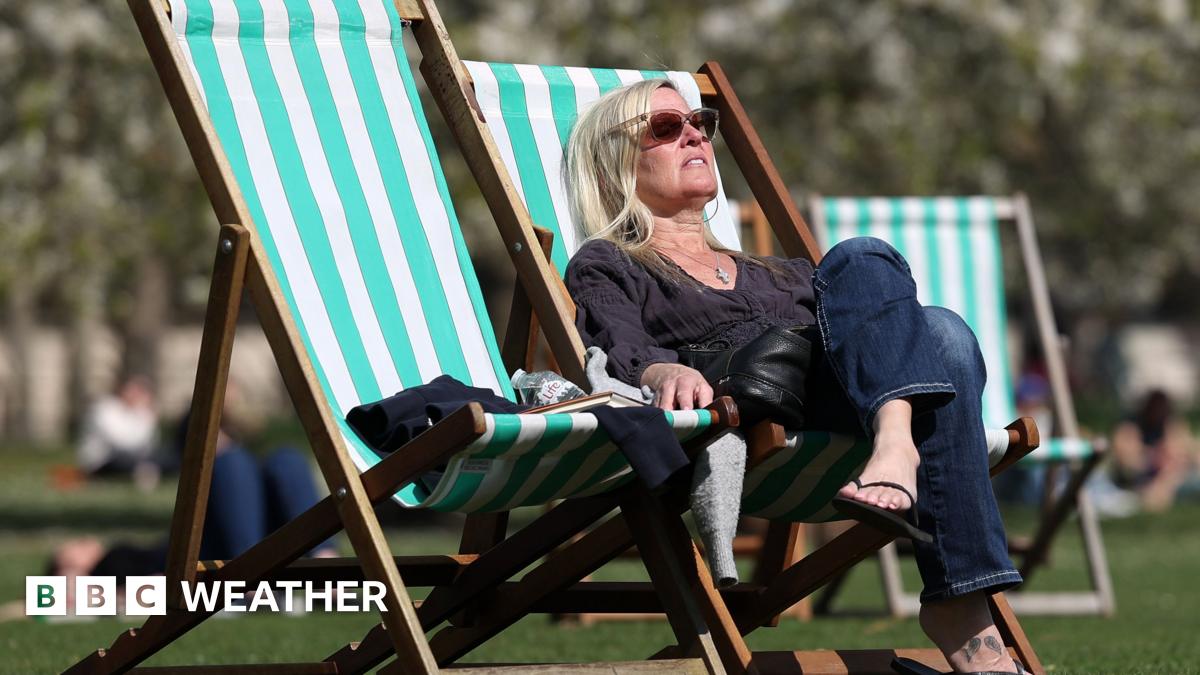
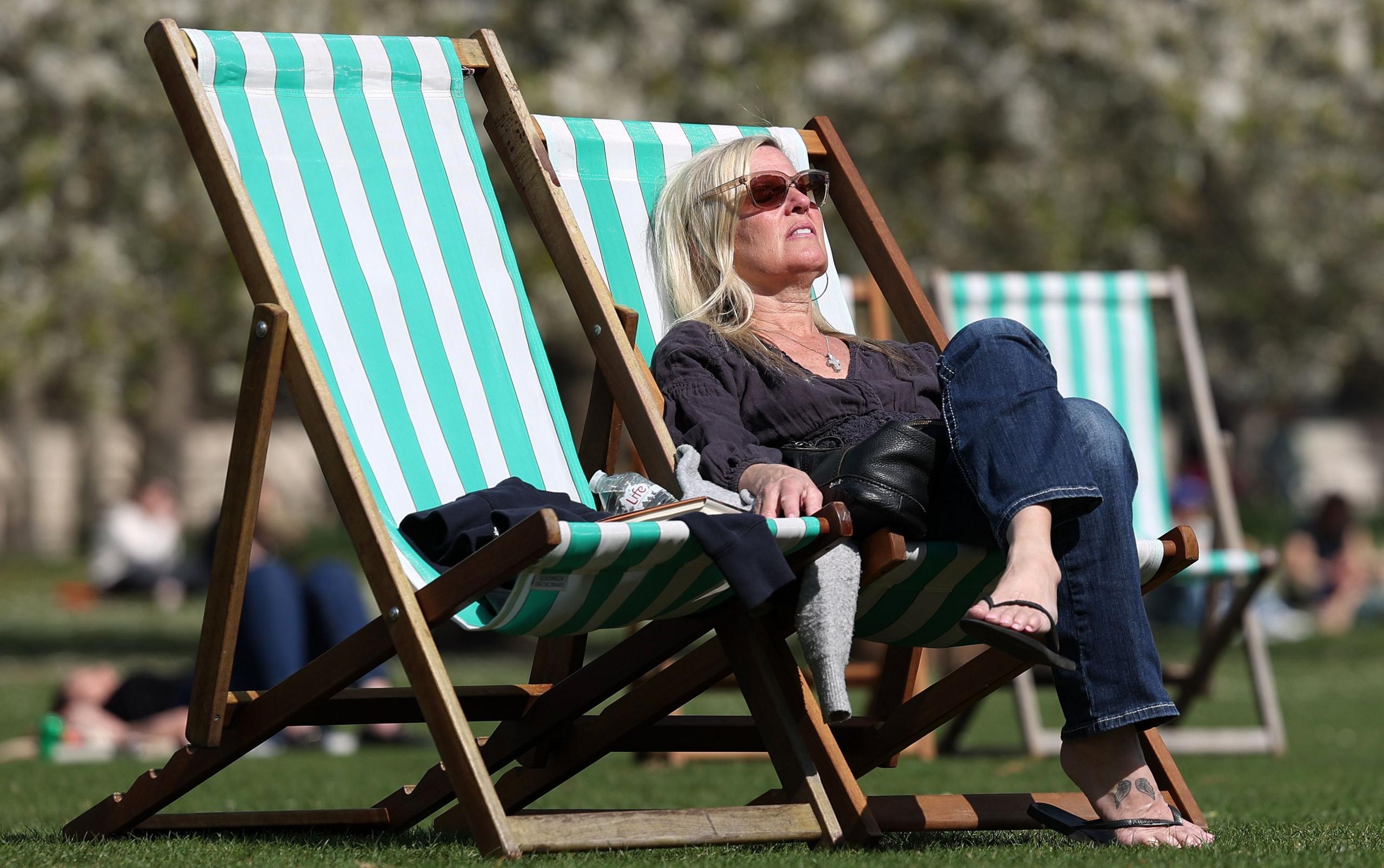
With a temperature of 20.9C recorded in Gogerddan near Aberystwyth on Wednesday, it has become the warmest day of the year so far in the United Kingdom.

England has also seen its warmest day of the year so far with 20.2C at Northolt, London.

Temperatures widely have reached the high teens across England and Wales, making it more generally the warmest spell of weather of the spring so far.

Longer spells of sunshine will also lead to higher UV levels developing and there'll be very little rainfall in the forecast for most of us over the next week or so.

Criccieth, Gynedd and surrounding area has seen the warmest weather of the year so far with temperatures up to 20C.

The warmest areas on Wednesday so far have been in west and north-west Wales, London and the north coast of Cornwall.

The temperatures in west and north-west of Wales have had temperatures boosted by something called the Foehn effect.

This effect is caused by air travelling over a mountain range - in this case Eyri and Bannau Brycheiniog- formerly known as Snowdonia and the Brecon Beacons.

Moisture in the air on the windward side of a mountain is forced to rise where it will cool and condenses, taking the moisture out of it.

The drier air then travels down the leeward side of the mountain where it warms.

And because it's drier and its thermal properties have changed, the temperature gets higher than it originally started as.

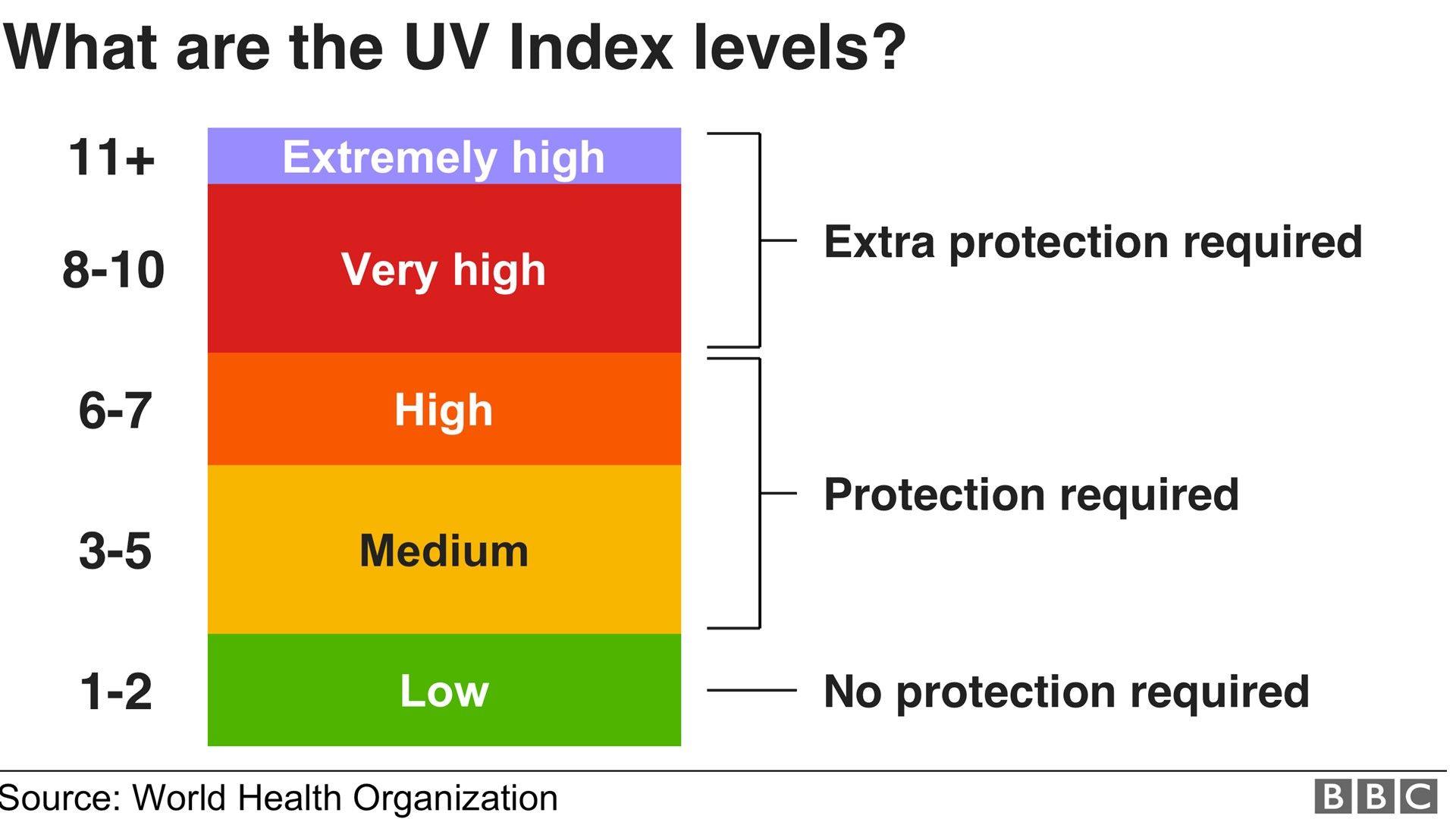
This time of year - close to the spring equinox - day length increases and the Sun moves higher in the sky. You might notice the Sun feeling stronger. With largely clear skies forecast, UV levels will rise to medium across England, Wales and eastern Scotland on Wednesday. Cloudier conditions will keep UV levels low elsewhere.

It is easy to get caught out in the spring months because, although temperatures aren't as high as later in the summer, ultraviolet (UV) levels in late March are actually just as strong as they are in September.

Whilst exposure to small amounts of UV radiation is essential to produce vitamin D, the World Health Organization warns "overexposure may result in acute and chronic health effects on the skin, eye and immune system".

Advice from the NHS, external is to "strike a balance between protecting yourself from the Sun and getting enough vitamin D from sunlight". This includes spending time in the shade between 11am and 3pm, and covering up with suitable clothing and sunglasses.

Keep an eye on the UV forecast on the BBC Weather app or website.

Sun protection is recommended by the World Health Organization once UV levels reach the medium category

What and when is the spring equinox?

Spring is 'fastest-warming' season in the UK

Weather for the week ahead

Comments can not be loaded

To load Comments you need to enable JavaScript in your browser