Press
BTS Seoul concert: Capital braces for the Army as band returns
Images
1 / 13

2 / 13
3 / 13
4 / 13
5 / 13
6 / 13
7 / 13
8 / 13
9 / 13
10 / 13
11 / 13
12 / 13

13 / 13
The historic heart of South Korea's capital is bracing itself for what may well be the year's biggest event: the return of the world's most successful band in recent years, BTS.

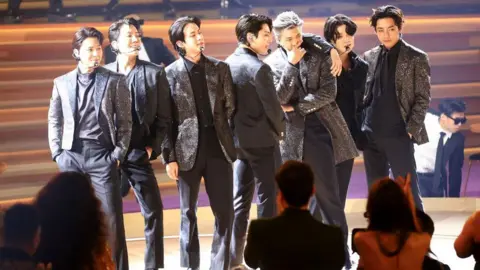
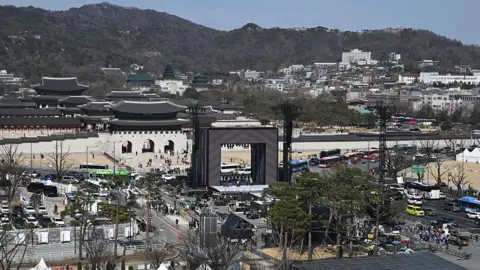
More than 250,000 people are expected to turn up on Saturday at Gwanghwamun Square, where the seven K-pop stars - RM, Jin, Suga, J-Hope, Jimin, V and Jung Kook - will perform together for the first time since October 2022.

Most of them will watch the giant screens outside because only about 22,000 people who managed to get the free tickets will enter the concert venue, a smaller area that has been cordoned off.

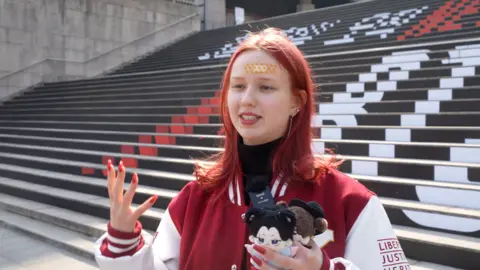
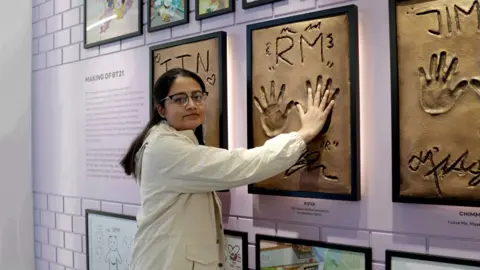
Ami Ostrovskaia, who moved to Seoul from Russia last year to study, is one of the lucky ones. "BTS is the reason I'm here," she says. "It's why I started learning about Korean history, culture, food, sports, and the language."

Set against the backdrop of a 14th Century gateway to the royal palace, the band's one-hour set will include songs from their long-awaited new album, Arirang, which is set to release on Friday afternoon. Millions around the world can watch the show on Netflix, which has struck a live-stream deal with BTS.

For South Korea, this is more than the comeback of a K-pop band - it's also the return of a cultural force that has propelled Korean soft power with its record-busting mix of punchy pop and electric dance moves.

One of the world's biggest pop acts, BTS were at the peak of their fame when they had to enlist for mandatory military service, starting with Jin in 2022. Suga was the last to complete service in June last year, paving the way for a full-group comeback. Their 82-date world tour across more than 30 cities, from Singapore and Tokyo to Munich and Los Angeles, begins next month.

The stakes are high as BTS returns to a K-pop industry that has got bigger and more competitive. "They've always exceeded my expectations. They might feel the pressure, but I believe they'll do their best," says Park Joo-young, a student in her 20s, who has been waiting a long time for this.

The BTS Army, as the band's millions of fans call themselves, has already begun gathering. Margarita Perez, a 58-year-old architect from Germany, didn't manage to snag a ticket for Saturday but has been scouting the area so she can "stay nearby".

Authorities are pulling out all the stops, lighting up landmarks, bathing parts of the city in the band's signature shade of purple and deploying some 7,000 police officers, including SWAT units equipped with anti-drone systems, to manage the crowds at the square.

As the capital's central district turns into a massive, open-air stadium for BTS, access to dozens of buildings will be restricted and three subway stations nearby will close. In the hours before and after the concert, access to the square - a popular, open space - will be controlled through 31 entry points fitted with metal detectors.

Although South Korea has strict gun control laws and private ownership is rare, with firearms typically stored at police stations, authorities will temporarily bar civilians from retrieving them.

The scale of the preparations has left some South Koreans wondering if it's all a bit too much. "They've pulled in police and fire personnel en masse. If something happens elsewhere, there may be no staff left to respond, and access could be blocked because of the controls," wrote one user on X.

A Seoul city official told the BBC that authorities are providing the venue, along with crowd management and safety measures, but no direct financial support. A ruling party lawmaker Lim O-kyeong expressed concern earlier this month that Netflix was the sole streamer for an event that requires so many public resources.

Netflix's deal with BTS includes exclusive rights to live stream the show, as well as a documentary on the band's reunion - a marketing triumph given the billions it has pumped into Korean entertainment.

The free tickets have upset some who say it reduces the chances of dedicated BTS fans securing tickets. Fans have even launched campaigns to discourage resales and prevent "no-shows". Some 13,000 free tickets were snapped up instantly when reservations opened last month, a fraction given that more than 100,000 people had been queuing online. Another 7,000 free tickets were released later, and also sold out within minutes.

"I tried with both my smartphone and a desktop computer - none of them worked," says Rachel, who doesn't describe herself as a BTS fan but "they're so talented and globally famous that I wanted to take this chance to see them perform live".

Ami Ostrovskaia initially failed to get a ticket - "I was crying the whole night" - but, thanks to a friend, the 23-year-old got lucky.

"I was so happy and felt like all my problems were gone. This means that I'll be joining their [full-group] performance after so many years. It's really meaningful for me," she says, standing in the square days before the concert, holding small dolls resembling Suga and Jung Kook.

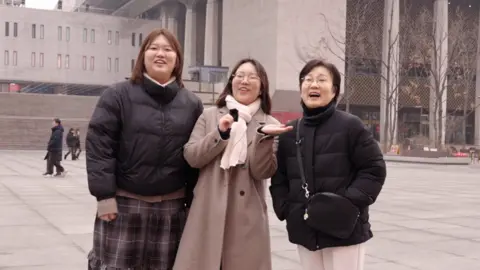
"I think holding a BTS concert here will help promote Korean culture, including K-pop, around the world," says Kim Young-ran, a mother in her 50s who was visiting Gwanghwamun with her two daughters.

But for some the scale is unnerving. "I know officials will strengthen safety measures, but there will be so many people that I'm still a bit worried," says Park Su-bin, a wheelchair user in her 30s and a BTS fan for about seven years. She has tickets for the group's concert in April, so she decided to skip the Gwanghwamun event.

Scrutiny has grown as the concert draws closer. With most of the square blocked, pedestrians have to take long detours, and those who had planned for other events in the area are uncertain of what happens now.

Sohn Yeon-ju, a lawyer in her 30s, is confused and anxious because her wedding is meant to happen near Gwanghwamun Square just hours before the concert. Now, she's unsure how she, her family, and hundreds of guests will reach the venue, with all the restrictions in place.

"I've been contacting the Seoul metropolitan government for days, but haven't received a clear answer," she says. The police told her on Thursday that guests may be allowed to board police buses if the nearest subway station is closed.

"I don't have any particular feelings about BTS, but given the situation, it's frustrating."

The obvious beneficiaries are some local businesses, which are preparing for an influx of visitors. Hotels around the area were fully booked or had begun raising prices more than a month ahead. Photographers and cameraman have been busy securing spots on rooftops.

Kim Sung-dae, owner of a nearby seafood restaurant, says he expects sales to surpass the Christmas season. "I'm preparing menus in English, Chinese and Japanese, and decorating the restaurant with purple flowers," he adds - BTS's signature colour.

This boost to revenue and tourism, the government argues, justifies the resources it is expending.

Shortly before BTS went on hiatus in 2022, the Korea Culture & Tourism Institute estimated that a single performance could generate up to $842m (£621m), encompassing ticket and merchandise sales, accommodation, tourism and other related spending.

Some South Koreans agree. "I don't see what the problem is," wrote one local who lives close by. "BTS has done so much for Korea, elevating our image abroad, with no government support all along. Why can't we share the Gwanghwamun public space for their performance just one Saturday?"

But others argue that's not the point.

"The expectation that citizens should make sacrifices for 'tourism revenue and economic impact' or for 'enhancing national prestige through K-pop promotion' feels outdated," wrote columnist Choi Moon-sun.

Pop music critic Jung Min-jae wrote on X: "If a comeback concert of this scale, one that effectively paralyses parts of the city centre, is allowed, then other artists or agencies may well request to use the same space in the future. At that point, on what criteria will the Seoul Metropolitan Government approve or reject such requests?"

But for those who have been waiting to see the kings of pop back on stage together, Gwanghwamun Square is exactly what they want: BTS uninterrupted.

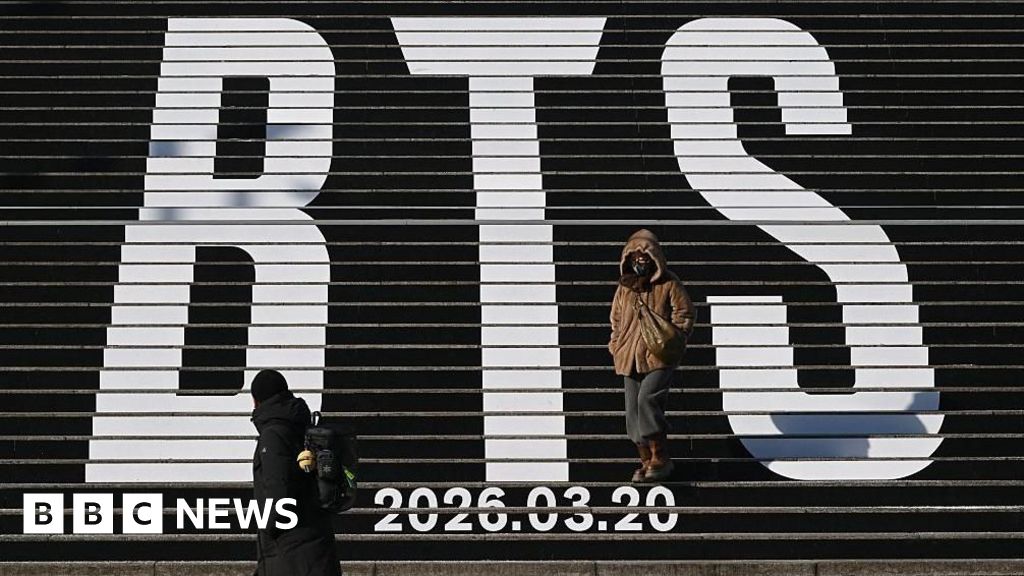
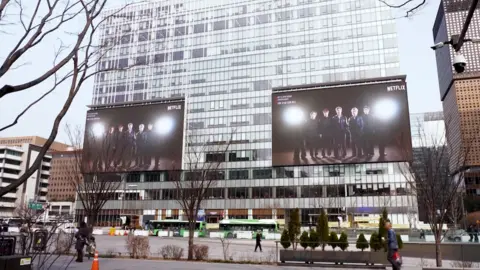
BTS billboards, leased by Netflix, have sprung up all over as Netflix's comeback trailer splashes across giant screens on high-rises. A staircase in front of the Sejong Center for the Performing Arts, wrapped in Netflix adverts, has become a spot for selfies.

And that's exactly where Jacqueline, a 29-year-old teacher from Mexico City, wants to be this weekend. She will be seeing the band in April at the opening concert of their world tour, but she will also be at the square hoping to catch a glimpse of her favourite stars.

"The last few years have been a sad time for [the BTS] Army. I loved their solo albums, but they're more amazing when they're together."

Additional reporting by Leehyun Choi and Hosu Lee

South Korea's military has since halted all shooting drills involving small firearms.

We find out how the award-winning, demon-busting crooners have cast a spell world over.

More inquiries into the incident have been launched, as investigators discover more body parts and victims' belongings.

Reports say the US may be moving parts of its Thaad system to the Middle East, despite Seoul's opposition.

The sequel brings back the co-directors of the first film, which was a smash-hit for the streaming service.