yahoo Press
Construction prices spiked at ‘staggering’ rate to begin 2026
Images
1 / 6
2 / 6

3 / 6

4 / 6
5 / 6

6 / 6
This story was originally published on Construction Dive. To receive daily news and insights, subscribe to our free daily Construction Dive newsletter.

Construction price inputs rose at a “staggering” 12.6% annualized rate during the first two months of 2026, according to an analysis of the latest economic data by Associated Builders and Contractors released Wednesday.

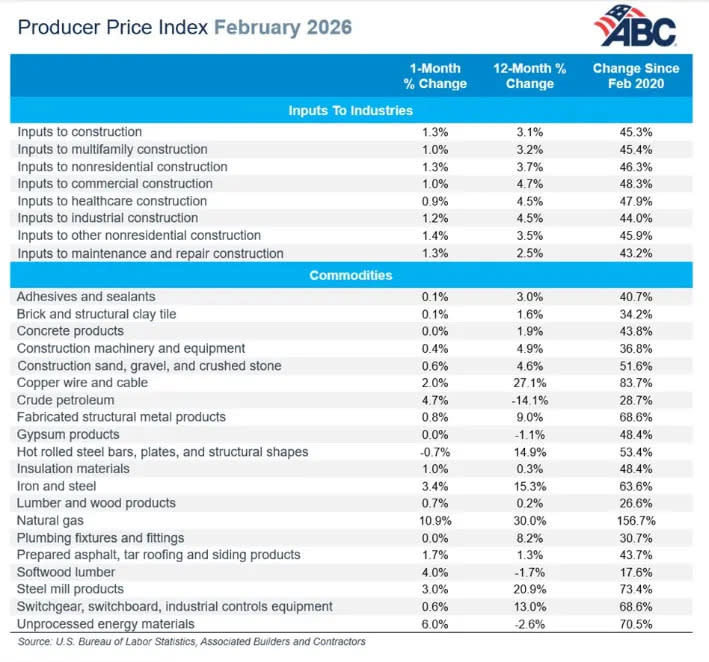
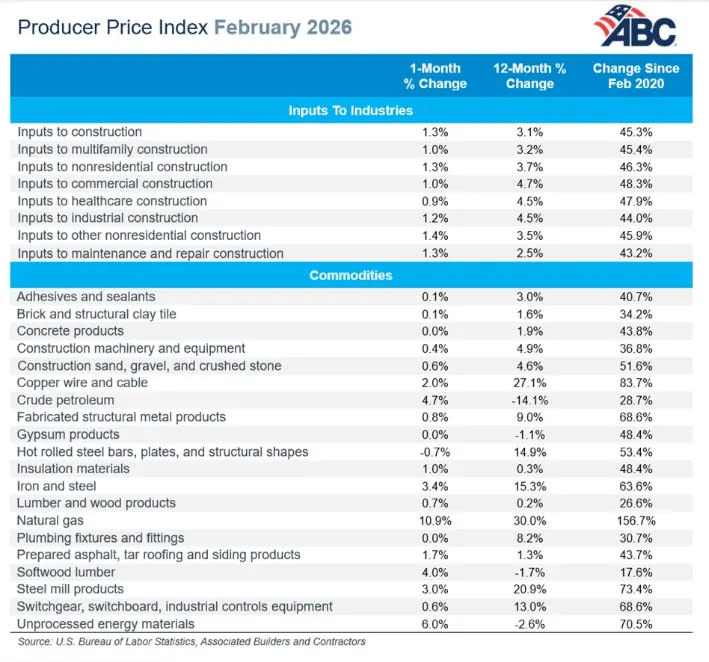
Inputs to nonresidential construction grew 1.3% month over month in February on the back of higher energy prices. On a year-over-year basis, prices were 3.7% higher in February than the same point in 2025.

The results don’t factor in the most recent economic shifts. The report noted the data doesn’t yet include the impact of surging oil prices due to the war in Iran, which began Feb. 28, an aspect that could cause more pain going forward.

The month-over-month increases, which were recorded before the U.S. and Israel launched coordinated strikes on Iran last month, were fueled by energy spikes. These include natural gas, unprocessed energy materials and crude petroleum.

“Notably, this data does not reflect the precipitous increase in oil prices, which are near $100/barrel as of this morning, caused by the conflict in Iran,” Anirban Basu, chief economist for ABC said in the release.

The impact will likely be broader than just rising prices at the pumps, he said.

“That will put upward pressure on construction materials prices directly by raising diesel prices and, indirectly, by raising the cost of shipping other inputs,” said Basu. “Which is to say, materials price escalation could serve as a real headwind to construction activity over the next several months.”

Before the conflict escalated, natural gas prices jumped 10.9% in February month over month, while unprocessed energy materials costs rose 6%. Prices for crude petroleum tacked on 4.7% during the same period. Other critical construction materials showed gains as well.

“Construction materials costs surged in February due to significant increases in oil, copper, lumber and steel prices,” said Basu. He noted, however, that contractors on the whole don’t seem to expect material prices to negatively impact their business outlooks.

But that optimism could be tested.

“Fewer than 1 in 4 contractors expect their profit margins to shrink over the next six months,” Basu said. “Those expectations will bear close monitoring if input prices continue their rapid ascent.”

The Associated General Contractors of America, in its analysis of the most recent data, noted increased prices are already starting to play out in project decisions.

“The disruption of oil, natural gas, and aluminum supplies from the Middle East is pushing up construction costs further and causing owners to delay projects,” said Ken Simonson, AGC chief economist.

The rise of input prices for nonresidential construction in February followed a January jump tied to tariff-induced increases for products including wire, cable and industrial controls equipment, as well as copper and steel. At the time, ABC noted that the increases were “not particularly concerning,” since the bulk of annual increases to that point had happened earlier in 2025.

Now, however, increases for all of construction — both residential and nonresidential — over the last year have risen again, from 2.3% annually in January to 3.1% year over year now. Although the most recent gain by itself might not seem troubling, the cumulative impact of those price hikes is starting to cause concern.

“While input prices are still up a relatively modest 3.1% since February 2025, they rose at a staggering 12.6% annualized rate during the first two months of 2026,” said Basu.

AGC’s CEO Jeffrey Shoaf said the current environment is squeezing project owners, who ultimately become contractors’ customers.

“There is a limit to how many price increases the market can absorb before owners put projects on hold,” said Shoaf. “Reducing uncertainty around tariffs and stabilizing supply chains would go a long way toward helping contractors keep projects moving forward.”