Press
As Starmer faces war overseas, his party can't find peace at home
Images
1 / 13

2 / 13
3 / 13
4 / 13
5 / 13
6 / 13
7 / 13

8 / 13
9 / 13
10 / 13
11 / 13
12 / 13
13 / 13
Traditionally, British politicians stuck together when it came to dangerous moments abroad. In 2026? Not so much.

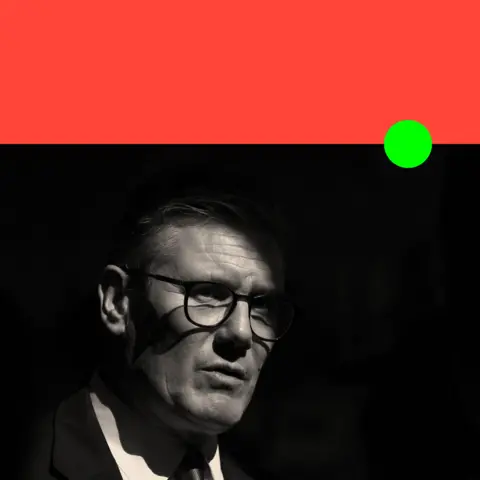
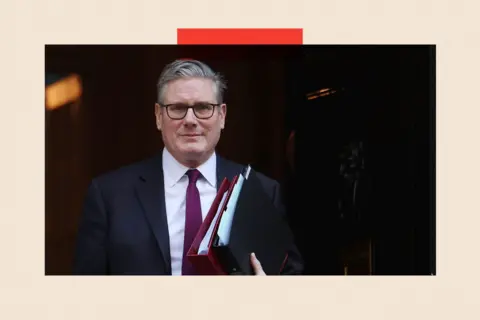
It used to be the case that governments with whopping majorities could more or less do what they liked. That's not true now. Sir Keir Starmer's party is still restless, and underneath the overwhelming scale of the crisis in the Middle East, politics continues to fray.

"There is a lot of anxiety around," one minister tells me, adding that it's not clear the public has a whole heap of faith in our politicians' ability to prioritise and protect the public from what could be "the greatest global energy security threat in history" according to the head of the International Energy Agency.

Nor is it certain that the government has the public's support to increase the UK's involvement in the conflict, after last night's decision to let the US use British bases to launch strikes on Iranian sites targeting the vital waterway, the Strait of Hormuz.

In a few weeks, millions of voters have a chance to show their confidence in politicians, or lack thereof, at the ballot box during local elections. And polls suggest the outcome won't be neat or ordered but, in reality, a bit of a mess.

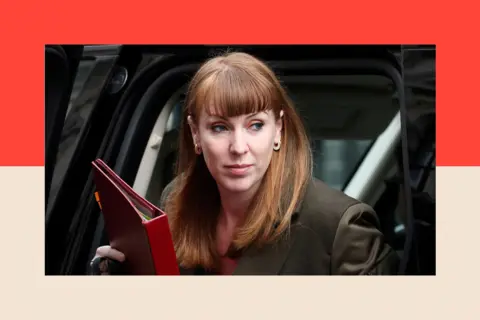
While the prime minister is trying to deal with a war that he didn't start, and doesn't have the power to end, some of his own MPs are making his life harder - not least his former deputy Angela Rayner, who popped back into public life in a very obvious way in the past couple of weeks.

She's one of the Labour MPs complaining about the Home Secretary Shabana Mahmood's plans. The group is thinking about trying to force a vote in the Commons unless Mahmood ditches some of her ideas, most controversially perhaps the plan to expect most migrants to wait 10, not five, years before they could be given the right to live in the UK for good.

Sources close to the home secretary are convinced that a stricter approach to immigration is what the public wants. Those sources are resolute in the face of discomfort among Labour MPs. "Once again we have people out of step with the country," they say, claiming that more voters have switched to Reform because of immigration policy being too weak than have gone over to the Greens because it's too harsh.

After the debacle over ditching welfare reforms that ran into a brick wall of resistance in the Commons, the home secretary is planning to make the changes she wants over a longer period of time, in a variety of ways - rather than create one big moment in Parliament where critics could organise a big bust-up.

But ministers are conscious of risk, and the impression it gives to voters. One warned colleagues picking a fight on the changes while the conflict in Iran rages: "Anyone thinking about it should take a deep breath and focus on the reward we could get with unanimity." Another frustrated source said it was "classic fighting amongst ourselves when we should be focusing on the world and trying to govern".

But a rocket was put on the row when none other than Angela Rayner jumped into it, not just arguing about some of the technicalities in the Commons, but accusing ministers of putting forward immigration proposals that were "un-British" in a speech in London, helpfully chipping in for good measure that "the survival of the Labour Party is at stake", and that it was "running out of time".

Some of her colleagues have huffed and puffed that it is a bit rich for someone under investigation for not paying the right amount of tax to be "lecturing Keir on British values". Others look at this speech and her recent speaking engagements in the City and conclude she's warming up to a leadership bid after the elections in May, in what seems the likely event that Labour get hammered.

Given what's happening in the Middle East, any talk of leadership elections is self- indulgent to many ears.

The war had shoved Labour infighting off the front pages, and also given some MPs a strong sense that now was just not the time for a challenge. But Rayner's outing this week proves the concern about the government's direction has faded, not been forgotten.

Starmer can't be sure he'll have the support of his party on controversial plans like those on immigration. Leadership angst remains, and could come roaring back in May. Wise heads point to a moment when Labour's power structures could change further down the track.

Over the summer, there are party elections for the ruling body, the National Executive Committee. As things stand, Starmer has been able to rely on the NEC, as was shown when he won their support to block Andy Burnham from running as an MP. By the end of the summer, new faces on the NEC could change that and make his position more precarious.

In the meantime, however, one government source says: "The world is on fire and we are doing what we can to protect people, but we also have to show we can chew gum and walk forward."

That's a story Labour has to try and tell in the run up to the May elections, partly by highlighting plans to give local communities cash to spend on doing up high streets, or community projects, with the election campaign slogan "Pride in Britain". Given the state of the government's popularity, you don't have to be a cynic to ask if these sorts of promises will be enough to turn things round.

We'll be joined by the Communities Secretary, Steve Reed, to talk about it on Sunday. But the hope in government is that getting cash out of Whitehall to tiny local projects, playgrounds, community pubs, or other ideas that people come up with, can make a political impact, despite all the turmoil. The government source said: "We are trying to do very visible change so people say 'Ah OK, there is a government out there that actually has its hands on the wheel, despite almost perma-crisis around the world'."

The May elections don't just give Starmer's critics on Labour's inside a chance to have a go at him, they are a big moment for the other political parties to make hay. And in 2026, there is no shortage of outfits trying to have a go.

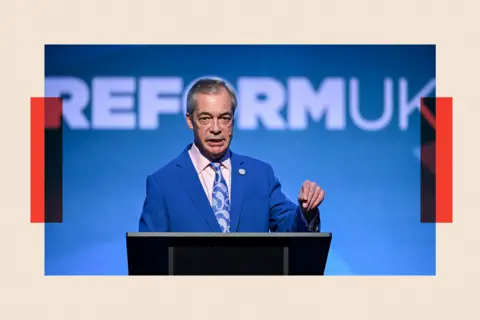
One of the chief challengers is, of course, Reform UK. There's a belief in both senior Labour and Tory circles that Reform's party has plateaued - their stellar growth has slowed, and their dominance in the polls not as convincing as it was for much of last year.

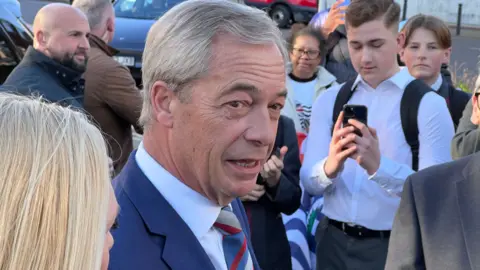
In the last couple of days, there's been embarrassment for its leader Nigel Farage, who quit the video message platform Cameo after a newspaper investigation found he had recorded clips supporting a man convicted of violent disorder, and an event by a neo-Nazi group.

Reform said he had stopped using the account for security reasons and that he had used the platform in good faith. Reform has definitely moved into a different era from their heady ascent in the polls last year, grappling with more scrutiny, as we reported on in our documentary, Reform: Ready to Rule?

They also have a new rival further to the right, Restore UK, founded by one of its own former MPs, Rupert Lowe, who had a spectacular bust-up with the party. He's now building followers online and has just officially registered Restore as a political party. Restore even claims now to have more members than the Conservatives - but evidence of party numbers is often closely guarded.

They hope to win some seats in Great Yarmouth in May. Party sources claim they are growing because "we are saying things that people want to hear, not the woke stuff that is being peddled".

But as far as the polls are concerned, they're yet to make any meaningful national impact. Reform is still the biggest challenger to Starmer, and, for that matter, Kemi Badenoch.

Her position in her own party is much more secure than in the early months of her leadership, but the Conservatives are still likely to have a rough night in May. But, irrespective of the election results, the big poll of polls survey shows the same broad picture week after week: Labour, the Conservatives and the Greens bunched around the same modest poll level, in the high teens, with the Lib Dems consistently in fourth and Reform constantly at the top. Add in healthy showings for Plaid Cymru in Wales, and the SNP in Scotland, and a completely different complicated picture in Northern Ireland.

The shape of our politics is in flux, and any traditional expectations of stability fraying. And that's happening just at the moment when it feels like the gravity of the decisions that faces politicians is growing every day: to take part in war or work only for peace, to grapple with what could be a hefty economic shock and, perhaps, to keep the lights on.

Is there "a lot of anxiety around", as the minister told me? You can be absolutely sure of that.

BBC InDepth is the home on the website and app for the best analysis, with fresh perspectives that challenge assumptions and deep reporting on the biggest issues of the day. Emma Barnett and John Simpson bring their pick of the most thought-provoking deep reads and analysis, every Saturday. Sign up for the newsletter here

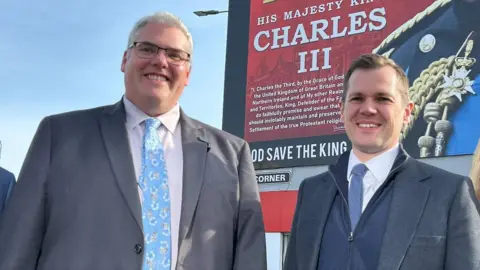
The DUP have hosted Robert Jenrick this week, it's the latest link between NI parties and Westminster.

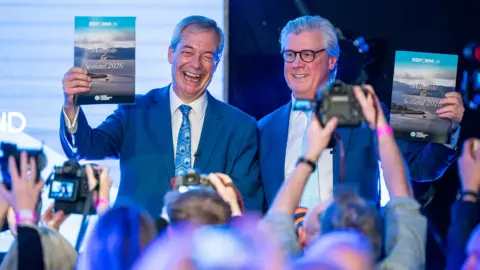
Scotland leader Malcolm Offord told BBC Radio Scotland that the party had "spent a lot of time on vetting" candidates

A senior Conservative councillor says the Reform UK leader "knows nothing" about local government.

Martin Hewitt had been tasked with cutting the numbers trying to get to the UK in small boats.

Owen Bradbury is sentenced for assaulting Steve Rubridge at the Falmouth Sea Shanty Festival.