Press
Benfleet woman refused Australian visa over cystic fibrosis drug
Images
1 / 13

2 / 13
3 / 13
4 / 13

5 / 13

6 / 13
7 / 13
8 / 13

9 / 13
10 / 13
11 / 13

12 / 13

13 / 13
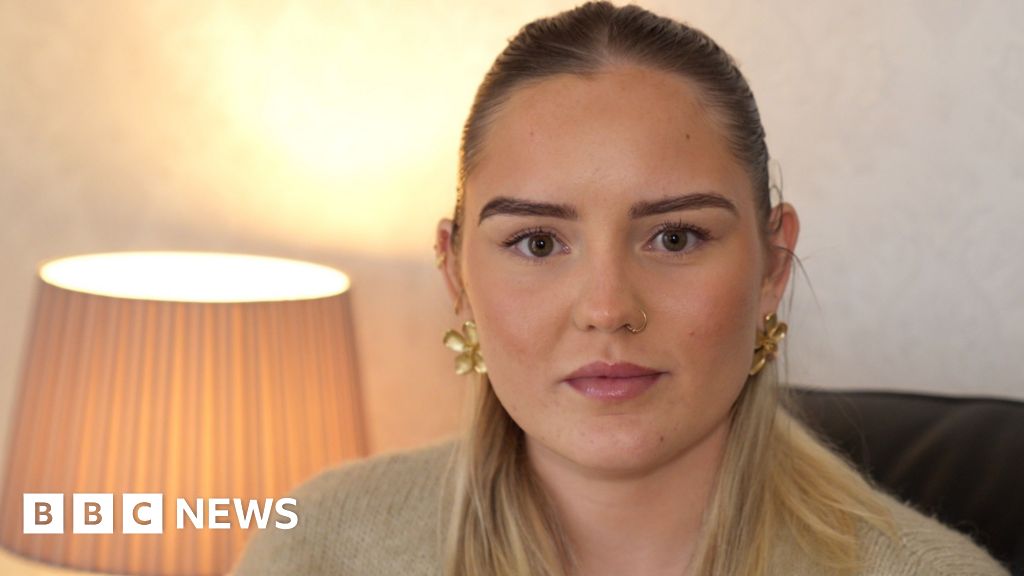
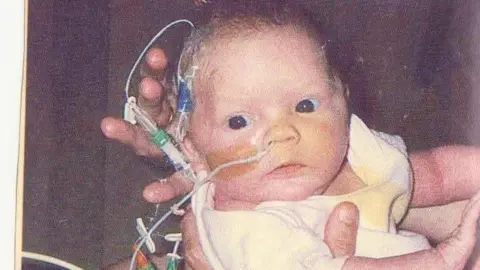
When Regan Sparks was born 23 years ago, she wasn't expected to live beyond her early 40s.

But when a "life-changing" drug became available in 2020, the future for those like her with cystic fibrosis (CF) was transformed.

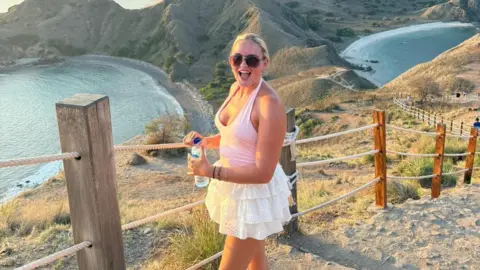
For the first time, Regan, of Benfleet, Essex, began to imagine a long life for herself. Her health improved dramatically. She got a job, found a partner, started running, and booked backpacking trips.

She dreamed of working in Australia for a year, but the medication that changed her life proved to be the roadblock in making that dream a reality.

One of Australia's visa requirements is a limit on how much a potential visitor might cost the community should they need medical treatment.

This threshold is currently A$86,000 (£45,700) over the duration of someone's visa.

However, Regan's medication, Trikafta, costs A$250,000 (£133,000) a year.

The decision to refuse her a visa was "a kick in the teeth", she says.

"I've never ever let my CF stop me do anything. It's never ruled a decision or a dream that I've got."

CF is a genetic condition that can particularly affect someone's digestive system, as well as their lungs, because their body produces a thick, sticky mucus that coats the organs.

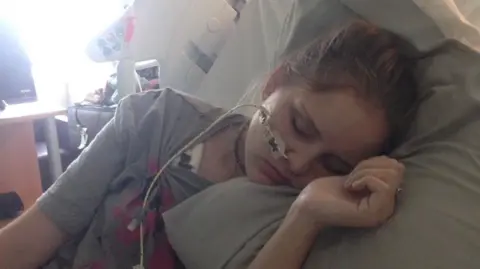
Within 24 hours of her birth, Regan had to have an operation on her bowel and spent her childhood in and out of hospital.

She describes life as "very chaotic, very up and down", until the NHS approved the use of groundbreaking new drug Trikafta, also known as Kaftrio, in 2020.

"From the second I took that tablet, it just gave me a completely new lease of life,"  she says.

She gave running a go - after "feeling cold air going into the parts of my lungs that I'd obviously not felt for such a long time".

She eventually built up to marathon training, and plans to head to New York later this year to run the marathon there.

"I've been to New York once when I was a child, with the Make-A-Wish Foundation, so the first time I entered New York I was classed as a dying child," she says.

"The second time I go back is to run a marathon for the same disease that should have killed me, which is a very full-circle moment."

Last autumn, Regan set off on a solo trip around South East Asia, taking a "massive" backpack containing all her medication for the trip.

In Thailand, Vietnam, Singapore and Indonesia, visa applications weren't an issue, and nor was the Trikafta she brought with her.

"Immigration saw that I had three months' worth of medication in this backpack that was bigger than me," Regan says.

"I showed them my medical letter, then they were just like, 'OK, amazing - have fun'."

She planned to head to Australia, and work for a year, earning money and soaking up the experience enjoyed by thousands of young Britons each year.

She applied for a working holiday visa in 2023 and paid for the required medical exam with an approved doctor in the UK.

A year went past, and she'd heard nothing - until she was rejected due to the cost of her medication being far above the threshold set by the Australian government.

She'd had a supporting letter from her medical team in Cambridge as part of her application, and went on to get another letter of support from CF Together in Australia, only to be rejected for a second time.

"I've come such a long way, and I've put myself through so much stuff to get to this healthy place," she says.

"I'm not behind, I'm not slower, I'm not sicker, I'm on par with everybody - so the fact that just on paper you're denying me for something that's completely out of my control just feels like a bit of a kick in the teeth."

Regan suggests Australia could bring in measures to ensure people in her position would be granted entry provided they agreed to completely fund their own treatment or sign a health waiver, which she said she would have been happy to do.

"There are countries that do have visa processes like that in place which are just way more inclusive for people that have been dealt not the best hand at life," she says.

"I wasn't asking to live there. I wasn't asking for anything from the Australian government, I wasn't looking for a handout – I just wanted to experience Australia for the set term of the visa."

The Australian Department of Home Affairs told the BBC it assessed all applications on a case-by-case basis, and applicants needed to meet the migration health requirements to guard against health and safety risks, access to care and excessive health care expenditure.

It added that having a health condition did not always mean an applicant would be rejected because of costs.

Mark Walsh, a registered Australian migration agent who helps visitors navigate the visa process, said the government's priority was to "look after Australian citizens and residents".

"Some people will have conditions that will almost certainly rule them out, or others it's maybe worthwhile trying, but it's about getting the right advice and preparing a thorough documentation," he said.

The BBC understands the Australian Department of Home Affairs has undertaken a review of the migration health requirement, including the "significant cost threshold", and spoke to disabled people and their families as part of it, as well as migration agents and representative organisations.

The findings of this review are being considered by the government and are set to be made public at a later date.

Follow Essex news on BBC Sounds, Facebook, Instagram and X.

Recent events abroad and at home have fuelled an ongoing surge of Islamophobia in Australia.

The cyclone has weakened to a category three, but intense wind and rain is lashing Far North Queensland.

The government's response to the Israel-Gaza war and rising Islamophobia has angered many Muslim Australians.

Australia international bowler Sean Abbott will return to Surrey for this season's T20 Blast and the first eight matches of the County Championship.

The post was criticised for being "deeply offensive" by a victims' rights commissioner.