buzzfeed Press
13 Widely Believed History Myths That Are Completely Wrong Or Missing A Key Piece Of Detail
Images
1 / 17
2 / 17

3 / 17
4 / 17
5 / 17
6 / 17

7 / 17

8 / 17
9 / 17

10 / 17
11 / 17

12 / 17
13 / 17
14 / 17
15 / 17
16 / 17
17 / 17
"We were all told that the decision to drop nukes on Japan was to force a quick end to the war and save US troops from the deadly task of a ground invasion. In reality, it was rushed to prevent the Soviets from being able to dictate terms."

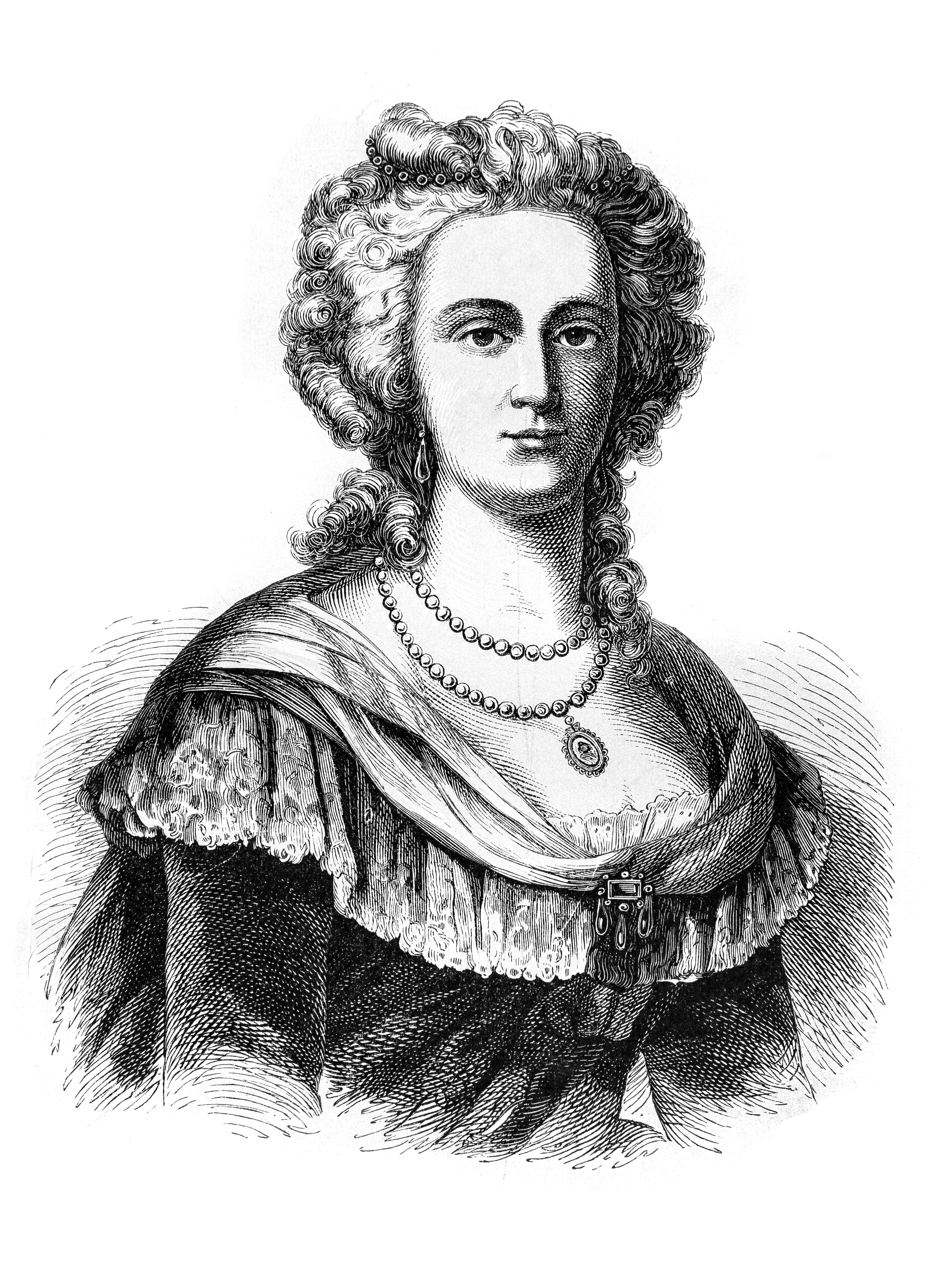
"The former Queen of France never said these words. But the rumors surrounding that line probably did cost her her life in the end. Can’t trust everything you hear."

Fact: The phrase can actually be traced back to Jean-Jacques Rousseau's Confessions, where he attributes the quote to a princess. Since Marie Antoinette was a mere child at the time the book was published, it's unlikely she uttered the famous quote.

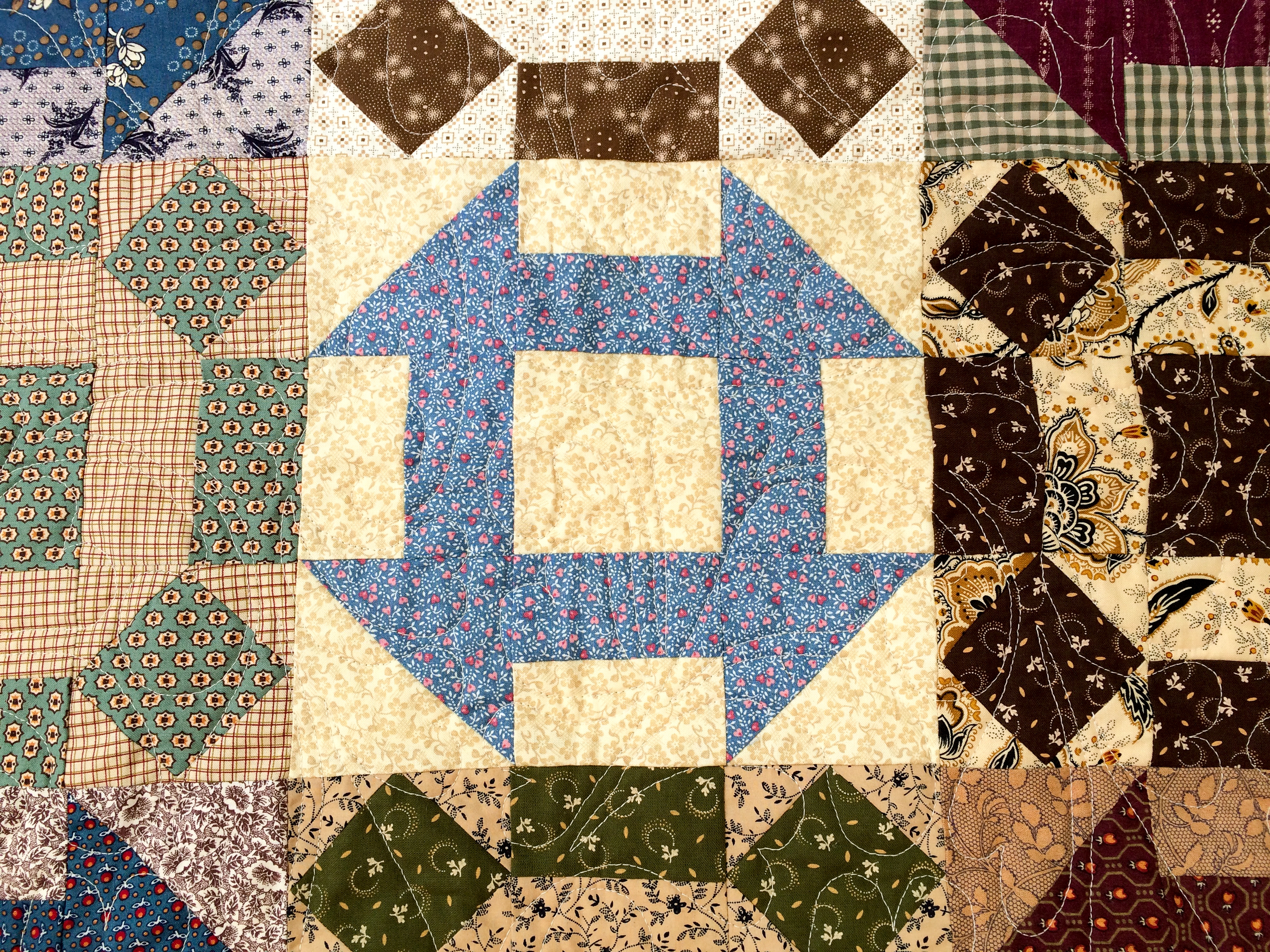
"It’s been debunked by historians and quilt experts and yet it is regularly perpetuated as fact."

Fact: While the myth of the Underground Railroad quilts hasn't been completely disproven, it mostly lives in the realm of "his word against hers." In other words, it's possible that quilts were used to communicate, but there's simply "no evidence of it at all."

"I’ve argued with more than one mediocre man who believed penicillin was discovered because of mold on a sandwich."

Fact: Penicillin was discovered by Scottish doctor Alexander Fleming, who noticed that a spot of mold growing on a petri dish of bacteria had prevented any bacteria from growing around it.

"We were all told that the decision to drop nukes on Japan was to force a quick end to the war and save US troops from the deadly task of a ground invasion. In reality, it was rushed to prevent the Soviets from being able to dictate terms. They were engaged in heavy bombing and a land invasion mere days before the bombs were dropped. It's heavily debated that the Soviet invasion was the primary reason for surrender."

Fact: It's not completely inaccurate to say that the American nuclear bombing of Japan was done to hasten the war's end. However, another significant motivating factor for deploying nuclear weapons was America's desire to curb Soviet influence in post-war Japan. By displaying impressive military power, the US hoped it would influence the Soviets to make concessions.

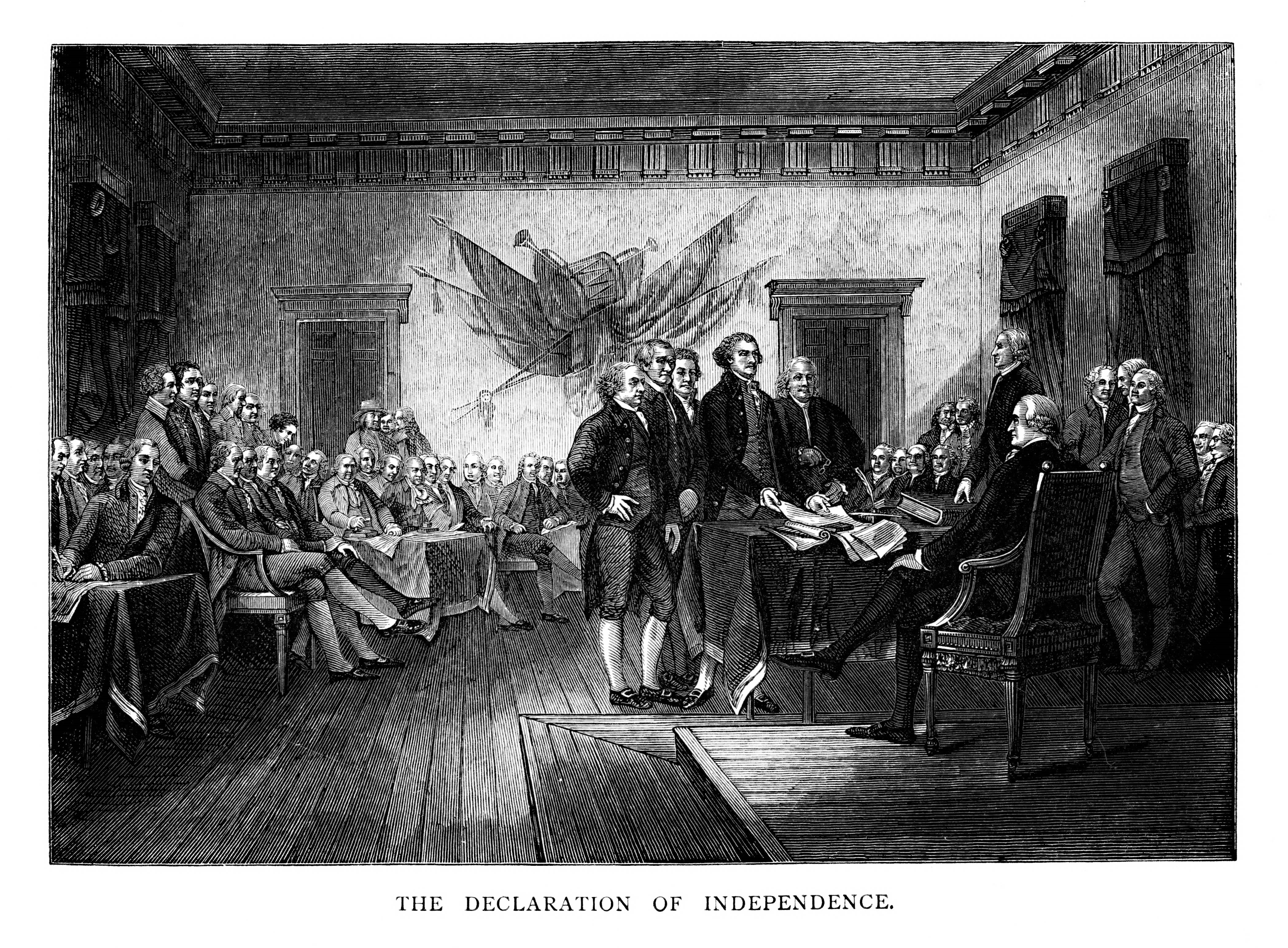
"The framers of the Constitution were believers in God (Deism) but weren’t Christian. They saw the hatred and discrimination of religion in Europe and England and did not want any government religion."

—Anonymous, 65, Female, Orange County, CA

Fact: While vastly influenced by orthodox Christianity, a few of the Founding Fathers — including George Washington and Ben Franklin — were actually practitioners of a school of thought called "deism," a movement of "reason and equality."

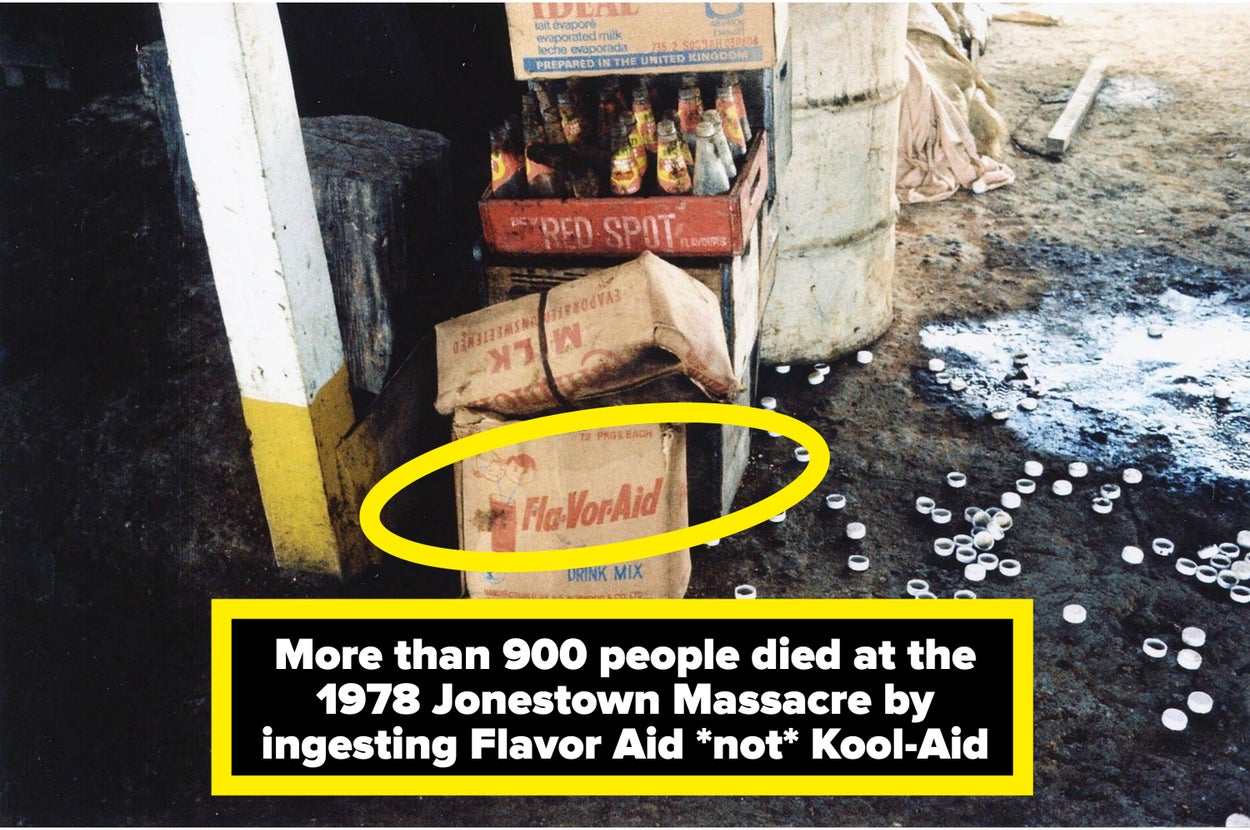
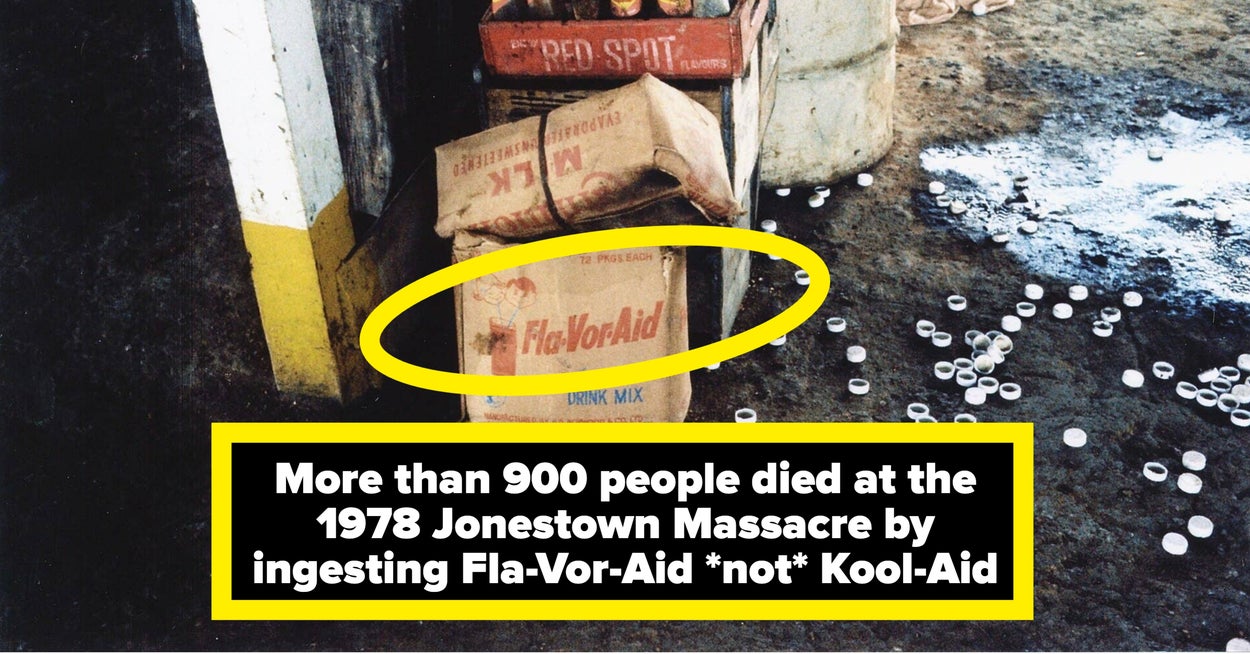
"Kool-Aid was not the drink used in the Jonestown mass suicide. It was Flavor Aid. "

Fact: It's a pretty minor detail in the tale of the 900 cult followers who were driven to mass suicide in the Jonestown Massacre, but the truth is, the punch they ingested was likely Flavor Aid, and not Kool-Aid.

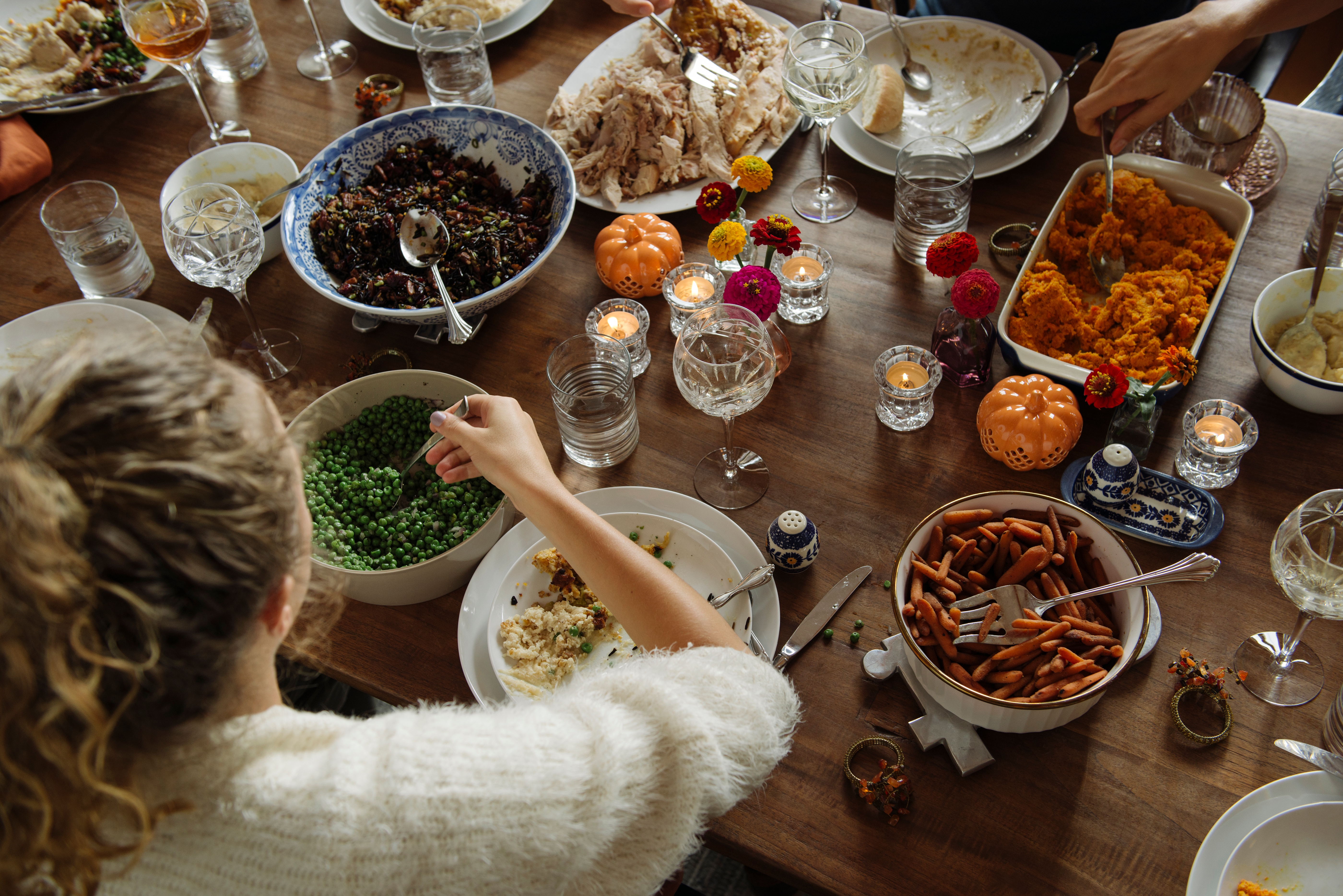
"The first Thanksgiving wasn't in Plymouth, MA. It was in St. Augustine, FL."

Fact: The US's first Thanksgiving actually took place on September 8, 1565, when Pedro Menéndez de Avilés and 800 Spanish settlers founded the city of St. Augustine in Spanish La Florida and celebrated their first day with a Mass of Thanksgiving.

"That people thought the Earth was flat when Columbus set sail. No they didn’t. The Greeks and Egyptians had figured this out literally thousands of years before Columbus."

Fact: According to historians, it was widely known, starting in the third century BCE, that the Earth was not flat.

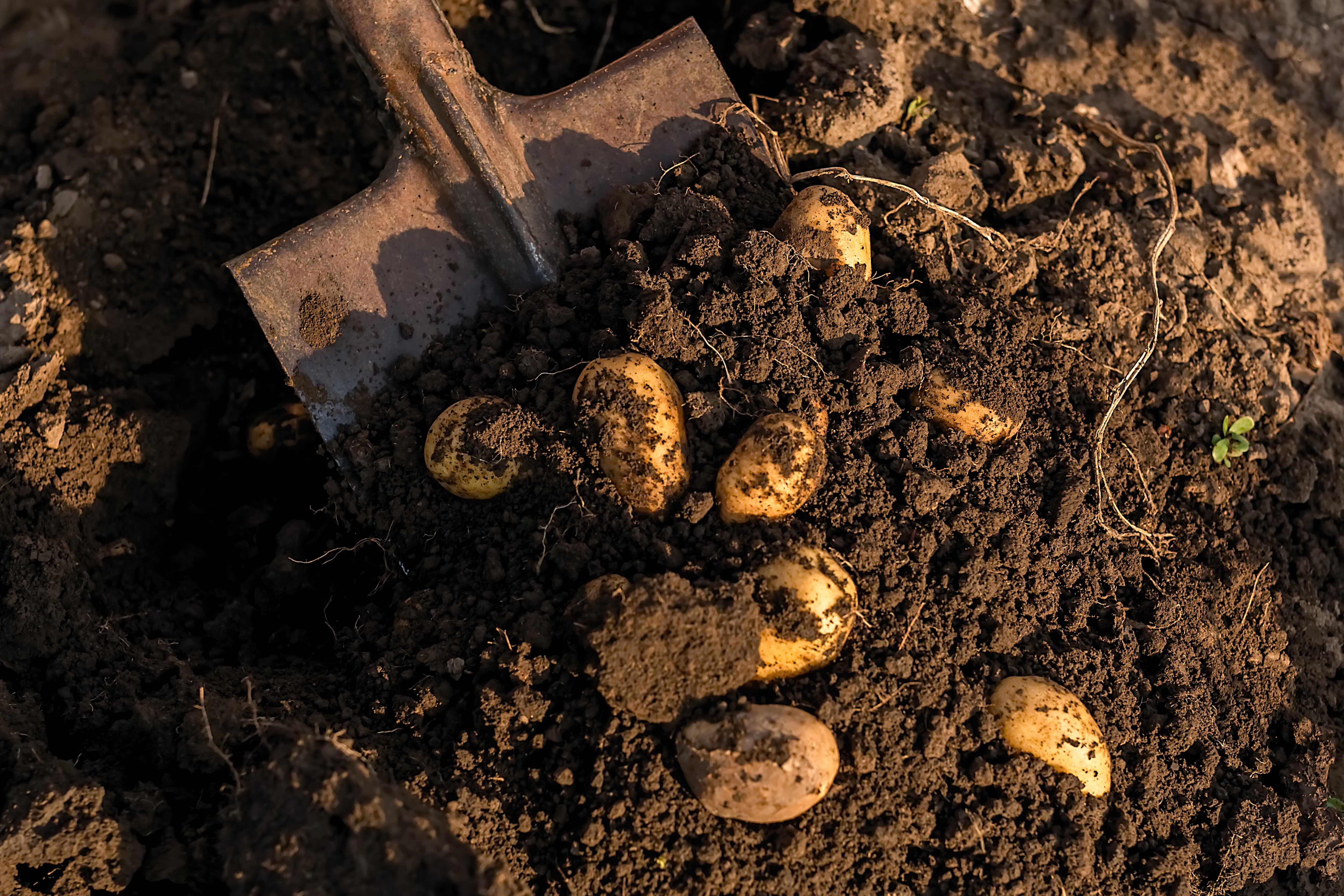
"Yes, a blight did kill the potato crop all through Ireland. But there were ample crops of wheat and vegetables that flourished. But this food was kept from the Irish and exported to England. The English Parliament said that if they helped the Irish, it would turn them into a bunch of welfare queens. (Sound familiar?) The Irish didn't starve because the potato failed. The English killed them by taking all the food."

Fact: While crop failure was a large reason for the Great Hunger, British policies that encouraged the export of huge quantities of food to Britain also played a large role.

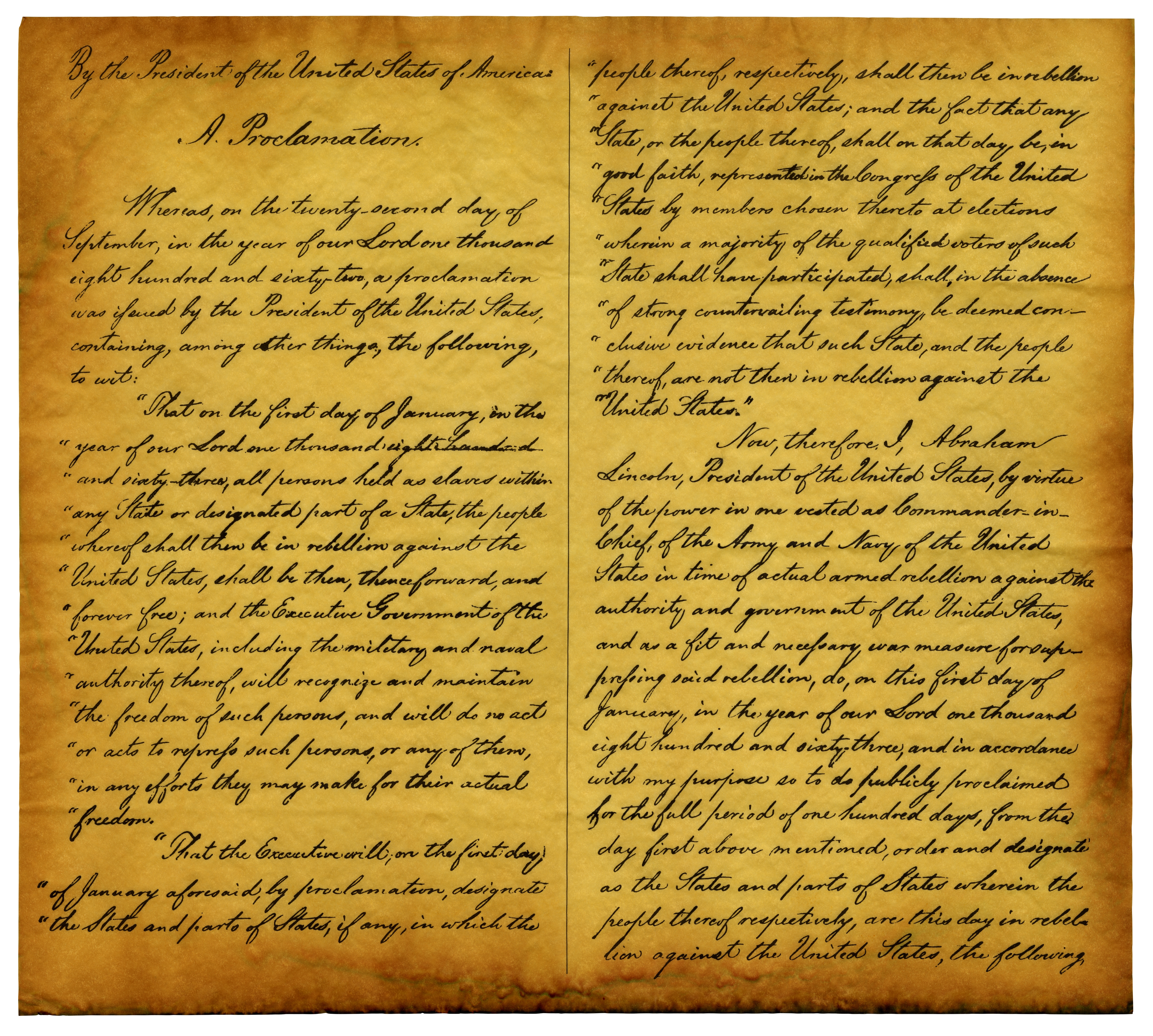
"The Emancipation Proclamation didn’t free all slaves. It was only 'for those states in rebellion,' which meant that, yes, slavery still existed in the Union and the North. It was not as widespread as in the South, but yes, it still existed. Slavery was not abolished nationwide until the end of the Civil War with the 13th Amendment to the Constitution."

Fact: The Emancipation Proclamation was indeed limited in its actual liberation of slaves. It only applied to the "rebel" states that had seceded from the United States, effectively exempting the border states and parts of the Confederacy that were already under Northern control.

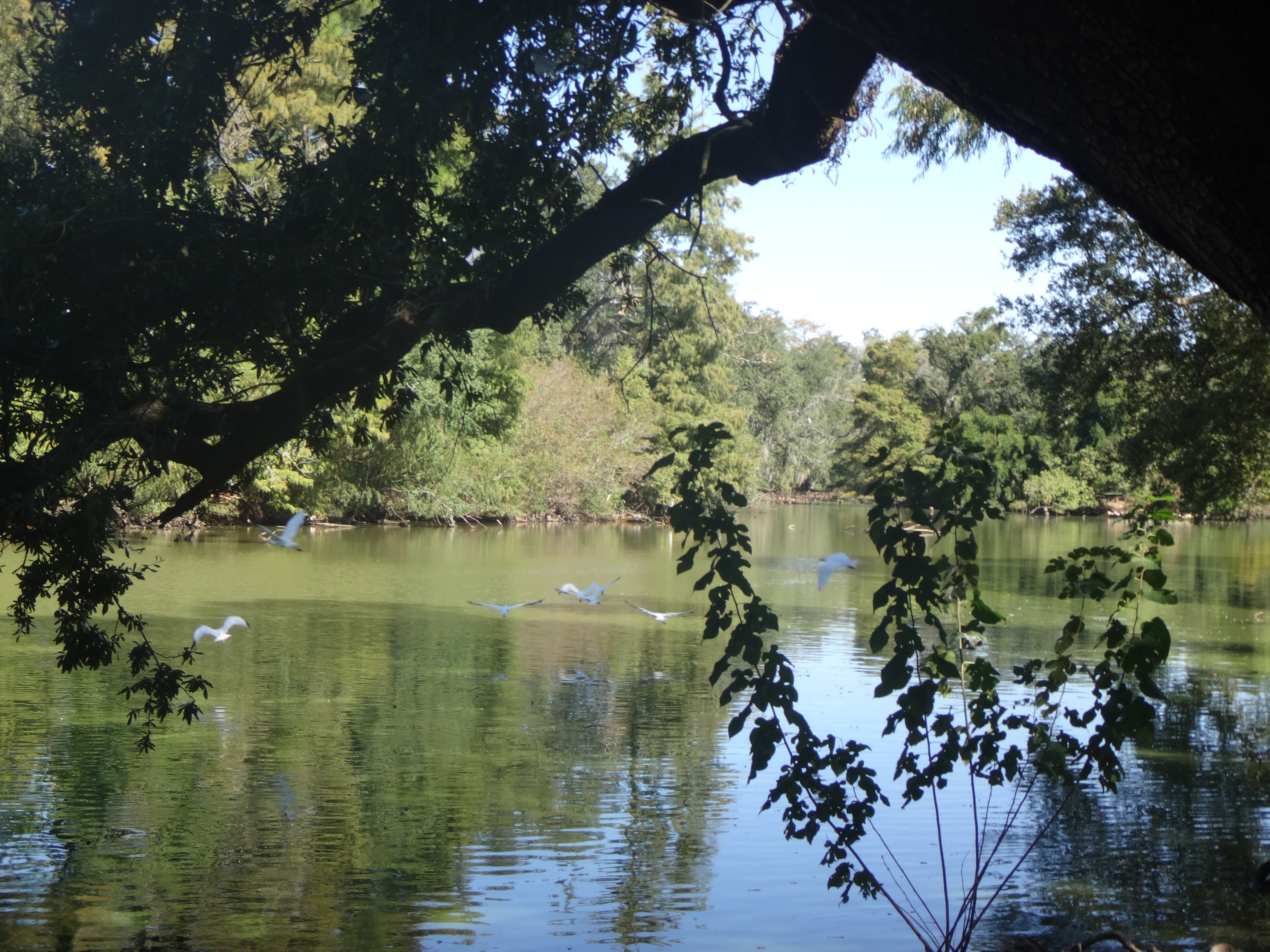
"Something which isn't really taught in US History is that the first Asian settlers in the US were likely Filipinos. They were fleeing the Spanish takeover of the Philippines and settled in St. Malo, Louisiana. There is even evidence that Filipinos made it over before the Pilgrims, in the 1500s."

Fact: While the origins of the first Filipino settlers in the US remain contested — some believe that they arrived on Spanish trade vessels — it's widely accepted that they established the country's oldest-known permanent Asian settlement in Saint Malo (present-day Lake Borgne), New Orleans.

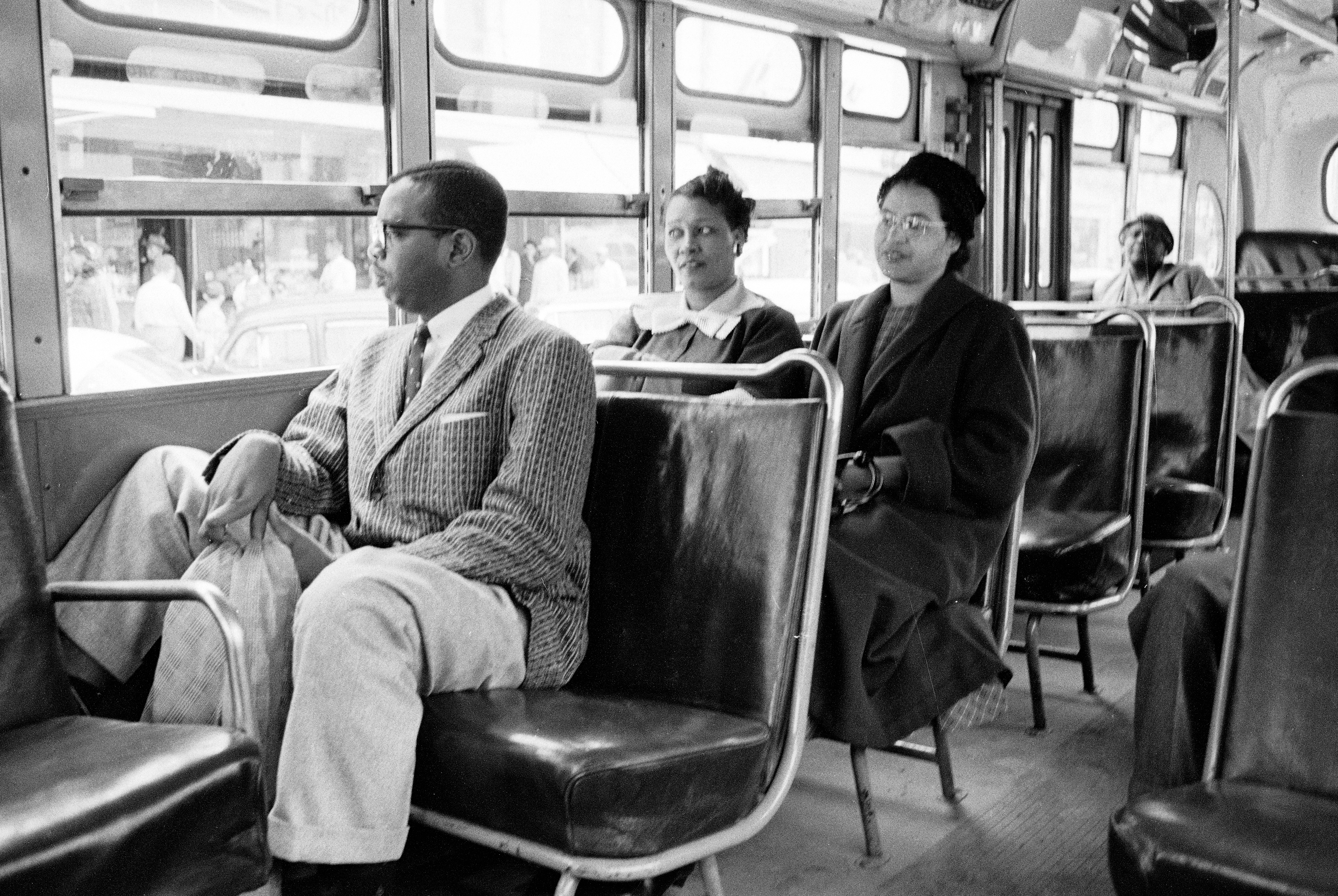
"Rosa Parks did not refuse to give up her seat so a white man could sit in it. It’s a far more petty rule than that. Once all the whites-only seats at the front of the bus had filled up, the first row of the Black section officially became for white people, and Black people couldn’t sit in it. Rosa refused to move from an otherwise empty row so that the white man 'could' sit down. All he had to do was sit at the other end of the same row."

Fact: Rosa Parks's well-known story of iconic defiance omits some context. When Parks was asked to leave her seat, she was actually sitting in the first row of the "colored" section. She was asked to leave because a white passenger wanted to sit in her row, not her seat.

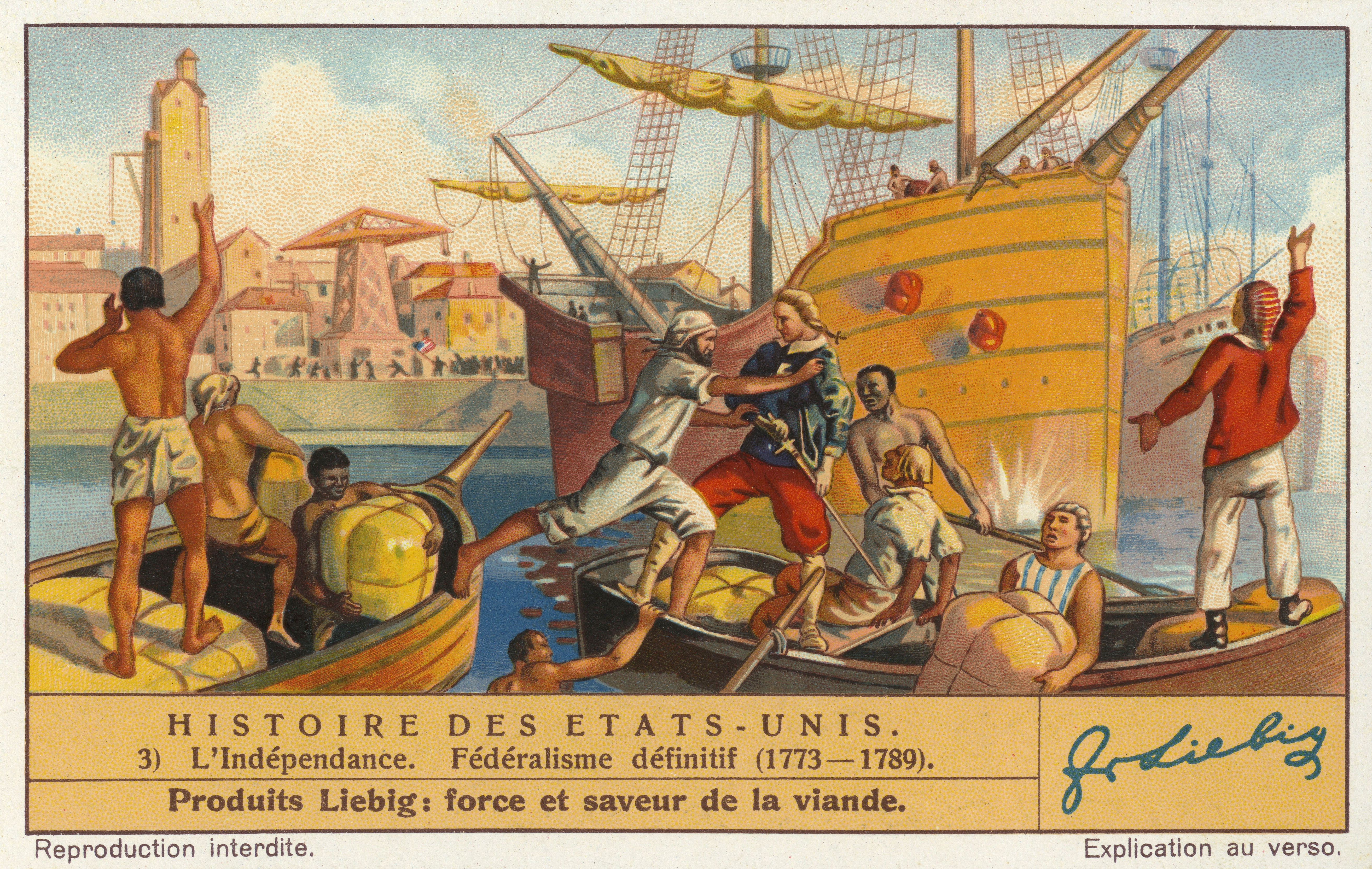
"It was actually the reduction of taxes on tea that created problems for the Bostonian smugglers of tea. That’s why they rebelled."

Fact: The Boston Tea Party was actually protesting the Tea Act of 1773, which allowed the British East India Company to sell tea at super low price and bypass middleman dealers, leading to reduced profits.