yahoo Press
Air Cargo Rates Jump 10% as Iran War Strains Capacity, Fuel Costs
Images
1 / 5
2 / 5

3 / 5

4 / 5
5 / 5
Air cargo rates have surged throughout March amid the volatility from the war in Iran that has snarled freighter capacity, escalated oil prices and restricted activity at major Middle Eastern airports.

According to more than 500,000 weekly transactions covered by WorldACD, average global air cargo rates rose by 10 percent in the week to March 15, reaching $2.67 per kilogram when including surcharges. The increase followed a week in which rates increased 8 percent.

More from Sourcing Journal

Hormuz Disruptions Lift India-Bound Freight Rates

Global Ocean Shipping Mostly Steady Despite Middle East Turbulence

White House Waives Shipping Statute As Oil Prices Spike

Jet fuel availability and prices have become a major factor in the rapid price hike, with the constrictions of oil trade through the Strait of Hormuz doubling jet fuel prices 94 percent over pre-war levels. On a week-over-week basis, these prices rose 11 percent.

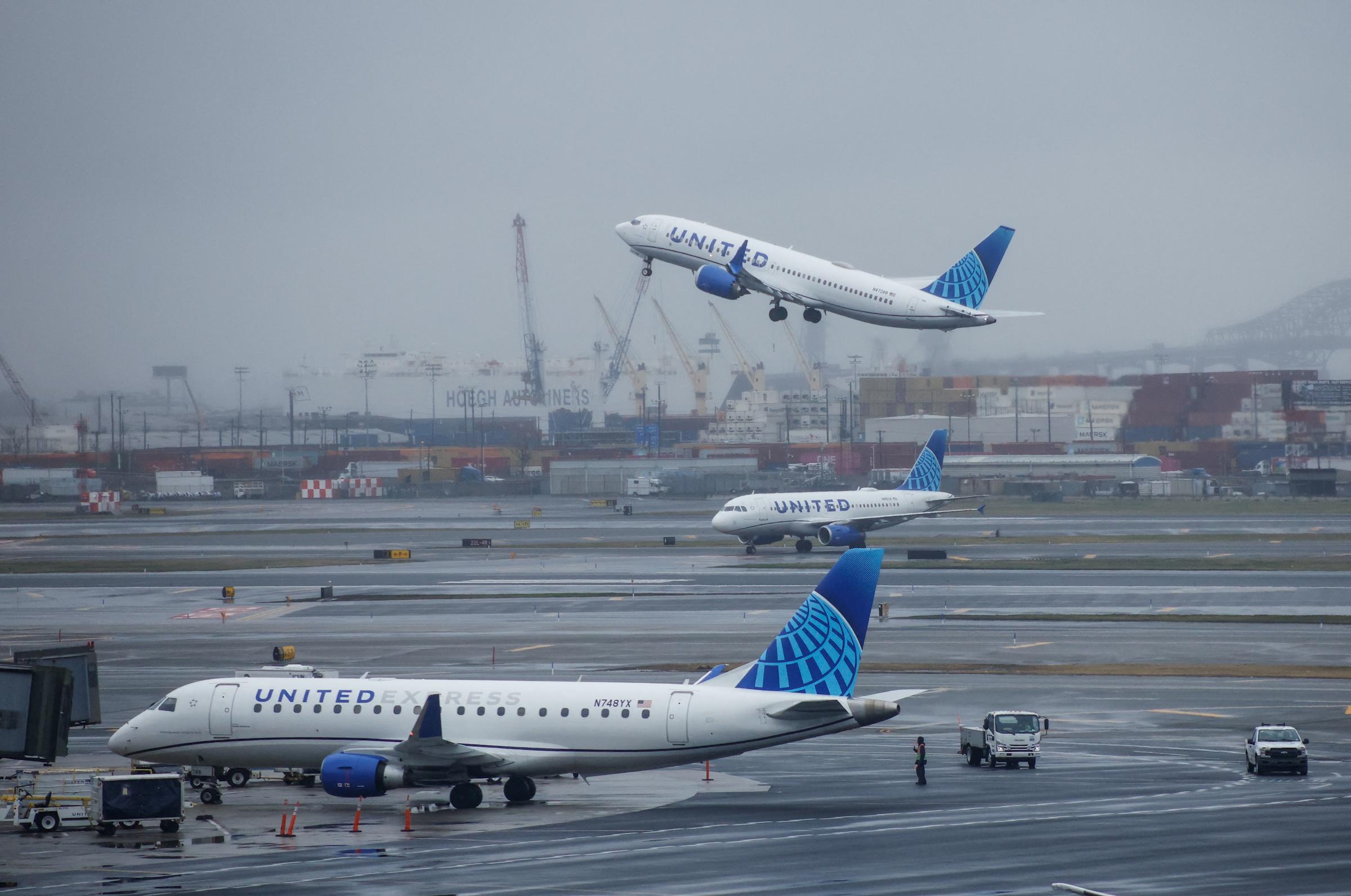
In a statement to employees, United Airlines CEO Scott Kirby said the air carrier is trimming its unprofitable routes that comprise roughly 5 percent of its planned capacity due to the high oil prices.

Much of the cuts—about 3 percentage points of capacity—will come from off-peak flights such as midweek and redeye routes, while another percentage point will be from reductions at Chicago O’Hare. Another percentage point tied to suspended services to Tel Aviv and Dubai.

“Nothing changes about our longer-term plans for aircraft deliveries or total capacity for 2027 and beyond, but there’s no point in burning cash in the near term on flying that just can’t absorb these fuel costs,” Kirby.

The cancellations are expected to last throughout Q2 and Q3, Kirby said. United currently plans to restore the full schedule this fall.

“Our plans assume oil goes to $175 per barrel and doesn’t get back down to $100 per barrel until the end of 2027,” said Kirby. “Honestly, I think there’s a good chance it won’t be that bad, but…there isn’t much downside for us to preparing for that outcome.”

Delta Airlines has also said it could adjust capacity if fuel prices stay elevated.

According to a client advisory from Seko Logistics Monday, more than 26,000 flights have been impacted to date, driving the persistent global backlogs. The global capacity shortfall has eased slightly to an estimated 13 percent to 8 percent, with approximately 12 percent to 13 percent tied directly to Middle East airspace closures.

Time‑sensitive cargo delays now averaging between four and eight days, Seko said.

Data from freight booking software provider CargoWise estimates that 43.4 percent of the roughly 540 logistics organizations using the platform have experienced air cargo interruptions, totaling 12,200 disrupted shipments.

FedEx largely dismissed any direct material impacts to its own air cargo business upon revealing last week that it had raised its full-year earnings outlook even as fuel costs accelerated throughout March.

Both FedEx and UPS started levying surcharges earlier this month to counteract potential spikes in costs and pass on any additional expenses to consumers. FedEx tacked on a 50 cent-per-pound export demand surcharge for parcel and freight aired out to Middle Eastern countries like the U.A.E., Saudi Arabia, Oman, Bahrain, Egypt and Jordan earlier this month, while shipments to and from Israel now have a $1.50-per-pound extra fee.

UPS added a $1.34-per-pound “surge fee” Sunday for shipments traveling between most Middle Eastern countries and the U.S., while a $1.50-per-pound fee was added for goods shipped from the U.S. to Israel and the U.A.E. and vice versa.

The fuel surcharge “is doing its job,” according to FedEx chief customer officer Brie Carere.

“It’s adjusted weekly,” said Carere in a Thursday earnings call. “It will cover and ensure that we maintain profitability.”

As the air cargo world continues to feel the impacts of the war in Iran, Hugo Boss is seeking to bolster its gross margins by cutting down its use of air freight.

According to Hugo Boss chief financial officer Yves Muller, the designer fashion seller plans to decrease the “high single-digit” share of cargo moved via air in 2025, with company executives noting the transportation mode should be an “exception” going forward.

The Germany-based apparel firm had already reduced air freight share from the mid-teens in early 2024.

“Strategically, the logic should be for mid- to long-term to have an air freight share of zero,” said Hugo Boss CEO and chairman Daniel Grieder said in a fourth quarter earnings call on March 10.

As for the Iran war’s implication on the business, Grieder said it was still too early to make a clear statement on impacts. The CEO noted that the conflict had not made an impact on freight delivery times.