huffpost Press
Trump's Side-Comment To Pete Hegseth Ignites Theories About The Intent
Images
1 / 7

2 / 7
3 / 7
4 / 7

5 / 7

6 / 7

7 / 7
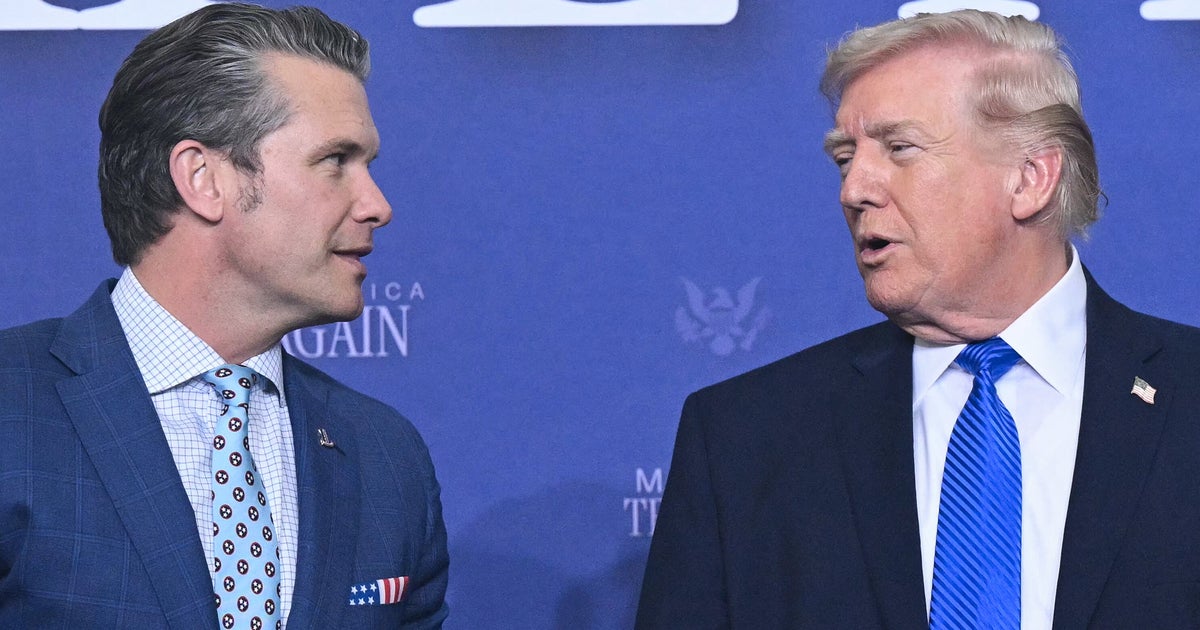
Donald Trump on Monday said Defense Secretary Pete Hegseth was the “first” of his “great people” to push for an attack on Iran, igniting debate as to whether the president was setting him up as a scapegoat or complimenting him.

(Watch the video below.)

“I called a lot of our great people,” Trump said. “We have great people, and I said, ‘Let’s talk. We got a problem in the Middle East. We have a country known as Iran that, for 47 years, has jbeen just a purveyor of terror, and they’re very close to having a nuclear weapon.’”

Trump said he suggested “a little journey in the Middle East and eliminate a big problem.”

He then turned to his defense secretary: “And Pete, I think you were the first one to speak up. And you said, ‘Let’s do it, because you can’t let them have a nuclear weapon.’ ”

Trump blames Hegseth for the war: "Pete, I think you were the first one to speak up. You said, 'Let's do it.'" pic.twitter.com/QBGeFuhM1M

A New Republic editorial didn’t mince words: “President Trump is already trying to throw Defense Secretary Pete Hegseth under the bus for the fruitless war on Iran.”

The article echoed an X post from former Obama speechwriter Jon Favreau, who wrote, “Hegseth about to give his next briefing from under the bus.”

“Trump Tries To Spread Blame For Iran War,” Rolling Stone’s headline blared.

Mediaite tried to look at it from two perspectives. “The remark could be viewed either as Trump giving praise or laying the groundwork for an eventual shakeup at the Pentagon, depending on subsequent events in the Middle East,” the outlet wrote.

Trump later re-emphasized a claim he was in peace discussions with Iran, which Iran has denied.

The president might be looking for a fall guy as reports refute the administration’s claims of success in the war.

He strongly objected to a recent New York Times article that asserted he was retreating from combat objectives, especially to topple the regime and totally eliminate Iran’s nuclear fuel capability.

The president called the reporter, longtime correspondent David Sanger, a “lightweight analyst” from a “Failing” newspaper “that always gets it wrong.”

But the Times pushed back.

“His piece is a fair and thorough analysis of what the U.S. military and American diplomats have and have not accomplished so far, and helps the country understand the state of the war and the president’s choices going forward,” spokesperson Charlie Stadtlander wrote.

By entering your email and clicking Sign Up, you're agreeing to let us send you customized marketing messages about us and our advertising partners. You are also agreeing to our Terms of Service and Privacy Policy.