yahoo Press
AI boom accelerates China's chip industry growth as demand strains supply chain
Images
1 / 4
2 / 4

3 / 4

4 / 4
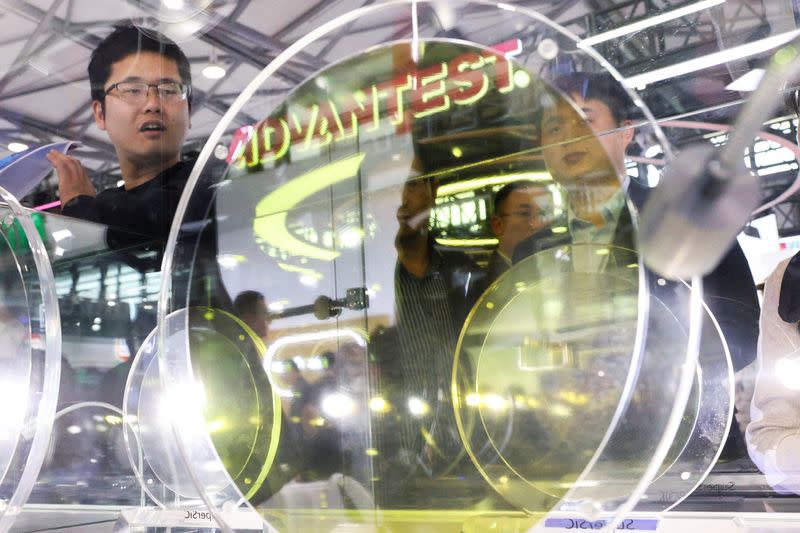
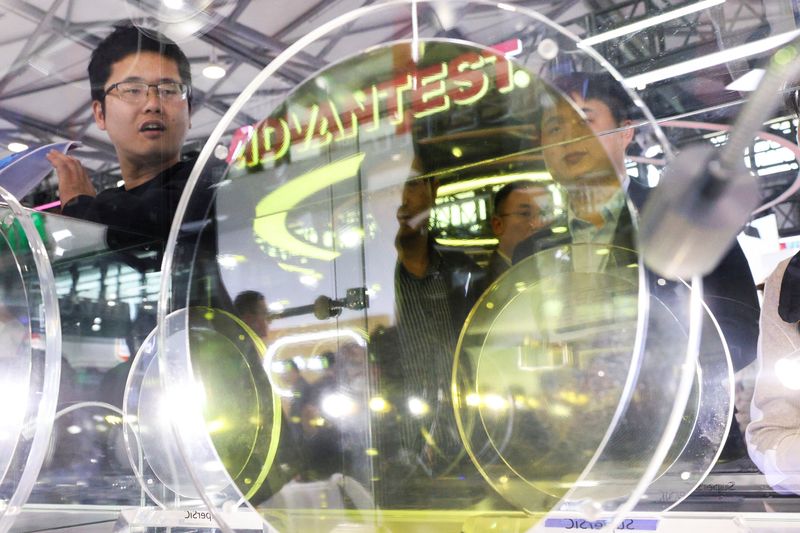
By Eduardo Baptista March 25 (Reuters) - China's chip industry is showing strong growth momentum as a global sprint to build AI infrastructure creates an explosion in demand, sparking higher capital spending and capacity expansion as chipmakers race to keep up, executives said on Wednesday. Growth in the industry "is coming faster than expected" this year, Jerry Zhang, China sales head at Swiss semiconductor components firm VAT, told Reuters on the sidelines of Semicon China 2026 in Shanghai, one of the industry's largest annual gatherings. As companies race to ramp up production, China's manufacturing capacity for chips made on mature 22nm to 40nm process nodes - used in cars, smartphones and electronics - is projected to reach 42% of global output by 2028, up from 37% in 2026, SEMI China President Lily Feng said. CHIPS BECOMING MORE COMPLEX Artificial intelligence is also reshaping the broader semiconductor sector, increasing requirements for testing, packaging, and high-speed interconnects, as chips become more complex and performance-intensive. "AI has significantly increased computing power requirements, and that in turn has raised the requirements for semiconductor testing," said Terry Feng, China sales director at U.S. chip testing firm Teradyne. The impact is particularly visible in areas such as optical interconnects - a critical layer linking chips inside data centres - for which China is a major global supplier. "Our order backlog is already booked out into next year," said Zhou Limin of Mycronic's MRSI unit, which makes high-precision equipment used to assemble optical modules, a key component of optical interconnects. The AI boom has also started to strain the semiconductor supply chain globally, particularly in raw materials and high-end components, as manufacturers struggle to keep up with rising demand. Given the size and strength of its manufacturing industry, China is better placed than most to respond, according to executives and industry analysts. "We are very optimistic about the memory (chip) cycle - there will be large-scale capacity expansion," said Bai Yu, vice president at Suzhou Origins Materials Technology, which will begin construction of a new production base next month. The company supplies materials used in manufacturing to top Chinese chipmakers including ChangXin Memory Technologies, Yangtze Memory Technologies and Semiconductor Manufacturing International Corporation. FOREIGN SUPPLIERS STILL KEY PART OF CHIP SUPPLY CHAIN Participants in the fair also included foreign suppliers, as they remain central in higher-end segments of the chip supply chain even as China's domestic industry expands. "There's still a place for foreign firms because it is a very specialized industry - you have to have the expertise, the materials and the understanding," said Cameron Johnson, senior partner at Tidal Wave Solutions. He added that foreign companies often retain an edge in after-sales support and technical services, areas where domestic competitors are still catching up.