yahoo Press
How Trump went from saying Strait of Hormuz 'will open itself' to acknowledging Iran's power to control the waterway
Images
1 / 6
2 / 6

3 / 6

4 / 6

5 / 6
6 / 6
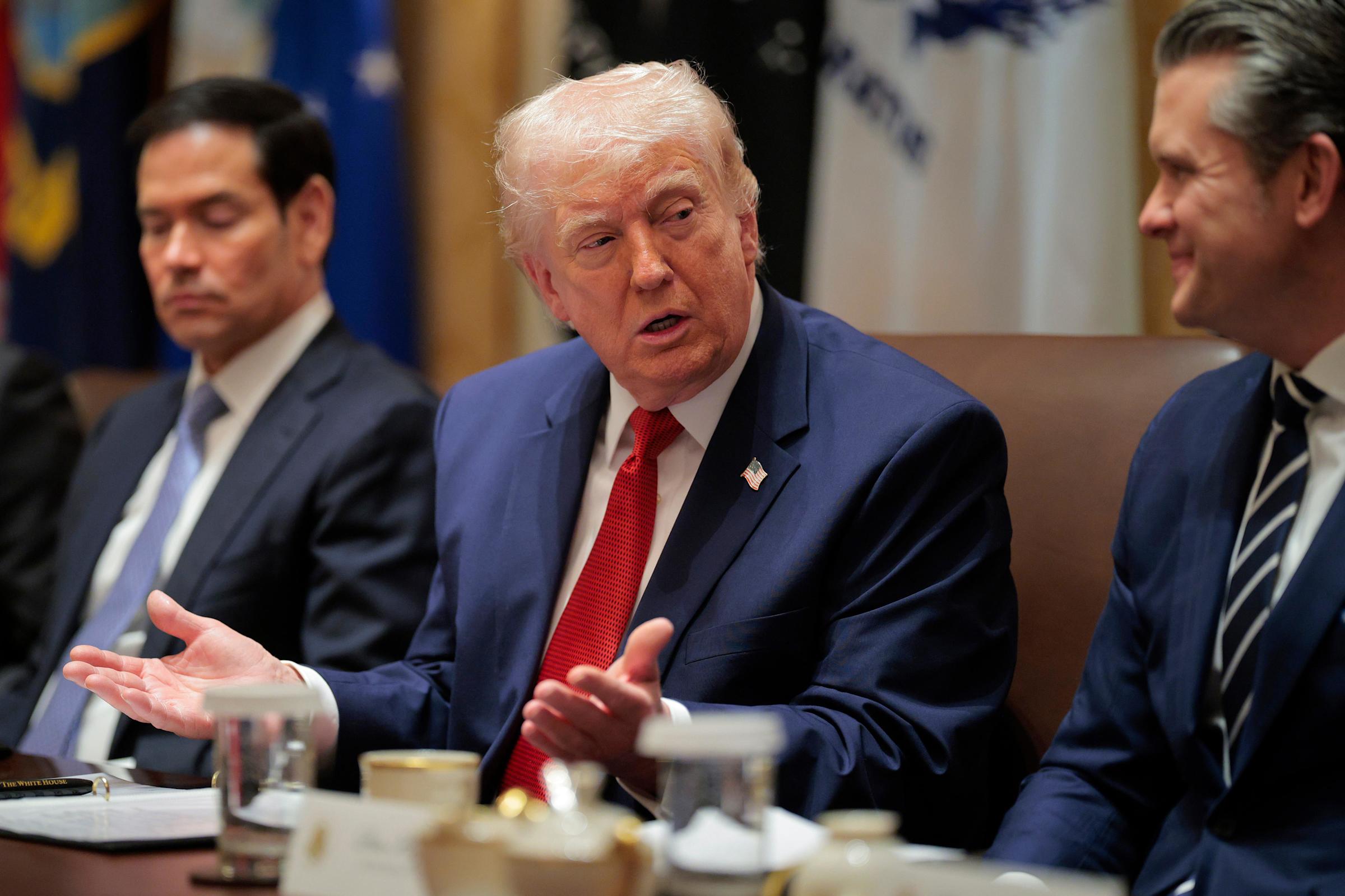
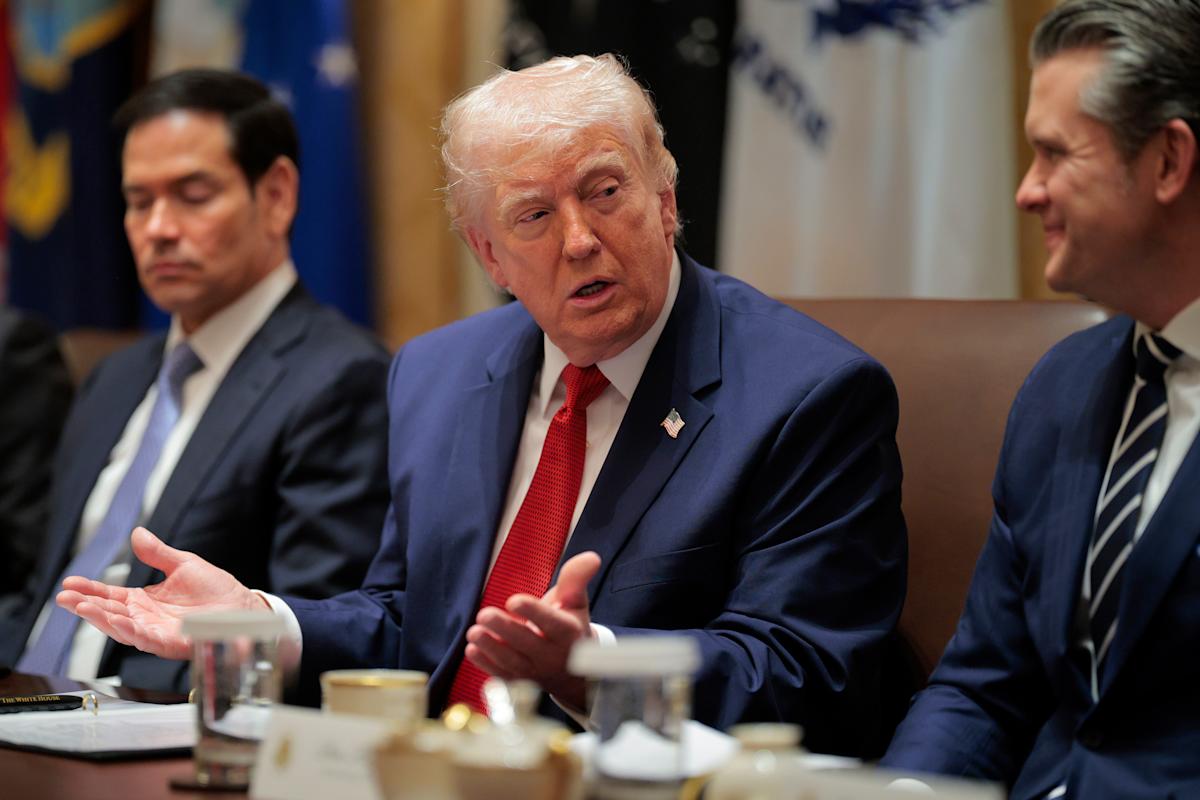
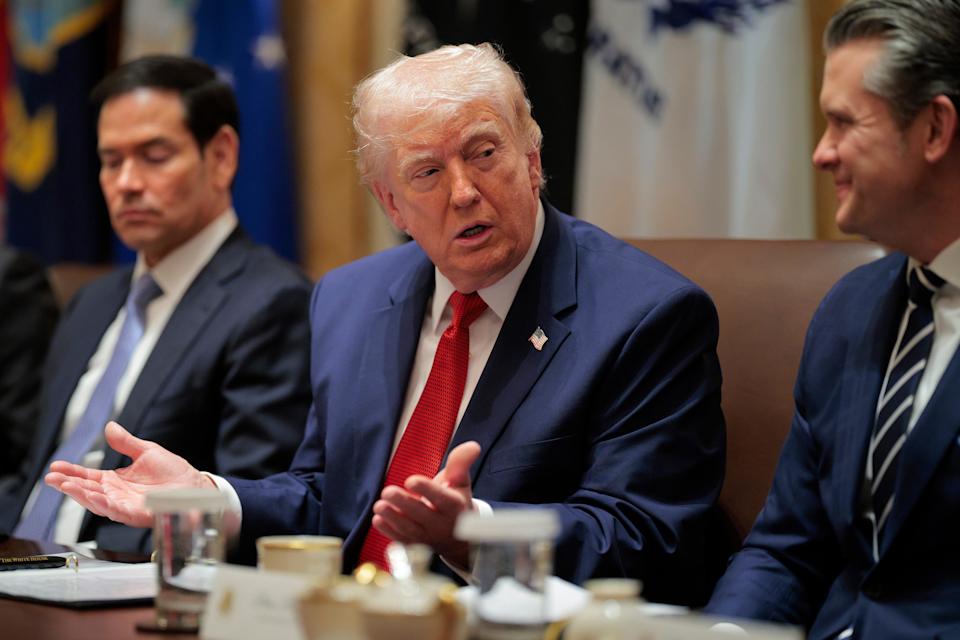
President Trump has been issuing ultimatums for weeks about the Strait of Hormuz, demanding full freedom of travel for shippers. If Iran doesn’t comply? Trump has said he’ll respond “quickly and violently.” But in spite of his repeated demands, Iran has held the line and continues to police shipping in the area, dropping ship passage to a tiny fraction of where things stood before the war. That led this week to a rhetorical shift from the president, who is now publicly — if somewhat begrudgingly — recognizing the regime’s ability to control the 21-mile-wide waterway. At a Cabinet meeting on Thursday, Trump even noted Iran’s burgeoning effort to charge shippers a fee for passage. “They shouldn’t be able to, but they’re doing it a little bit,” the president said. Read more: What an extended war with Iran could mean for gas prices Trump also described an exchange in the ongoing peace talks where the Iranian representatives said they would allow “eight big boats of oil” to pass through the strait — and then kept their promise. It clearly impressed the president and was a frank acknowledgement just a few days after he demanded Iran “fully open” the strait. At another point in recent weeks, he mused, “At a certain point, [the Strait] will open itself.” Iran’s resilience in this arena poses a major problem for the White House’s efforts to end the war quickly and calm energy markets upended by what is increasingly described as the biggest oil shock in history. Read more: How oil price shocks ripple through your wallet, from gas to groceries Trump has also floated the notion of simply ending hostilities and leaving others to deal with the Strait of Hormuz — but observers have warned of dire economic consequences in such a move. BlackRock CEO Larry Fink said this week during an interview with the BBC that oil prices could reach $150 a barrel and cause a global recession if Iran remains “a threat to the Strait of Hormuz” after the end of hostilities. Prices are currently about $100 per barrel. Since the war began, futures for both the international oil benchmark Brent crude (BZ=F) and US benchmark West Texas Intermediate (WTI) crude (CL=F) have gained roughly 40%. Trump’s shifting rhetoric on the strait reflects a key reality in the region: Shipping traffic has plunged as Iran has been able to exercise a veto power over who passes. As ship tracking service MarineTraffic put it in a Wednesday update, traffic in the Strait appears to be open only to those "preapproved" by Iran. Some ships have even been turned away. The tankers that moved this week, Trump said, passed under Pakistan’s flag (Pakistan is operating as mediator in the talks) and were followed by two additional boats for a total of 10. The movement was notable but remained far below prewar levels, when more than 100 ships would make their way through the strait on any given day. But it led President Trump to conclude, “I guess we were dealing with the right people.” Meanwhile, Iran’s semiofficial state media Fars reported that Iran continues to allow passage to “friendly countries,” as senior Iranian officials touted their burgeoning plans to charge a fee to ships making passage. About 20% of the world’s oil and many other key products passed through the Strait of Hormuz before the war. Those shipments have virtually ground to a halt since the US and Israeli attacks began on Feb. 28. The bottom line appears to be — as Trump put it Thursday — that complete relief for energy markets and shippers may only be in the offing “if they make the right deal, then the strait will open up.” It was about 10 days into the war that the rising problem at the Strait of Hormuz was fully on the president’s radar — and that’s when he started issuing ultimatums. On March 9, just a few hours after contending that the Strait would “remain safe,” Trump posted that if Iran “does anything” to impede the flow of oil, “they will be hit by the United States of America TWENTY TIMES HARDER than they have been hit thus far.” A second ultimatum followed on March 10, focused on mines. A third followed on March 13, when Trump announced attacks on military targets on Kharg Island but then promised to go further and take out oil infrastructure there “should Iran, or anyone else, do anything to interfere with the Free and Safe Passage of Ships through the Strait of Hormuz.” The following days saw the president launch an effort to get other nations’ assistance in the strait, before then declaring on Truth social a few days later, “WE DO NOT NEED THE HELP OF ANYONE.” Last Saturday, Trump promised that "if Iran doesn’t FULLY OPEN, WITHOUT THREAT, the Strait of Hormuz, within 48 HOURS from this exact point in time,” then he will “hit and obliterate their various POWER PLANTS.” He later backed away from that latest ultimatum, citing productive conversations. After Thursday’s appearance with his Cabinet, Trump announced that he would back away further from what he called plans for “the period of Energy Plant destruction” by an additional 10 days and let talks continue until April 6 at 8 PM ET. This story has been updated. Ben Werschkul is a Washington correspondent for Yahoo Finance. Click here for political news related to business and money policies that will shape tomorrow's stock prices Read the latest financial and business news from Yahoo Finance