yahoo Press
Elon Musk Says 'If You're Stranded On A Desert Island With $1 Trillion, It's Not Useful' — Money Is Just An 'Information System For Labor Allocation'
Images
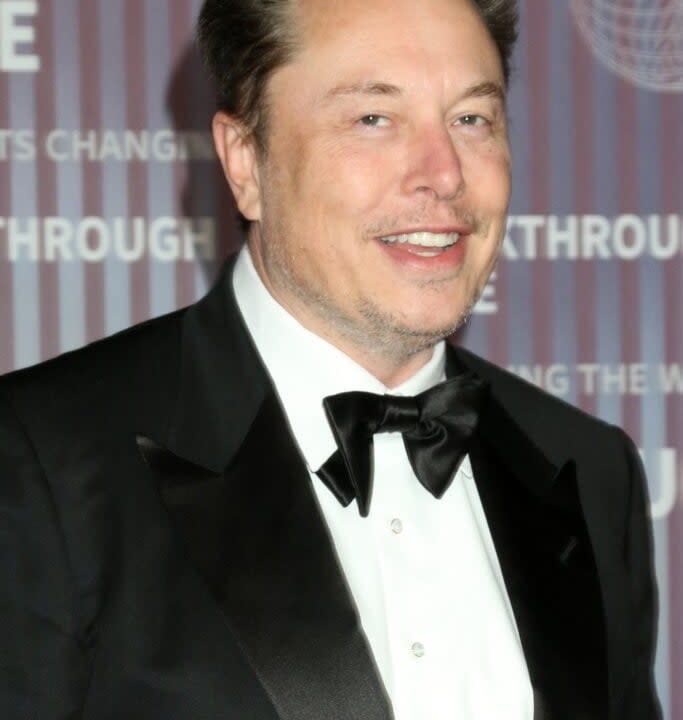
1 / 4
2 / 4

3 / 4

4 / 4
Money talks. According to Elon Musk, it also goes silent the second there's no one left to listen.

Speaking on the "People by WTF" podcast with host Nikhil Kamath in November, the Tesla CEO peeled back the idea of wealth to something far less flashy. Strip away the markets, the people, the systems, and what's left is not power. It's a tool. And without a system to plug into, that tool does nothing.

Musk put it simply: "It's just an information system for labor allocation."

Then came the line that reframed everything: "If you're stranded on a desert island with $1 trillion, it's not useful because there's no labor to allocate. You just allocate yourself."

Don't Miss:

A single bad hire can set a startup back years. Here are the 5 hires founders most often misjudge — and why

Avoid the #1 Investing Mistake: How Your ‘Safe' Holdings Could Be Costing You Big Time

A trillion dollars means nothing without people

The example sounds extreme, but that's the point. Musk wasn't talking about survival. He was talking about structure.

Money only works in a network. It needs workers, producers, services, and demand. Without that web, it loses its function entirely. Trillions of dollars can't build a house, grow food, or fix a machine on its own. It can only direct someone else to do it.

That's where Musk sees a common misunderstanding. "People sometimes think money is power in and of itself," he said. "But if there's no labor to allocate, it's meaningless."

In other words, money is not the engine. It's the instruction manual.

The X.com idea that never left

This line of thinking goes back decades. Long before Tesla or SpaceX, Musk was building X.com in 1999 with a very specific goal: create a faster, more efficient way to move money globally.

Even then, he viewed money less like cash and more like data. A system. A database that tracks who did what and who gets what in return.

Trending: Skip the Regrets: The Essential Retirement Tips Experts Wish Everyone Knew Earlier.

He circled back to that idea during the podcast. "I'm just kind of slowly revisiting this idea that I had 25 years ago to create a more efficient money database," he said. "If that's successful, people will use it, and if it's not successful, they won't use it."

It's a simple test. If the system works better, it wins. If it doesn't, it disappears. No mythology required.

When AI grows, money shrinks

Where Musk pushes this further is into the future. If money is just a way to coordinate human effort, what happens when human effort is no longer required?

That's where AI and robotics come in. Musk suggested a world where machines can produce goods and services at a scale that outpaces demand. If everything can be made quickly and cheaply, the need to "allocate labor" starts to fade.

"In a future where anyone can have anything, I think you no longer need money as a database for labor allocation," he told "People by WTF."

At that point, the bottleneck shifts. Not money. Not labor. Energy.

"There are still some fundamental currencies that are physics-based though," Musk said. "Energy is the real true currency."

He tied that vision to science fiction, pointing to the post-scarcity world imagined by Iain M. Banks, where machines handle production and human work becomes optional.

See Also: Don't risk buyer's remorse — ask these critical questions every homebuyer should know.

Inflation, output, and a different kind of bet

Musk also connected the idea back to today's economy. He pointed to rising deficits and money supply, noting that inflation depends on whether goods and services grow faster than the money being created.

"The output of goods and services will grow so fast that it will outpace the money supply," he said, adding that this shift could happen within a few years.

If that plays out, it flips a lot of current assumptions. Inflation cools. Interest rates fall. Debt becomes easier to manage, not because it shrinks, but because productivity explodes.

It's a big if. But it fits the same pattern Musk keeps returning to.

Money is not the story. It's the scoreboard. And if the game itself changes, the scoreboard might not matter much at all.

Read Next: Thinking about ETFs? See what investment risks you should be aware of before you buy.

Image: Shutterstock

Up Next: Transform your trading with Benzinga Edge's one-of-a-kind market trade ideas and tools. Click now to access unique insights that can set you ahead in today's competitive market.

Get the latest stock analysis from Benzinga:

APPLE (AAPL): Free Stock Analysis Report

TESLA (TSLA): Free Stock Analysis Report

This article Elon Musk Says 'If You're Stranded On A Desert Island With $1 Trillion, It's Not Useful' — Money Is Just An 'Information System For Labor Allocation' originally appeared on Benzinga.com

© 2026 Benzinga.com. Benzinga does not provide investment advice. All rights reserved.