yahoo Press
JPMorgan, Pimco say bond market is underestimating slowdown risk
Images
1 / 5
2 / 5

3 / 5

4 / 5
5 / 5
(Bloomberg) — Some of Wall Street’s biggest bond-fund managers say financial markets are underestimating the risk that the US war in Iran will cause a sharp slowdown in an already sputtering economy.

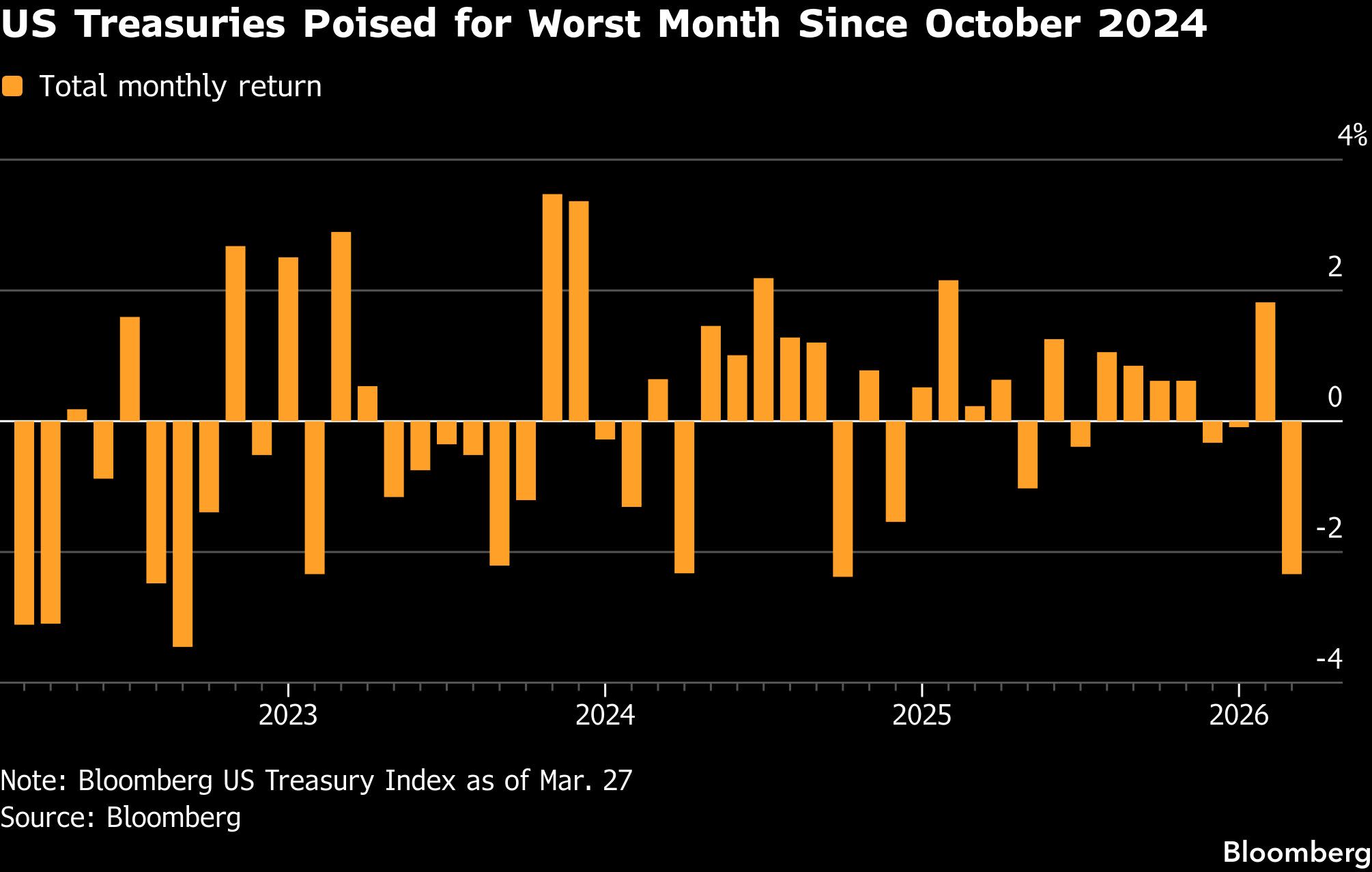
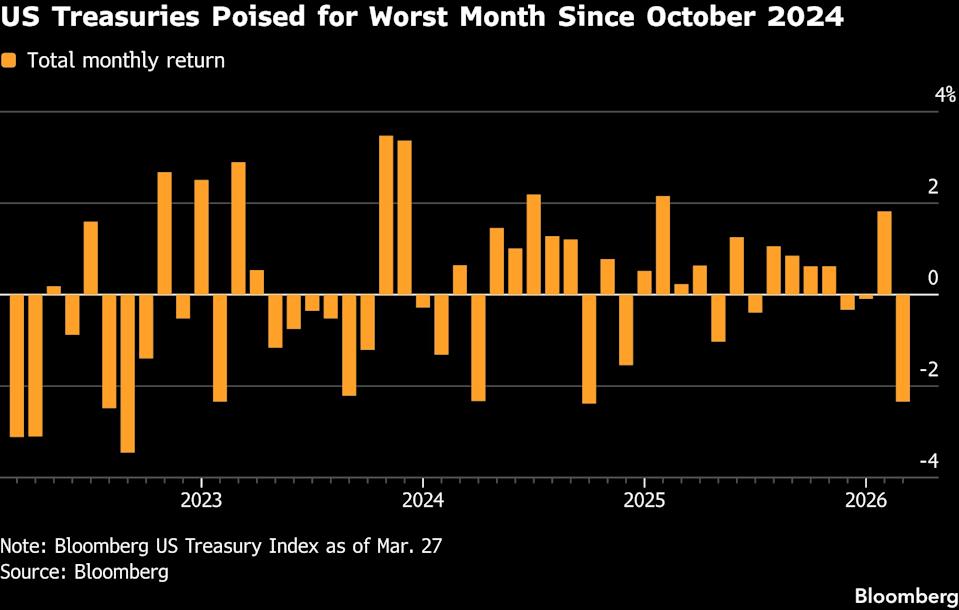
As oil pushes over $110 a barrel and the conflict shows little signs of ending, traders have largely focused on the inflation shock. That has sent the US Treasury market toward the deepest monthly loss since October 2024 as investors brace for the possibility that the Federal Reserve will push interest rates higher before the year is out.

But at companies including Pacific Investment Management Co., JPMorgan Chase & Co (JPM). and Columbia Threadneedle (GQCC.SG) Investments money managers are preparing instead for an economic hit that will eventually trigger a bond-market rebound and cause yields to come sliding back down.

“Every day that this conflict persists brings us closer to the market being forced to consider the more negative implications for growth, which should ultimately push Treasury yields lower,” said Kelsey Berro, a fixed-income portfolio manager at JPMorgan Asset Management. “Yields broadly have risen enough to be attractive.”

Economists have started to dial back their growth forecasts and nudge up the odds of a recession as higher energy prices, rising borrowing costs and the stock-market slump start to squeeze businesses and consumers. Goldman Sachs Group Inc. said the probability of a downturn over the next 12 months has risen to about 30%, while Pimco sees a more than one-third chance.

Such pessimism is typically positive for bonds because it increases the likelihood that the Fed will reduce rates to stimulate the economy. But that hasn’t been the case this time because traders expect the energy-price spike to tie the hands of a central bank that has already been contending with inflation that’s stubbornly above its target.

The result has been a fierce selloff that’s sent bond yields surging. Rates on two- and five-year Treasuries have jumped by more than half a percentage point since the US bombing started late last month. Thirty-year yields have climbed to the cusp of 5%, not far below the peak in 2023, after the Fed had pushed rates to a more than two-decade high.

Much of that reflects anticipation that elevated energy prices will drive up the cost of all kinds of goods, with the OECD warning last week that US consumer prices could jump by 4.2% this year. That, in turn, is making investors demand higher payouts to keep their returns from being eroded by inflation.

Yet some long-time bond investors say the selloff has created an opportunity to lock in elevated yields as the inflation worries overshadow the threat to growth.

“What tends to begin as an inflation shock can quickly migrate into a growth shock,” said Daniel Ivascyn, the chief investment officer of Pimco, which has over $2 trillion of assets. “And we are on the cusp of seeing a significant weakening in the economy.”

The economic risks were already building up before the war. The job market has continued to slow since President Donald Trump returned to the White House and upended global trade with his tariffs. Employers cut 92,000 jobs in February and the March figures — due to be released Friday — are expected to show only a partial rebound, with payrolls expanding by 60,000. And markets have been rattled by concerns about artificial-intelligence and pockets of stress in the private-credit industry.

Now, markets are hanging on a four-week-old war that’s effectively shut down oil shipments through the Strait of Hormuz. That is already being passed along to consumers, with the price of gasoline hitting the highest since the post-pandemic inflation surge.

At BlackRock Inc. (BLK), Rick Rieder, who oversees more than $2 trillion as the head of fixed-income investments, said he thinks the Fed should still cut rates to soften the impact. He said he’s prepared to step up buying of shorter-term debt when the outlook starts to become more clear.

“We’ll see what happens over the next couple of weeks — and then I want to jump in and buy some stuff,” he said during an interview on Bloomberg Television.

By Friday, the futures market indicated that traders are ruling out any rate cuts from the Fed in 2026, anticipating it will likely remain on hold. The market was pricing in a roughly one-third chance of a quarter-point hike later in the year.

As 30-year yields drifted higher, Ed Al-Hussainy, portfolio manager at Columbia Threadneedle, said he started buying more long-dated bonds. He anticipates that those yields will ultimately come down if the Fed adds another drag to the economy by pushing up short-term rates.

“The more the Fed leans into tightening policy, the more damage the long end of the curve has to price to aggregate demand and inflation premia,” he said.

More stories like this are available on bloomberg.com

©2026 Bloomberg L.P.