yahoo Press
Agibot Shipped A Staggering 5,000 Humanoid Robots In The Last 3 Months
Images
1 / 6
2 / 6

3 / 6

4 / 6
5 / 6

6 / 6
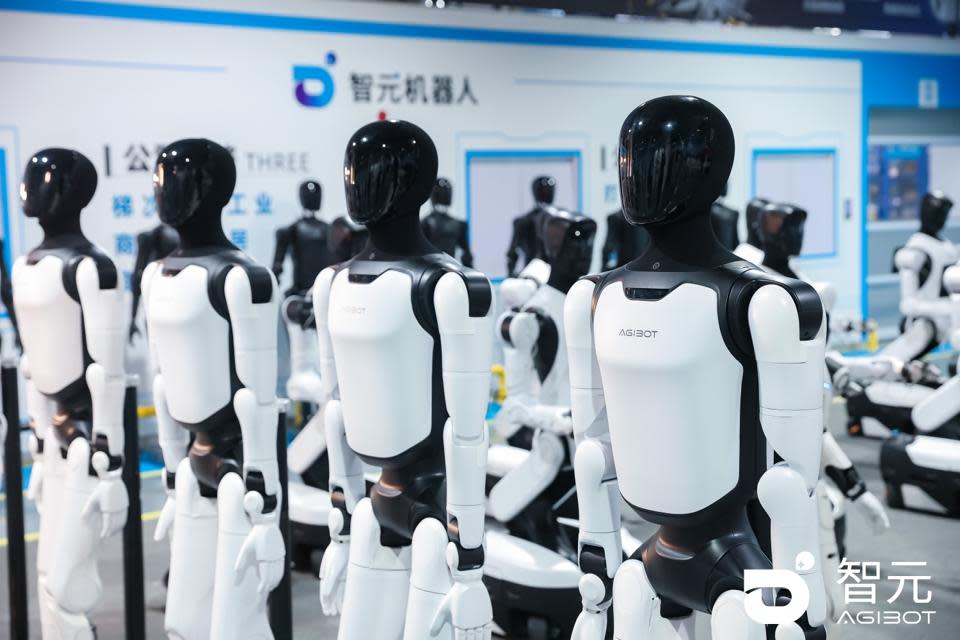
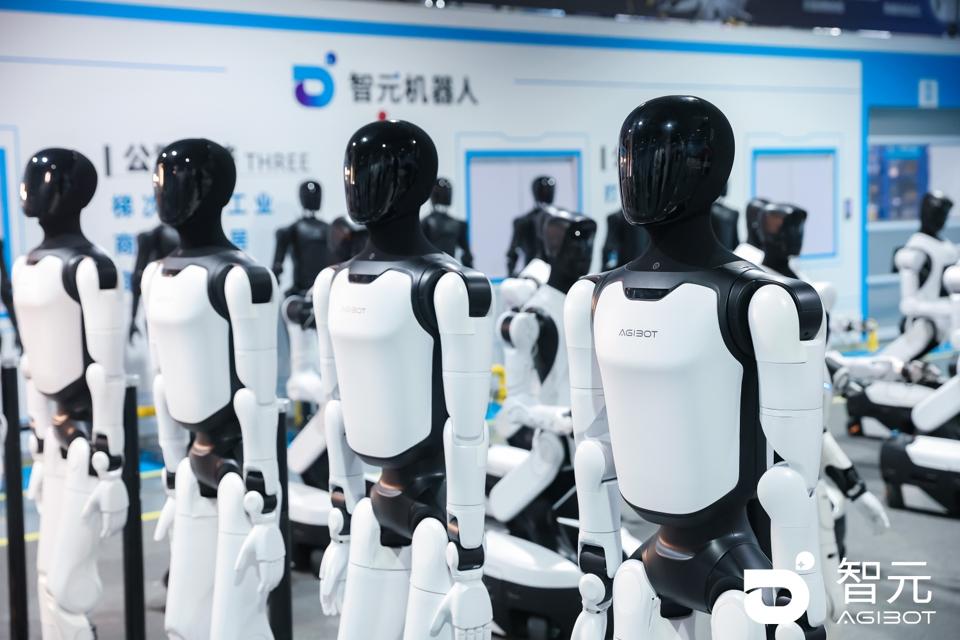
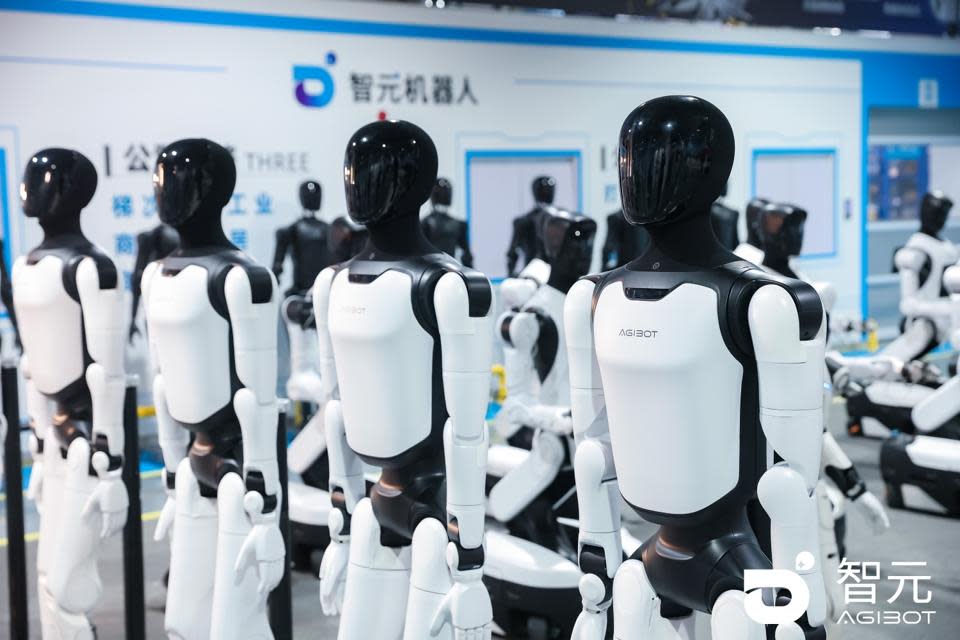
Agibot just shipped 5,000 humanoid robots in only three months, hitting 10,000 total robots shipped.

Shanghai-based Agibot announced today that it shipped a staggering 5,000 humanoid robots in the last three months alone. For context, it took the company two full years to ship the first 1,000 units and another year to scale to 5,000, a company representative told me via email. Now the company has surpassed that three-year total in just three months.

That’s exponential growth.

“Reaching 10,000 units is not simply about producing more robots, it reflects a fundamental shift in our ability to scale,” Agibot chief technology officer Peng Zhihui said in a statement. “As our supply chain matures and manufacturing standardizes, we are seeing a pivot from small-scale, niche applications to robust, large-scale commercial demand. The widespread deployment of Agibot’s robots is no longer about seeking technical viability, but about delivering scalable value and driving the adoption of embodied AI.”

Driving this massive acceleration in production capacity, Agibot says, is a now-mature supply chain and “continuous” innovations in manufacturing efficiency.

Independent research released in January of this year indicated that Agibot currently has the lion’s share of the global humanoid robot market. At that point, Omdia estimated that the company had shipped just under 5,200 units, with second place Unitree at 4,200, and the first American humanoid robot manufacturers, Figure, Agility Robotics and Tesla at around 150.

At that point, almost 90% of all built humanoid robots were manufactured in China, and with this new news from Agibot, that percentage will only go up.

According to Agibot, these robots are not just being sold and used in China’s domestic market, with “a substantial number” active in Europe, North America, Japan, Korea, Southeast Asia and the Middle East.

The Agibot A3 humanoid robot

Perhaps worryingly for the company’s competition, Agibot also says that it is seeing “a transition from initial pilot projects to repeated, large-scale rollouts.”

It’s of course important to remember that we are very early in the development and distribution phase of the still-very-nascent humanoid robot market. Many manufacturers with significant and impressive hardware, like Figure, Apptronik, Agility, Boston Dynamics and others, are taking the time to ensure that their solutions are as complete, capable and durable as possible before scaling production to hundreds and thousands.

That’s typically smart: the worst-case scenario here for a young humanoid robotics company that has raised significant capital is to squander momentum on products that do not deliver.

On the other hand, however, the longer they wait, the more they cede the market to fast-moving competitors. Moving fast has risks, but it ensures learning at scale as well as rapid iteration: both important to speed delivery of innovation to the market.

Agibot says this delivery milestone signals a new phase in “continuous system improvement.” In other words: scale builds speed builds scale builds speed in an ongoing virtuous circle.

“With thousands of robots already operating in real-world environments, ongoing usage is helping refine system performance, improve reliability, and expand application capabilities over time," the company says. "At this level of scale, progress is no longer driven by isolated deployments, but by coordinated advances across hardware, software, and supply chain systems, enabling both deployment and performance to improve in parallel.”