Press
‘Loyalty campaign’: Iraqi armed groups in Iran as US talks of ground war
Images
1 / 7
2 / 7
3 / 7
4 / 7

5 / 7

6 / 7

7 / 7
Fighters from a major Iraqi pro-Iran armed group have entered the country, carrying aid — and a signal of support.

Save

Share

Tehran, Iran – Iranian authorities have welcomed a number of paramilitary Iraqi forces as part of a “humanitarian convoy” while war with the United States and Israel threatens to enter a new phase involving potential ground assaults.

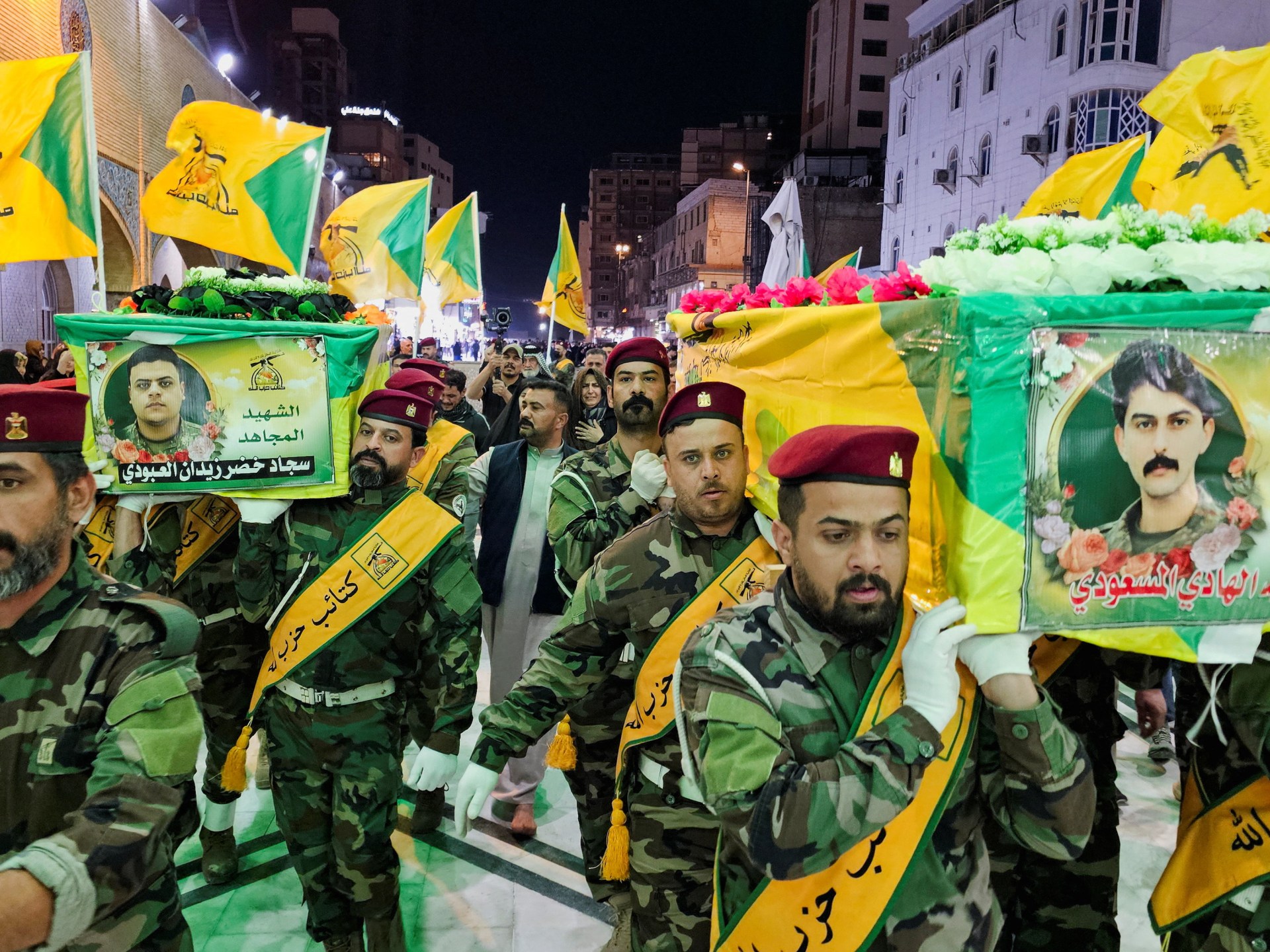
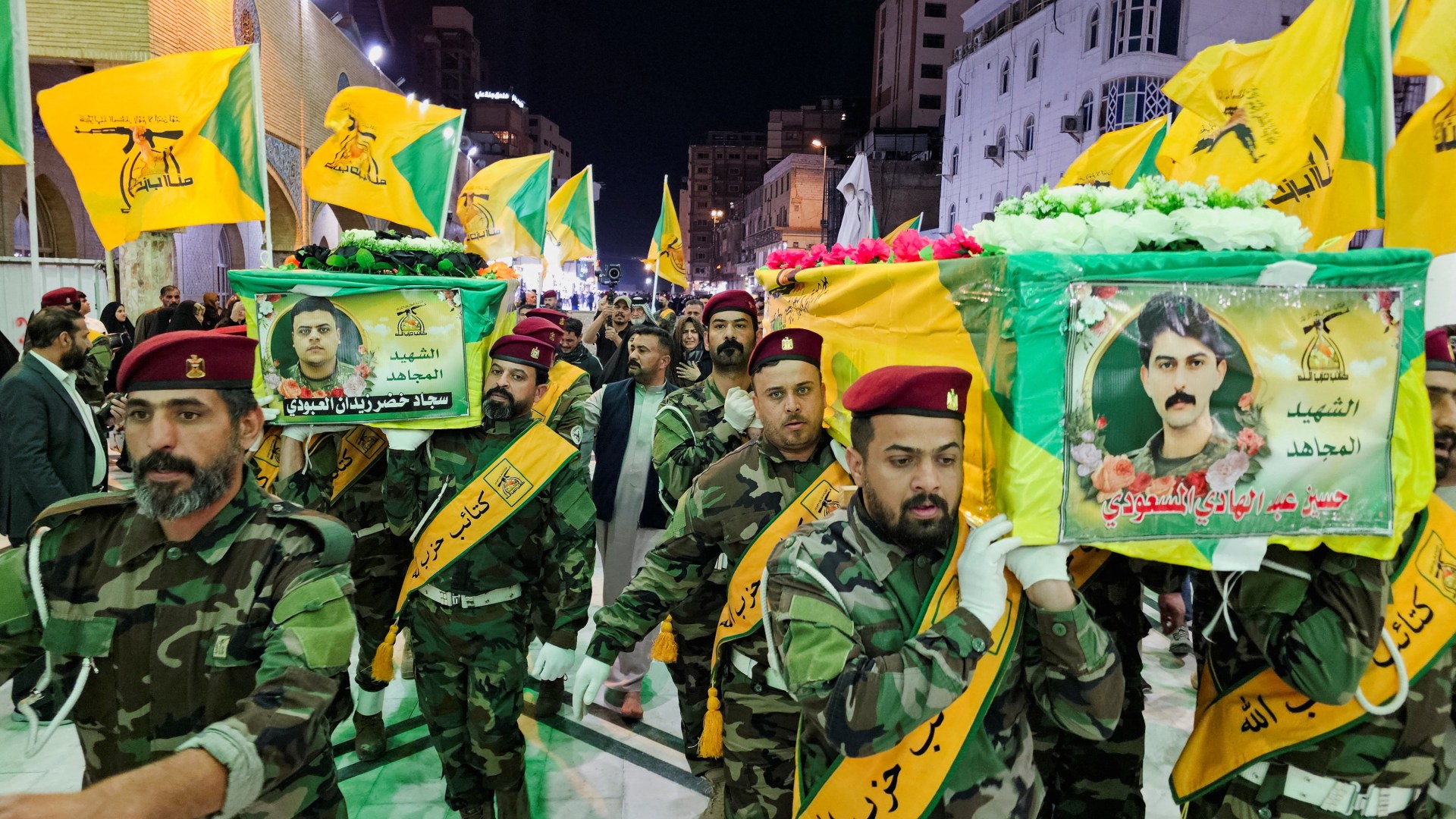
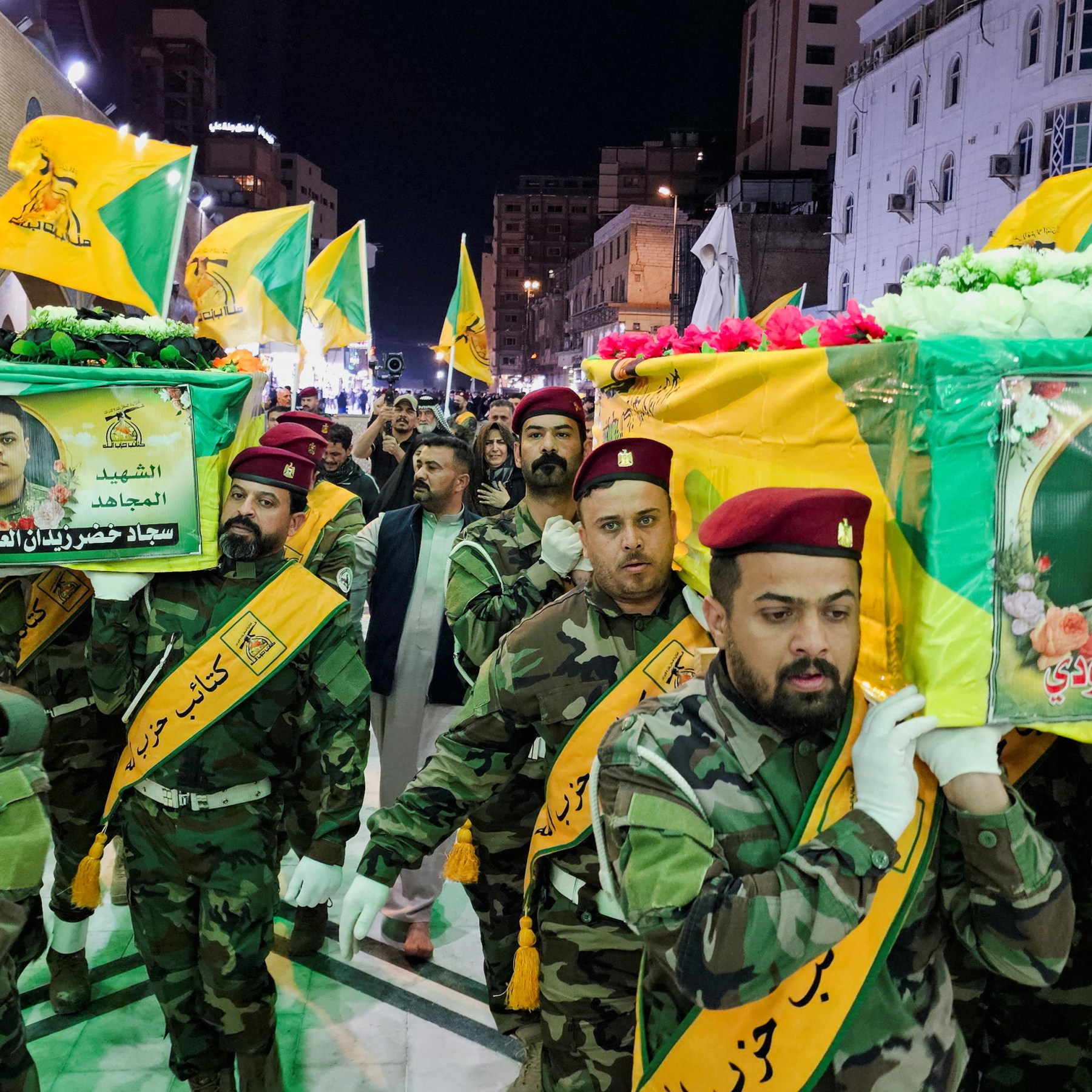
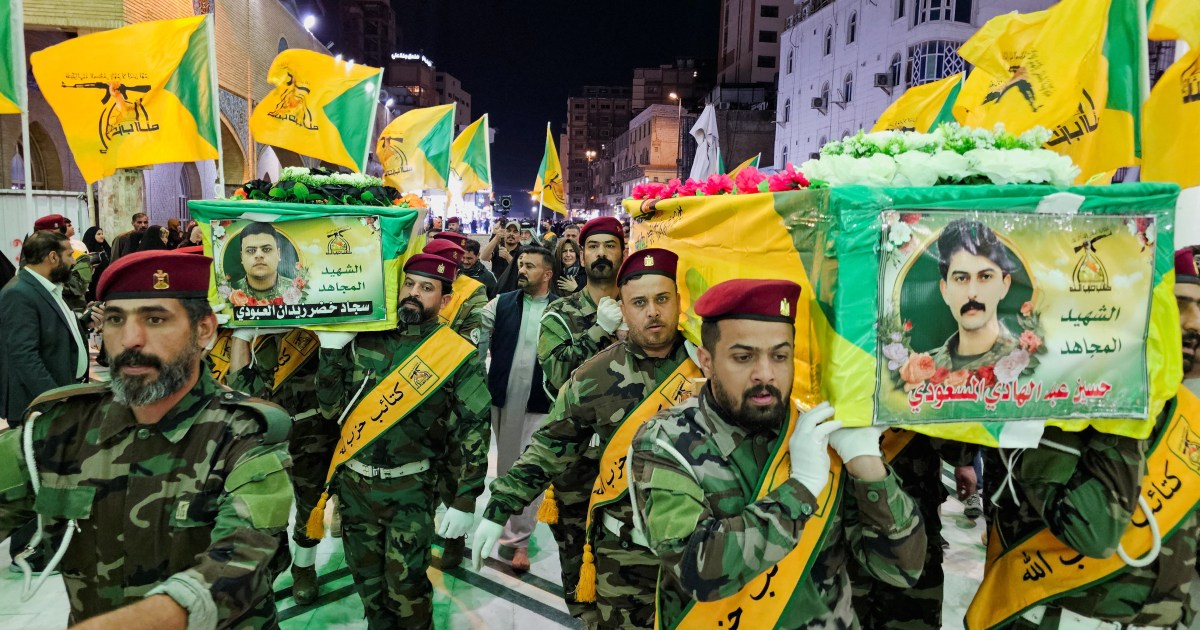
Footage circulated online by Iranian and Iraqi media outlets on Saturday and Sunday showed a convoy belonging to Hashd al-Shaabi, also known as the Popular Mobilisation Forces (PMF) of Iran-aligned fighters, entering Iran.

The convoy consisted of dozens of pickup trucks carrying packaged cargo, as well as men in military attire, some of whom also wore clerical turbans. The group waved the Iraqi flag, as well as the flag of Lebanon’s Hezbollah, another member of the Tehran-led “axis of resistance” of armed forces.

The Fars news agency, affiliated with Iran’s Islamic Revolutionary Guard Corps (IRGC), whose Quds Force leads the axis, described the movement as “the first humanitarian aid convoy from the people of Iraq”.

Al-Alam, the Arabic-language news channel run by Iranian state television, described the effort as a “loyalty campaign” and said it carried 70 tonnes of food and medical supplies. The Iranian government has repeatedly emphasised since the start of the war a month ago that the country does not face a shortage of essential goods.

The convoy started its journey from Basra in southern Iraq and crossed the border into Khuzestan in western Iran. It was spotted entering from Shalamcheh, a historic town on the border where invading Iraqi forces launched a deadly chemical gas attack during the eight-year war with Iran in the 1980s.

In the decades following the devastating war, and especially after the US invasion of Iraq in the early 2000s, the Iranian establishment grew close to armed factions in the neighbouring country, which became part of the anti-US and Israel regional axis.

During the journey this week, PMF fighters released videos in Abadan and Khorramshahr, as welcoming groups could be seen cheering them and Shia Muslim songs played in the background. The local Friday prayer imam was filmed exchanging warm greetings with the fighters and clerics while carrying a rifle himself as a sign of defiance during wartime.

The PMF, an umbrella group of armed factions that have now integrated into the regular Iraqi army, has claimed responsibility for attacks on US interests in Iraq and beyond and has itself been targeted.

There were unconfirmed reports and speculation online this week that some of the Iraqi forces had been spotted on the streets in Tehran, but there was no comment from Iranian authorities or any verified footage.

Such speculation is tied to years-long accusations that Iranian authorities use the PMF and other aligned armed groups to crack down on local dissent, including during nationwide protests, which the authorities have rejected.

The Basij paramilitary force of the IRGC and other security forces continue to set up heavily armed checkpoints and roadblocks on the streets in Tehran and other cities, and have launched a “campaign of warriors defending the homeland” that is officially recruiting children over 12 years old for field activities.

Amid a month-long internet shutdown, Iranian authorities have warned against dissent while the US and Israel express varying interest in overthrowing the Islamic Republic.

“I think we’ve had regime change; we can’t do much better than that,” US President Donald Trump told reporters aboard his presidential plane on Monday. “One regime was decimated, destroyed; they’re all dead. The next regime is mostly dead, and the third regime we’re dealing with different people than anybody has ever dealt with before.”

Washington says it has been preparing for a series of ground incursions on Iranian soil to take control of strategic islands on the country’s southern shores that are crucial for processing oil and gas resources while offering control over the strategic Strait of Hormuz.

At the same time, the US and Israel have been entertaining the idea of using armed Kurdish groups based in Iraq to open another ground front inside Iran.

Israel’s Channel 12 reported this week that premature leaks to the media, lobbying by allies, and assurances required by the Kurdish fighters have led the Trump administration to consider the plan unfeasible, at least for now.

Since the start of the war, the IRGC has repeatedly bombed Iraq-based interests linked with Kurdish fighters using explosive-laden drones and ballistic missiles that have also been launched against countries across the region.

Earlier in March, senior Defence Council official Ali Akbar Ahmadian said Iran has only targeted “bases of the US and the Zionist regime and secessionist groups” in the semi-autonomous Kurdish region of northern Iraq, but will bomb “all facilities” in the region if Kurdish fighters enter Iran.

US and Israeli warplanes continue to launch major strikes in Tehran and cities across the country, this week also hitting civilian nuclear sites, steel factories and a university. Overnight strikes into Monday led to temporary electricity outages in multiple areas of Tehran and nearby Karaj.