huffpost Press
Supreme Court Will Soon Decide The Fate Of A Top Trump Priority
Images
1 / 9
2 / 9
3 / 9
4 / 9
5 / 9
6 / 9
7 / 9
8 / 9

9 / 9
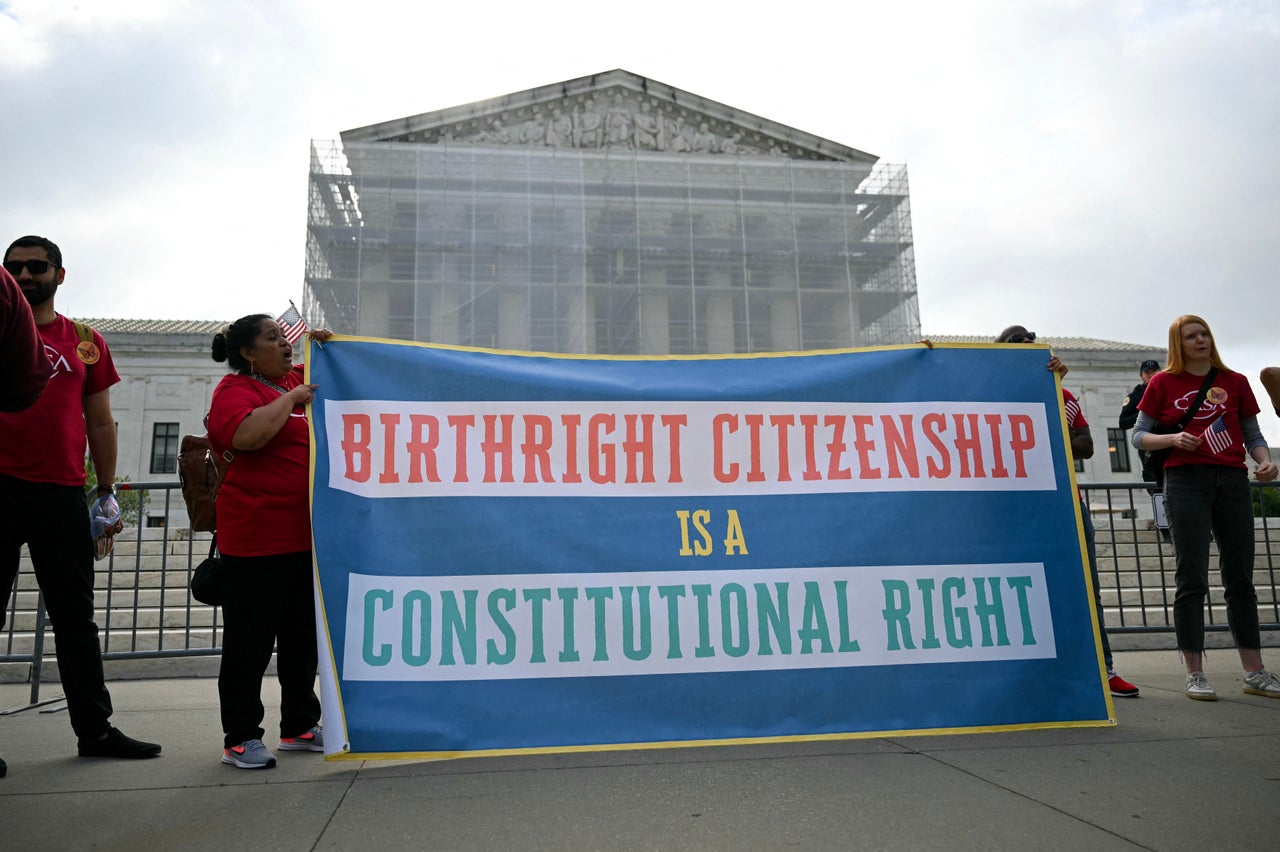
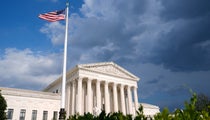
This week, the U.S. Supreme Court will hear arguments on what has long been an unquestioned, fundamental right: whether children born in the U.S. are automatically Americans by birth, a right guaranteed under the 14th Amendment and a concept that the high court itself has, for over a century, failed to turn its back on.

Justices are hearing the case Trump v. Barbara, a class-action challenge to President Donald Trump’s highly-contentious executive order, which declared an end to birthright citizenship for anyone born to undocumented or temporary resident parents after Feb. 20, 2025.

The stakes are enormously high for thousands of children and mixed-status families, whose legal rights and national status hang in the balance. Cody Wofsy, one of the American Civil Liberties Union lawyers arguing before the Supreme Court in defense of the existing system, told HuffPost it would completely upend the existing understanding of citizenship. “The arguments that the government is lodging about what it thinks the Constitution supposedly means would cast a shadow on the citizenship of millions and millions of people who have lived their entire lives as Americans, potentially going back generations,” he said.

The order hinges on a new interpretation of a phrase in the 14th Amendment to make the claim that only children of legal permanent residents are eligible for citizenship. Courts have overwhelmingly rejected the argument. As one district judge put it to Trump last year, “no court in the country has ever endorsed the president’s interpretation” of birthright citizenship. As a result, a universal injunction on his executive order has been in place ever since. But the Supreme Court now has the opportunity to change all that.

And advocates say the question before the court may be existential for the nation: Should long-settled law under the 14th Amendment be thrown away, or, if the court contorts itself to agree with Trump’s grossly distorted interpretation of birthright citizenship, then, arguably, no citizen is safe.

“This would really signal a kind of open season to question the citizenship of all sorts of folks in this country,” Wofsy said. “All sorts of our fellow Americans.”

For the Trump administration, the effort to whittle down who is an American citizen by birth hinges on its interpretation of a few words inside the 14th Amendment: “subject to the jurisdiction thereof.”

The 14th Amendment, one of the post-Civil War amendments, intended to confirm citizenship rights for all formerly enslaved people. It states that “all persons born or naturalized in the United States, and subject to the jurisdiction thereof, are citizens of the United States and of the States wherein they reside.” It has long been understood to mean anyone subject to the authority of U.S. law and government, and some very limited exceptions have not been a point of contention, such as children born to foreign-born diplomats living in the U.S.

But last year, the administration made the novel claim that “subject to the jurisdiction thereof” refers to people who are “‘completely subject’ to the United States’ ‘political jurisdiction’” — a definition, it argues, which excludes undocumented immigrants and temporary residents.

In a brief to the Supreme Court, Solicitor General John Sauer, who will argue on behalf of the administration, said the distinction is based on the idea that undocumented and temporary residents “do not owe primary allegiance to the United States by virtue of domicile, for illegal aliens lack the legal capacity to establish domicile here.”

In short, if you are living in or entering a country illegally or without legal permission or are here on a temporary basis, you can’t get legal residence. If you don’t have legal residence, it’s assumed you don’t have full allegiance to the U.S., despite being subject to its laws and law enforcement, and as a result, neither do your kids.

It is a tortured reading of the 14th Amendment that both courts and Congress have steadily rejected. Tying birthright to notions of “allegiance,” a word that appears nowhere in the text of the amendment, is what Wofsy described as “the government playing sleight of hand with the term.”

While the term had relevance in English and American law even before the Constitution’s Citizenship Clause was framed, Wofsy explained, “allegiance” was and has been understood as a technical term.

“Every person who comes to the U.S., whether they’re here for 10 years, 1 year or a week, owes ‘allegiance’ in the sense that they have to comply with the law and the law applies to them and that the law can be enforced on them,” he said. “That’s exactly what the Supreme Court had explained before the Citizenship Clause was framed, and that’s exactly how the Supreme Court later interpreted the constitutional text.”

The court has ruled on pretty much this exact issue before, over 100 years ago. In the 1898 decision United States v. Wong Kim Ark, the Supreme Court ruled 6-2 that a person born in the U.S. — even to parents who were citizens of another country — was born an American citizen.

Justice Horace Gray wrote in the majority that the 14th Amendment was, in fact, intended to expand the right to citizenship, not limit it. The 14th, he wrote, “was not intended to impose any new restrictions upon citizenship, or to prevent any persons from becoming citizens by the fact of birth within the United States, who would thereby have become citizens according to the law existing before its adoption. It is declaratory in form, and enabling and extending in effect.”

Congress also confirmed the interpretation 50 years after Wong Kim Ark by twice preserving statutes in the Immigration and Nationality Act that defined those born in America as “subject to the jurisdiction thereof” of the U.S. Those terms are still law today.

In the reimagined, narrow terms and conditions for birthright citizenship, the government is seeking to dance around the plain language laid out by both the Supreme Court and Congress around birthright citizenship.

“I think what the government [today] is gesturing at is some other idea of loyalty. Or pledging allegiance to the flag, something like that. And that is absolutely not the rule and has never been the rule,” Wofsy said.

It may prove problematic for the administration in its arguments, since the conservative majority of the Supreme Court regards itself as textualists who must interpret the law strictly in accordance with the intention of the Founding Fathers.

“The arguments logically don’t work,” Wofsy said. “The sources don’t support them.”

So why would the Supreme Court take a case that seems to involve completely settled law?

While logically, it feels like Trump v. Barbara should be an open-and-shut case at arguments, Lisa Graves, co-founder of Court Accountability, a group investigating corruption in the judiciary, told HuffPost she isn’t particularly confident that’s how the justices will treat it.

“If this Court were not so far in the tank for Trump, [this birthright case] would be a 9-0 decision against him. This would be a slam dunk,” Graves said.

Court Accountability reported that in 2025, among two dozen rulings or temporary orders made by the justices tied to the Trump administration, Trump won 90% of the time.

And the Trump administration has made it quite clear that eliminating birthright citizenship is a top policy priority.

In a campaign message in 2023, Trump condemned birthright citizenship, saying he would seek to overturn it.

“This policy is a reward for breaking the laws of the United States and is obviously a magnet helping draw a flood of illegals across our borders. They come by the millions and millions. They come from mental institutions... They come from jails, prisoners, some of the toughest, meanest people you’ll ever see. The U.S. is among the only countries in the world that says even if neither person is a citizen nor lawfully in the country, their future children are automatic citizens the moment the parents trespass onto our soil. This current policy is based on a historical myth,” Trump said.

When the executive order purporting to end birthright citizenship was quickly blocked via nationwide injunctions issued by federal judges, the administration moved to have the Supreme Court strike down those blocks. However, in that case, 2025’s Trump v. Casa, the administration avoided asking the court to directly address the question of citizenship, instead focusing on a procedural appeal on the validity of the injunctions blocking the order from taking effect.

Trump won that one, but federal judges quickly found other ways to block the order — including the type of class-action suit now before the court. And this time, both the court and the administration must face the question of citizenship rights directly.

Reversing the birthright citizenship law not only shatters Constitutional bedrock principles, but it could put tens of thousands of people in a deeply confusing and chaotic situation. Graves said she isn’t certain whether justices even consider the practical impact a ruling for Trump could have in this case.

“I’m concerned they don’t [care], and we have recent evidence of that in the tariff ruling where they could have, back in August of last year, shut down those tariffs which were plainly unconstitutional,” she said. In that case, the court allowed the tariffs to take effect and the government to begin collecting fees as the case progressed — before finally ruling against Trump, leaving others to figure out the mess of what happens to the money already collected.

“They could have nipped that in the bud, and they did not. And then, when they issued a ruling, they did not provide a mechanism for addressing the illegal, unconstitutional collection of those tariffs. They just left it for other bodies to figure out,” she said.

And the impact would be far-reaching.

The Center for Immigration Studies reported an estimated 225,000 to 250,000 births by undocumented mothers in the U.S. last year. According to a study by the Migration Policy Institute, the repeal of birthright citizenship would likely swell the number of unauthorized people in the U.S. — the exact opposite of what the Trump administration purports to want.

Aarti Kohli, executive law director of the Asian Law Caucus, noted in a call with reporters ahead of arguments that right now, having a baby in the U.S. and determining citizenship is straightforward: New parents receive a birth certificate and, within days, a Social Security number is issued. If Trump’s birthright order is upheld, that would change, creating more chaos. “For children born after this order takes effect, [a birth certificate] would no longer be sufficient proof of citizenship on its own,” she said.

“Parents would have to prove immigration status before their child’s citizenship is recognized. That sounds manageable until you understand the reality. The databases used to verify status are notoriously unreliable,” Kohli said.

It would likely create a multi-tier system, where newborn babies are effectively stateless until their parents can prove their own citizenship or legal status.

“Birth certificates are how Americans get passports, enroll in school, and access healthcare,” Kohli said.

There are also looming questions about what happens to children when one or more parents are unknown. In a brief from Project Rousseau, a migrant advocacy nonprofit organization, the group noted that about 10% of all birth certificates in the U.S. list the father as unknown. Situations where neither the mother nor the father of a child is known — these children are called “foundlings” — also present a unique challenge. If the parents’ citizenship is unknown, enforcement of Trump’s order would mean these children would have their citizenship completely stripped away and potentially be left stateless.

Kohli said it’s important to remember that the families and people affected by Trump’s proposed order “are not outsiders.” They are parents on HB-1 visas or on student visas. Some have humanitarian temporary protected status, and many people in these situations frequently transition to permanent residency.

“They are putting down roots, investing in careers and raising families,” Kohli said.

Conchita Cruz, co-executive director at the Asylum Seeker Advocacy Project (ASAP), told reporters ahead of arguments that many families are worried ICE will detain them or their newborns — separating them from their families. And these are people who own their homes, have other U.S. citizen children and have built lives for themselves here in the U.S. with their family.

“It is a cloud hanging over the joy of having a child for so many expecting parents,” Cruz said.

In an anonymous witness statement shared by the ACLU with reporters, a woman who attended college in the U.S. as an international student and has two brothers who are U.S. citizens said she worries about the future of her now nearly 7-month-old daughter. The child was born after the February 2025 deadline.

“Being able to give my child the opportunity to make her dreams come true in this country is such a blessing. But as soon as the executive order was announced two months before her birth, we started to get really concerned about the uncertainty. What’s going to happen to my child, and how do I provide her as much protection as she needs?” the woman said. “If she thinks she’s an American, if there is uncertainty, that’s going to impact how her identity forms. It’s important to have something unconditional, like a parent’s love. Being American is unconditional.”

The injunction the court issued against Trump’s birthright executive order remains in place and protects every single child, everywhere in the U.S., who is subject to it for now. Until the Supreme Court decides this case, people should try to breathe easy, Wofsy said. However, he acknowledges it’s “painful and scary” for families to have their citizenship called into question and their child’s future in the country attacked.

The test of the Supreme Court’s fidelity to the Constitution and to the concept of equal citizenship looms massively in the days ahead. And as Graves noted, the justices stand in the shadow of 160 years of law holding that U.S. citizenship is based on birth.

“This notion that somehow immigrants aren’t subject to U.S. jurisdiction?” she said. “You know, the legal term for that would be bullshit.”