yahoo Press
Sysco is Buying the Warehouse It Could Never Build
Images
1 / 5
2 / 5

3 / 5

4 / 5
5 / 5
Sysco just spent $29 billion acquiring the one restaurant supply model it couldn't replicate on its own… the one where the customer does all the work.

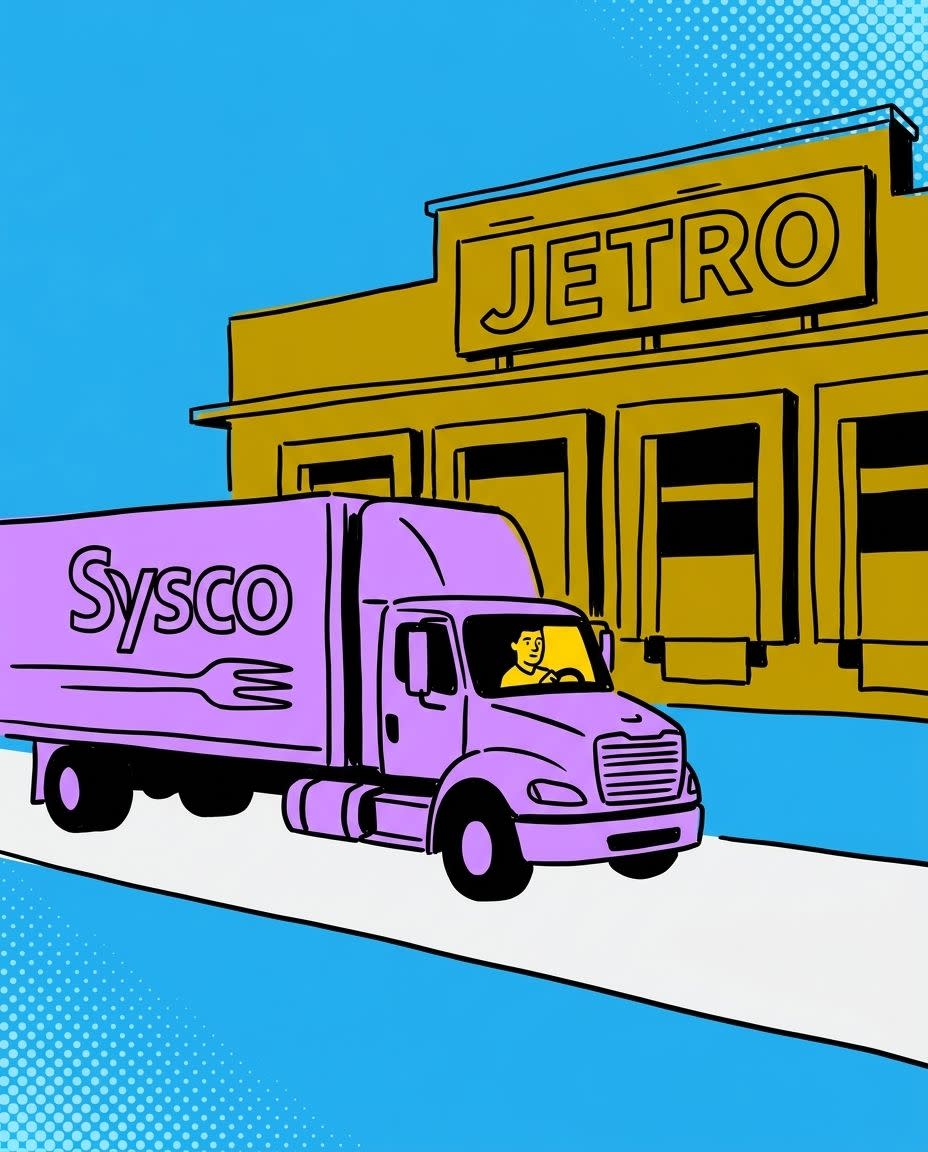
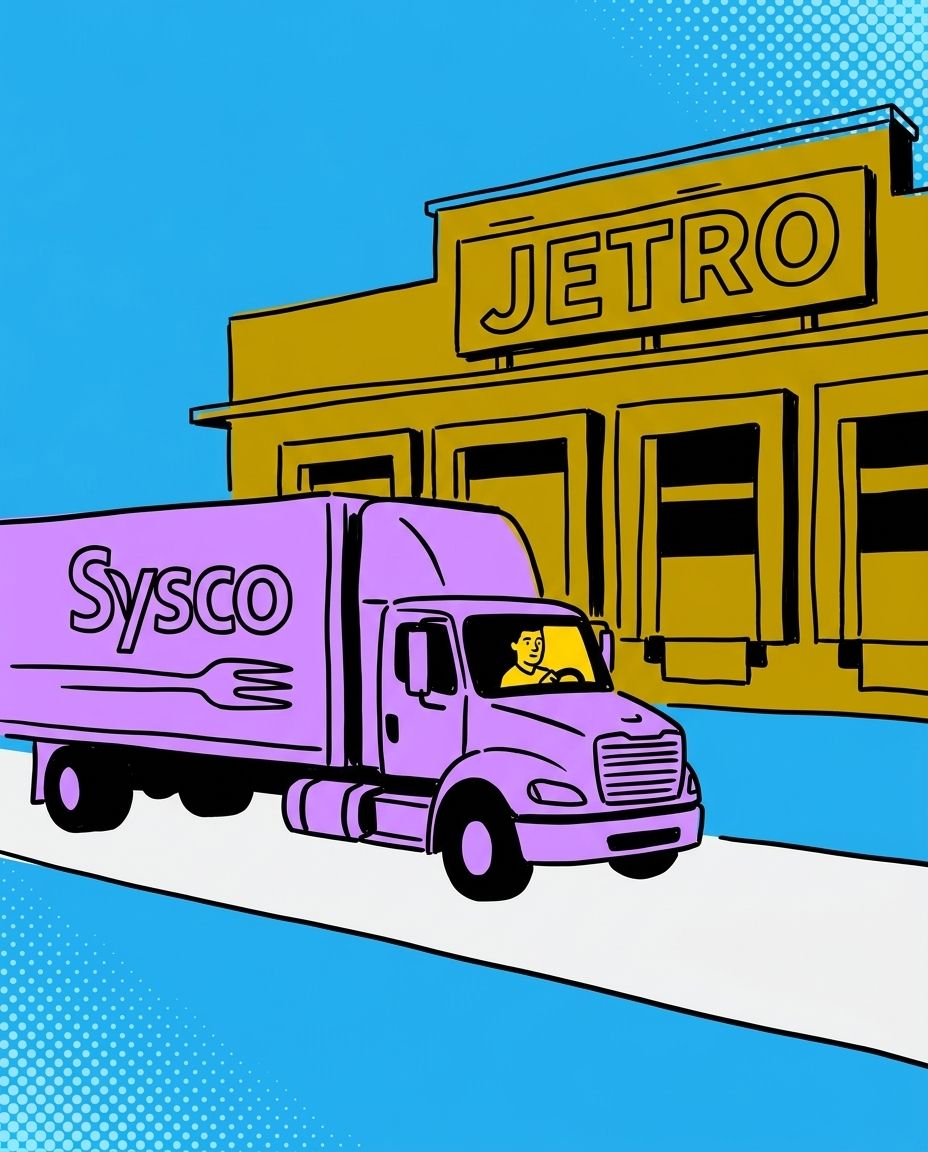
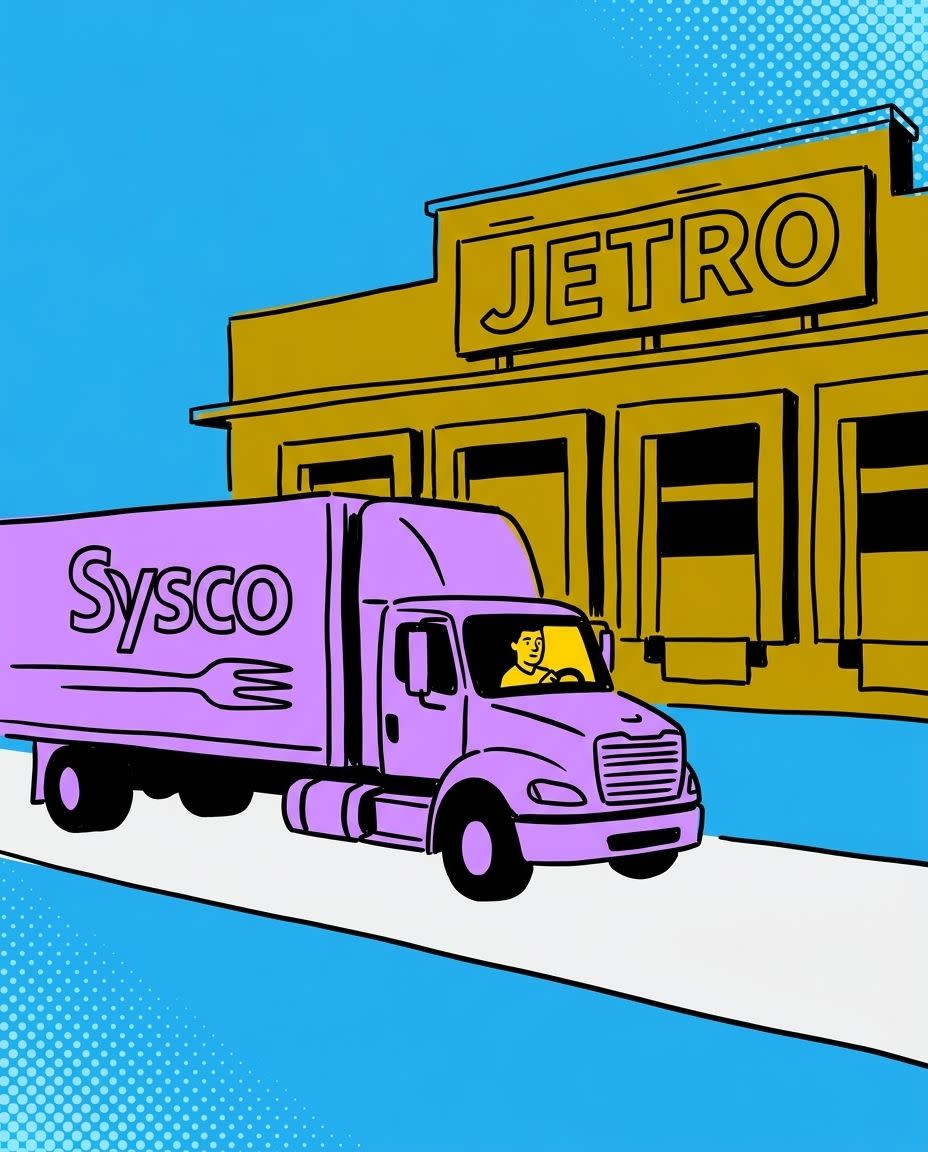
On Monday, Sysco announced a deal to acquire Jetro Restaurant Depot, the 166-store, 35-state cash-and-carry warehouse chain that independent restaurant operators have been quietly leaning on for decades. The deal is valued at $29.1 billion, structured as $21.6 billion in cash plus 91.5 million Sysco shares, making it the largest acquisition in the company's history by a comfortable margin.

Jetro threw off $1.9 billion in free cash flow last year on roughly $16 billion in revenue, and founder Nathan Kirsh kept it private long enough that nobody ever got to squeeze the margins for a quarterly earnings call. The result is a business that genuinely delivers high returns, loyal customers, and minimal logistics complexity because the customer is the logistics. Operators drive to a warehouse, load their own carts, and haul it back to their kitchens. Glamorous? No. Profitable? Very.

Sysco is funding the cash portion with roughly $21 billion in new debt, pushing leverage to about 4.5x. They've promised to de-lever by 1.0x within 24 months, buybacks are paused, and the dividend survives. Close is expected by Q3 of Sysco's fiscal 2027, pending regulatory review.

The strategic logic here is actually pretty elegant, which is not something you say often about a $29 billion food distribution deal. Sysco's core business is broadline delivery; basically, you order, and they truck it. Jetro is the opposite end of the same transaction, two completely different models serving the same customer. Think of it less like a traditional bolt-on acquisition and more like Amazon buying Costco, one company deciding it wants to own every lane between supplier and end user, and being willing to pay a premium to close the loop.

The numbers Sysco is projecting ($250 million in annual cost synergies within three years from procurement and supply chain overlap) bring the effective acquisition multiple down from 14.6x to 13.0x operating income. That's still rich. Investors didn't exactly celebrate; the stock fell on the announcement, which is the market's version of slow clapping. They believe the strategy bu they're skeptical that the price tag was the move.

Our analysts just identified a stock with the potential to be the next Nvidia. Tell us how you invest and we'll show you why it's our #1 pick. Tap here.

The debt is where this gets uncomfortable. Taking on $21 billion at 4.5x leverage is aggressive for any business, and doubly so for a food distributor operating on margins thin enough that a bad quarter dents the whole thesis. Sitting on top of that is integration risk of the rarest kind. Sysco has never run a warehouse retail concept. They're keeping Jetro as a standalone segment, which is the right instinct, but "we'll keep it separate" is precisely what every acquirer says before things get complicated and the org charts start merging like a Brady Bunch adaptation on OnlyFans.

Then there's the ghost of 2015. When Sysco tried to buy US Foods eleven years ago, the FTC blocked it, and the courts agreed. While that denial haunts any large Sysco deal, any analogy to that deal is inherently weaker than it looks. US Foods was a direct competitor in broadline delivery. Jetro warehouses. They serve the same independent restaurant operators through entirely different mechanisms, and the FTC's ability to draw a tight competitive market around "delivery-based broadline distribution" gets a lot harder when the target doesn't deliver anything.

Under an administration that has been friendlier to industrial consolidation than any since the Coolidge era, approval seems likely, possibly with targeted divestitures in markets where footprints are uncomfortably close.

If this closes on schedule, late 2026 or early 2027, the story immediately becomes a de-leveraging race. Sysco has roughly 24 months to prove it can absorb $21 billion in debt while integrating a business that runs nothing like its own.

They've also announced plans to open 125+ additional Jetro locations over the next 20 years, which is either a genuinely compelling organic growth runway or the kind of thing that sounds better in a slide deck than on a balance sheet that still needs to come down a full turn.

Watch the integration milestones. Watch the debt paydown pace. That's the whole game.

One stock. Nvidia-level potential. 30M+ investors trust Moby to find it first. Get the pick. Tap here.