yahoo Press
Ukraine’s Fire Point develops low-cost Patriot missile alternative
Images

1 / 10
2 / 10

3 / 10

4 / 10

5 / 10

6 / 10

7 / 10

8 / 10

9 / 10

10 / 10
As Ukraine continues to navigate a high-intensity aerial conflict, the demand for sustainable air defense has led to a major domestic breakthrough.

The Ukrainian defense firm Fire Point is currently spearheading the development of a next-generation interceptor designed to neutralize ballistic threats at a significantly lower price point than Western counterparts.

This initiative represents a strategic shift toward economic efficiency in modern warfare, aiming to provide a reliable shield against sophisticated missiles without the multi-million dollar price tag of traditional systems.

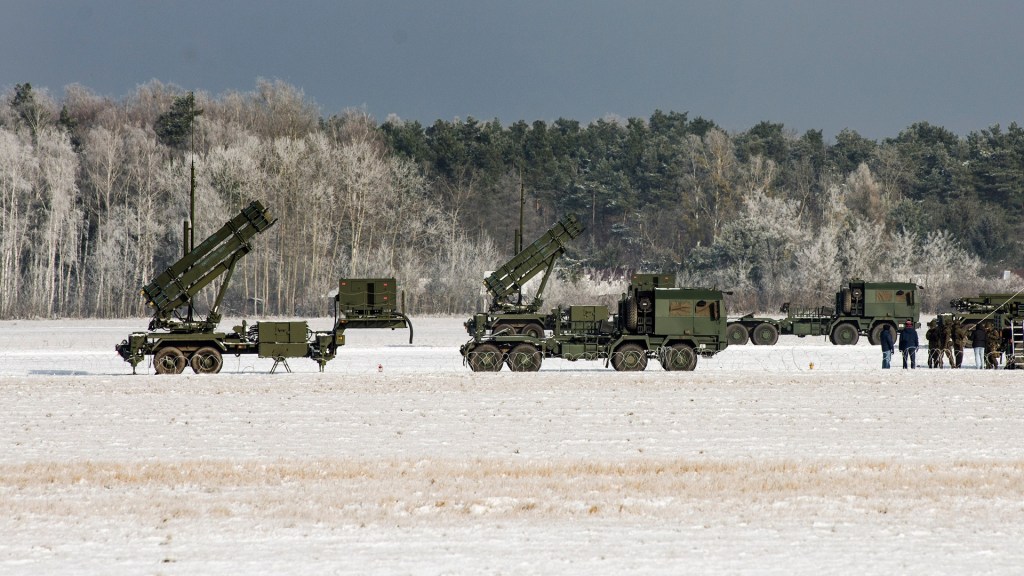
The primary motivation behind this project is the growing "cost-to-kill" ratio disparity. Currently, intercepting a single ballistic target using a U.S.-made Patriot system can cost several million dollars per missile.

Fire Point co-founder Denys Shtiliierman noted that the company’s objective is to reduce the cost of a single interception to under $1 million.

Achieving this would be a monumental shift for defense economics, as it allows for a more sustainable protection of critical infrastructure against a high volume of incoming threats.

The new air defense solution is not starting from scratch; it is being built upon a foundation of existing high-speed Ukrainian missile technology.

The initiative runs alongside Fire Point’s broader work on advanced supersonic systems, which provide the high-velocity foundation required for modern air defense.

The FP-7 system is designed for a range of 200 kilometers (124 miles), offering significant regional coverage.

To handle the most demanding ballistic threats, the FP-9 missile is engineered to reach staggering speeds of up to 2,200 meters (7,218 feet) per second.

At these velocities—approximately Mach 6.4—the interceptor possesses the kinetic energy necessary to neutralize incoming ballistic projectiles during their terminal phase.

These specifications are bolstered by the structural baseline of the Flamingo cruise missile, ensuring the airframe can withstand the intense thermal and aerodynamic stress of high-altitude, high-speed maneuvers.

Unlike many closed-loop Western systems, Fire Point’s approach focuses on "open architecture." This design philosophy allows for the seamless integration of various components from different manufacturers.

To bring this to life, the firm is seeking active collaborations with prominent European defense leaders such as Hensoldt, Thales, and SAAB. By combining Ukrainian missile airframes with European radar, guidance sensors, and command-and-control software, the project aims to create a versatile and modular defense network that can be easily upgraded and scaled.

The project’s potential has already attracted significant international interest. Fire Point is currently in the process of finalizing a $760 million investment deal with a Middle Eastern conglomerate.

This injection of capital would value the defense company at approximately $2.5 billion, providing the necessary resources to accelerate research and production.

While the immediate goal is the protection of Ukrainian skies, the long-term vision is to establish a competitive, exportable air defense system that can serve as a budget-friendly alternative for nations globally.

The roadmap for this low-cost interceptor is ambitious but follows a clear technical trajectory. Fire Point expects to conduct its first live test to intercept a ballistic missile by the end of 2027.

If successful, the system will fill a critical gap in Ukraine's defensive layers, offering a high-altitude solution that complements existing short-range and medium-range defenses.

This domestic innovation signifies Kyiv’s transition from a recipient of foreign aid to a developer of high-tech military solutions that could redefine the standards of the global defense industry.