Press
How a UK military college sought to distance itself from ban on Israelis
Images
1 / 6

2 / 6

3 / 6

4 / 6

5 / 6

6 / 6
Head of defence college asked military official to ensure the government took ownership of the ban, emails reveal.

Save

Share

The United Kingdom’s decision to ban Israelis from a top military college over Israel’s genocidal war on Gaza prompted concern about the college’s reputation internally, with its leadership seeking to distance the institution from the decision, emails from the college, which have been obtained by Al Jazeera, reveal.

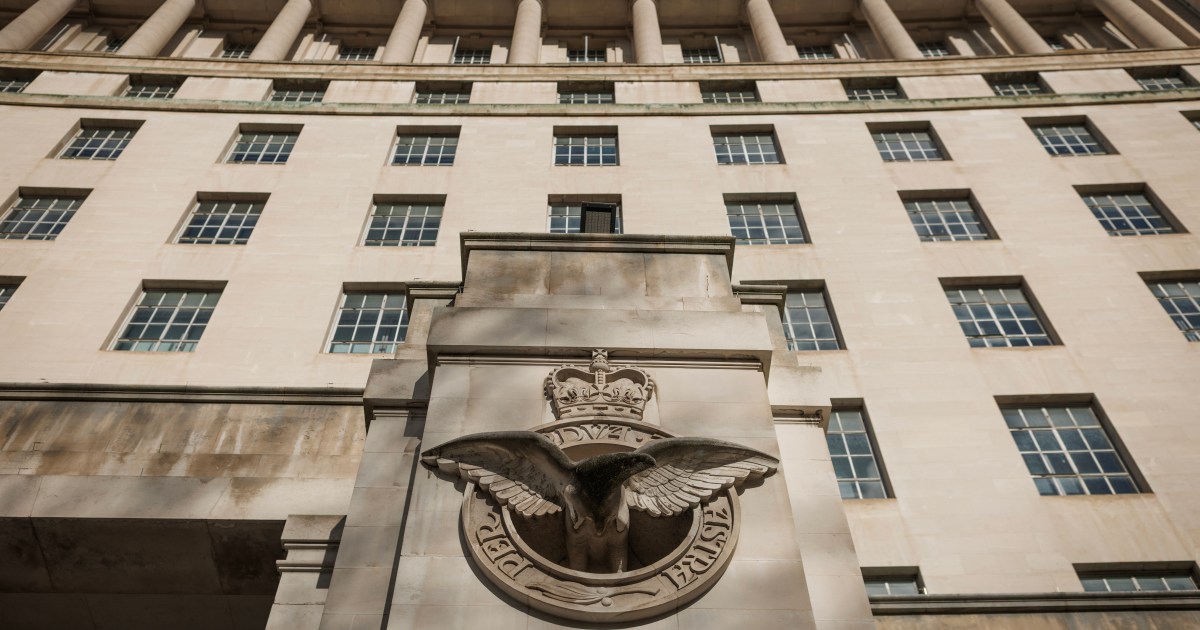
The Ministry of Defence (MOD) announced the ban on Israelis attending the Royal College of Defence Studies (RCDS) in September last year after Israel unveiled plans to launch a major ground assault on Gaza City.

The British government made the decision, which was widely reported in international media, amid a wave of condemnation of Israel’s escalation of the war, calling the planned ground offensive “wrong”.

Previously unreported correspondence shows that the move prompted discussion within the RCDS about potential harm to its reputation as an institution which welcomes students of all backgrounds, leading its head to ask a senior military official to ensure that the public would be aware that the college played no role in the decision.

RCDS commandant George Norton asked Tom Copinger-Symes, a British army lieutenant general, for his help in shaping the public narrative while a government minister was preparing to answer a question about the ban in the UK’s upper house of parliament.

In an email sent shortly after the ban was announced, Norton told Copinger-Symes that it would “appear to be important” for Jenny Chapman, the UK’s development minister, to highlight that the college does not invite or select participants in its courses, and that invitations were “rather a government-to-government matter”.

“These key pieces of information have been absent from the majority of media portrayal, generating a perception that RCDS itself is deciding which countries to invite or not to invite,” Norton, a retired British army officer, wrote.

“I would be grateful for your support in underlining this position in our public narrative, without of course creating a perception that RCDS (or CSOC) is seeking to undermine government policy.”

Copinger-Symes wrote back that he would “see what we can do” and asked a colleague to “check that we are able to contribute” to Chapman’s response.

Norton’s request came a day after staff at the college discussed the potential reputational impact amid a flurry of media inquiries and correspondence from the public about the ban.

“I appreciate that while we fall under MOD, we do have a standalone brand and our reputation as a welcoming college that positively wants to engage with all as that diversity and dealing with places we would not always agree with on a topic is exactly what this place is about,” deputy commandant Tamara Jennings wrote in an email to colleagues about how to respond to a media inquiry.

“So a story which says RCDS have banned anyone is unhelpful, both in terms of attribution of the decision and the term ‘ban’.”

Al Jazeera obtained the emails via a Freedom of Information request.

In her answers to questions about the ban in the House of Lords, Chapman explained the government’s rationale for the decision, but did not specifically state that the college had no role in selecting participants for courses, according to the House of Lords Hansard, the publicly available daily transcript of debates and discussions in the chamber.

In response to questions from Al Jazeera about this, an MOD spokesperson said decisions about military education and training are made by the government on a “case-by-case basis” and following “robust assessment as to the benefits and the risks”.

“We keep foreign attendance on UK military education courses under constant review,” the spokesperson said.

The RCDS did not respond to a request for comment.

While the UK is traditionally a close ally of Israel, the countries’ ties have been strained by Israel’s genocidal war on Gaza.

More than 72,000 Palestinians – the majority women and children – have been killed in Gaza since Israel launched its genocidal war on the enclave following the October 7, 2023, Hamas-led attacks on villages and army outposts in southern Israel, according to Gaza’s health authorities.

These figures have been accepted by the Israeli authorities as correct; however, many thousands more are missing and believed to be dead and lying under the rubble.

Fewer than five Israeli military personnel are currently enrolled in military-related academic courses in the UK, according to British government officials.