Press
Migrants are making false domestic abuse allegations to stay in the UK, BBC investigation finds
Images
1 / 10

2 / 10
3 / 10
4 / 10

5 / 10
6 / 10
7 / 10
8 / 10
9 / 10
10 / 10
Migrants are falsely claiming to be victims of domestic abuse in order to stay in the country, a BBC investigation has discovered.

They are exploiting rules brought in by ministers to help genuine victims of abuse to secure permanent residence more quickly than through other routes, such as asylum.

Inadequate Home Office checks are allowing them to do so on the basis of little evidence, while their unsuspecting British partners have had their lives turned upside down by the false accusations, lawyers said.

The concerns about how these protections - known as the Migrant Victims of Domestic Abuse Concession - are being exploited are the latest to be highlighted by a BBC investigation into the immigration system.

Today we reveal how some migrants, both male and female, are duping British partners into relationships and marriage and then making fake domestic abuse claims after moving to the UK.

Others are being encouraged to fabricate abuse allegations by legal advisers who advertise online.

A BBC undercover reporter met one adviser who encouraged him to make false allegations of domestic abuse.

The number of people claiming fast-track residency on the basis of domestic abuse has now reached more than 5,500 a year - a number which has risen by more than 50% in just three years.

In one case, a British mother who had left her male partner after reporting him for rape was subsequently accused by him of domestic abuse - a false allegation, she says, made so he could stay in the country.

The allegations were never proven but the partner has been able to use them to avoid having to return to Pakistan.

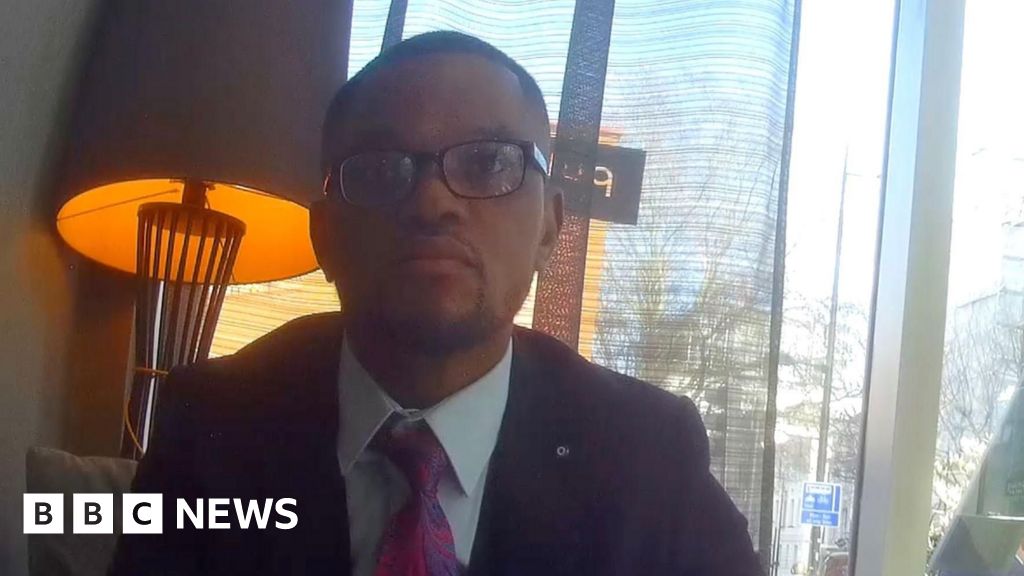
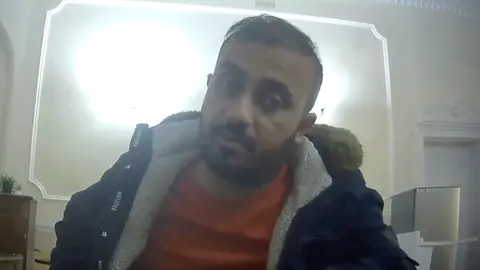
In a hotel lounge in London's St Pancras in late February, a young immigration adviser in a smart suit is meeting a client.

He has been contacted a few days earlier by a new customer, a recent immigrant from Pakistan.

The man explained that he had a problem - he wants to leave his British wife to live with his mistress. But his visa is linked to his marriage; if he separates, he would have to leave the country.

On the initial phone call, the adviser, Eli Ciswaka, had been quick to suggest a solution. Unprompted, he told the prospective client to pretend he was the victim of domestic abuse.

Now he confirms what he's willing to do. For £900 he will fabricate the claim, creating a story to tell the Home Office in order to secure the client's status in the UK.

What he doesn't know is that his customer is really a BBC undercover reporter investigating how some lawyers and immigration advisers are helping migrants break the law by making up stories for them to gain indefinite leave to remain in the UK.

Under Home Office rules, migrants who are the victims of domestic abuse and who are on temporary visas in the UK as the partners of British citizens can apply for a special concession.

Because these migrants are often reliant on their partners not just for their visa but for their food and accommodation, the concession provides support to those whose relationships have broken down because of violence or abuse.

If the application is successful, they are granted permission to stay in the UK for three months and can claim benefits.

During those three months, they can then apply for indefinite leave to remain in the UK, when foreign nationals are given the right to live, work and study in the UK permanently with no time limit.

This is much faster than other routes to permanent residency, such as asylum.

Someone who lives and works in the UK on a visa would typically have to wait at least five years before an application for indefinite leave to remain can be made.

Experts told us they were concerned that these rules were open to abuse because of how quickly that status can be conferred.

So we decided to investigate.

Ciswaka, who uses the company name Corporate Immigration UK, regularly posts on social media about the domestic abuse concession and boasts about successes he's had on behalf of clients asking for help via this route.

During the meeting at the St Pancras hotel, he goes into more detail about how he will convince the Home Office.

"What evidence are you going to use because she doesn't hit me or anything so there's no domestic violence," our reporter asked.

"Orally," Ciswaka replied. "You two have been having an argument and she's been telling you things like: 'Remember, I'm the one who brought you here' - those kind of things."

Later on in the conversation he explained more about his plan.

He said that he would present the case as "psychological domestic abuse", like "when someone is playing with your mind".

He told our reporter not to worry, that he would create a story for him. He had experience from the other cases he had worked on.

"How many were successful?" the reporter asked.

"All of them," Ciswaka replied.

To prove it, he showed the reporter a Home Office letter sent to him on behalf of a client. It said their application had been successful, although it was not clear whether this case was based on genuine domestic abuse allegations.

Ciswaka is neither a registered solicitor nor a regulated immigration adviser, meaning it would be illegal for him to provide immigration advice or services.

But the letter showed that the Home Office had been sharing official correspondence with him about paying clients, seemingly without checking his credentials.

Ciswaka explained to our reporter what would happen next.

"Once we submit this one, you can go live with the girlfriend because you will get three months limited leave to remain," he said.

"During that three-months limited leave to remain, that's when you will have to apply for indefinite leave to remain."

He told the reporter not to worry about what the consequences might be for his wife when he accused her of abusing him, saying she would not be affected.

"She will not be questioned, she will not be called because there is no crime."

Ciswaka did not respond to a written request for comment, but during a phone call to tell him about our investigation he denied being willing to make up a story that the undercover reporter had been a victim of domestic abuse.

The Immigration Advice Authority, which regulates the industry, said it would "investigate and act decisively" to identify those involved in wrongdoing and "take robust enforcement action".

Immigration Services Commissioner Gaon Hart said: "Our message to the public is clear - only use registered advisers, anything else puts you at serious risk."

According to figures obtained by BBC News using the Freedom of Information Act, a total of 5,596 migrants made applications for indefinite leave to remain as the victims of domestic abuse in the 12 months up to September 2025, the most recent period for which there is data.

Around a quarter of applications - 1,424 of them - were made by men, a rise of 66% compared with the same period two years earlier, with the number being made by women increasing by 47%.

That has led some to worry the rules are being gamed by male and female migrants who make up allegations.

Victims of false allegations have complained that their partners made false reports to the police which resulted in a crime report which was then used as evidence to persuade the Home Office, even though the police investigation resulted in no action.

The Home Office says a crime reference number on its own is not treated as proof that domestic abuse has occurred.

Some victims have reported their abuse to domestic violence charities and used that as evidence, or sought a non-molestation court order against their partner which can be obtained "ex parte", meaning without their partner's notice.

More than a decade ago, in 2014, an internal Home Office assessment "identified the potential for abuse of the domestic violence route to settlement".

A year later, a report by the Independent Chief Inspector of Borders and Immigration found problems with checks being made by officials on domestic abuse claims and excessive weight being applied to "unverified evidence" such as letters from support agencies which just repeated an alleged victim's own account of what happened.

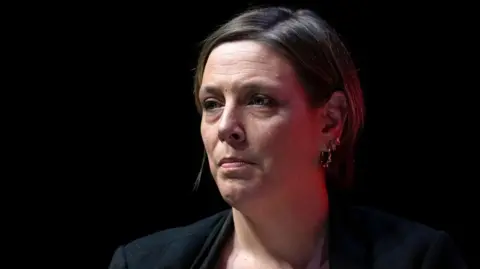
Jess Phillips, the minister for safeguarding in the Home Office, said: "The unacceptable abuse of this route, which protects genuine victims from the devastation of domestic abuse, is utterly shameful. I have personally seen the deplorable impact of this type of underhanded tactic.

"Let me be clear: try to defraud the British people to remain in the UK and your application will be refused, and you will find yourself on a one-way flight out of Britain.

"Sham lawyers facilitating this advice abuse will be put behind bars and their dirty money seized will be reinvested to shut down the crime they once bankrolled."

This issue is close to Phillips' heart as she was warned about it by one of her own constituents.

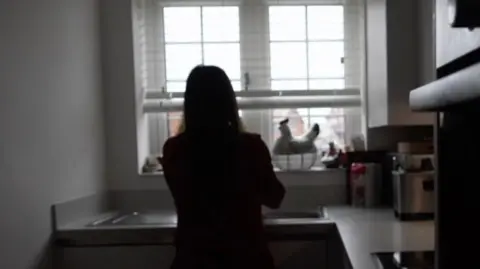
Aisha, not her real name, met her ex-husband on a Muslim dating app during the pandemic and began a whirlwind romance.

"He was promising the world, proper love-bombing me. And he was buying things as well, trying to get me to fall in love very quickly with him," she says.

After an Islamic wedding, followed by a formal ceremony, Aisha says the relationship soured.

She says she discovered he did not have British citizenship, as he had claimed to her when they first met, and that he was actually reliant on her for his visa as a Pakistani national.

"He became fully controlling, very abusive. He started demanding that he wanted a baby in the country," she says.

"And I think his friends at the time were telling him, you should have a baby to secure yourself here. So he was trying very hard to get me pregnant. And that included, unfortunately, rape as well."

She left the marital home and reported what had happened both to the police and the Home Office.

That prompted officials to write to him to say his visa would expire without the support of his spouse.

"I think once he got that curtailment letter, he thought there's no way out, they're telling me to leave, I need to do something."

She says his answer was to go to the police and tell them that he was the victim of domestic abuse, not her.

He told officers that she and her family had subjected him to coercive control, and that she had been physically violent as well.

"He told me just before he made the domestic abuse report: "Oh don't worry, I've multiple ways to stay here. I don't need you to stay in the country'," she says.

"I was being supported by the authorities and I was being supported by domestic abuse agencies, way before his allegation of domestic abuse. And for him to turn the narrative around and say I'm a perpetrator, it was heartbreaking."

Aisha says the police never took any action against her in relation to her ex-partner's allegations.

He also never faced rape charges, as she changed her mind about whether to support a prosecution.

But Aisha was awarded more than £17,000 by the Criminal Injuries Compensation Authority meaning they judged that the sexual assault she had alleged was more likely than not to have occurred.

Aisha says her ex-husband's campaign against her did not end there.

In January 2023, she was arrested by the police after he made another allegation against her.

She says she spent a total of eight hours away from her baby who she was breastfeeding at the time because her daughter was allergic to formula milk.

"When I left, I went to breastfeed my baby and when I got home, I just wanted to end my life," she says.

Her MP, Jess Phillips, wrote to officers that day, saying "I do not believe she would have been arrested had they [police] been aware of the history between her and her ex-partner".

The Birmingham Yardley MP continued to apply pressure and, after becoming a Home Office minister, advised Aisha to forward any evidence to the Home Office, saying she would follow up on it.

"The Home Office is allowing this to happen," Aisha told us.

"They allowed him to continue this behaviour. I've suffered four years of hell because of the Home Office."

Jabran Hussain, a criminal lawyer based in Bradford, says Aisha is far from the only British national he has encountered who he thinks has been falsely accused of domestic abuse by their migrant partner for reasons to do with their visa.

He says he has seen some of his client's lives "turned upside down," while the person making the allegations "can still potentially get settlement because under the immigration rules, it's not necessary to get a conviction".

He said that while the requirements on migrant spouses to secure indefinite leave to remain are usually onerous, like passing English language tests and paying fees, those rules do not apply under the domestic abuse concession.

"This route was well-intended and it was there to protect some of the most vulnerable in society - victims of domestic violence," Hussain added.

"But I think there's certain people out there that see it OK to abuse that for their own gain or to get settlement here fast-track."

Concerns about how the rules are being exploited have also been raised in parliament.

In November 2024, the West Yorkshire Conservative MP Robbie Moore said he was seeing what he described as a "worrying" trend of spouses who had recently arrived in the UK making false allegations against their partners living in his Keighley constituency.

"Some of the claims of domestic abuse are now being made as early as a few weeks into the claimants' arrival in the UK, both by men and women," he told MPs.

"I fear that even in loving relationships, a claim of domestic abuse is being used by certain individuals to accelerate getting settled status or to avoid the costs that must be paid to apply for settled status or for visa extension."

Get in touch – politicsinvestigations@bbc.co.uk

If you are affected by any of the issues raised in this story, help and support is available via BBC Action Line.

Sign up for our Politics Essential newsletter to read top political analysis, gain insight from across the UK and stay up to speed with the big moments. It'll be delivered straight to your inbox every weekday.

The camp is at more than half of its capacity, nearly three months after the first people moved in.

Police say there have been an "unacceptable" number of incidents at or near the 19th Century hotel.

The government says the fall is partly due to housing people in alternative sites such as military barracks.

The BBC exposes a shadow industry charging migrants thousands of pounds to help them cheat the asylum system.

In the second part of an undercover investigation, the BBC exposes elaborate deceptions being used to bolster fake asylum claims.