Press
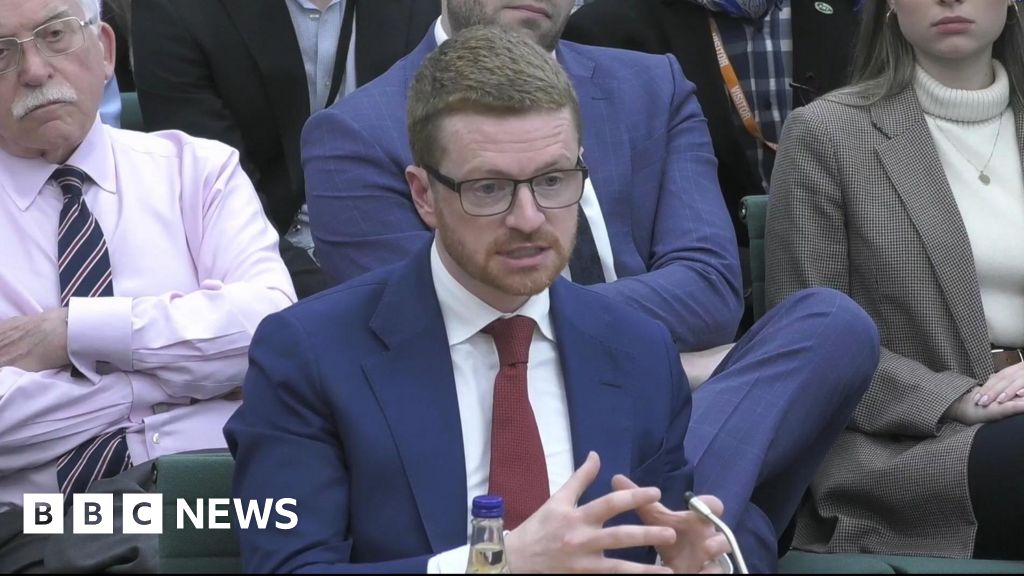
Morgan McSweeney: I made 'serious mistake' advising Keir Starmer to appoint Mandelson
Images
1 / 3
2 / 3

3 / 3
The PM's former chief of staff has said he made "a serious mistake" in recommending the appointment of Lord Mandelson as the UK's ambassador to the US.

Morgan McSweeney, who resigned in February over the advice, said he felt the peer's experience as an EU trade envoy would help the UK secure a US trade deal.

However, he told MPs on the Foreign Affairs Committee that after fresh revelations about Lord Mandelson's friendship with the late convicted sex offender Jeffrey Epstein emerged, it "dawned" on him that he had not given the "full truth" about their friendship.

McSweeney admitted No 10 wanted Lord Mandelson in post "quickly" but insisted officials were never asked to "skip steps".

In a rare public appearance by a senior advisor, he also denied telling the Foreign Office "explicitly or implicitly" that security checks "should be cleared at all costs".

The decision to appoint Lord Mandelson has dogged the prime minister for months but anger was reignited over the issue after it emerged the peer was given security clearance for the role by the Foreign Office, despite concerns being raised by vetting officials.

The prime minister has said no one in Downing Street - including himself and McSweeney - were aware the Foreign Office had gone against the vetting recommendation until recently.

Sir Keir is facing a vote by MPs later on whether there should be a parliamentary investigation over claims he misled the House of Commons about Lord Mandelson's vetting.

While he is unlikely to lose the vote, any rebellion by Labour MPs would do more damage to his authority.

Lord Mandelson was sacked as ambassador in September 2025, after new information came to light about the depth of his relationship with Epstein.

This included photos of the pair together and supportive emails he sent to Epstein as he faced charges for sex offences in 2008.

McSweeney told the committee that when he saw the revelations "it was like a knife through my soul".

"The nature of the relationship that I understood he had with Epstein was not a close friendship," he said.

"How I understood it at the time was a passing acquaintance that he regretted having and that he apologised for.

"What has emerged since then was way, way, way worse than I had expected at the time."

Before Lord Mandelson was appointed, a due diligence check - a separate process to the security vetting - was carried out by a team at the Cabinet Office and sent to the prime minister.

This flagged Lord Mandelson's continued relationship with Epstein after his conviction as a potential "reputational risk".

McSweeney was subsequently asked by the PM to send three follow-up questions to Lord Mandelson about his association with Epstein.

While at the time McSweeney said he believed the answers were truthful, he later realised he was not given the "full truth" and that revelations in the Epstein files showed Lord Mandelson was "unfit" for the job.

The BBC understands Lord Mandelson's view is that he answered questions about his relationship with Epstein in the vetting process accurately.

In-depth security vetting was not carried out until after Lord Mandelson's appointment was announced.

McSweeney said this "didn't jump out to me as a problem at the time" although he acknowledged it would have been "very embarrassing" if the appointment had to be pulled because Lord Mandelson failed vetting.

He insisted that if Downing Street had been aware of any problems with his vetting, his ambassador job would have been withdrawn.

Earlier, Sir Philip Barton, the top civil servant at the Foreign Office at the time, told the committee Downing Street had been "uninterested" in the vetting process and the focus was on making sure Lord Mandelson was able to start his job by the time of Donald Trump's inauguration.

This backed up the account of his successor, Sir Olly Robbins, that there was "pressure" from Downing Street to complete vetting quickly and that No 10 had been "dismissive" about the process.

However, both men denied this affected the vetting decision.

In response to the claims, McSweeney acknowledged that the PM's private office would have chased the Foreign Office for updates on Lord Mandelson's vetting.

He added that Downing Street wanted the process completed "quickly" so Lord Mandelson was in post by the time of Trump's inauguration.

However, he insisted nobody was asked to "skip steps" in any part of the process.

"Yes we wanted it done quickly but at no point did I witness anyone being dismissive about DV [developed vetting] or national security," he added.

McSweeney denied reports he had sworn at the top civil servant at the Foreign Office while asking him to approve the appointment.

Sir Philip also said he had no recollection of being sworn at by McSweeney.

While he was a key figure in Sir Keir's rise to power and within the Number 10 operation, McSweeney was rarely seen in public and had not spoken about his role in Lord Mandelson's appointment since his resignation statement.

McSweeney denied accusations he had tried to push through the appointment of the former Labour minister and closed his eyes to the risks because he was a friend.

"Like everyone else, I could see there were pros and cons in the appointment, and I worried that it would go wrong, so I didn't try to push anything through," he said.

McSweeney said the PM considered "a wide range of views" before making the decision, adding: "If everybody else was opposed to this appointment but me, he would not have made an appointment such as that."

While he acknowledged the Labour veteran was a "confidant", who he went to for advice, he insisted: "I didn't regard him as my mentor."

McSweeney also sought to downplay claims about Lord Mandelson's influence over the current Labour government, arguing that while he would offer up advice he was far from the only figure to do this.

Sign up for our Politics Essential newsletter to keep up with the inner workings of Westminster and beyond.