yahoo Press
Trump says war to end quickly as Iran claims control of Strait of Hormuz
Images
1 / 13
2 / 13

3 / 13

4 / 13
5 / 13
6 / 13
7 / 13
8 / 13
9 / 13
10 / 13

11 / 13

12 / 13

13 / 13
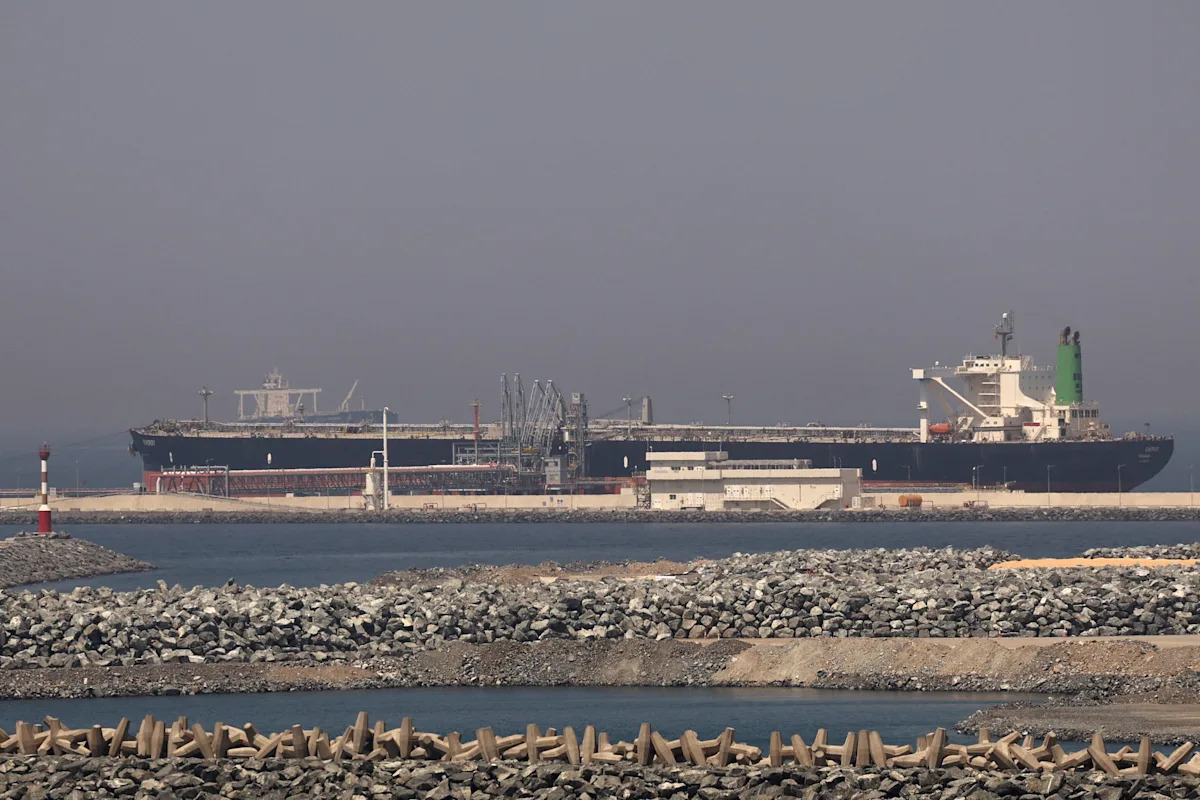
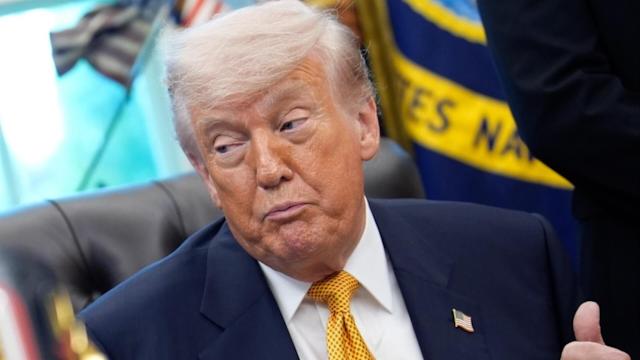
What to know about the Iran war today:As Iran says it's reviewing the latest U.S. proposal to end the war, it is also attempting to formalize its control over the vital shipping lanes of the Strait of Hormuz, which were free and open prior to the U.S.-Israeli attacks on Iran. Shipping intelligence firm Lloyd's List says the strait is now closed, as Iran says an agency it just created is in charge of clearing vessels for transit.President Trump is again voicing optimism for a peace deal, saying the war will be "over quickly" and insisting it's going "unbelievably well." But he also warned Wednesday that if Iran rejects the U.S. offer, he could order "higher level" military strikes. Mr. Trump's latest comments appear to have eased oil prices and boosted stocks this week. Brent crude and U.S. benchmark West Texas Intermediate were both trading below $100 a barrel early Thursday. Rubio and Pope Leo discuss Middle East at Vatican meeting

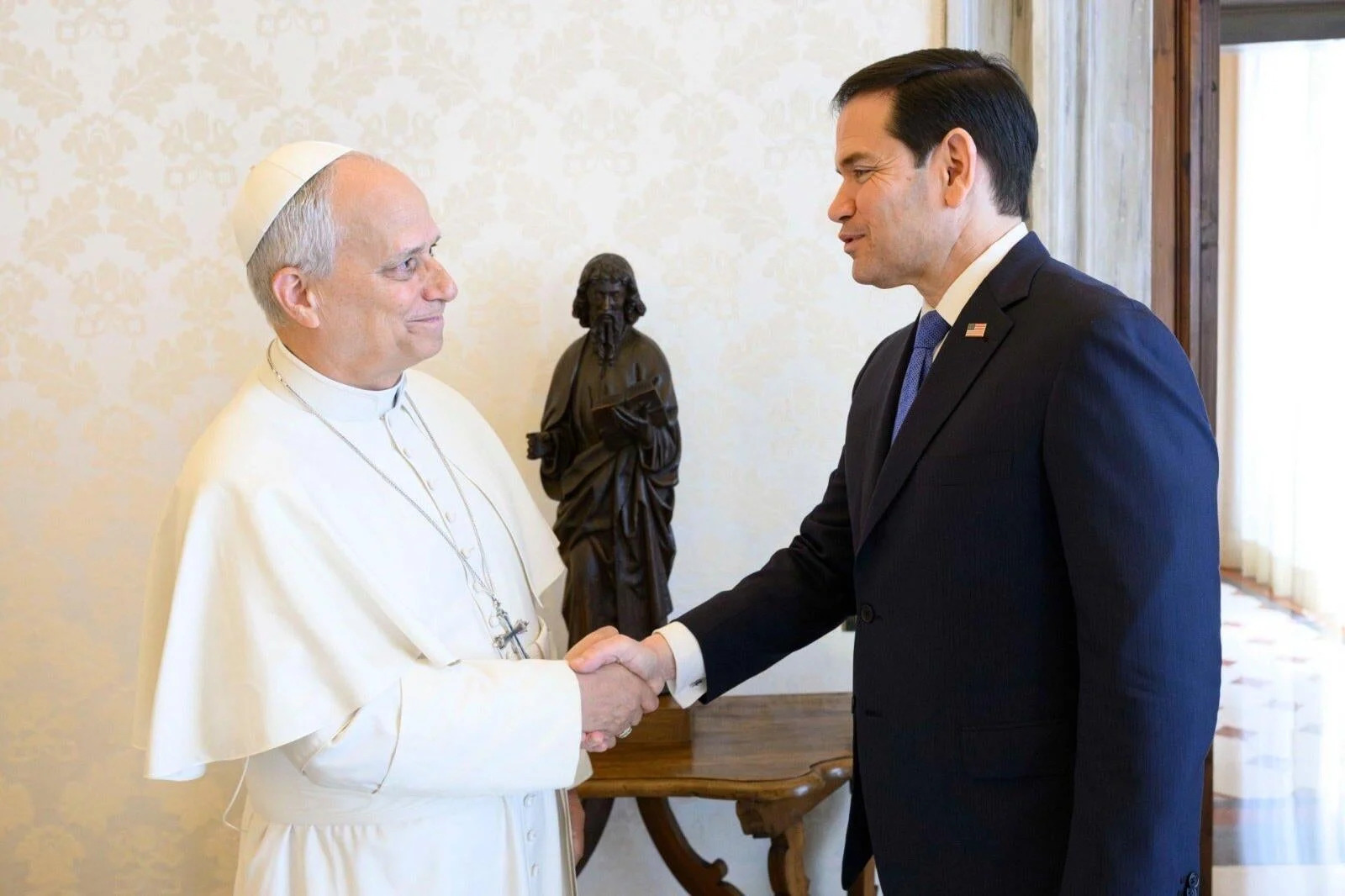
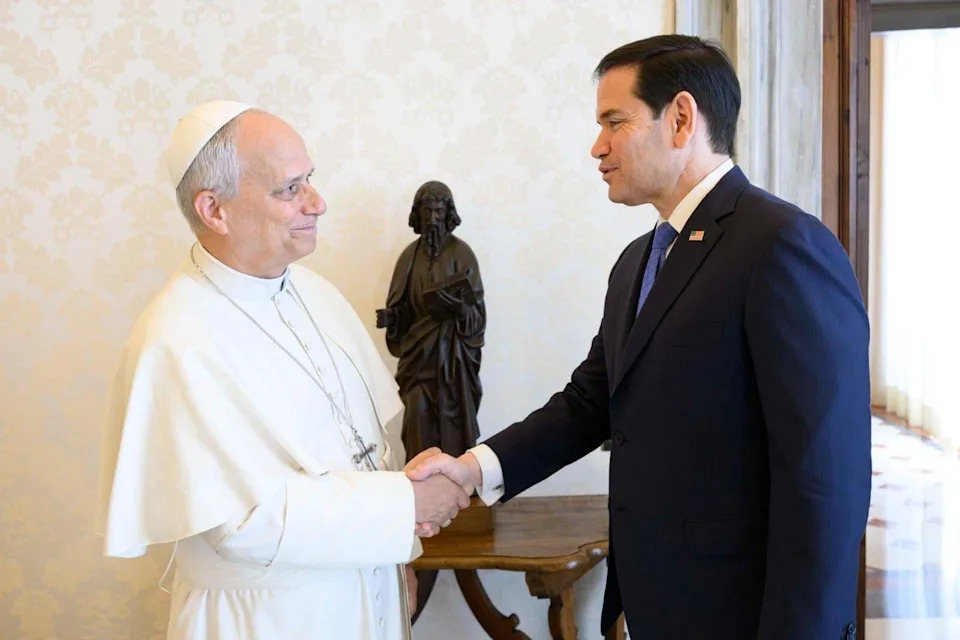
Secretary of State Marco Rubio and Pope Leo XIV met Thursday at the Vatican to discuss the situation in the Middle East and other matters, a meeting that came after weeks of tension between the American-born pontiff and President Trump.

"The meeting underscored the strong relationship between the United States and the Holy See and their shared commitment to promoting peace and human dignity," State Department spokesperson Tommy Pigott said.

Read more here.

U.S. sanctions Iraqi official and firms over Iran ties

The U.S. Treasury Department announced new sanctions on an Iraqi oil official, several Iraqi firms and leaders of Iran-backed militias accused of helping Iran evade U.S. sanctions and finance militants.

The Treasury Department alleges that Iraq's deputy oil minister, Ali Maarij Al-Bahadly, helped divert Iraqi oil and falsify documents so Iranian oil could be sold as Iraqi oil, benefiting Iran and allied militias. The Treasury's Office of Foreign Assets Control also said it is designating three senior leaders of Iran-aligned terrorist militias Kata'ib Sayyid Al-Shuhada and Asa'ib Ahl Al-Haq to effectively cut their access to financial institutions.

"Like a rogue gang, the Iranian regime is pillaging resources that rightfully belong to the Iraqi people," Treasury Secretary Scott Bessent said in a statement. "Treasury will not stand idly by as Iran's military exploits Iraqi oil to fund terrorism against the United States and our partners."

CBS/AP

Israel reimposes restrictions on some events near Lebanon border, citing possibility of new Hezbollah attacks

A day after an Israeli airstrike killed a senior Hezbollah commander in Lebanon's capital, Israel's military said it was canceling some events in northern Israel, close to the Lebanese border, due to the threat of Hezbollah attacks.

"Following the IDF strike in Beirut yesterday (Wednesday), the IDF continues to conduct ongoing situational assessments in the northern sector. Accordingly, events that had previously been exempted from the Home Front Command's defensive guidelines in the northern border area have been canceled due to the possibility of enemy fire by the Hezbollah terrorist organization toward the area," the Israel Defense Forces said in a statement.

It said there was no formal change to security guidelines issued by the IDF's Home Front Command, which vary for different regions. Those broad restrictions on daily life were eased after the U.S.-Iran ceasefire came into effect in early April, and the IDF said if any further changes were deemed necessary, it would "update the public and the relevant authorities in an orderly manner."

Iran president acknowledges "difficulties" for wartime economy, urges business leaders to help keep country afloat

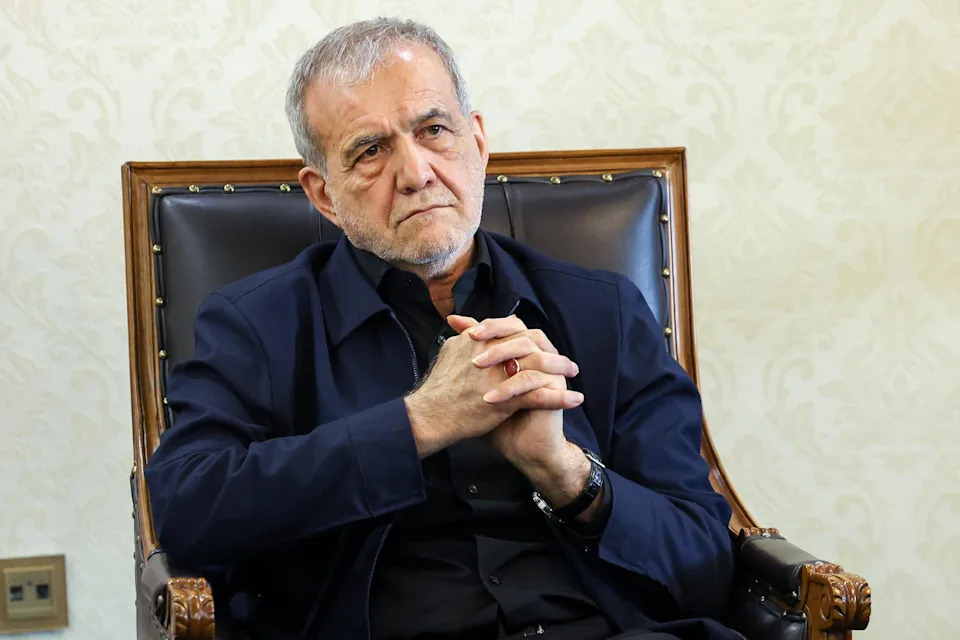
Iranian President Masoud Pezeshkian, in video taped remarks to business leaders shared by his office on Thursday, admitted the country was facing domestic difficulties, which he attributed to coordinated external efforts to destabilize the country.

"The reality is that all countries in the world face protests due to inflation, high prices, and economic pressures," Pezeshkian said. "We are in a war situation, and we have been attacked heavily, so it is natural that we face some difficulties."

"We must control excess consumption. We must ensure that electricity and gas for production are not cut off. Instead, we should reduce unnecessary consumption. If we use energy properly, we can supply industries without disruption," the president said, urging the business leaders to "manage your own affairs," but ask for government help where it is needed.

"And where we cannot, we will be honest with you. We want to help you, and you should also help us continue on this path," he said, acknowledging that the regime has "shortcomings" given economic pressure caused by the war.

White House insists plan in place to mitigate impact of "short-term disruptions" to fuel prices

Asked by CBS News on Thursday about concerns within the administration over soaring jet fuel prices and consequentially rising airfares, White House spokeswoman Taylor Rogers said President Trump and his energy team "anticipated these short-term disruptions to the global energy markets from Operation Epic Fury and had a plan prepared to mitigate these disruptions."

In her statement, Rogers said the plans included temporarily waiving the Jones Act "to let energy flow more freely to U.S. ports," adding that Trump administration officials were continuing to "work closely with the private sector and industry to address their concerns, explore potential actions, and inform the President's policy decisions."

"As President Trump continues to exert maximum leverage over Iran with the ongoing successful blockade to bring this conflict to an end, we will see global energy markets stabilize and gas prices plummet back to the multi-year lows Americans enjoyed prior to the start of Operation Epic Fury," Rogers said.

A White House official said waiving the Jones Act, which restricts shipping traffic between U.S. ports to only U.S.-made and operated vessels, had enabled around 9 million barrels of American oil to reach domestic destinations in multiple states and prevented U.S. businesses from having to rely on imports.

The statement came after a report by the Wall Street Journal said advisers close to Mr. Trump were voicing concern about high fuel prices as a result of the war. The Journal said Chris Sununu, who leads the Airlines for America trade association, had warned Treasury Secretary Bessent that airfares would continue to spike if the war didn't end soon.

Iranian state media claim president met recently with new supreme leader for two and a half hours

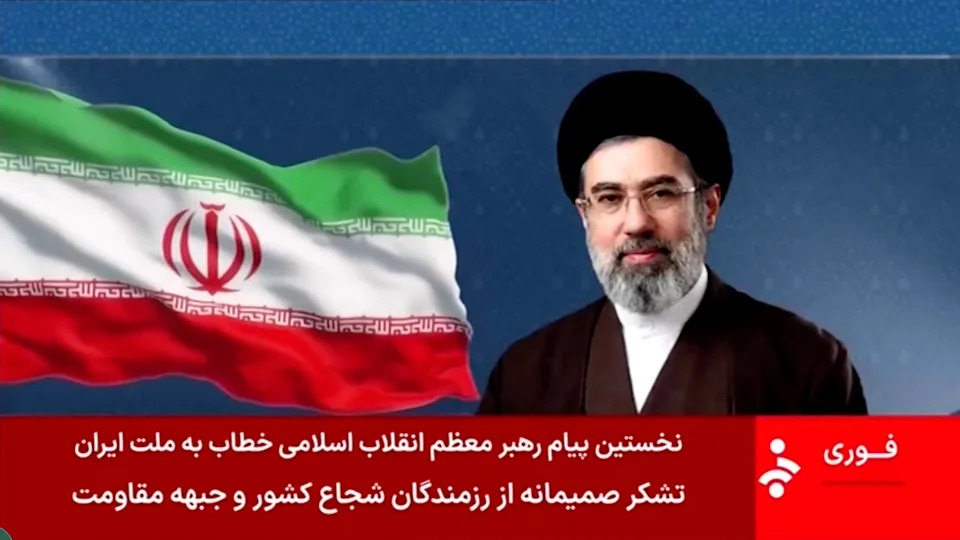
Iranian President Masoud Pezeshkian says he met recently with the country's new Supreme Leader Ayatollah Mojtaba Khamenei for nearly two and a half hours, according to a report Thursday by the country's semi-official Tasnim news agency.

Pezeshkian described the atmosphere of his meeting with Khamenei as "completely direct, candid, and filled with a sense of closeness and trust."

Khamenei has not been seen or heard from directly since he was named as his father's replacement, and U.S. officials say he was severely wounded, possibly incapacitated, in the same U.S. or Israeli airstrike that killed his father and predecessor Ali Khamenei on Feb. 28, the first day of the war.

Since the younger Khamenei was named the new supreme leader, only written statements attributed to him have been released by the regime.

Iranian state TV says "all vessels are waiting for Iran's permission" to transit Strait of Hormuz

Iran's IRIB state television network joined in efforts Thursday to portray the Islamic Republic as the sole controller of shipping traffic in the Strait of Hormuz.

A reporter broadcasting from a location said to be near Iran's Qeshm Island told viewers: "Behind me, you can see the open waters, empty of vessels," and adding: "All vessels are waiting for Iran's permission and the approval of the IRGC Navy to pass through the Strait of Hormuz."

The IRIB reporter said Iranian authorities were monitoring vessels as they wait to move through shipping lanes designated by Iranian military authorities, which pass very near islands the regime is said to be using to impose tolls for passage.

The reporter said that after President Trump "backed down from implementing his plan related to passage through the Strait of Hormuz," referring to the Project Freedom initiative that Mr. Trump called off Tuesday night after one day, it became clear to Iranian authorities that maritime transit should be governed and enforced by Iran's navy.

Global shipping intelligence firm Lloyd's List said in a briefing earlier Thursday that Iran had launched "a new Persian Gulf Strait Authority to approve ship transits and collect tolls in the Strait of Hormuz."

In its briefing, Lloyd's said "as of right now the strait is closed," with no transits recorded since May 4.

Netanyahu vows anyone threatening Israel will be targeted after Hezbollah commander killed in "heart of Beirut"

"No terrorist has immunity," Israeli Prime Minister Benjamin Netanyahu warned Thursday, a day after an Israeli strike killed a senior Hezbollah commander in Lebanon's capital Beirut.

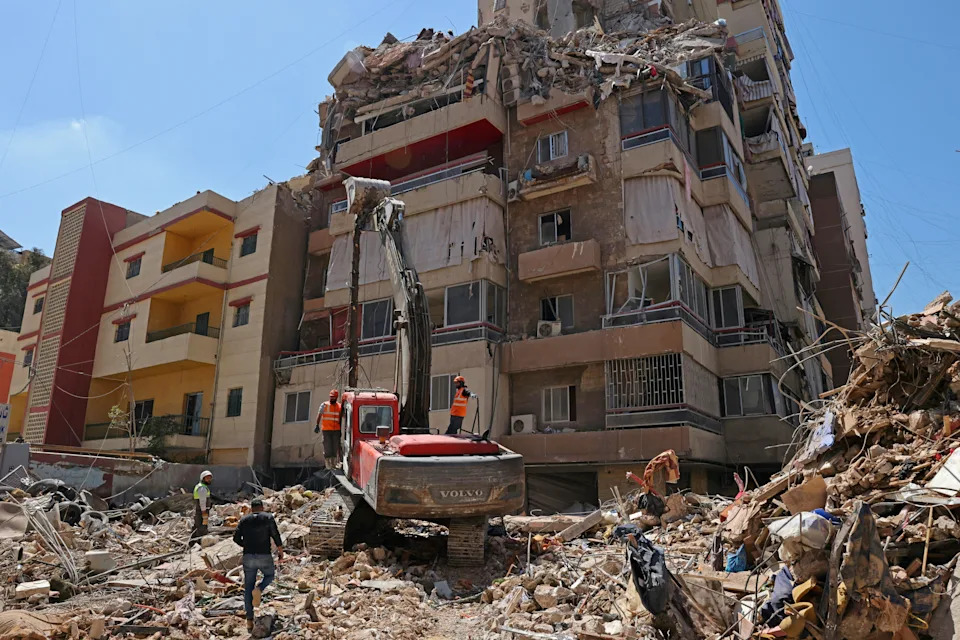
Netanyahu said the strike "in the heart of Beirut" killed Ahmed Ghaleb Balout, who was the commander of Iranian-backed Hezbollah's Radwan Force, warning that "anyone who threatens the State of Israel will pay the price."

Netanyahu said with the killing of Balout, whom he said had led a plan by Hezbollah "to conquer the north" of Israel "we have eliminated more than 200 Hezbollah terrorists who acted against Israeli citizens and IDF soldiers."

The Israeli and Lebanese governments signed a ceasefire, brokered by the Trump administration, weeks ago. The truce remains ostensibly in effect, but it has not stopped Hezbollah and Israel from attacking each other, or Israel from ordering the evacuation of dozens of towns and villages in a section of southern Lebanon it has occupied.

The conflict erupted in tandem with the joint U.S.-Israeli war with Iran, as Hezbollah joined its backers in Tehran in attacking Israel with rockets and drones not long after the Iran war began 69 days ago.

The ongoing violence in Lebanon has proven to be a sticking point in diplomatic efforts to nail down a wider peace agreement between the U.S. and Iran, as Tehran has thus far insisted on a stop to fighting on both fronts as part of any deal.

Hezbollah and Israel have accused each other of breaching the U.S.-brokered ceasefire in Lebanon almost daily since it took effect.

At least 11 other people were killed Wednesday in Israeli strikes across southern and eastern Lebanon, according to the country's health ministry.

Saudi state TV says "breakthrough" to let ships transit Strait of Hormuz "expected in the coming hours"

Saudi Arabia's state-owned and operated Al-Hadath television channel reported Thursday that "intensive negotiations" were underway to reopen the Strait of Hormuz.

"Agreements have reportedly been reached regarding easing the blockade in exchange for a gradual reopening of the Strait," the channel said, without naming any sources or specific reports.

"A breakthrough regarding the ships stranded in the Strait is expected in the coming hours," the outlet predicted.

Saudi Arabia is one of about half of a dozen countries that rely heavily on shipping traffic through the strait to export their oil and gas from Persian Gulf ports. The kingdom was also among those targeted during the war by Iranian missiles and drones, as Tehran attacked Gulf states accused of cooperating with the U.S.-Israeli war effort.

Pakistani government says U.S.-Iran deal to end war expected "sooner rather than later"

"We expect an agreement sooner rather than later," Pakistan's Foreign Ministry spokesperson Tahir Andrabi said Thursday, echoing optimism voiced by President Trump on Wednesday.

A fragile ceasefire between the U.S. and Iran has largely held since April 8, but in-person talks between the two countries hosted by Pakistan last month failed to bring a wider agreement to end the war that started on Feb. 28 with a blistering wave of U.S. and Israeli strikes on Iran.

"We hope the parties will reach a peaceful and sustainable solution that will contribute not only to peace in our region but to international peace as well," Andrabi said.

He declined to give a timeline, however.

"What I can tell you, and this is what I have stated before, that we remain positive, we remain optimistic, and we hope the settlement will be soon rather than later," he said.

Asked whether Pakistan expected any response from Iran to the latest U.S. proposal by the end of the day, Andrabi said he would "not comment on specifics or the movement of the messages."

CBS/AP

Oil prices sink, Asian stocks surge on hope for deal to end Iran war

Oil sank again Thursday and Tokyo's Nikkei index led another strong rally across Asia stocks, fuelled by growing optimism the Iran war is close to ending and the revival of demand for all things AI.

Risk sentiment was surging on hopes Washington and Tehran will conclude the conflict and reopen the Strait of Hormuz, which has been effectively closed since the start of March, choking off a fifth of the world's crude.

Optimism got a huge boost Wednesday when President Trump said an agreement was near, a day after he paused efforts to help stranded ships through Hormuz, which drew Iranian attacks and threatened their fragile ceasefire.

If "Iran agrees to give what has been agreed to" the war would be over, Mr. Trump said. But if not, the bombing will resume "at a much higher level and intensity."

He later told reporters: "We've had very good talks over the last 24 hours, and it's very possible that we'll make a deal."

Iran has yet to respond to the latest U.S. proposal, with foreign ministry spokesman Esmaeil Baqaei telling local media it was "still under review."

Oil prices tumbled more than 2% on Thursday, having fallen around 10% over the previous two days, with international benchmark Brent crude and West Texas Intermediate in the U.S. both below $100.

CBS/AFP

Shipping intel firm says "right now the strait is closed," as Iran says new "authority" will govern traffic

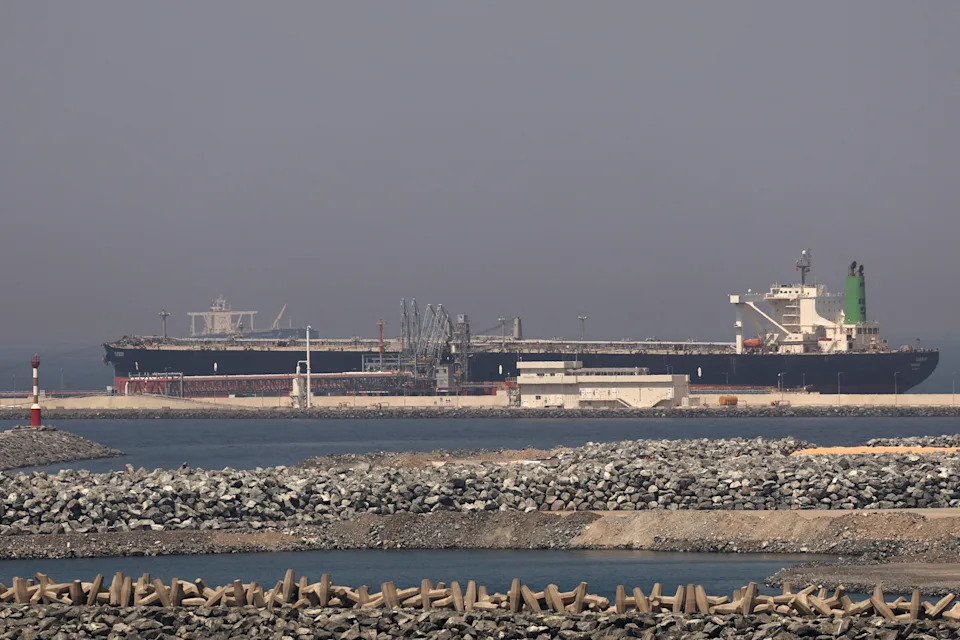
While the Iranian regime says it is considering the latest proposal from the U.S. to end the war that's gridlocked the vital shipping lanes of the Strait of Hormuz for 69 days, it has also attempted to formalize its control over the waterway.

The Lloyd's List shipping analyst and intelligence firm said in a report Thursday that Iran "has created a new Persian Gulf Strait Authority to approve ship transits and collect tolls in the Strait of Hormuz."

Lloyd's said Iranian authorities had sent an example of the application form ship operators will be required to submit to gain permission to transit the strait, which it said requires detailed records of vessel "ownership, insurance, crew details and intended transit route."

The firm said Iran, with the PGSA, had "positioned itself as the only valid authority to grant permission to ships transiting the Strait of Hormuz."

In its Thursday briefing, Lloyd's said "as of right now the strait is closed," with no transits recorded since May 4.

Macron tells Iranian president strikes on UAE "unjustified," calls on U.S. and Iran to lift Hormuz blockades

French President Emmanuel Macron said he spoke Wednesday with Iranian President Masoud Pezeshkian and told him attacks on Emirati civilian infrastructure and ships near the Strait of Hormuz were "unjustified."

"I expressed my deep concern about the ongoing escalation and condemned the unjustified strikes against Emirati civilian infrastructure and several ships," Macron said on X following the call.

Macron also said he had called on both the U.S. and Iran to immediately lift their respective restrictions on shipping in the strait without any conditions.

Speaking about the France and U.K.-led initiative to help ensure safe passage for commercial vessels through the strait once the war is over, Macron said "recent events clearly demonstrate the usefulness that such a mission would have."

He said he would speak with President Trump about the mission.

"We are pleased that France's approach is based on resolving issues through dialogue," Pezeshkian told Macron, according to Iran's presidency, adding that "any negotiation regarding the full reopening of the Strait of Hormuz requires the lifting of the naval blockade imposed by the United States."

CBS/AFP

Trump says there's "never a deadline" in negotiations with Iran

As reporters began to leave the Oval Office Wednesday, one asked the president about a deadline for negotiations with Iran.

"Never a deadline," the president responded. "It'll happen. It'll happen. But never a deadline."

The president in the past has tried to impose a deadline for negotiations. He ended up extending that deadline and ceasefire for negotiations to continue.

Earlier Wednesday, the president told the New York Post it's too soon to send senior U.S. officials to Iran for another in-person talks.

Gas prices top $4.50 a gallon, reaching highest level since July 2022

Gasoline prices across the U.S. surged to an average of $4.54 a gallon on Wednesday, the highest since July 2022, according to AAA data.

The price of regular gas has jumped 52%, or $1.56 per gallon, since the start of the Iran war in late February, as disruptions to oil flows in the Middle East drive up costs for motorists. The cost is approaching the highest-ever gas price, when it reached $5.02 a gallon in June 2022 during a pandemic-era spike in inflation.

Fuel costs climbed even as oil prices edged lower Wednesday on renewed hopes for a U.S.-Iran agreement, highlighting a disconnect between crude markets and what drivers pay at the pump.

Read more here.

Trump insists Iran leaders "want to make a deal" as war is going "unbelievably well" for U.S.

The U.S. has had "very good talks over the past 24 hours" aimed at reaching a peace deal with Iran, President Trump told reporters during an event with UFC fighters at the White House on Wednesday.

It wasn't clear if the president meant the U.S. and Iran were talking directly or via Pakistani mediators.

"They want to make a deal," Mr. Trump said. "We've had very good talks over the last 24 hours. And it's very possible that we'll make a deal."

He acknowledged that there had been "some good talks before, as you know, and all of the sudden, the next day like, they're like, they forgot what happened."

Earlier Wednesday, Mr. Trump said the war with Iran was going "unbelievably well."

After an event to honor military mothers at the White House, he also favorably compared the operation in Iran to the one in January that saw former Venezuelan leader Nicolas Maduro captured in his own capital city.

"We're in a — I call it a skirmish, because that's what it is, a skirmish, and we're doing unbelievably well, as we did in Venezuela, where it was rapid, over in one day and we're doing pretty much equally as well I would say, larger, but we're doing very well in Iran."

"It'll be over quickly," Mr. Trump predicted later Wednesday of the Iran war during an event to support Georgia Republican gubernatorial candidate Burt Jones.