yahoo Press
The CEO of Maersk, which ships 14% of everything you buy, said the Iran war is adding $500 million in monthly costs it’s trying not to pass down
Images
1 / 4
2 / 4

3 / 4

4 / 4
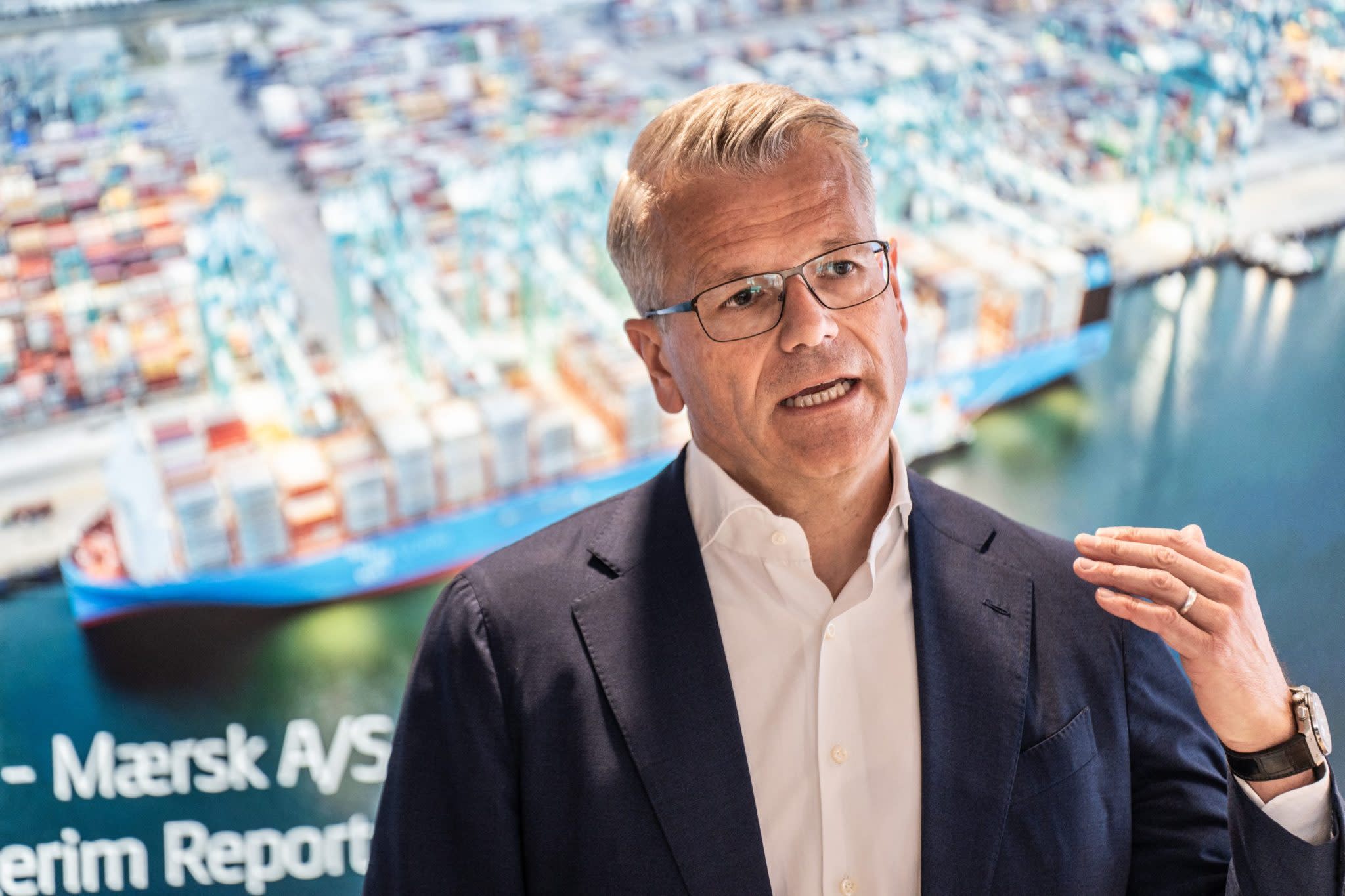
A prolonged war in Iran will bump the odds of inflation while simultaneously forcing a slowdown in consumer demand. All of this is troubling for the chief executive of container shipping giant Maersk, who warned that deadly combination is already rocking the global shipping sector. “The war in the Middle East created a new wake-up call with significant disruptions, both to the flows in and around the Middle East, but also to our energy supply,” CEO Vincent Clerc told CNBC’s “Squawk Box Europe” on Thursday. “We are a highly energy-intensive industry, and that has created a whole new set of circumstances that we now have to deal with, and that will have an important impact on the second and third quarter.” Maersk is at the forefront of the oil shock, deeply entwined with fuel costs and global logistics, making it a harbinger of what is to come in how the world navigates widespread energy disruptions. The Strait of Hormuz, the chokepoint through which one-fifth of the world’s oil passes, has remained effectively closed for the duration of the war in Iran, sending and keeping oil prices above $100 per barrel. The price was about $105 as of Friday, still elevated above the pre-war $70, as the market attempts to make sense of mixed signals of peace talks between the U.S. and Iran, which could reopen the trade passage. Goldman Sachs analysts previously predicted that if supply chain disruptions continue, oil prices could remain elevated through 2027. Just two months in, there are already consequences from the shock, like Spirit Airlines ending operations, unable to afford rising jet fuel costs. Now, Maersk, the second largest shipping company in the world that operates 700 vessels and ships about 14% of global containerized goods, is saying the prolonged war is affecting logistics. The company already suspended two key vessel crossings in March that connected the Far East to the Middle East, and the Middle East to Europe. Now on Thursday, Clerc confirmed one of Maersk’s commercial vessels was able to pass through the Strait of Hormuz with U.S. military protection, but the company still has six ships stranded in the Gulf. Clerc explained increased energy expenses have cost the company an extra $500 million per month, and while Maersk has strategies to reduce costs, its consumers—from small businesses to multinational conglomerates—will have to take on some of the burden of the increases. “And there is so much we can do on reducing costs, but there is a lot we need to do on passing on these costs to customers, because it’s such a massive cost increase that we can’t shoulder it,” he said. The energy shock has created widespread concerns of inflation. Federal Reserve officials, including St. Louis Fed President Alberto Musalem, said persistent energy costs could be reminiscent of the pandemic, when global supply chain disruptions following the onset of Covid-19 contributed to a rapid rise in inflation. Supply chain pressures spiked the costs of goods productions, which accounted for 60% of the inflation in the country from 2021 to 2022. Gas prices are already averaging above $4.50 per gallon, compared to just $3.15 a gallon a year ago, a 43% increase. “Inflation is running meaningfully above our target,” Musalem said at an event this week. “We have risks both on the employment side and on the inflation side. In my understanding, risks have been shifting towards…the inflation side.” Maersk reported first quarter earnings on Thursday, including revenues down 2.6% to $13 billion, and a nearly 75% decrease in operating profit down to $340 million. The shipping company kept its operating profit guidance for the rest of the year, which ranges from a loss of $1.5 billion to a profit of $1 billion. Clerc expressed concern that ongoing pressures on consumers would increase the likelihood of demand destruction, meaning a long-lasting decline in demand for a certain product because of supply constraints. A broader slowdown could threaten total container volumes for the entire shipping sector. Last month, an International Energy Agency (IEA) report indicated early signs of this phenomenon: Oil demand is now projected to contract by 80,000 barrels per day in 2026. In March, IEA projected demand would grow by 730,000 barrels per day this year. “As some of these costs made their way all the way up to the end consumer, will we see demand destruction at the consumer level, and will that then reverberate throughout the supply chain, with softer demand in the second part of the year?” Clerc asked. “That is certainly something that we’re looking out for very, very closely, because it would certainly change the equation on how this crisis is going to impact the global supply chain and our industry, in particular.” Though Clerc’s demand destruction anxieties are reflected in early data, Ryan Kellogg, an energy and environmental economist and public policy professor at the University of Chicago, said it remains to be seen if the global oil sector will see demand destruction, which is usually a long-term headwind. Kellogg previously told Fortune this demand destruction could translate to a push away from cars with combustible engines and toward electric vehicle productions, which could cause volatility in other critical minerals, leading to medium-term “economic pains.” “It’s very arguable that we have entered a new era in which oil supply from the Persian Gulf region is not as consistent, as reliable as we once thought it would be, and it makes sense to diversify away from that,” he said. “There’s some ability to adapt. It comes at a cost, though.” This story was originally featured on Fortune.com