foxnews Press
Members of Congress using online prediction markets? Don't bet on it
Images
1 / 20
2 / 20

3 / 20
4 / 20
5 / 20
6 / 20
7 / 20

8 / 20
9 / 20
10 / 20
11 / 20
12 / 20

13 / 20
14 / 20
15 / 20
16 / 20
17 / 20

18 / 20
19 / 20

20 / 20
Fox News chief congressional correspondent Chad Pergram reports on the U.S. Senate adopting a measure banning its members and aides from participating in prediction markets on 'Special Report.'

No one would have predicted it.

But you could have made a lot of money if you did.

With uncharacteristic dispatch, the United States Senate unanimously voted to ban senators and staff from playing in the prediction markets.

"This is a national security risk," said Senate Minority Leader Chuck Schumer, D-N.Y. "The very possibility that a member’s vote could be influenced by a bet is reason enough to slam the door shut."

SENATE QUIETLY BANS LAWMAKERS FROM BETTING ON PREDICTION MARKETS

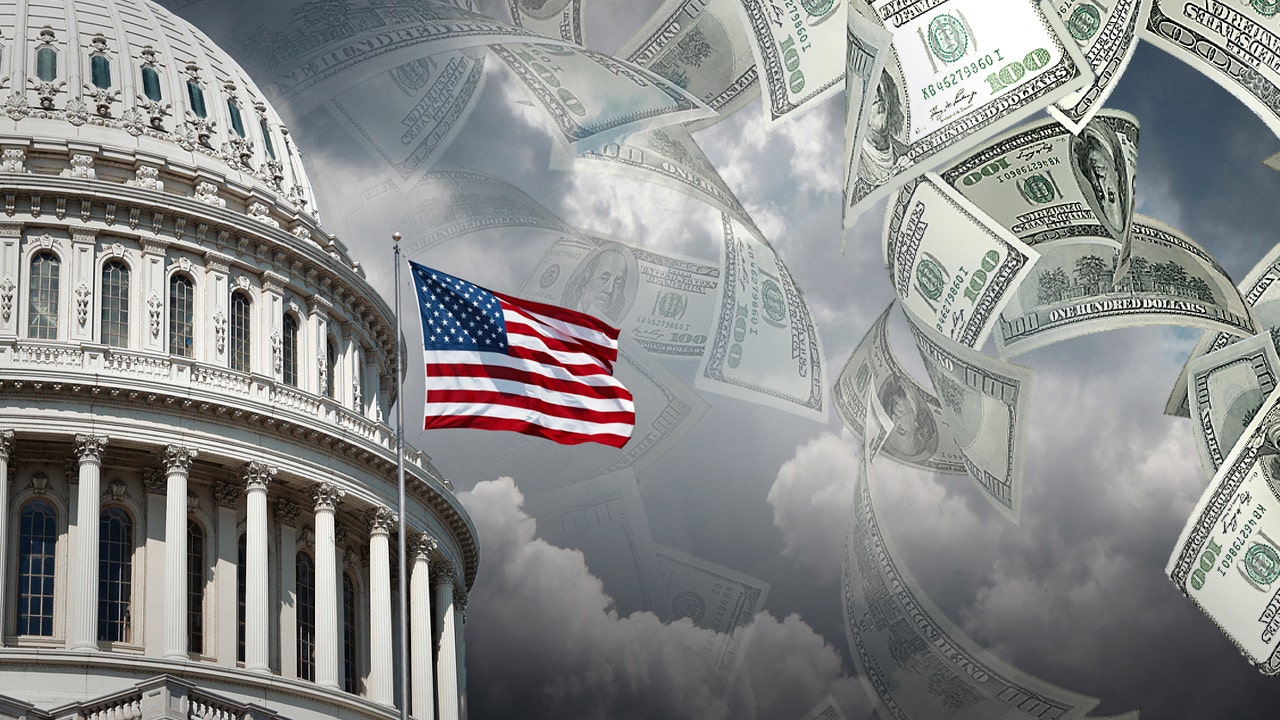
The Senate has unanimously voted to ban its members and staff from betting in prediction markets. (iStock)

You can’t predict the future. But now in the Senate, you can’t even bet on it.

Especially real world events.

Like if the stock market might crash. The fate of the economy. War. Terrorism.

Or who would wear what gown at the Met Gala.

SEN DAVE MCCORMICK: PREDICTION MARKETS ARE BOOMING. WASHINGTON MUST CATCH UP

The biggest concern on Capitol Hill is potential wagering on the fate of legislation. Or the confirmation of nominees. There’s bipartisan concern that speculation in the prediction markets could tilt political outcomes.

"Engaging in any way in a prediction market or trying to place bets where we might have inside information deteriorates the confidence that our constituents have in us," said Sen. Bernie Moreno, R-Ohio.

Moreno pushed to change the rules for senators. Sen. Alex Padilla, D-Calif., amended Moreno’s proposal to include Senate aides.

This only applies to the Senate. For now. The House is playing catch up.

"Any place where your role in Congress has a potential for individual benefit, I think needs to be tightly controlled," said Rep. Rob Wittman, R-Va., when asked about prospects for a similar measure in the House.

Keep in mind that under the Constitution, the House and Senate can make their own rules.

Senate Minority Leader Chuck Schumer, D-N.Y., has said "we must never allow Congress to turn into a casino." (Graeme Sloan/Bloomberg via Getty Images)

The Senate’s maneuver comes just weeks after the Feds busted a U.S. special forces solider who had access to classified information – and then bet on the capture of former Venezuelan leader Nicolás Maduro.

Virginia U.S. Senate candidate Mark Moran placed a wager that he would run for office. Moran later made money on his own proposition after he jumped into the race.

"Our constituents have to know that our only guiding light is what's best for our state. What's best for the people of our states. And what's best for the United States of America," said Moreno.

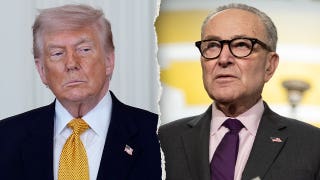
"We must never allow Congress to turn into a casino," said Schumer. "Just the possibility that Members could have their votes influence because of betting is a reason enough to prohibit members from meddling in the prediction markets."

But Schumer wants prediction market prohibitions extended to the executive branch. The New York Democrat argues that the Trump Administration "shows such a troubling affinity to corruption and self-dealing."

SENATE PASSES MEASURE BANNING LAWMAKERS FROM PREDICTION BETS

This brings us to something else from which many Congressional Democrats want to exclude the executive branch: trading stocks.

But here’s the problem. Congress has paid lip service to imposing its own ban for lawmakers and aides to stock trades. But neither the House nor Senate ever implemented an across-the-board prohibition.

It’s a stalled issue. And has been so for years.

"Send me a bill that bans insider trading by Members of Congress and I will sign it tomorrow," instructed former President Obama during his State of the Union speech in January 2012.

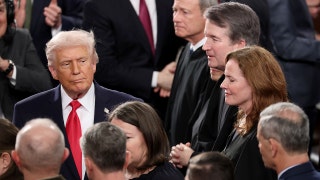
"Let's also ensure that Members of Congress cannot corruptly profit from using insider information," proclaimed President Trump during his State of the Union message in February.

Well, it’s nearly mid-2026 and Congress still isn’t all the way there.

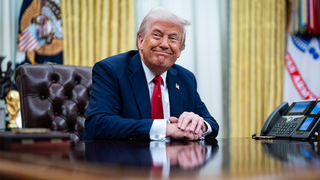
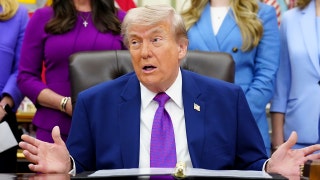
President Donald Trump expressed a desire to "ensure that Members of Congress cannot corruptly profit from using insider information" at his State of the Union address. (Jabin Botsford/Getty Images)

Late Rep. Louise Slaughter, D-N.Y., and former Rep. Brian Baird, D-Wash., were the most ardent advocates of a Congressional stock trading ban – dating back to 2006. Former House Majority Leader Tom DeLay, R-Texas, made hundreds of stock trades in 1999 and 2000. That caught Baird’s attention.

"If there is a way to make a profit on that, somebody has probably already figured out a way to do it," said Baird, "And it's not illegal."

Congress finally passed the STOCK Act in 2012. It stands for "Stop Trading On Congressional Knowledge." There was concern that lawmakers are privy to financial, economic and political intelligence. Therefore, they could buy or sell stocks on information which bordered on "insider trading."

But the STOCK Act didn’t prohibit lawmakers from playing on Wall Street. It just required additional financial disclosures about when lawmakers and aides traded stocks.

TRUMP TAKES JAB AT PELOSI BY NAME OVER HISTORY OF CONTROVERSIAL STOCK TRADING

President Obama’s 2012 entreaty certainly helped goad lawmakers into approving the STOCK Act a few days later. But it wasn’t a ban on "insider trading" as the former president suggested. This just entailed additional transparency.

The stalemate over stock trades baffles some lawmakers.

"I don't know why it's been such a challenge in the House," said Rep. James Walkinshaw, D-Va. "I think any Member saying that they should be able to trade stocks is flat out wrong. I think it degrades trust in the institution. Even for those members who are not trading on inside information."

House Administration Committee Chairman Brian Steil, R-Wis., has a bill to curb stock trades by lawmakers.

"If you want a day trade, go to Wall Street. Come to Washington to lead this country," said Steil.

"If you want a day trade, go to Wall Street," House Administration Committee Chairman Brian Steil, R-Wis., said. (Jim Vondruska/Getty Images)

But that bill is marooned. It partly goes back to the Democrats’ push to extend any Congressional stock trading ban to the executive branch. That’s something many Republicans are reluctant to do.

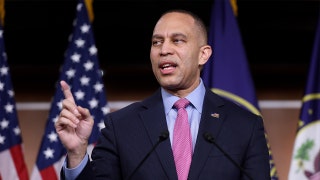
"There is zero justification and rationale for allowing a president of any party or a vice president of any party, to be able to engage in stock trading while they have the awesome power of the presidency, vice presidency and executive branch in their hands," said House Minority Leader Hakeem Jeffries, D-N.Y.

Rep. Yassamin Ansari, D-Ariz., believes the stock trade issue is evolving. She doubts that voters will put up with market activity by her colleagues much longer.

"We know there are many colleagues who do still trade stocks. I think the American public is much more informed on this topic now. And this is very unpopular. So I do think the tide is changing and it will become untenable for any member to to be supportive of  it," said Ansari. "I think more people have more information. So what a Member of Congress was able to get away with even five years ago just is not possible today."

Like many things when it comes to ethics in politics, it’s not necessarily impropriety. But the perception of impropriety. The public holds Congress in low esteem to start with. Many voters believe the "ruling class" has special access to information which enables them to game the system for their own economic benefit. That distrust may fester as long as Congress fails to police its own.

While we can’t predict the future, people can certainly shape it. Congress has a lot of tools at its disposal to contour that future. The question is if lawmakers are bending those fortunes in their direction.

CLICK HERE TO DOWNLOAD THE FOX NEWS APP

So will Congress approve a stock trading ban? The best predictor of future behavior is past behavior.

In other words, don’t bet on it.

Chad Pergram currently serves as Chief Congressional Correspondent for FOX News Channel (FNC). He joined the network in September 2007 and is based out of Washington, D.C.

Get the latest updates from the 2024 campaign trail, exclusive interviews and more Fox News politics content.

By entering your email and clicking the Subscribe button, you agree to the Fox News Privacy Policy and Terms of Use, and
        agree to receive content and promotional communications from Fox News. You understand that you can
        opt-out at any time.

Subscribed

You've successfully subscribed to this newsletter!