yahoo Press
Opinion - America gains a foothold in the world’s most critical chokepoint
Images
1 / 7
2 / 7

3 / 7

4 / 7
5 / 7

6 / 7

7 / 7
America just signed an agreement that will give it a perch on the world’s most important natural waterway, the Strait of Malacca. At the same time, Indonesia just found a partner to protect it from China.

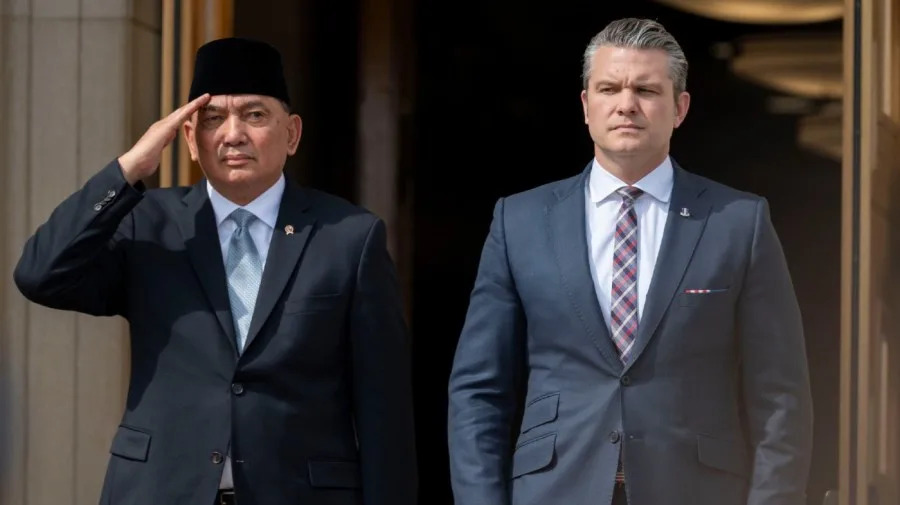
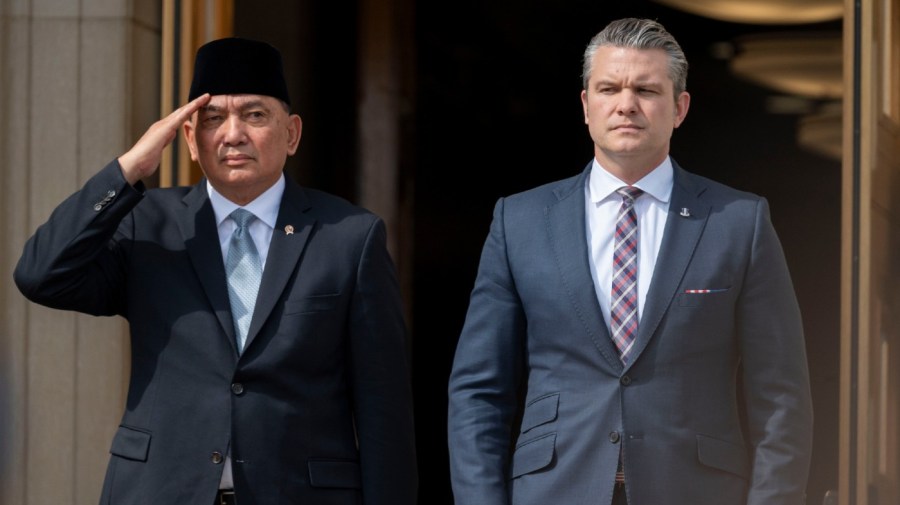
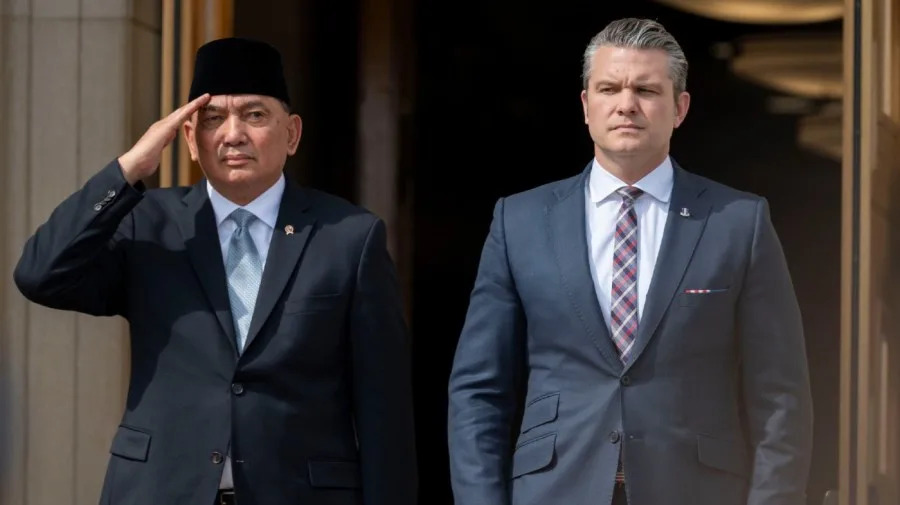
On April 13, Indonesia and the U.S. inked the Major Defense Cooperation Partnership agreement, which the Pentagon said will serve “as a guiding framework to advance bilateral defense cooperation.” The pact has “three foundational pillars” — capacity building, training and operational cooperation.

Indonesia, the world’s fourth most populous country and world’s largest archipelagic state, is also considering a letter of intent that would facilitate American access, on a case-by-case basis, to its airspace for both emergency operations and standard transits.

Details of April’s agreement are scarce, and the real test, of course, will be how the parties move “from paper to practice.” Because of China, however, both America and Indonesia have reason to solidify their relationship into an enduring military partnership.

“Indonesia needs friends, as indeed we all do,” James Holmes, the J. C. Wylie Chair of Maritime Strategy at the U.S. Naval War College, told me this month. “Mutual access helps us mount combined pushback against Chinese aggression.”

We start with the Malacca Strait. With Malaysia on the northern side and the Indonesian island of Sumatra on the southern one, this waterway controls the shortest shipping route between East Asia and the Indian Ocean. It is, therefore, part of the busiest transit lane between the great economic powerhouses of Asia — China, Japan, South Korea and Taiwan — and Europe and Africa.

Through the chokepoint flows an estimated 23.2 million barrels of oil each day, about 29 percent of the world’s maritime oil traffic. Last year, more than 102,500 vessels passed through the strait. The strait is critical for China. Almost two-thirds of that country’s maritime trade, including about 80 percent of its oil imports, transits the waterway.

Indonesia has traditionally adopted a non-aligned posture but was particularly close to China. The defense partnership, therefore, represents a noticeable tilt toward America. Beijing cannot now be happy, but the Chinese have only themselves to blame for alienating Jakarta.

As an initial matter, Beijing clung to its unsupportable sovereignty claim to the Natuna Islands, which are clearly part of Indonesia, until as late as 2015. Yet China has not, as required by the United Nations Convention on the Law of the Sea, acknowledged Indonesia’s rights in the exclusive economic zone generated by those South China Sea islands. Beijing, without recognized legal support, maintains it has rights to “traditional fishing grounds” in Indonesia’s exclusive economic zone.

China, with its ten-dash line, claims sovereignty over most of the South China Sea. There, Beijing has employed gray-zone tactics of regularly intruding into Indonesia’s exclusive economic zone with its so-called “blue hulls” fishing boats organized into a maritime militia, and the Chinese Coast Guard, called the “white hulls.”

Jakarta was slow to recognize China’s designs on its 17,508 islands. Holmes told me he gave a presentation in 2012 at an institute in Paris where an Indonesian diplomat “with a smirk on his face” expressed a lack of concern about Chinese belligerence toward the Philippines in the South China Sea at Scarborough Shoal.

“Look at the map,” the maritime scholar said to the diplomat, referring to China’s southward advance through that contested body of water. “It was obvious Beijing would sprawl southward even back then. And so it has.”

To confront Chinese expansionism southward and protect its waters from Chinese encroachment, Indonesia has maintained what looks like a three-pronged strategy. First, Jakarta, while not formally abandoning claims, has tried to appease Beijing by employing ambiguous and accommodative language in official dealings with the Chinese. For instance, in November 2024, President Prabowo Subianto formalized in writing his willingness to jointly develop the North Natuna Sea, the first time Jakarta had made such an important concession.

Second, Indonesia has resorted to force to keep Chinese boats out. For instance, last decade Indonesia repeatedly seized and scuttled intruding fishing vessels, including those from China.

Third, Jakarta has been developing military relationships with Australia, Japan, India and France. Now it has one with the mightiest nation on earth, the U.S.

Last month’s agreement furthers Washington’s objectives as well. If America has had any consistent foreign policy in its 250 years, it has been the defense of the global commons. Now, the U.S. has a foothold on a critical chokepoint. China, which seeks to exert dominion over the seas, is the big loser.

Gordon G. Chang is the author of “Plan Red: China’s Project to Destroy America” and “The Coming Collapse of China.“

Copyright 2026 Nexstar Media, Inc. All rights reserved. This material may not be published, broadcast, rewritten, or redistributed.

For the latest news, weather, sports, and streaming video, head to The Hill.