yahoo Press
China’s Xi gives Putin a red-carpet welcome – and makes a veiled jab at the US
Images
1 / 9
2 / 9

3 / 9

4 / 9
5 / 9
6 / 9
7 / 9

8 / 9

9 / 9
Chinese leader Xi Jinping hailed ties with Russia as a force for “calm amid chaos” during a meeting with Vladimir Putin in Beijing on Wednesday, days after Xi hosted President Donald Trump for a landmark US-China summit.

Xi alluded to an increasingly fractious international situation – and took a veiled jab at the US – as he sat down with Putin in the Great Hall of the People for meetings kicking off the Russian leader’s roughly 24-hour state visit in the Chinese capital.

“The international situation is marked by intertwined turbulence and transformation, while unilateral hegemonic currents are running rampant,” Xi said, using Beijing’s typical language to criticize what it sees as American foreign policy overreach.

In the face of this, China and Russia should enhance their “comprehensive strategic coordination,” Xi said, according to Chinese state media.

For Xi, hosting leaders of both the US and Russia – two nations mired in conflict – in the space of a few days is a boon as he aims to cement China’s reputation as a global powerbroker.

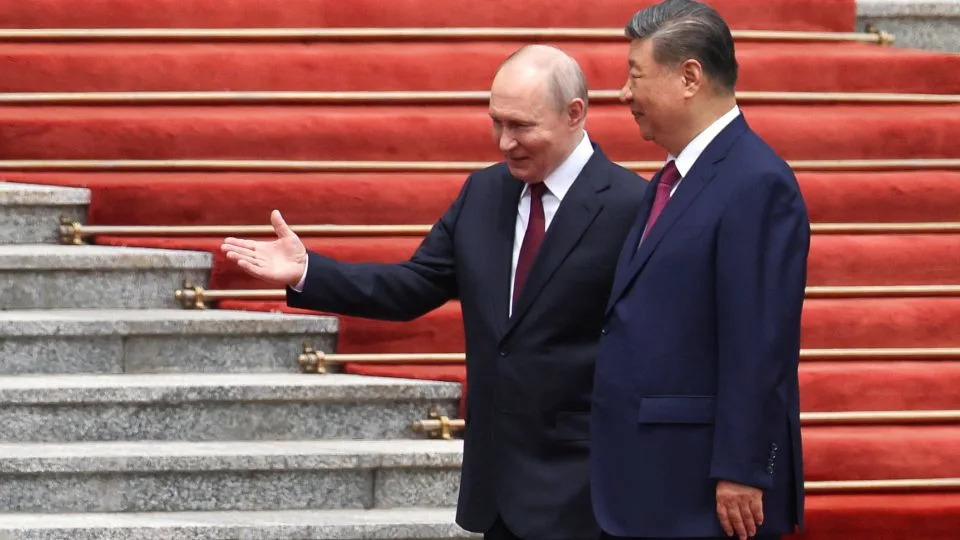
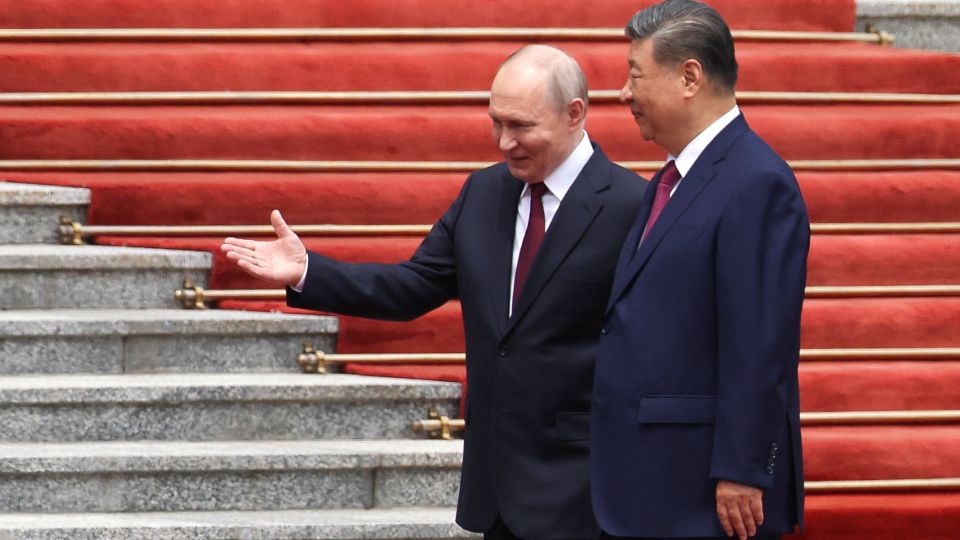
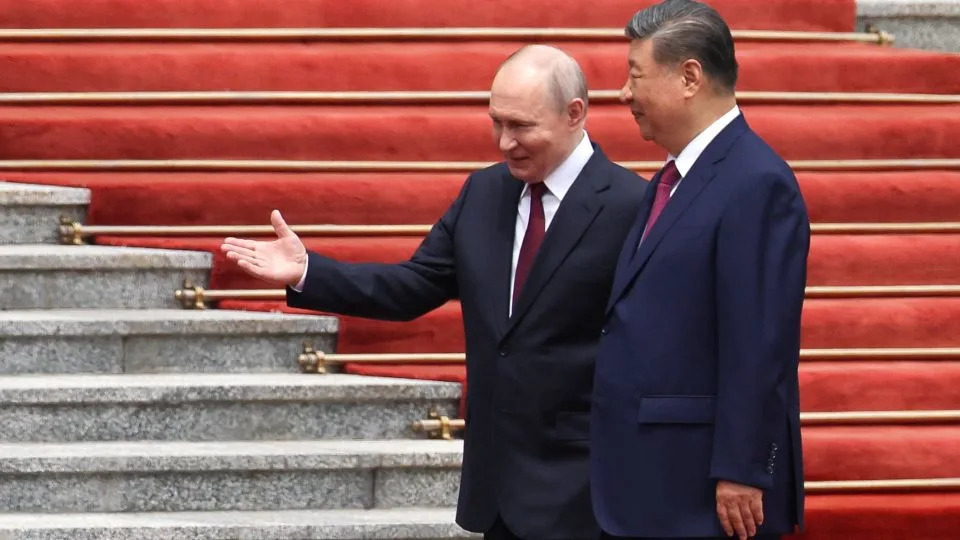
But while both leaders received a red-carpet welcome, Putin’s visit was marked by a more outward display of the friendship between the two leaders and their countries.

Putin and Xi signed a joint statement – a diplomatic gesture that’s become standard during their state visits, but which did not happen during Trump’s – reiterating their close ties and a desire for a “multipolar world.”

Putin said China-Russia relations had reached an “unprecedentedly high level” and were among the “main stabilizing factors on the international stage.”

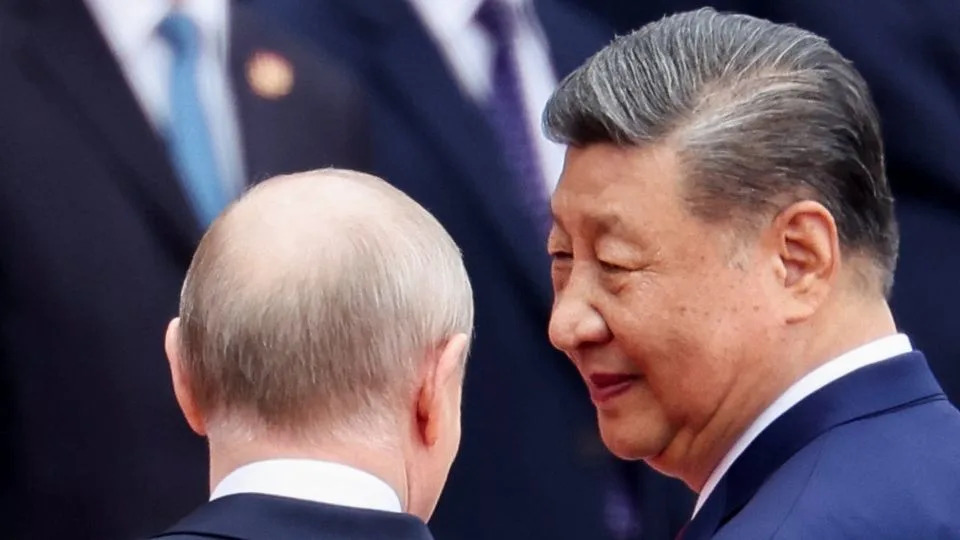
He also alluded to the close personal ties between himself and the Chinese leader, who have met more than 40 times, in opening remarks. He used a Chinese idiom that translates to “One day apart feels like three autumns,” used to emphasize the sadness of being separated.

This was Putin’s 25th official visit to China during his quarter-century as Russia’s leader and his first since the outbreak of fresh conflict in the Middle East.

Xi and Putin have significantly tightened their countries’ coordination across trade, diplomacy and security in recent years, driven together by shared frictions with the US and an aim to reshape a world order they see as unfairly dominated by the West.

But behind the pomp and platitudes, Putin is also facing Xi in a much weaker position than during his last visit to Beijing in September.

Days before his arrival, Ukraine launched what Russian media said was the largest attack on Moscow in more than a year, targeting the capital with more than 500 drones. Russia has also been losing ground to Ukraine, last month suffering what analysts say was the first net loss of territory since August 2024.

One message that the two sides appeared keen to project was their shared view on the Trump administration’s shift to a muscular foreign policy.

Joint statements between the two sides typically lay out a raft of largely veiled but at times direct criticism of the US and its policies. This meeting’s more than 10,000-word joint statement included a number of such points, including comment on Trump’s plan to build a multibillion-dollar Golden Dome missile defense system.

“The parties believe that the US ‘Golden Dome’ project… poses a clear threat to strategic stability. These plans completely negate the key principle of maintaining strategic stability, which requires the inseparable interconnection of strategic offensive and strategic defensive weapons,” the two said in a joint statement, according to the Kremlin.

The Chinese leader directly addressed the US-Israeli war against Iran in remarks to Putin earlier in the day, saying that its “early end” will help reduce disruption to energy supplies, supply chains and trade.

“A comprehensive cessation of war brooks no delay, restarting hostilities is even less desirable, and persisting with negotiations is particularly important,” Xi said.

Their joint statement also said US-Israeli strikes against Iran undermined stability in the Middle East, according to a copy released by Chinese state media.

In addition, the two sides condemned “brazenly launching military strikes against other countries; using negotiations as a pretext while actually preparing for action” and “assassinating leaders of sovereign states,” in an apparent reference to the killing of Iran’s former Supreme Leader Ayatollah Ali Khamenei.

The leaders’ criticism of the US also extended to Latin America and the Caribbean. They appeared to reference former Venezuelan President Nicolás Maduro, who was captured by the US and is expected to face criminal proceedings there.

The joint statement said “forcibly abducting and putting a head of state on trial” violates international law and undermines the “foundations of the international world order.” Elsewhere in the statement, the Chinese and Russian leaders expressed support for “the status of Latin America and the Caribbean as a zone of peace,” and said they “oppose external forces interfering in the internal affairs of Latin American and Caribbean countries under any pretext.”

The two countries signed some 20 cooperation agreements during Putin’s visit. Those ranged over areas from trade to nuclear energy and building a new cross-border railway, according to Chinese state media.

While energy cooperation was a topic of discussion, the long-mooted Power of Siberia II gas pipeline was not referenced in information about the signed agreements, in what may be a disappointment to the Russian leader, who has long pushed for the project, especially as a way to supplement lost gas sales to Europe since his invasion of Ukraine.

Putin did play up Russia’s role as a key energy supplier to China, telling Xi “amid the crisis in the Middle East, Russia continues to maintain its role as a reliable supplier of resources, while China remains a responsible consumer of these resources.”

The two sides also agreed to extend visa-free travel for each other’s citizens until the end of 2027 and pledged deeper cooperation when it comes to artificial intelligence.

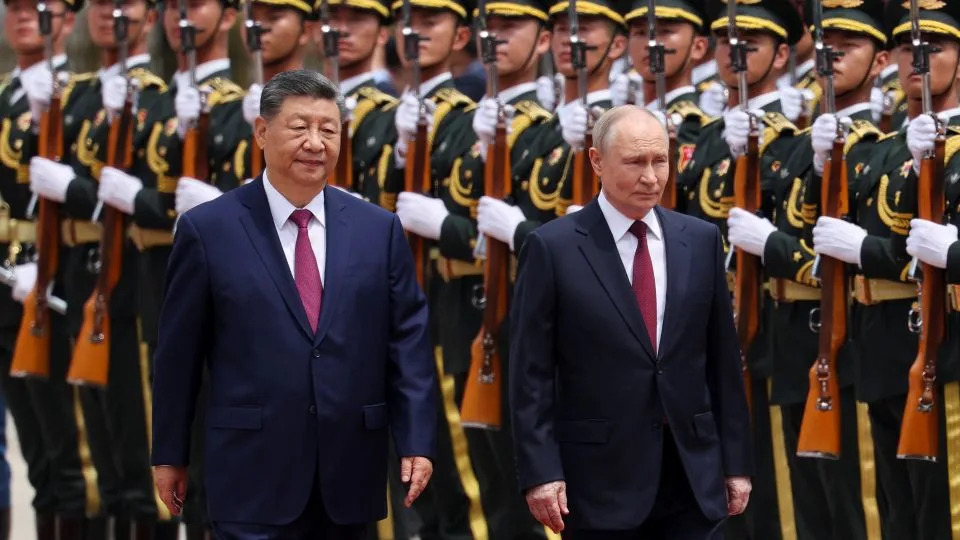
Putin’s welcome outside the monumental Great Hall on Wednesday morning had all the trappings of the typical state-visit welcome, which Beijing also bestowed on Trump last week.

Xi and a line-up of his top officials shook hands with the Russian president, before the relaxed-looking leaders stood shoulder to shoulder during a gun salute, while a military band played and Russian and Chinese flags fluttered in the background.

Children waved flags and flowers as the leaders walked by – a feature of last week’s ceremony that visibly amused Trump.

The American leader commented on the parallels while speaking to reporters Wednesday. “I don’t know if the ceremony is quite as brilliant as mine. I watched, I think we topped him,” Trump said, adding it was “good” Putin was making the visit and that he “got along” with both leaders.

But the optics of Putin’s welcome on the heels of Trump’s appeared geared to underscore China and Russia’s enduring and ever-deepening alignment, even as Trump’s visit worked to stabilize Beijing’s ties with Washington.

Putin’s visit coincided with the 25th anniversary of their 2001 “Treaty of Good-Neighborliness and Friendly Cooperation,” which resolved long-standing border frictions and ushered in a new period of cooperation.

Later Wednesday, Xi and Putin attended a photo exhibition, curated by their countries’ respective state media Xinhua and TASS, called “Unbreakable Friendship of Great Nations, Strategic Partnership of Great Powers.”

CNN’s Fred He, Darya Tarasova and Ivana Kottasová contributed to this report.

For more CNN news and newsletters create an account at CNN.com