Press
DJ Black Coffee stuns O2 crowds with orchestral show
Images
1 / 5

2 / 5
3 / 5
4 / 5
5 / 5
It's 28C on a sweltering afternoon in London as crowds gather outside The O2 arena for a sold-out night with one of the world's most renowned DJs.

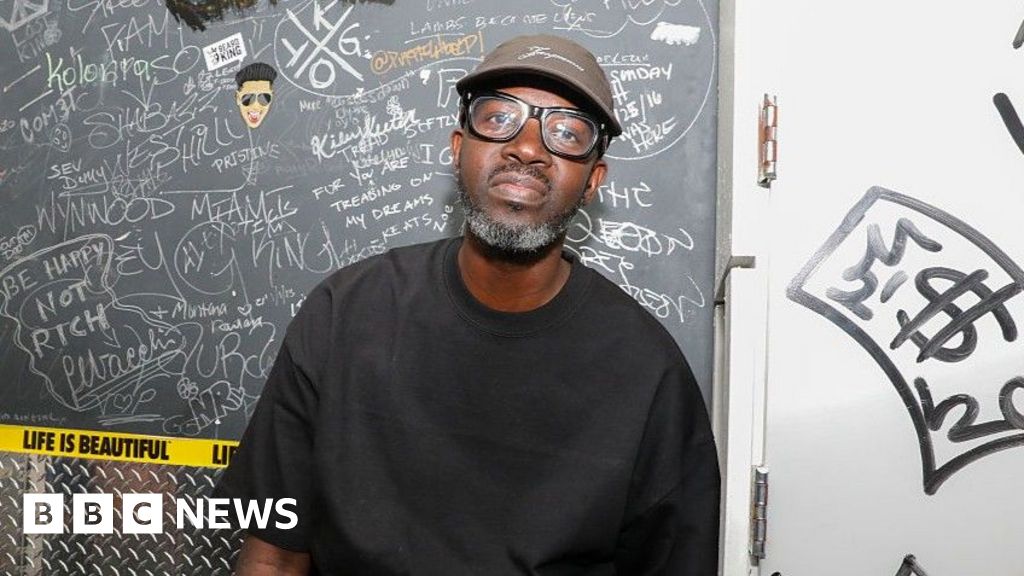
Backstage, as an orchestra rehearses and cameras document his every move, South African superstar Black Coffee is preparing for one of the biggest performances of his career.

The Grammy Award-winning artist, whose real name is Nkosinathi Maphumulo and known for hits such as The Rapture Pt.III and Drive, was in London on Friday for one night before flying to begin his Ibiza summer residency.

Speaking to the BBC before his Afropolitan House O2 spectacle, he's calm - despite the scale of the occasion.

Moments earlier, US singer Alicia Keys, his special guest for the show, had walked past backstage. Smiling apologetically, he tells us: "I'm keeping her waiting for you guys and this interview."

For Black Coffee this show represents far more than another arena set. It is the culmination of a journey that began in small London clubs decades earlier.

"I've been here before," he says. "I played in the Indigo room before, so it was always a big thing for me to move to the next room - the big one."

The production is ambitious: a three-hour performance featuring a live orchestra, guest artists and surprise appearances. London audiences, he says, demand something different.

"London is known for clubbing for so many years," he explains. "There's a very big relationship with Ibiza. They're just a clubbing community. London is punchier, groovier. So I had to build a different set for tonight."

The city also played a major role in launching his international career.

"One of my singles became big here," he recalls. "London has always been part of my dream. I basically grew up here musically."

But behind his success lies a story marked by tragedy and resilience. In 1990, during celebrations surrounding the release of Nelson Mandela from prison, Black Coffee was involved in a devastating car accident in which two people died, and that left him with a serious injury to his left arm.

"It changed my entire life," he says quietly. "It was a setback. I was still a kid and I always wanted to be a DJ. One day I just made a decision not to stop."

That determination would eventually transform him into one of Africa's most successful musical exports. Yet he believes South Africa still lacks the infrastructure needed to support young artists.

"We haven't built sustainable structures that can take artists from zero to one," he says. "Every artist tries their own way. Some make it, some don't. What we need are systems that guide talent step by step."

Black Coffee is equally outspoken about how African artists are perceived globally. While many celebrate the rise of "African excellence", he rejects the label.

"I don't like the wording," he says. "I just want excellence. If we want to be global players, we should come as global players - not African global players."

He argues artists from the continent should no longer wait for validation from Europe or America.

"Whatever opportunities we're not given, we need to create ourselves and stop waiting to be invited to the table."

That philosophy shaped one of the proudest moments of his career: winning a Grammy Award.

Black Coffee deliberately avoided competing in categories specifically designated for African music, instead choosing to compete alongside mainstream international artists.

"That win was very strategic," he explains. "I wanted to be nominated amongst my peers - people I tour with, travel with and work with. We don't need a smaller table."

He believes such recognition represents a broader shift for African artists breaking into global markets on an equal footing.

"It may not make sense to a lot of people now," he says, "but it was an important moment in the history of music from the continent."

As our interview ends, stage managers are calling him as the show is nearing its start.

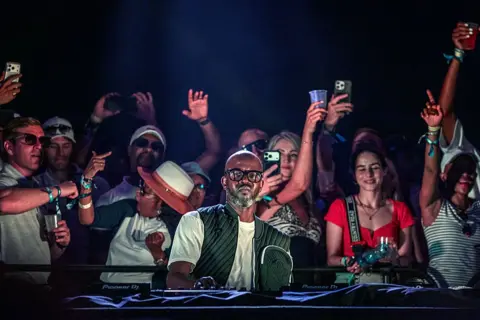
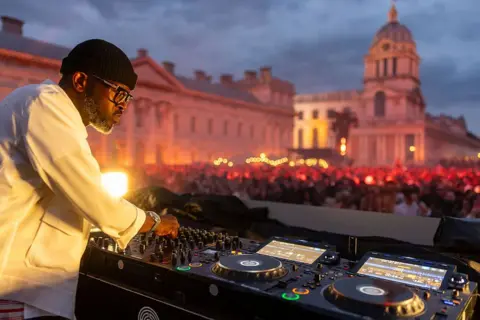
The lights go down and the orchestra weaves between the steady thump of his beats and vivid melodies, as shadow-like projections are beamed onto a huge circular curtain draped above him. Black Coffee does not disappoint.