huffpost Press
GOP Twists Itself In Knots To Shield Trump’s Court Picks From Saying He Lost In 2020
Images
1 / 6

2 / 6

3 / 6
4 / 6
5 / 6

6 / 6
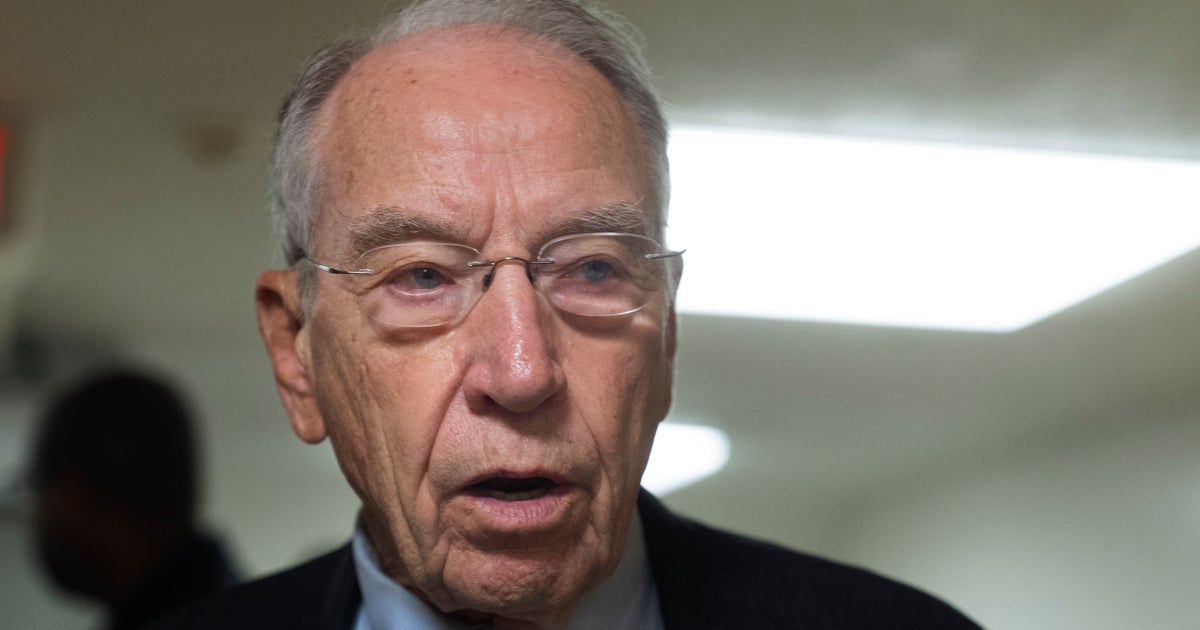
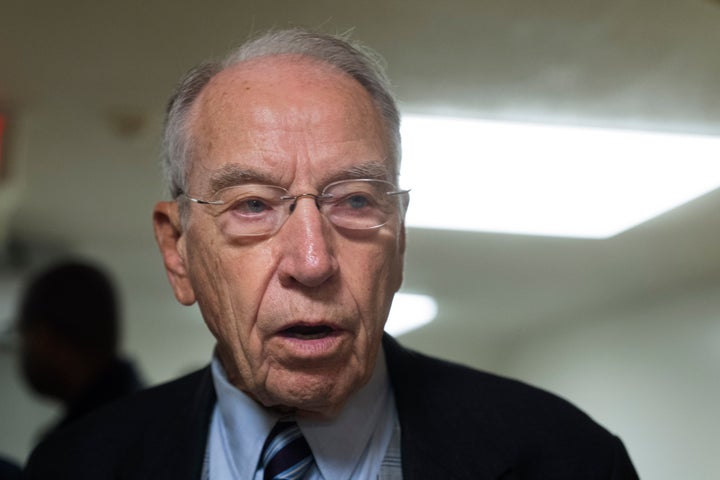
WASHINGTON – Sen. Chuck Grassley (R-Iowa) has been trying for months to stop Democrats from asking President Donald Trump’s judicial nominees who won the 2020 election, a basic question that none will answer like a normal human being.

Instead of just saying “Joe Biden” and moving along, dozens of Trump’s picks for lifetime federal judgeships have given bizarre and convoluted answers about the electoral certification process. They’ve all gone out of their way to avoid stating the fact that the thin-skinned president who appointed them to powerful court seats lost that election, and later incited an insurrection on Jan. 6, 2021, to try to reverse the election results by force.

It’s been an embarrassing exercise for all of these federal judicial nominees, who will forever have it on their records that they were the people too afraid to cross Trump — and too determined to advance their own careers — to tell the truth and prove that their loyalties lie with the Constitution over any particular president.

Grassley, who chairs the Senate Judiciary Committee and wants to help Trump, has been trying to give his nominees cover as they dodge these questions. Except his arguments have been nonsensical.

His criticism of Democrats for asking nominees who won the popular vote in 2020? “Of course, none of the nominees counted ballots.”

His insistence that it’s normal for Trump’s nominees to keep saying Biden was certified as president, when asked who won the election? He’s undermined this argument himself, at one point making forceful comments about a president being determined by who gets the most electoral votes, not by who is certified: “Under Article II and the 12th Amendment of our Constitution, the electoral college dictates who wins presidential elections.”

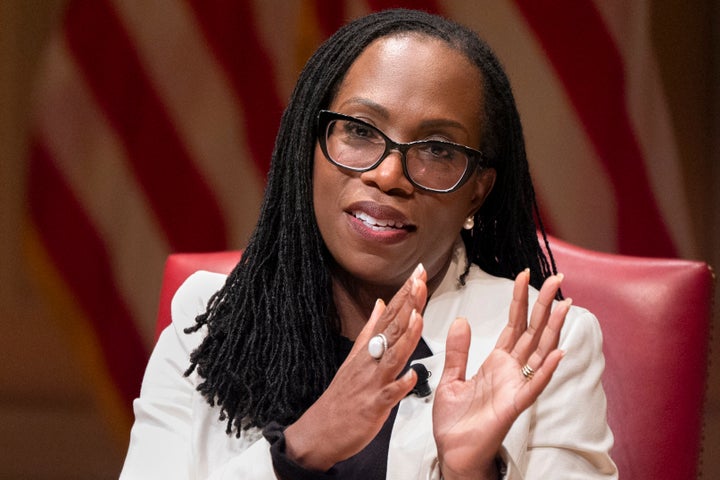
This week, Grassley tested out a new and absurd defense of Trump’s court picks who won’t say who won in 2020: citing Supreme Court Justice Ketanji Brown Jackson, who declined to discuss the election in her nomination process.

With a propped-up poster of Jackson next to him, Grassley opened a Wednesday hearing by highlighting that the then-Supreme Court nominee declined to answer a question about the 2020 election in her follow-up written responses to questions from the committee, submitted after her March 2022 nomination hearing.

“When asked if she’d ever commented on the results of the 2020 election, Justice Jackson stated, ‘It would be inappropriate for me to publicly weigh into any subject of political debate,’” the Iowa Republican read aloud in his opening remarks. “She gave the same answer when asked whether she ever expressed skepticism about the 2016 election results.”

“Her answer then, like the answers of the judicial nominees recently, was entirely prudent and unremarkable,” Grassley continued. “My Democratic colleagues need to stop and reflect. Why have they created a months-long circus about Trump nominees for making the exact same point Justice Jackson made during her confirmation process?”

His “gotcha” moment appeared highly coordinated with the two judicial nominees before the committee that day. Both invoked Jackson when asked who won the 2020 election.

“I’ll incorporate the answer that Justice Jackson gave that Chairman Grassley referred to earlier,” Benjamin Flowers, Trump’s pick for a seat on the U.S. Court of Appeals for the 6th Circuit, said in response to the question from Sen. Richard Blumenthal (D-Conn.).

“I think the answer that Justice Jackson gave is the only legally and ethically correct answer,” said Matthew Schwartz, Trump’s nominee to a seat on the U.S. Court of Appeals for the 2nd Circuit, to Blumenthal.

For anyone who has been following these hearings, watching Republicans now insist this is the real reason Trump’s nominees shouldn’t have to say who won in 2020 is laughable.

“This has been ridiculous,” Sen. Dick Durbin (D-Ill.), the top Democrat on the committee, told HuffPost on Thursday.

“I’ve been around Chuck for a long time. I think he is a little bit embarrassed by the answers that have been given by nominees,” Durbin said of Grassley. “They’re clearly rehearsed, carefully choosing their words. They want to sound credible, but they don’t dare say anything that might offend Trump and his MAGA leaders.”

The thrust of the GOP’s new argument — that Jackson declined to discuss the results of the 2020 election as a nominee, so Trump’s judicial nominees can, too — is also ridiculous. Jackson was a sitting judge on the U.S. Court of Appeals for the D.C. Circuit when she was nominated to the Supreme Court, meaning she was bound by the Code of Conduct for U.S. Judges. It requires federal judges to uphold the independence of the courts and avoid even the appearance of impropriety.

Neither Flowers nor Schwartz is a sitting judge; Schwartz is currently Trump’s personal lawyer, which is a conflict in its own right, and Flowers is a former Ohio solicitor general, most recently in private practice. Federal judges are legally mandated to follow the judicial code, but federal judicial nominees are not. Instead, the code is “designed to provide guidance” to them, in addition to the judges required to follow it.

Both Flowers and Schwartz tried to claim otherwise during their hearing, saying they were restricted in what they could say, just like Jackson was. Blumenthal shot them down.

“Justice Jackson said it would be inappropriate for her as a sitting federal judge,” he sternly told Flowers. “You are not a sitting federal judge.”

Flowers tried to muddy the language of the judicial code, but the Connecticut senator had enough: “I think your failure to answer that question mocks this committee.”

Carl Tobias, the Williams Chair in Law at the University of Richmond and a frequent commentator on federal judicial nominations, said it made no sense to bring up Jackson’s nomination process in Wednesday’s hearing.

“What the GOP and Grassley were saying was not very clear. [Wednesday’s] nominees are NOT sitting judges,” Tobias said in an email. “At best, it was disingenuous to invoke her testimony as a nominee.”

Grassley spokesperson Clare Slattery disputed that judicial nominees aren’t legally bound by the judicial code.

“If anything, Democrats should be embarrassed that they don’t have a basic grasp of the judicial Code of Conduct, which clearly states, ‘The Code is designed to provide guidance to judges and nominees for judicial office,’” Slattery said in a statement.

“Justice Jackson acknowledged the same when she declined to engage in a political debate regarding the 2020 election, not just because she was a sitting federal judge, but also a ‘pending judicial nominee,’” she said. “Judicial nominees, just like federal judges, are not political pundits.”

A request for comment from Justice Jackson was not returned.

Grassley’s attempt to paint Democrats as hypocrites also glosses over the context in which Jackson was answering the questions from Sen. Ted Cruz (R-Texas) about 2016 and 2020. Each was asked slightly differently. His 2016 question was about whether Jackson ever “expressed skepticism” about “the validity of the outcome.” For 2020, his question was about whether she “ever commented … on the results.” (They appear on page 136 of Jackson’s 330-page package of responses to the committee.)

You have to rewind your brain back to March 2022 to consider where these questions were coming from. The 2016 question stems from claims of Russian interference throwing that election to Trump. Special Counsel Robert Mueller concluded in his exhaustive 2019 investigation that the Russian government interfered in the U.S. election in “a sweeping and systematic fashion,” but there was no evidence Trump’s campaign coordinated with them.

The 2020 question is more general, asking Jackson if she’s ever said anything about its outcome. Cruz’s questions about these elections are back-to-back in the questionnaire, and none are about vote counts. They appear more aimed at making Jackson look political by pressing her on whether she’d ever said anything bad about Trump being elected.

“It was truly a political matter,” recalled Josh Orton, president of Demand Justice, a progressive judicial advocacy group, and a former top aide to Sen. Bernie Sanders (I-Vt.). “No way was he asking her essentially whether she agreed with the sitting president who nominated her that the election results were bogus.”

“Also, Jackson wasn’t nominated by an election denier,” Orton added. “She wasn’t nominated by someone who attempted to overthrow an election and expected his nominees to lie about it, too.”

“It's going to haunt them for the rest of their careers.”

Republicans on the judiciary panel seem ready to keep giving cover to Trump’s court picks on 2020 questions. Sen. Mike Lee (R-Utah), who has been on Trump’s short list for a Supreme Court seat, tried to argue in Wednesday’s hearing that the judicial canon equally applies to nominees. Last week, another committee member, Sen. Eric Schmitt (R-Mo.), openly griped about Democrats routinely asking Trump’s nominees about what happened on Jan. 6.

Grassley, too, has only dug in on attacking Democrats for asking who won in 2020. The 92-year-old committee chairman briefly appeared to forget why he’s doing this, though, when he was caught on a hot mic last month asking his staff in the middle of a hearing with more of Trump’s nominees, “What would be wrong if they said Biden won?”

Durbin, a longtime member and former chairman of the committee, said he thinks the GOP’s frustrations with all the 2020 questions show that Democrats are doing this right.

“They’re embarrassed. They know that, at the end, there’s going to be a composite video that shows these painful moments of those people trying to avoid saying the truth, and everyone knows it,” said the Illinois senator. “It’s going to haunt them for the rest of their careers.”

By entering your email and clicking Sign Up, you're agreeing to let us send you customized marketing messages about us and our advertising partners. You are also agreeing to our Terms of Service and Privacy Policy.