yahoo Press
Ozempic may be reshaping the brain, scientists say
Images
1 / 5

2 / 5

3 / 5

4 / 5

5 / 5
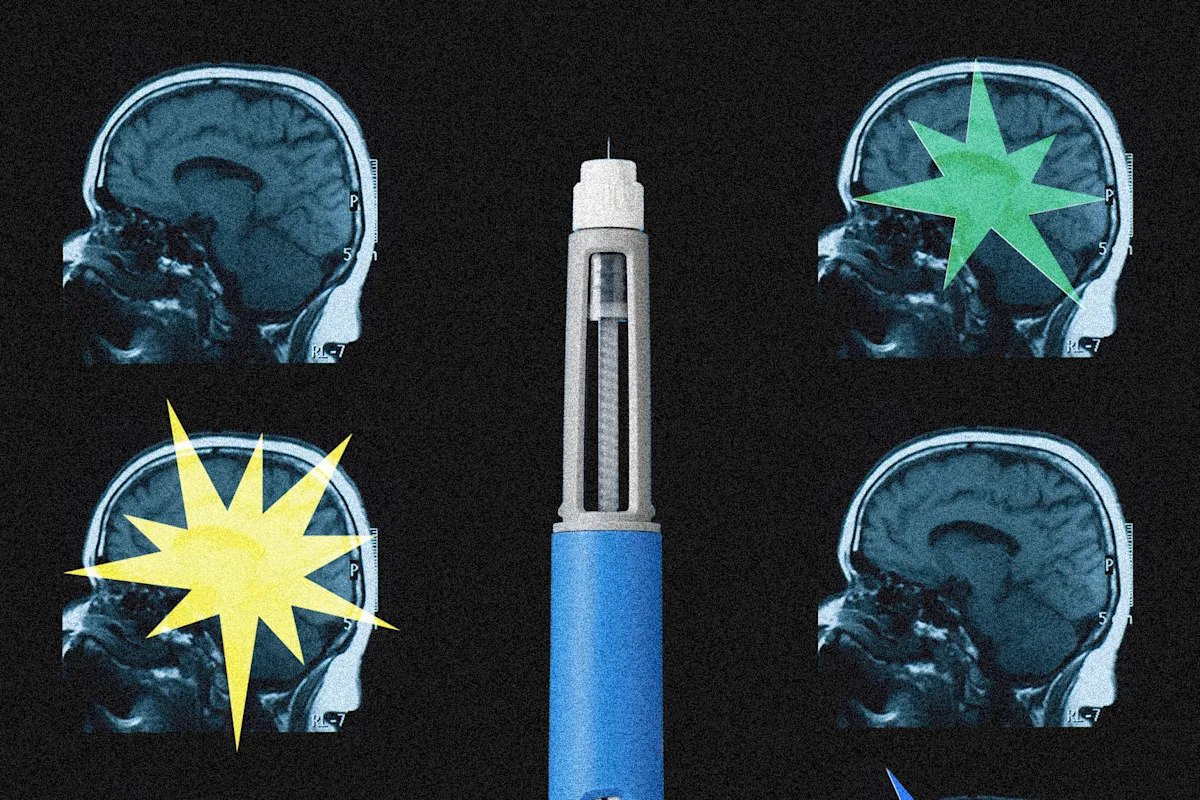
Ozempic was supposed to be a gut story. Then Allison Shapiro looked at the brain scans.

An assistant professor at the University of Colorado Anschutz, she was part of a team studying 13 teens and young women with a hormonal disorder affecting the ovaries who were put on GLP-1 drugs. As part of testing to catalogue the effect of the medication on their bodies, Shapiro took snapshots of their brains before and after.

Subscribe to The Post Most newsletter for the most important and interesting stories from The Washington Post.

She was astonished to find extensive changes.

Within only a few months, the brain connections in the salience network, which helps target attention, had multiplied.

“We didn’t expect to see this effect, and we really don’t know what it means,” Shapiro said.

Ozempic and other GLP-1 drugs were initially understood as a metabolism breakthrough: medicines that act like hormones to control hunger, blood sugar and weight. But as researchers probe deeper into how the drugs work, early evidence suggests that GLP-1s may also be reshaping parts of the brain.

Tens of millions of people are now taking the medications worldwide, turning what began as an obesity and diabetes treatment into what could be modern medicine’s largest unplanned neuroscience experiments.

Scientists are studying GLP-1 drugs - medications that mimic the hormones involved in appetite, blood sugar and digestion - for how they affect not only eating behavior, but also addiction, cognition, neurodegeneration and even motivation and pleasure. The category includes older diabetes drugs that researchers have studied for decades; newer medications such as Ozempic and Wegovy, which contain semaglutide; and Mounjaro and Zepbound, which contain tirzepatide - a newer compound that targets both GLP-1 and a second metabolic hormone known as GIP, a distinction some scientists believe may matter neurologically.

The emerging research on GLP-1s is part of a larger scientific shift away from treating brain and physical health as separate domains. Increasingly, researchers see them as tightly intertwined.

Exercise is associated with sharper cognition, stronger memory and better executive function across a person’s lifespan, probably because it enhances neural activation and plasticity - the brain’s capacity to adapt and reorganize itself. Diet exerts its own influence; eating balanced, nutrient-dense foods has been linked to greater gray matter volume and improved mental well-being.

But not all of the reported mental effects of GLP-1 drugs have been positive. On social media and at doctor’s offices, some users have reported a type of brain fog and others something broader and harder to define: a strange emotional flattening. People describe less pleasure, less motivation, diminished interest in hobbies and even reduced sexual desire.

Those accounts are beginning to raise deeper questions about what, exactly, these drugs are changing. If GLP-1s alter the brain systems involved in reward, craving and motivation, researchers wonder, where is the line between quieting a person’s destructive impulses and reshaping personality itself?

The hormones and receptors targeted by GLP-1 drugs form a vast communication network that stretches far beyond the stomach. Naturally activated after eating, the system helps regulate hunger, blood sugar and digestion - but its receptors are also scattered throughout the body, including in the heart and deep within the brain.

Scientists are still in the early stages of investigating how GLP-1 drugs affect neural networks. Because the medications are relatively large molecules, researchers remain uncertain how much of them can cross the blood-brain barrier, a protective membrane that shields the brain from the bloodstream.

That uncertainty has raised a larger question: Are the drugs acting directly on the brain, or are they reshaping the nervous system more indirectly by reducing inflammation, improving metabolism and easing stress on the body?

Researchers suspect that both may be true. Some studies suggest the drugs help reduce inflammation that can damage neurons over time, while other research indicates the medications may help brain cells survive and function more effectively.

13 surprising ways GLP-1s may benefit the body, according to science

If you aren’t losing weight with GLP-1 drugs, this may be one reason why

People with eating disorders are taking GLP-1s, and doctors are alarmed are alarmed

One leading theory is that GLP-1 drugs may reduce inflammation in the brain. Researchers think the medications could quiet overactive immune cells that, when repeatedly triggered, may contribute to damage and cognitive degeneration over time. Other scientists suspect the drugs may act more directly on brain cells themselves, helping them function more efficiently and resist stress. These two effects may be happening simultaneously.

Researchers are also investigating whether this process originates in the gut rather than the brain. Naturally occurring GLP-1 hormones communicate with the brain through the vagus nerve, the long signaling pathway connecting the digestive system and brain stem that guides sensations of hunger and fullness. Scientists suspect those same gut-brain circuits may also influence mood, craving and cognition.

Long before Oprah Winfrey and social media influencers helped popularize GLP-1 drugs, physician-scientist Lorenzo Leggio was studying them as a possible addiction treatment.

After seeing a 2013 study in Sweden showing that rodents given a GLP-1-like medication consumed less alcohol, Leggio - the clinical director and deputy scientific director at the National Institutes of Health’s National Institute on Drug Abuse - replicated the findings and has been investigating ever since.

Leggio and his team have built a mock bar where participants are exposed to alcohol-related cues - smells, sights and other triggers associated with craving - while their physiological and behavioral responses are measured in real time. Participants also move through virtual-reality environments, including a cafeteria simulation in which they are asked to choose foods, allowing scientists to study how desire and decision-making may shift under the drugs’ influence.

Researchers have long known that addiction is associated with hyperactivity in brain circuits connected to reward, craving and reinforcement. Scientists suspect GLP-1 drugs may dampen the brain’s dopamine-driven reward systems that determine what feels pleasurable and worth repeating - which could lessen these urges. They are also investigating whether the drugs affect the amygdala, which helps regulate fear, stress and emotional processing.

Eli Lilly, which manufactures tirzepatide under the brand names Mounjaro and Zepbound, has launched a large clinical trial expected to conclude by the end of this year or early next year examining whether the drug could help treat alcohol-use disorder.

Several major studies examining GLP-1 drugs on nicotine dependence, opioid- and cocaine-use disorders, gambling addiction and binge eating are also underway.

“It’s very exciting times, but we don’t fully understand how it works,” Leggio said.

Many patients have described a quieting of “food noise” - the constant mental pull toward eating that many had lived with for years. But the same mechanisms that curb destructive cravings could also suppress healthy desires, a shift some on the medication have reported.

“If you think about it from a survival standpoint, some of the foundational behavior such as eating and sex could be impacted,” Leggio said. Still, he noted, the Food and Drug Administration has repeatedly reviewed available safety data and has not concluded that this is a widespread problem.

The end of 2025 brought a major setback for one of the most ambitious hopes surrounding GLP-1 drugs. After years of speculation that GLP-1s might help slow Alzheimer’s disease, Novo Nordisk announced last year that its large Phase III clinical trial had failed to show the medication significantly slowed cognitive and functional decline in patients.

The study was large, rigorously designed and widely viewed as a serious test of whether GLP-1 drugs could alter the course of one of aging’s most devastating diseases. For many researchers, the results appeared to close the door on one of the biggest ambitions surrounding the drug.

But deep in the data were hints of hope.

Aaron Burstein, a scientist with the Alzheimer’s Drug Discovery Foundation who was not involved in the Novo Nordisk trial, noticed subtle shifts in biomarkers found in cerebrospinal fluid - including those associated with neuroinflammation and neurodegeneration. The changes were modest, roughly 10 percent, but enough to catch researchers’ attention.

The findings fit into a broader shift already underway in Alzheimer’s research: a growing recognition that effective treatment may require looking beyond the buildup of amyloid and tau proteins, which has dominated the field for decades.

Earlier brain imaging studies had also suggested GLP-1 drugs might slow the loss of brain volume in regions including the frontal, temporal and parietal lobes - areas involved in planning, memory, emotion and sensory integration.

Now, some researchers are beginning to wonder whether the drugs may still exert meaningful biological effects but were simply given too late to produce clear clinical improvement. Increasingly, scientists are considering whether GLP-1 drugs might prove more useful earlier - perhaps not as treatments for established Alzheimer’s but as a way to delay or prevent the disease.

Ted Dawson, a professor in neurodegenerative diseases at Johns Hopkins University School of Medicine, said similar thinking applies to research about Parkinson’s disease. Nearly a decade ago, animal studies indicated GLP-1s could help with Parkinson’s, but a recent clinical trial did not show any overall impact.

However, he believes it’s possible researchers undershot the dose and said there has been talk of testing a higher one in younger patients.

As evidence has grown that inflammation, metabolism and mental health may be far more connected than scientists once believed, researchers have become intrigued by patients who say GLP-1 drugs appear to ease anxiety, compulsive thinking and emotional distress.

Daniel Drucker, a University of Toronto researcher and GLP-1 drug pioneer who receives funding from several drugmakers, said researchers are investigating the medications across a variety of psychiatric and neurological conditions, though none are approved for them.

“We have so many anecdotal reports: They were treated for blood sugar and then they felt much happier. Or they took one dose of the drug and their brain fog cleared,” he said.

Early animal studies and observational human research have hinted at possible antidepressant and antianxiety effects, though scientists caution that the evidence remains preliminary.

There is also growing interest in schizophrenia. Initial attention focused largely on how many antipsychotic medications cause severe weight gain and metabolic dysfunction, making GLP-1 drugs potentially useful for managing these side effects. But researchers have begun to ask whether the drugs might affect schizophrenia more directly by reducing inflammation and changing how the brain communicates.

And as millions of people continue to report brain fog, anxiety, depression and cognitive problems long after recovering from covid-19 infection, researchers suspect persistent inflammation may play a role. Large clinical trials are now underway, testing whether drugs like tirzepatide can alleviate those symptoms.

Some of the earliest clues that GLP-1 drugs might reshape the brain emerged almost by accident, through research on a hormonal disorder affecting 1 in 10 U.S. women. Once known as PCOS and now increasingly called polyendocrine metabolic ovarian syndrome, or PMOS, the complex endocrine disorder can lead to hormonal dysfunction, metabolic abnormalities and abnormal tissue growth that can affect fertility.

At the University of Colorado Anschutz, pediatric endocrinologist Melanie Cree had been studying whether the drugs could help adolescents with the condition by reducing excess weight and stabilizing blood sugar. As Cree’s trial progressed, her colleague Shapiro began scanning participants’ brains, looking for neurological changes that might accompany the metabolic ones.

What she found pointed researchers toward a deeper possibility: that the disorder may involve dysfunction in the hypothalamus, the small but powerful brain region that helps regulate hunger, stress, sleep and hormones. The area also contains a high concentration of GLP-1 receptors.

The scans showed increased connectivity between certain brain regions, but researchers caution that the science is still in early stages. They are still trying to understand how changes visible on imaging scans translate into thought, behavior and long-term brain health.

And in children and adolescents, the questions become even more complicated. In adults, many of the effects of GLP-1 drugs, including weight loss, appear reversible. But scientists do not yet know what these drugs might mean for the developing brain that is especially vulnerable to external stimuli.

“We can’t assume what adults do and how they respond is going to be how adolescents respond,” Shapiro said.

The images from Shapiro’s study are the beginning of what she hopes will be a larger dataset specifically about children and GLP-1s to determine whether some of the neural changes observed in them could prove more lasting.

“The real test is how the brain effects are sustained when you take adolescents off the drugs,” she said.

Study participant Grace Hamilton, a 28-year-old from outside of Denver, lost over 100 pounds on GLP-1s, and her testosterone levels are more regulated. She has continued to stay on GLP-1s after starting them in her early 20s and said she has noticed a number of brain changes even if it’s hard to pinpoint the exact cause. She was on myriad antidepressants since she was a teen, but since being on GLP-1s, she no longer needs them and has shifted from being a social drinker to not having a desire to drink at all.

“I would probably stand to bet it’s not just a coincidence,” Hamilton said.

---

Video Embed Code

Video: GLP-1 drugs were built for diabetes and weight loss, but scientists are now studying their effects on inflammation, the brain and beyond.(c) 2026 , The Washington Post

Embed code:

Related Content