Press
Bereaved parents face long waits to find out how children died
Images
1 / 11

2 / 11
3 / 11
4 / 11
5 / 11
6 / 11

7 / 11
8 / 11
9 / 11

10 / 11

11 / 11
"We are in the most serious situation that we have been in the last 20 years."

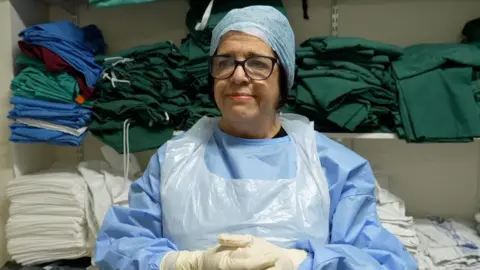
Dr Marta Cohen is a paediatric pathologist who has come out of retirement to help reduce the long waiting times bereaved parents face before they can find out how their child died.

A shortage in the number of qualified pathologists able to carry out post-mortem examinations on children means that a fifth of families who have suffered the loss of a child now wait six months or more for the results.

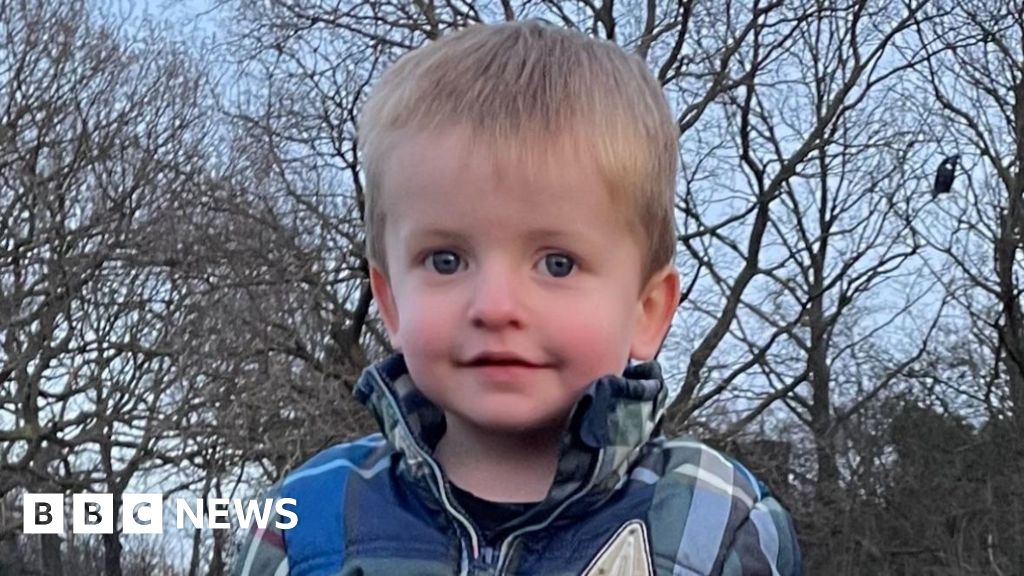
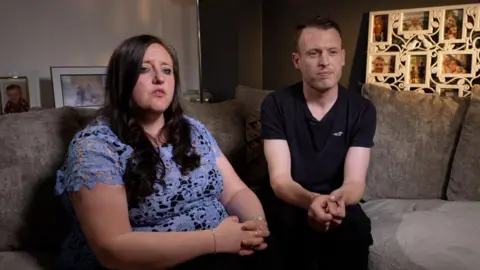
For Doncaster couple Nathan and Fiona Robinson, the wait between their two-year-old son Alfie's sudden death and his post-mortem examination taking place was seven months.

Warning: This article contains distressing details about losing a child

There were no warning signs before Alfie died in his sleep.

Fiona had gone to wake her son and his older sister when she found him in bed one morning in May 2022.

She recalls: "I went over and tapped his back lightly and said, 'Come on dreamer, it's time to get up now'.

"I knew straight away, as soon as I rolled him over, he was gone."

After what Fiona describes as "one of the most harrowing moments of my life", she and Nathan were left "living in limbo" until pathology staff at Sheffield Children's Hospital could attempt to give them the answer as to how he had died.

Alfie was "a really big character" and "very affectionate", Nathan says.

"You could really feel the love that he radiated towards his mum, dad and sister."

After their son's death, Nathan says the couple "no longer operate like normal parents".

"You go over loads of scenarios in your head on a daily basis. What happened? Could we have done something differently?

"Then, having another child, it leaves you constantly fearing for her future."

These fears were compounded by not knowing for several months why Alfie died.

An inquest held in November 2024 could not establish a cause of death, despite a post-mortem examination, an examination of the scene and a review of the child's and family's medical history.

About 40 children and young people aged under 18 die unexpectedly in the UK every year from unknown causes, in which investigations failed to uncover a reason.

But Nathan says it was "reassuring" to know "there was nothing that we could have done differently to stop this".

"For a parent that's gone through an unexplained death, it's paramount that they get that answer quickly," he adds.

"It's really important for these families that they can start to build a life again that's been completely destroyed."

A Royal College of Pathologists (RCP) report last year attributed the delays to a national staffing shortage, with more than a third of pathologist posts vacant.

Pathologists are specialist doctors who identify and diagnose diseases and conduct post-mortem examinations on bodies to determine cause of death.

The RCP said the main barriers to recruitment were shortages of qualified pathologists, budget constraints, and delays due to approvals or processes.

At Sheffield Children's Hospital, some pathologists are picking up extra shifts to cover workforce gaps.

The hospital conducts about 500 post-mortem examinations on children each year, including around 120 cases of sudden, unexpected deaths.

Lead paediatric and perinatal pathologist Cohen currently handles 85% of the sudden death cases.

She says the number of pathologists has been falling for two decades and the shortage is now in "the most serious situation that we have been in the last 20 years".

"The cases are complex, the workforce is short, and the pressure is high. So the wellbeing of the pathologist is not good enough," she says.

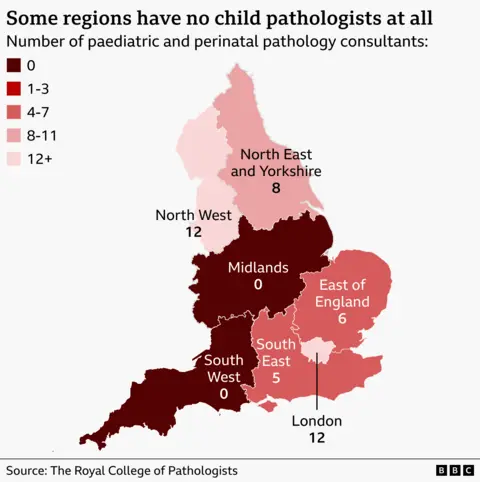
There are currently just 52 consultant pathologists across the UK, according to the RCP. Some regions, such as Midlands and South West, do not have any child pathologists.

Sheffield Children's Hospital is part of a "mutual aid" scheme in which its pathology consultants help to cover shortages in other parts of England.

This means more pressure on consultants like Cohen, who are taking on cases from further and further afield.

She performs post-mortem examinations in Sheffield on children from as far away as Kent, Newcastle and the West Midlands, with bodies sometimes arriving a month later because "coroners have been trying to find a pathologist".

Cohen fears the situation could get even worse, with 25% of the current workforce of pathologists expected to retire in the next five years, according to the RCP report.

She says: "If you don't have enough consultants, how will you train the ones you need?"

Cohen says the government "has to invest in training" to help solve the shortage.

Alfie's parents, meanwhile, want to see changes to help families like theirs.

Fiona says the delays they faced had caused a "ripple effect" in the couple's life "where it's not just damaging one thing, it's damaging multiple things".

Nathan adds: "You're trying to run a home, you're trying to maintain high-pressure jobs, as well as look after a four-year-old child that's just gone through an awful tragedy. It's impossible on a day-by-day basis."

He says the couple "don't feel like the current system is set up to help families and the pathologists through the process".

"We just want a plan where there's clear, definable action points from the government that we can work towards," he adds.

A Department of Health and Social Care spokesperson said: "Any avoidable distress to families in this heartbreaking position is unacceptable."

They said the department was committed to creating more training posts across the NHS "with a focus on specialties where there is greatest need".

If you are affected by any of the issues raised in this article, these organisations may be able to help.

The £340m deal will see five common conditions added to the list of things pharmacists can prescribe medication for from this autumn.

Just two years after opening, the unit at Huddersfield Royal Infirmary needs improvement.

Two men are on trial accused of sexual offences against seven children from Doncaster and Barnsley.

The five-year-old's mum thought he was going to die after an American bulldog mauled him in a park.

One in eight men will be diagnosed with prostate cancer in their lifetime.