foxnews Press
BISHOP ROBERT BARRON: Pope Leo sees the AI age clearly — and warns we must save our souls
Images
1 / 20

2 / 20
3 / 20
4 / 20
5 / 20

6 / 20

7 / 20
8 / 20

9 / 20

10 / 20
11 / 20
12 / 20
13 / 20

14 / 20

15 / 20

16 / 20
17 / 20

18 / 20

19 / 20
20 / 20
Forbes contributor Gene Marks assesses Pope Leo XIV’s concerns about the dangers of artificial intelligence on ‘Fox News Live.’

Pope Paul VI’s 1968 encyclical Humanae vitae covers a variety of themes, both theological and anthropological, and has proved to be remarkably prophetic, and yet it is still, in the minds of most people, simply the "birth control" encyclical. Similarly, Pope Francis’s 2015 encyclical Laudato Si’ ranges across a number of topics and provides a trenchant analysis of the philosophy that dominates the modern world, and yet, for most, it is simply the "global warming" encyclical. I am a bit afraid that something similar might happen to Pope Leo XIV’s Magnifica Humanitas, for it is already being characterized as the "AI encyclical." But to reduce this extraordinary text to that single theme would be regrettable indeed. Leo does, of course, discuss AI, and with remarkable insight, but there is so much more going on in this letter, and it should not be overlooked.

The best framework for understanding the text is the title. Pope Paul VI famously said that the Church is an expert in humanity, and the Vatican II document Gaudium et spes commences with the reminder that the Church is concerned with all dimensions of human experience. One of the last texts composed by Pope Francis, Dignitas infinita, focused on the "infinite dignity" of the human being. The irreducible nobility of the human being is, I believe, the master motif of Magnifica Humanitas. In line with his recent predecessors, Pope Leo insists that we human beings are magnificent because we have been made in the image and likeness of God and even more wonderfully elevated through the Incarnation to a share in divinity itself. It is not the secular humanism that the pope presents, but a deeply theological and Christological humanism.

Magnifica Humanitas effectively commences with a contrast between two images drawn from the Old Testament, namely, the construction of the Tower of Babel and the rebuilding of the walls of Jerusalem after the return of the exiles from Babylon. The first, driven by imperialistic hubris and undertaken without reference to God, led to calamity; the second, supervised by Nehemiah, predicated upon the cooperation of the various elements within Israelite society and undertaken for the glory of God, led to something beautiful. Pope Leo worries that many of the "new things" of today, including and especially AI and other forms of advanced technology, can have a Tower of Babel quality, that is to say, a tendency toward manipulation, domination, and the reduction of all forms of communication to a singular digital language. But he firmly believes that, rightly employed, these marvels can fit into a more "Nehemiah" framework and become a means of enhancing human dignity and community.

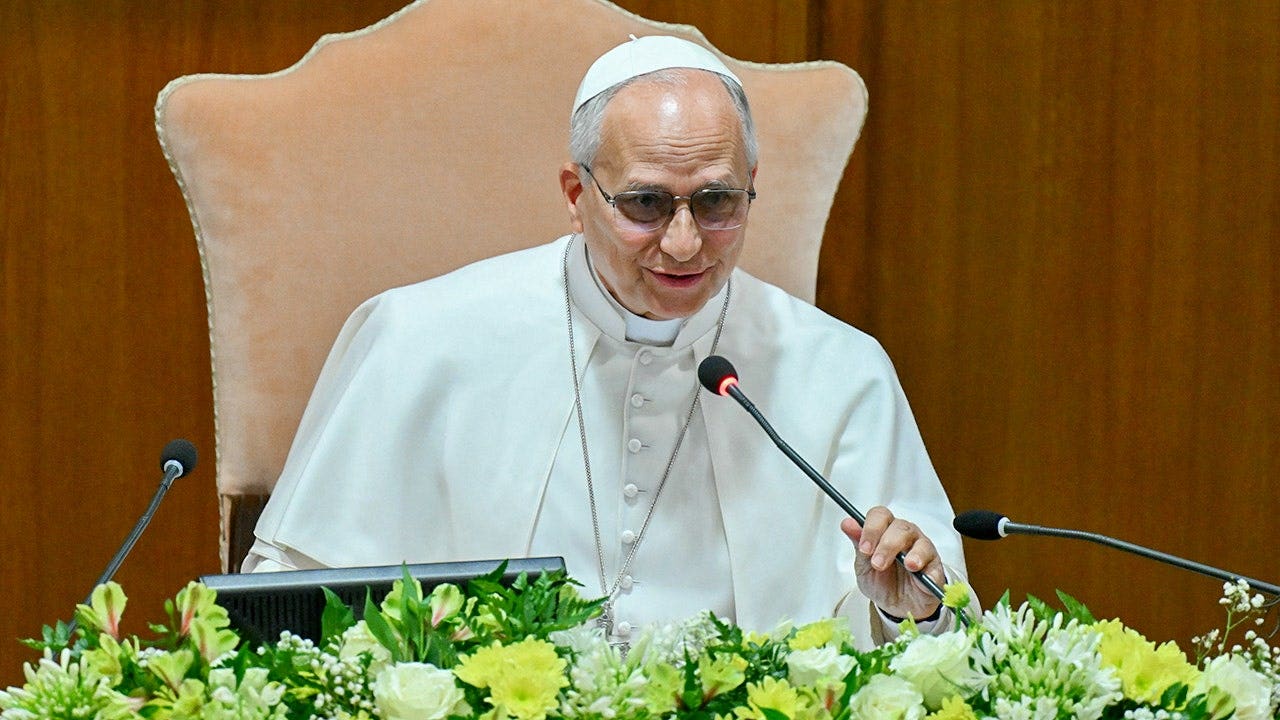
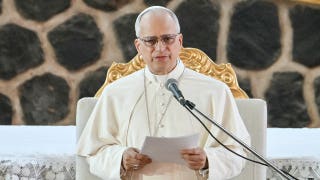
Pope Leo warns artificial intelligence could become a force for "domination, exclusion and death" without moral limits in the Vatican’s new encyclical. (Photo by Alberto PIZZOLI / AFP via Getty Images)

But before he treats these matters in detail, he pauses to consider the great principles that undergird Catholic social teaching. He wants to show that a proper consideration of contemporary technology must take place within a fundamentally moral context. And so, in the second chapter of Magnifica Humanitas, Leo provides an extremely concise and helpful overview of the Church’s social doctrine, emphasizing its satisfying ideological equilibrium. Thus, subsidiarity (the preference for more local forms of authority), typically favored by conservatives, is placed in healthy tension with solidarity (our moral obligation to one another), typically favored by liberals. And the dignity of the individual, typically stressed by conservatives, is balanced by an insistence upon the common good, typically stressed by liberals. The moral legitimacy of private property and the free market, dear to more right-leaning people, is placed alongside the universal destination of goods, a theme of importance to people of the left, and so on. This creative tension is the genius of Catholic social teaching and is precisely what allows its representatives to enter into constructive conversation with those on various points of the political spectrum.

POPE LEO XIV CALLS THIS A CHALLENGE TO 'HUMAN DIGNITY' IN FIRST ADDRESS TO CARDINALS

In chapters three and four, Pope Leo turns with acute attention to the particular issues presented by the revolution in communication technology underway today. His entire discussion is conditioned by a theme borrowed from Pope Francis, namely, the danger of a "technocratic paradigm." By this term, both Francis and Leo mean the tendency to privilege efficiency, control, and practical results over the dignity of the individual and the development of real communion. Leo, in fact, references Romano Guardini, a favorite of Pope Francis, who, at the beginning of the 20th century, bemoaned the dehumanizing features of a technologically driven culture. AI and its attendant technologies are good to the extent that they function as tools in the hands of responsible agents acting for a moral purpose; they are problematic to the extent that they come to dominate both thought and action, bending the properly human in the direction of the machine.

Pope Leo XIV celebrates the mass on the 30th World Day of Consecrated Life at St. Peter's Basilica in the Vatican on February 2, 2026.  (Alberto PIZZOLI / AFP via Getty Images)

Within the confines of this brief article, I cannot begin to cover the complexity of the pope’s analysis of AI, but I might draw attention to a few highlights.

First, Leo, as befits an Augustinian, is deeply concerned with the truth, and he fears that the digital space is inhabited by people who are far more interested in power than in truth. The denizens of the AI world can propagate, for a variety of reasons, "fake news," deeply distorted narratives, and misleading information. But the Tower of Babel story shows that when will is divorced from reality, disaster follows: "Such power should be constantly guided by the pursuit of truth and respect for human dignity, so that the culture fostered on the internet does not become an instrument of excessive distraction, homogenization or dominance, but rather a setting in which inner freedom and critical thought can mature" (136).

A related concern is how AI can undermine the sort of slow, patient, and careful work required to uncover the deepest truth. The ease with which AI delivers data to us can deceive us into thinking that acquiring "information" is the same as coming to understand. Here is the pope’s pithy conclusion: "Many educators already report signs of dehumanization, where people may ‘know many things’ but struggle to find direction in their lives, partly due to an inability to connect information with deeper knowledge or maintain a sense of purpose" (146).

Leo is also deeply distressed by the negative psychological impact of the internet on those who are drawn into the digital space. Many studies have demonstrated a tight correlation between "screen time" and depression, anxiety, and low self-esteem. Moreover, the internet has proved to be a breeding ground for sexual exploitation, grooming, and blackmail, not to mention an environment in which the worst forms of pornography have become available to children. Accordingly, the pope calls for effective regulation of this potentially dangerous media space.

THE AI REVOLUTION THREATENS OFFICE JOBS, BUT REVIVES DEMAND FOR SKILLED TRADES

Another preoccupation of the pope is the way AI has begun to affect the arena of work. Following St. John Paul II, Leo maintains that labor is not merely a practical necessity, but rather an essential dimension of human flourishing. Through our toil, we engage our minds, wills, and bodies, and we actualize potentialities within ourselves that we did not realize we had. And therefore, when the speed and efficiency of AI effectively eliminate possibly millions of jobs, certain economic advantages might accrue to the powerful, but a moral and spiritual disaster would occur for the working class: "The pursuit of greater profits cannot justify choices that systematically sacrifice jobs, because the human person is an end, not a means, and the economic order must remain subordinate to human dignity and the common good" (152).

CLICK HERE FOR MORE FOX NEWS OPINION

I will draw attention, finally, to Leo’s deep anxiety regarding the addictive quality of social media. It has now been well established that the devices that give us access to the web were consciously designed to be addictive — and this is perhaps most evident in the "doomscrolling" practiced by so many today.

Further, since AI tools capture so much personal data and information, all of us are deeply vulnerable to manipulation on the part of those who have less-than-savory economic and political motivations. Here are Pope Leo’s words: "When every action — movements, purchases, relationships and preferences — leaves a trace, a new form of power emerges, namely the power to profile, predict and influence behavior, often without individuals being fully aware of it" (171). Again, there is extraordinary richness in this fourth chapter of Magnifica Humanitas, and I would strongly encourage individuals and parish groups to engage in a serious reading of it.

Pope Leo XIV waves as he arrives at Saint Joseph's Cathedral in Bamenda, on the fourth day of an 11-day apostolic journey to Africa, on April 16, 2026. (Alberto PIZZOLI / AFP via Getty Images)

The final chapter of Magnifica Humanitas finds the pope shifting to a somewhat different key, as he focuses on questions of war and peace. This might prove to be the most talked-about and controversial section of the encyclical, given the roiled circumstances of the political world today.

In fact, I found this part of the letter the most thoroughly Augustinian. Basic to St. Augustine’s vision, especially as he articulated it in his City of God, is the contrast between the Roman society of his day, predicated upon the worship of morally ambiguous gods and goddesses, and the properly Christian society, predicated upon worship of the God whose name is love. In accord with the principle that we become what we worship, Rome was bellicose, violent, marked by what Augustine called the libido dominandi (the lust to dominate). And following the same principle, Christian society at least ought to be characterized by forgiveness, peace, and reconciliation. History, on Augustine’s reading, is an ongoing struggle between these two visions.

Pope Leo is anguished because he sees the ways of war coming to dominate the polity of the world today. And he calls upon the Church to provide an alternative vision, a civilization of love. This City of God will not emerge, he says, from some grand plan imposed from above, but rather from the steady work of individuals producing, in time, a cumulative effect. Remarkably, Leo quotes the great J.R.R. Tolkien in this context: "It is not our part to master all the tides of the world, but to do what is in us for the succour of those years wherein we are set, uprooting the evil in the fields that we know, so that those who live after may have clean earth to till" (213, Gandalf in "The Return of the King."). Especially in our time, when AI and other forms of advanced technology have made warfare more likely and more "efficient," Pope Leo wants the Church to present to the world the path of peace.

CLICK HERE TO DOWNLOAD THE FOX NEWS APP

I might remark on a certain irony in this context. In regard to questions of war and peace, St. Augustine is best known, not for his proposal of a civilization of love, but for his theory of just war. But we have to be eminently clear regarding the function of this device. One must never construe Augustine’s theory as some facile "justification" for war, a means of providing moral cover for the wanton use of violence. In fact, just the contrary is the case. The great saint saw his criteria as providing a severe limit to the waging of war, and the Church has always treated them as such. There is one line from this section of the letter that puzzled me a bit. Leo says that he feels the just war theory is "outdated." I certainly understand that since the means of waging war have changed so dramatically from Augustine’s time, a hasty application of the just war protocols would be naïve today. But I do not think that the criteria themselves — declaration by a just authority, proportionality, discrimination between combatants and noncombatants, last resort, and so on — are outdated. Instead, I believe they should be applied with particular rigor in our present circumstance.

In conclusion, please read this letter and do so with care and in a meditative frame of mind. Consciously step away from the online world of shouted opinions, arrogant self-assertion, and verbal violence. And take in the work of this wise man, an expert in humanity.

CLICK HERE TO READ MORE FROM BISHOP ROBERT BARRON

Bishop Barron leads the Roman Catholic Diocese of Winona-Rochester, Minnesota, and is founder of the ministerial organization Word on Fire. Follow: @BishopBarron

Get the recap of top opinion commentary and original content throughout the week.

By entering your email and clicking the Subscribe button, you agree to the Fox News
        Privacy Policy
       and
        Terms of Use
      , and
      agree to receive content and promotional communications from Fox News. You understand that you can
      opt-out at any time.

Subscribed

You've successfully subscribed to this newsletter!