buzzfeed Press
Older Folks Are Sharing Great Depression Memories That Are Devastating Yet Fascinating
Images
1 / 10
2 / 10

3 / 10
4 / 10
5 / 10
6 / 10
7 / 10
8 / 10
9 / 10
10 / 10
“It must have been dreadful for everyone, and my mom was traumatized for the rest of her life...”

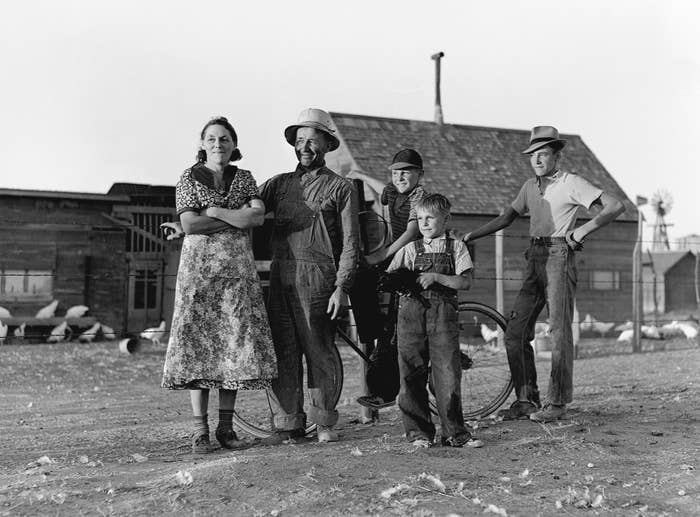
"Times were not that hard for them during the Depression, because they could easily live off of what they produced on the farm. But for those who stayed in the city, times were very hard, and they helped quite a few people with extra food. It was hard work, however, and many times neighbors would help each other to get in crops or do other chores.

When things got better, they moved back to the city, and Gramps started making enough money again at the barbershop to hire an assistant and enlarge their house. Great-grandpa died in 1942, so great-grandma sold the farm and moved into the city with my grandparents. She lived until around 1964. I barely remember her other than sitting on her lap and how gentle and kind she was. But my grandma had a lot of stories from back in those days about hunting and raising her boys on the farm."

"And she would talk about schoolmates who got new dresses and clothes for Christmas, while she got a little wooden doll and an orange. She didn’t understand why Santa Claus stiffed her and her sisters. Had they not been good enough? It broke my heart when she would talk that way and actually turned me very much against the whole Santa Claus Christmas nonsense, imagining so many kids in various places at various times wondering the same thing."

"I just found out the other day that my grandpa, who was born in 1920, lied about his age to join the Army because his family was so poor and desperate for money. I think he joined up in 1935 or '36. I don’t know what the required age was then, but he lied because he was a year under the requirement (I assume they didn’t check birth certificates, or you didn’t have to prove your age).

His family was apparently in a bad enough situation to need the little he got from the Army, or maybe that little money combined with one less mouth to feed helped."

"I'll note too that all three of the kids worked on taking care of their mother and paying for all of her needs right up to her death. My oldest uncle was an inherently unpleasant, selfish person, but there were some areas where he always did what was right."

"My other uncle said they used to go to Las Vegas together and said abotut the first uncle, 'He was the luckiest SOB I ever met.' He never married and moved to California in the '60s after serving in the Marine Corps.

He retired early, played tennis, and told me the women would 'follow me right into the house!' He was happy-go-lucky and funny as hell."

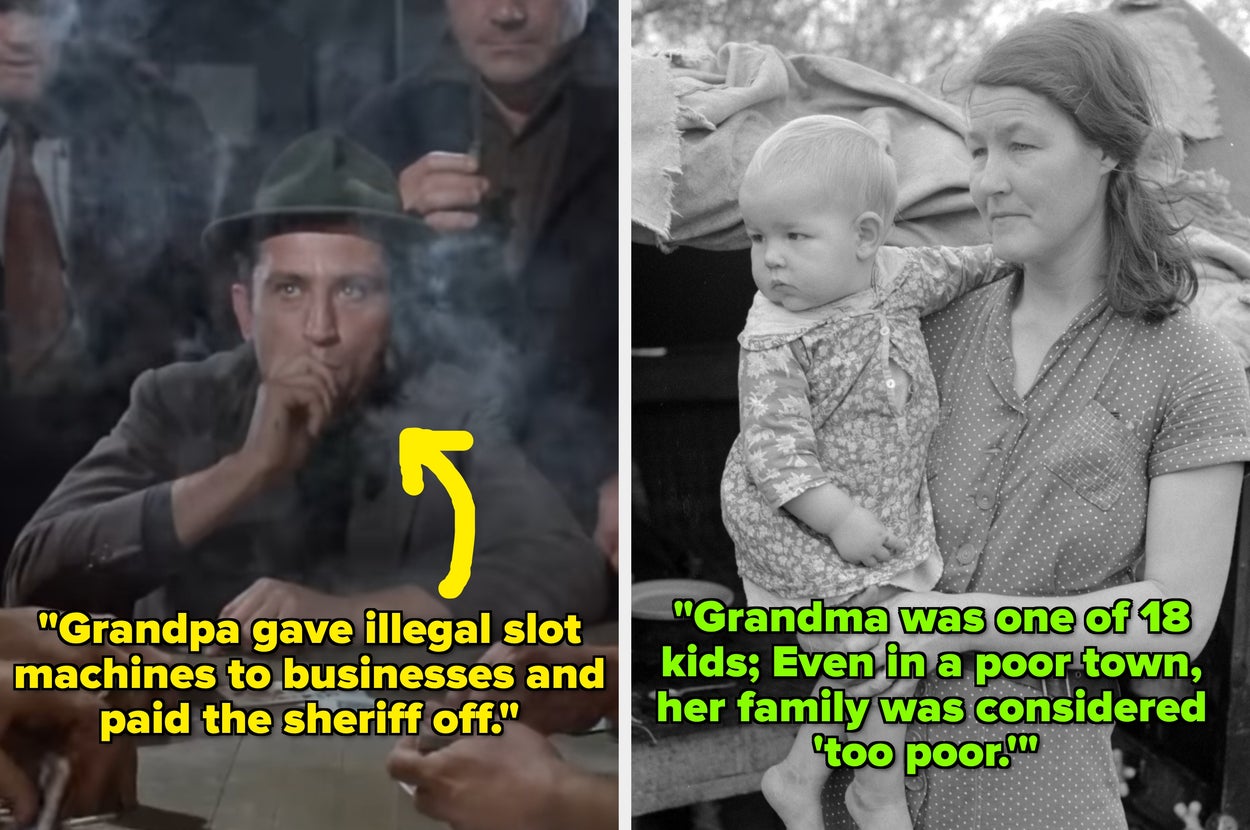
"The sheriff's deputies would wave at him after they were done with the raid, and Grandpa would move his machines back into the stores."

"He said that one year, the grain prices offered by the elevators were so low that he saw farmers dump their crops in the ditches rather than accept the elevator's price. They felt both insulted by the low-ball price and certain that the price would get marked up somewhere down the line, so they would rather have zero profit than make some flour or bread company rich off their harvest. (They always set aside seed for the next crop and enough to feed their family and any hired hands for the coming year before taking the surplus to sell at the elevators, so they weren't going to starve. Most owned their land, handed down since the Homestead Act, so they didn't lose their land, either.)

We still have that farm. It's in a trust, so as the generations pass, the next generation becomes the trustees and beneficiaries. Way to plan, Grandpa!"

"On my father's side, they had a house with a large garden, and my paternal grandfather had a stall in the market selling seafood, so the family got to eat whatever didn't sell that day. My dad told me they were poor, but better off than some, as at least they ate well. My grandfather would give some of the leftover fish to a family who wasn't doing as well.

Two of my father's older brothers were in the WPA and then went into the Army. My father began shining shoes in Boston's Scollay Square at age 11. I still have his old shine box from about 1942, and found his application to the City of Boston for a shoe shine license in the archive that states his birth year as 1927, not 1930, which was his real birth year."

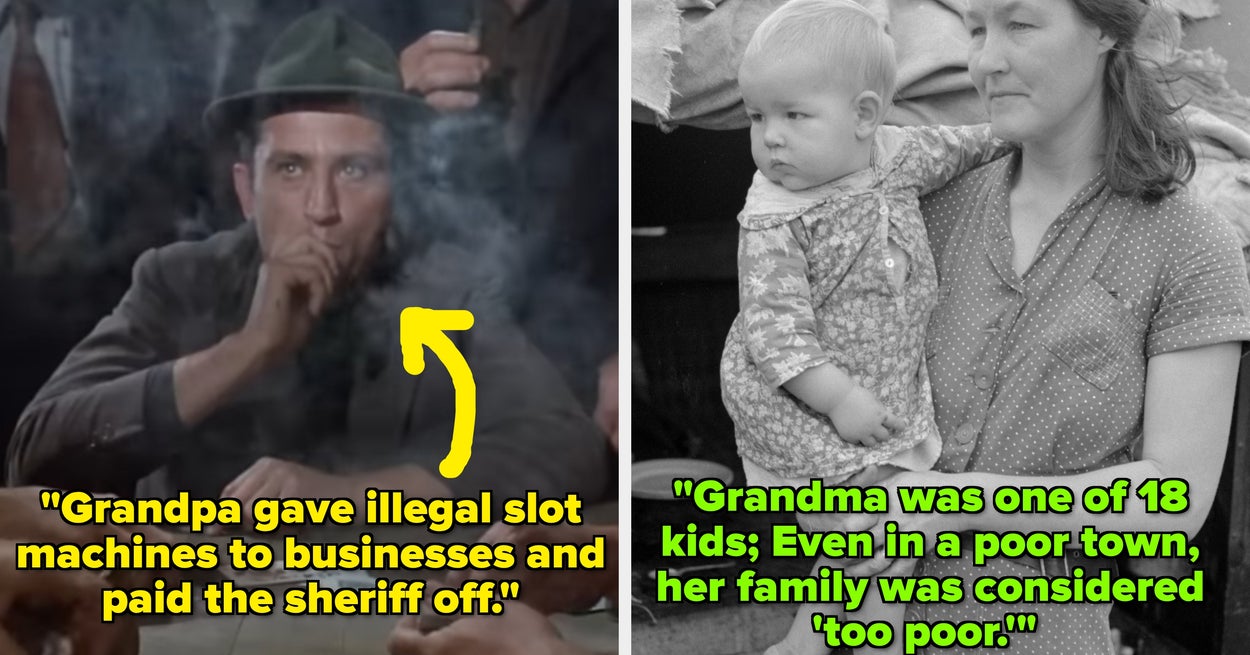
"My maternal grandparents were Texas dirt poor. My grandfather was the ninth child and was born premature. His mother died during childbirth, and his father couldn't care for another child, so an aunt raised him."

"That's where he met and married my grandmother. Her family couldn't support her, either, so being a girl, she did the only thing she could and joined a burlesque show that traveled through the oil fields to entertain workers.

WWII pulled them out of poverty. My grandfather enlisted and sent all his paychecks directly to the bank, and my grandmother got a factory job making batteries for the war. By the time the war ended, they had a tidy nest egg, bought a GI house, and started raising a family.

Of course, everything wasn't happily ever after. Grandfather carried shrapnel in one arm and one leg until the day he died, and Grandmother hoarded everything. She would comb the sale ads for food, and buy boxes of canned veggies to store for a rainy day. I remember her pantry always had boxes of canned corn and beans in a stack about 4 feet high."

"The family had to move to a city, presumably for him to find a job. The largest impact was on my great-grandmother. The family saying is that 'she was never the same afterwards.' I don't know what this means precisely, even though I asked questions. I gather that she had an emotional breakdown. My grandmother stepped up to raise her siblings and care for her mother.

I learned to be grateful for what I have, no matter what it is."

"She married my father when she was 16, and he was 28. That marriage lasted 15 years, and they had four kids together. Then she married my stepfather. That marriage lasted 30 years, and they had one child together.

She said marriage was the only way she could escape the poverty she lived in."

"She told me about walking to the pretzel stand with her dad in Chicago and talked about having moonshine in the cellar. She lived in a multi-level house, and her grandparents lived on the level above her family.

She is not a very nice person, but I don't know if that is related to growing up when she did, as she has very nice siblings, and her parents were amazing."

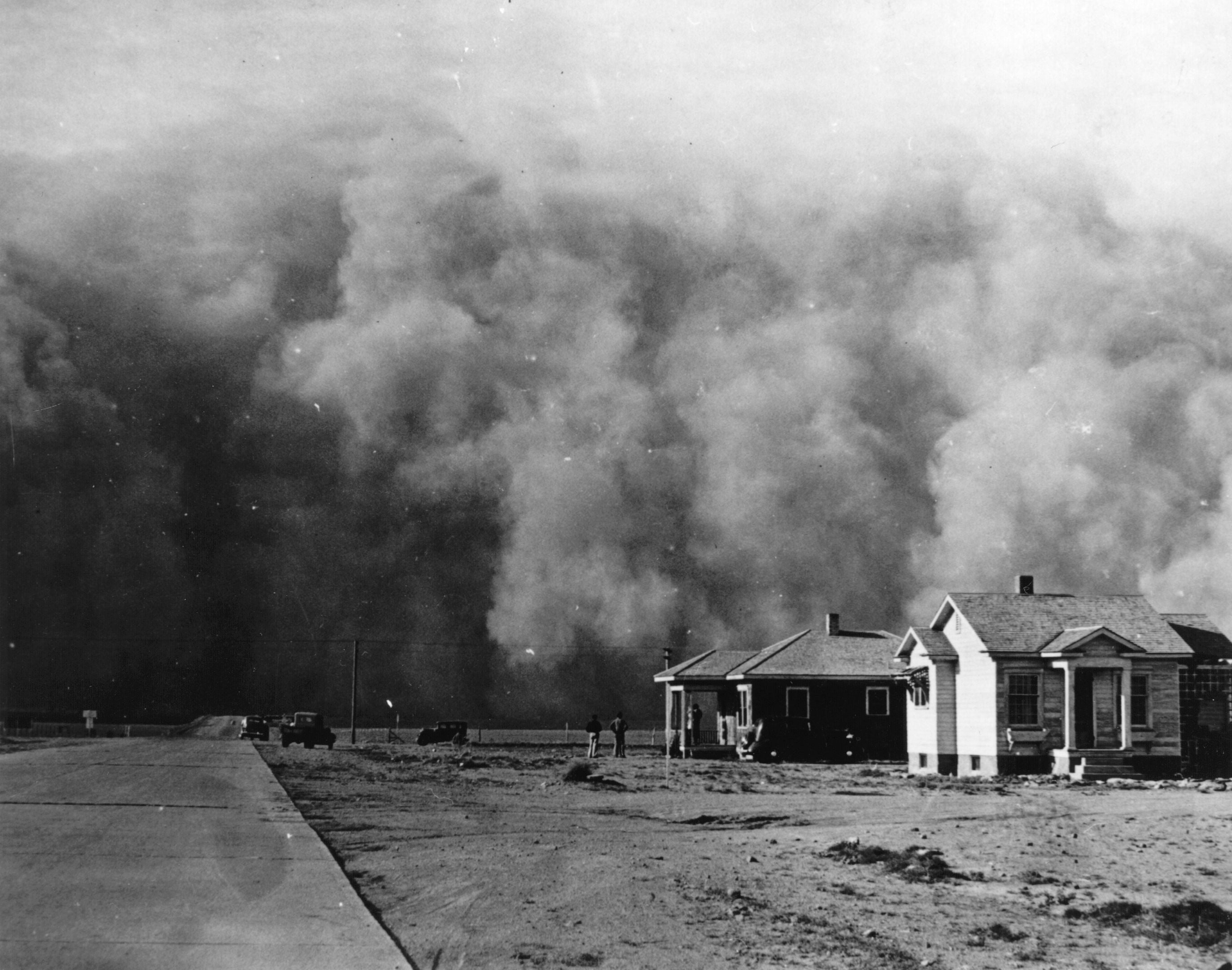
"My mom was born in 1930. She always told the story that one Sunday, when the family was attending their country church, a windstorm blew in. It became extremely cold and blew dirt so that no one could see to leave. The men in the church had to link arms to go out to the woodpile to get wood for the pot-belly stove.

I also remember my grandma saying that she used a sack of fabric in water to stuff under the door and windows to keep the dirt from blowing in."

"She said sometimes trucks would lose a load on the road, and they would take it. One of the most memorable things they got were feminine supplies.

She married my grandpa a month after turning 16 because she knew he would take care of her."

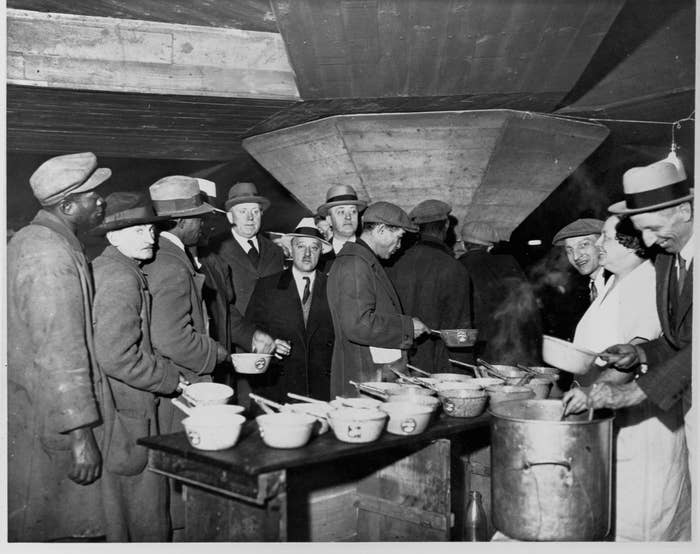
"In my town, there were lots of older kids who had left home or been forced out of their homes so that their parents could feed the younger ones, and they were living in the woods and in caves. My great-grandfather spent a lot of time and money feeding these kids and paying them for odd jobs — he actually ended up adopting one. They also used to feed unhoused people and those passing through riding the rails.

For the rest of her life, his only daughter was a habitual saver who didn't want to throw anything away or pay for anything she didn't have to, and didn't trust banks. She also didn't want children. When she died, my family found money hidden in books and old catalogs, and even hidden in packages of frozen bacon between the slices."

Note: Some responses have been edited for length and/or clarity.