yahoo Press
Opinion - Ukraine changed its tactics, and now Putin is slowly losing
Images
1 / 7
2 / 7

3 / 7

4 / 7
5 / 7

6 / 7

7 / 7
The events of recent days in Ukraine and Russia have radically changed the picture of the war as well as attitudes toward the Russian aggressor.

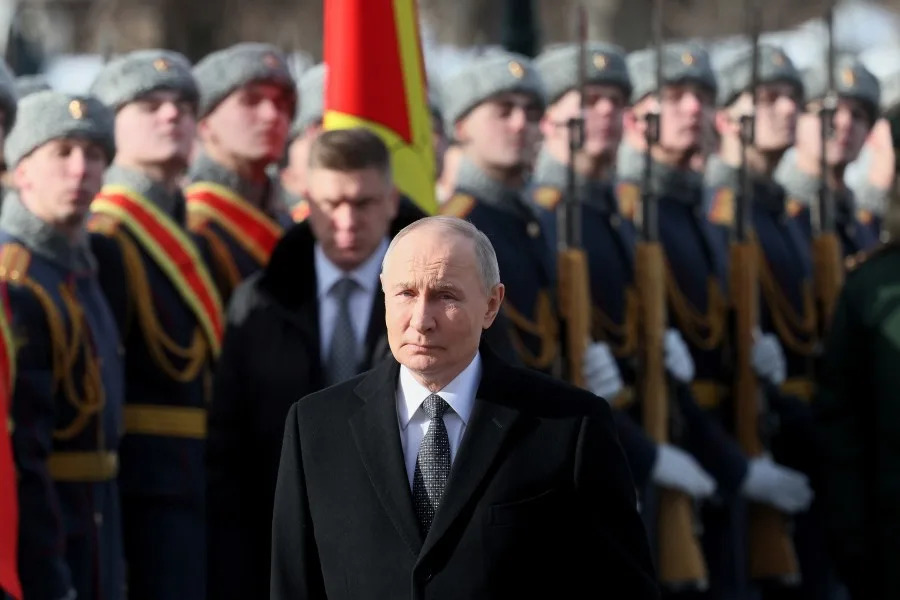
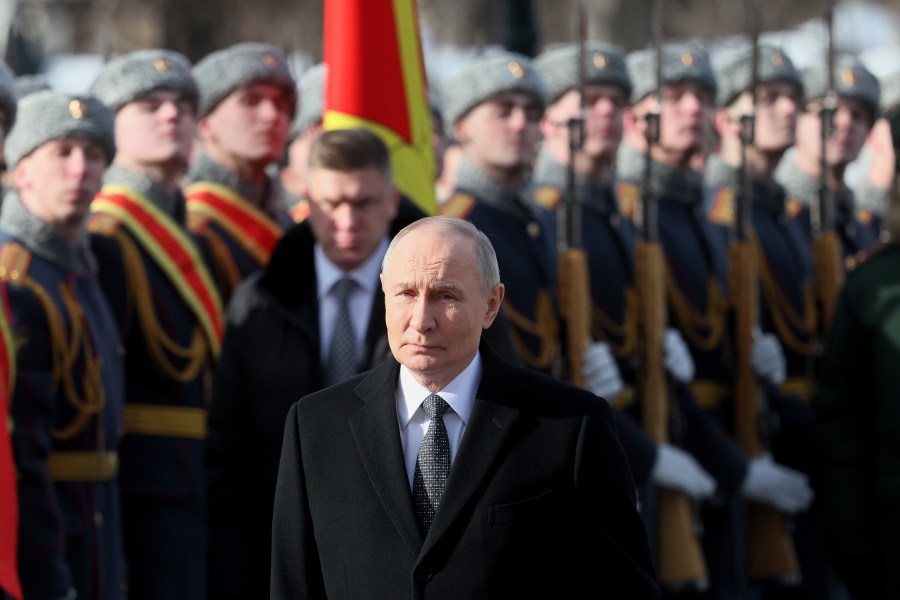
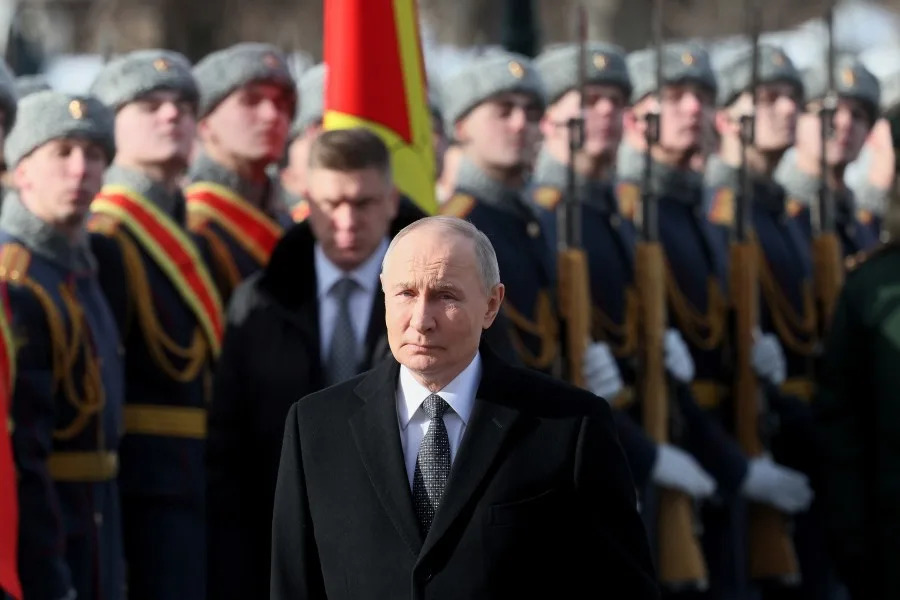
There was recently a telling sign of the shift: Russia, for the first time in almost 20 years, held its festive annual parade on Red Square without any tanks or missiles. Putin had to cancel the heavy military equipment for fear of a Ukrainian strike.

In recent weeks, perceptions of Russia have changed across the world. Russia’s ideological expansion was not strengthened by developments on the cultural front either: A recent protest action by the Russian rock band Pussy Riot disrupted government efforts to insert Russia into European cultural politics through art at an event in Venice.

Putin has also suddenly changed his rhetoric regarding Ukraine. He no longer calls the authorities in Kyiv “drug addicts” and “neo-Nazis” who have “taken the entire Ukrainian people hostage.” Instead, he now politely says “Mr. Zelensky” when referring to Ukraine’s president. He even seems to hold forth the possibility of a meeting with him.

The reasons are clear. The Russian dictator has genuinely felt the power of the Ukrainian military. Its strikes deep inside Russia are inflicting serious damage on Russia’s war machine and the public’s morale. Meanwhile, Russia tries to use its missiles and drones chiefly to terrorize Ukrainian civilians and destroy such cultural treasures as the Chernobyl Museum, with far less effect on Ukraine’s military.

Ukrainian forces have now destroyed the oil terminal in Tuapse four times in two weeks. They have also struck the Baltic ports of Primorsk and Ust-Luga. As far east as the Urals, they are knocking out air defense systems faster than Russia can replace them.

Alongside the dramatic explosions in Tuapse and Ust-Luga, there is another important sign of Russia’s slide toward defeat. Thanks to Ukrainian drones, the tactics of warfare are changing. The logistical control established by these Ukrainian aerial forces has led to numerous strikes on enemy equipment behind the lines near Mariupol. It has also enabled fire control over roads around Donetsk.

Thus, massive strikes more than 1,200 kilometers deep into Russian territory, carried out by the Ukrainian army with drones, have demonstrated the effectiveness of this strategy. It has changed not only Putin’s presidential rhetoric — as he fears Ukrainian drones over Red Square — but also the map of the Russian-Ukrainian front itself.

We can likewise state that the Ukrainian army is changing the tactics of warfare by implementing a model of technological siege against occupied territories. Instead of the classic encirclement of cities by infantry and tanks, the Armed Forces of Ukraine are moving toward total fire blockade of enemy logistics through the mass use of drones.

As a result, all territory occupied by Russian troops and beyond Ukrainian control will sooner or later become lethally dangerous for Russians. Donetsk and Luhansk may ultimately be encircled — not by heavy Ukrainian equipment, but by Ukrainian drones. Such is the logic of modern warfare introduced by Ukraine.

The frontline reality is even harsher. In April, for the first time since 2024, Russia lost more territory than it captured. And for the fifth consecutive month, Ukraine has been killing Russian servicemen faster than Putin can recruit their replacements. Overall, during the years of the full-scale invasion of Ukraine, as many as 500,000 Russian soldiers have been killed, with an even larger number wounded.

All of this — including the change in the rhetoric by Russia’s president, the ability of Ukrainian forces to disrupt the enemy’s logistics within Russia, and the Russians’ gradual loss of territory — shows a weakened Russia, possibly heading toward a humiliating conclusion to headed toward a .

Igor Bondar is a Ukrainian writer based in Kharkiv.

Copyright 2026 Nexstar Media, Inc. All rights reserved. This material may not be published, broadcast, rewritten, or redistributed.

For the latest news, weather, sports, and streaming video, head to The Hill.