yahoo Press
Social Security: Here’s how much monthly checks could be cut by 2032
Images
1 / 6

2 / 6

3 / 6
4 / 6

5 / 6

6 / 6
(NewsNation) — Retirees could see their monthly Social Security checks cut by about $500 as soon as 2032 if lawmakers fail to address the program’s funding shortfall, a new analysis shows.

That reduction reflects a 24% benefit cut — the level needed to bring spending in line with revenues under current law, according to the Committee for a Responsible Federal Budget.

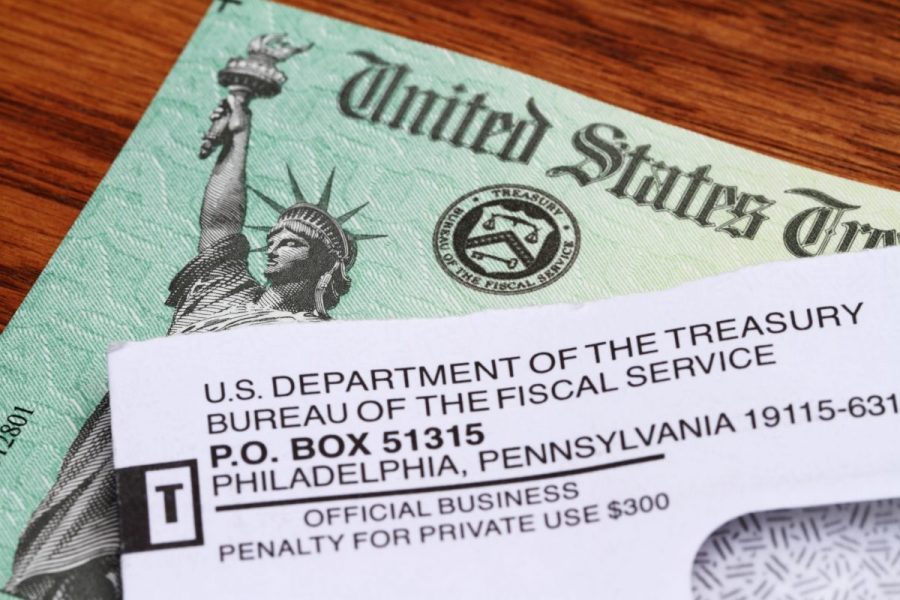
Social Security is fully doing away with paper checks: How to prepare

The trust fund that pays Social Security retirement benefits is projected to be depleted in less than seven years, at which point monthly payments would be automatically reduced — but not eliminated — if Congress doesn’t take action.

“Policymakers need to enact changes to the program as quickly as possible to protect against these scenarios,” the CRFB warned.

A 24% cut to Social Security retirement benefits today would affect roughly 63 million people, or about 1 in 5 Americans.

Nationally, the average monthly benefit cut would be $500 — more than the average retired household spends on groceries each month, the CRFB noted.

But the size of the potential cut varies by state, ranging from $556 for retirees in Connecticut to $459 in Mississippi based on current benefit levels.

Here’s what your Social Security COLA could be in 2027

A 24% across-the-board cut would exceed $500 in 29 states, the analysis found. Retirees in several Northeastern states with higher average benefits would face the largest monthly reductions in dollar terms.

The size of Social Security retirement checks depends on several factors, including lifetime earnings, years worked and when beneficiaries start collecting.

10 states where retirees would see the largest monthly benefit cuts (CRFB projections)

National avg: $500

Rank

State

Average Monthly Benefit Cut

1

Connecticut

$556

2

New Jersey

$554

3

New Hampshire

$553

4

Delaware

$549

5

Maryland

$541

6

Washington

$531

7

Minnesota

$530

8

Massachusetts

$527

9 (tied)

Michigan

$523

10 (tied)

Utah

$523

Depending on the state, between 12% and 23% of the population would be affected by a benefit cut, with the highest shares in Maine (22.9%), West Virginia (22.4%) and Vermont (22.0%).

Those differences suggest Social Security’s looming shortfall could have uneven effects on state and local economies across the country.

States with the largest share of residents affected (CRFB projections)

National avg: 18.0%

Rank

State

Share of population impacted

1

Maine

22.9%

2

West Virginia

22.4%

3

Vermont

22.0%

4

Delaware

21.1%

5 (tied)

Montana

21.0%

6 (tied)

New Hampshire

21.0%

7

South Carolina

20.6%

8

Wisconsin

20.2%

9 (tied)

Michigan

19.8%

10 (tied)

Pennsylvania

19.8%

11 (tied)

Florida

19.8%

Yes, lawmakers can still prevent the projected cuts by making changes before the trust fund is depleted, though there is disagreement over how to address Social Security’s funding gap.

Policymakers have several options that generally fall into three categories: raising revenues through tax changes, reducing benefits or some combination of the two.

The last major Social Security overhaul came more than 40 years ago, when the federal government gradually raised the retirement age from 65 to 67. At the time, the program was just months away from being unable to pay full benefits.

But the current financing challenge is far greater than it was back in 1983, and the longer lawmakers wait, the more significant the necessary changes will become.

“Restoring solvency to Social Security will require navigating difficult tradeoffs,” the CRFB wrote. “[Policymakers] must act quickly to prevent deep, abrupt benefit cuts that would affect all beneficiaries, regardless of age or need.”

Copyright 2026 Nexstar Media, Inc. All rights reserved. This material may not be published, broadcast, rewritten, or redistributed.

For the latest news, weather, sports, and streaming video, head to NewsNation.