huffpost Press
Trump Admin Argues They Could Bulldoze Statue Of Liberty If They Wanted — So Get Over It
Images
1 / 9

2 / 9

3 / 9
4 / 9
5 / 9

6 / 9

7 / 9

8 / 9

9 / 9
WASHINGTON — If the Trump administration wanted to bulldoze the Statue of Liberty on short notice, according to the Justice Department, Americans might just have to accept that.

At least, that’s what a lawyer arguing on behalf of the administration, Yaakov Roth, suggested Friday during an appellate court hearing weighing whether construction of President Donald Trump’s 90,000-square foot White House ballroom should be allowed to continue.

“If the government decides very quickly to bulldoze the Statue of Liberty, the people whose ancestors, that was the first thing they saw coming to this country, but the government moved too fast. Nothing can be done?” U.S. Circuit Court Judge Patricia Millett said.

“I think that’s right, yes,” Roth said.

The National Trust for Historic Preservation sued the Trump administration last year to stop the project, which includes not just the above-ground ballroom but a security bunker beneath it. The Trump administration says the entire complex is necessary for national security. The trust, however, claims the president never had authority to build the ballroom without going through Congress first and that the construction is a blight on federal land.

A lower court agreed to block construction of the above-ground portion in April, but the work has continued. The appellate court ruled last month the work could go on before it issued a final ruling.

Roth argued that since the East Wing of the White House had already been demolished in order to make way for the ballroom project, there was no longer anyone who could effectively challenge the project. The DOJ asserted that because of national security needs, the administration had the authority to continue construction, even over the objection of Congress or if the court deemed the project lawless. The Trump administration demolished the East Wing in October of last year without first getting sign-off from the National Capital Planning Commission, which normally has jurisdiction over construction on government buildings.

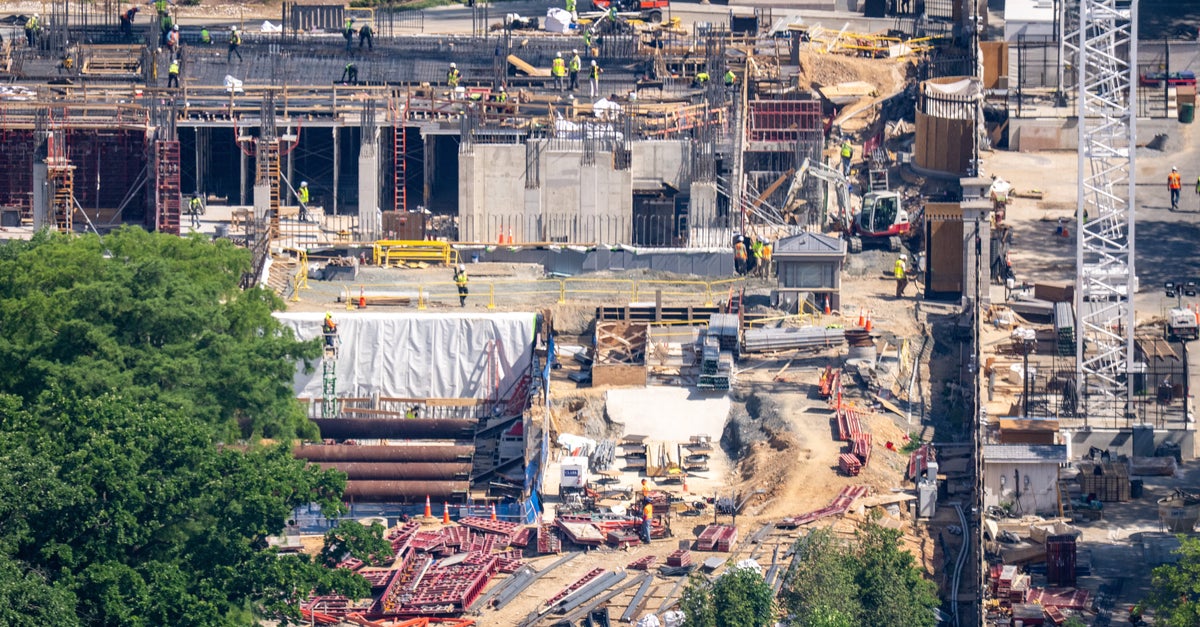
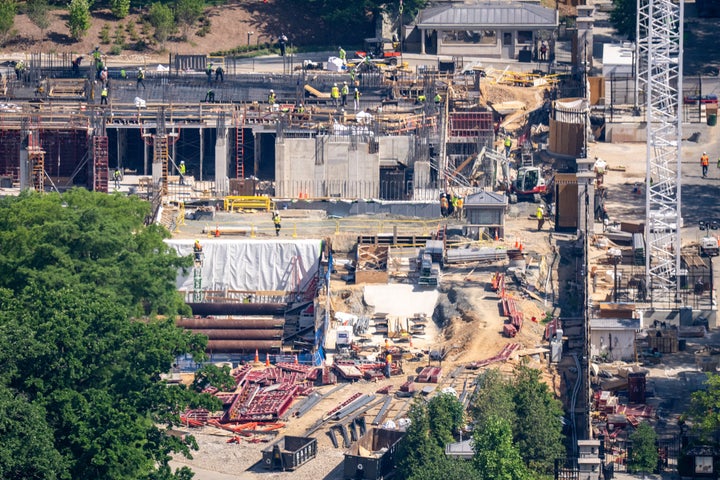
Given that the site for seven months has been an open pit of construction where the East Wing of the White House once stood — Millett had Roth clarify again.

“They can’t sue as long as the government goes too fast and no one has input and they move quicker than the input process would work. Correct?”

“Yes,” Roth replied.

“So move fast and break things and nobody has standing?” Millet said.

Roth argued that the Trust had simply failed to provide any valid explanation for how the ballroom’s construction injured them. Similar to the judge’s hypotheticals, he argued, the Trust was relying on an “aesthetic injury.”

The Trust’s adviser and board member Alison Hoagland, who helped launch the lawsuit, claimed in the records that the construction had an adverse impact on more than just what she would see on her walks near the White House. She argued it would interfere with her own historical architectural studies and work.

Pushing back again on Roth’s downplaying of Hoagland and the Trust’s grievances, Millett offered another hypothetical.

“Imagine,” Millett said. “You’re a descendant of slaves who built the original White House, not the wings. But a future president says, ‘We need to make it bigger. Harden it and add all the new modern security measures for protection. We’re going to bulldoze the White House mansion and replace it with steel and glass, special glass.’ Could the descendant of a slave who once a month walks by [the White House mansion] looks, contemplates the sacrifice … and feels a connection to it on that basis, sue?”

“If they sued before the demolition happened,” Roth said.

Millet continued: Even if there “wasn’t notice” or a public participation process? Even if the public or a person didn’t have a chance to voice dissent before construction began, that person could not sue then, either?

“So if you just move fast enough, no one has standing to challenge it even if they have a personal connection [to a site],” she said.

“That’s correct,” Roth said.

Lawyers for the Trust urged the court to keep its attention on the separation of powers, and specifically a law known as 40 USC 8106 states that “a building or structure shall not be erected on any reservation, park, or public grounds of the Federal Government in the District of Columbia without express authority of Congress.”

“Congress controls federal property,” Thaddeus Heuer, an attorney for the Trust, told the judges Friday, and that’s where the ballroom sits.

In the past, Heuer emphasized, presidents had undertaken construction projects on White House grounds without going through Congress first, like a swimming pool or tennis pavilion. But those weren’t large-scale projects that reached into the tens or hundreds of millions of dollars.

When U.S. Circuit Judge Neomi Rao, a Trump appointee, asked Heuer on Friday why no one had challenged the legality of those choices, Heuer explained that just because someone hadn’t challenged it before didn’t mean it couldn’t be challenged now.

“It’s what is happening in the moment,” Heuer said.

Though Rao lamented shortly later that the Trust “keeps going back to the most broad arguments,” Heuer said the work must be stopped even if Trump has national security concerns.

“The project should be stopped and the construction should be stopped until Congress gets a say ... about what can or cannot go on at the White House in terms of construction,” Heuer said. “That’s the balance of equities. That’s Congress’ right to be involved and say, ‘Here is exactly what you can do. You can leave a hole if Congress allows a hole.’”

By entering your email and clicking Sign Up, you're agreeing to let us send you customized marketing messages about us and our advertising partners. You are also agreeing to our Terms of Service and Privacy Policy.