yahoo Press
Solar flare prompts storm warnings, chance at seeing the northern lights this week
Images
1 / 7
2 / 7

3 / 7

4 / 7
5 / 7

6 / 7

7 / 7
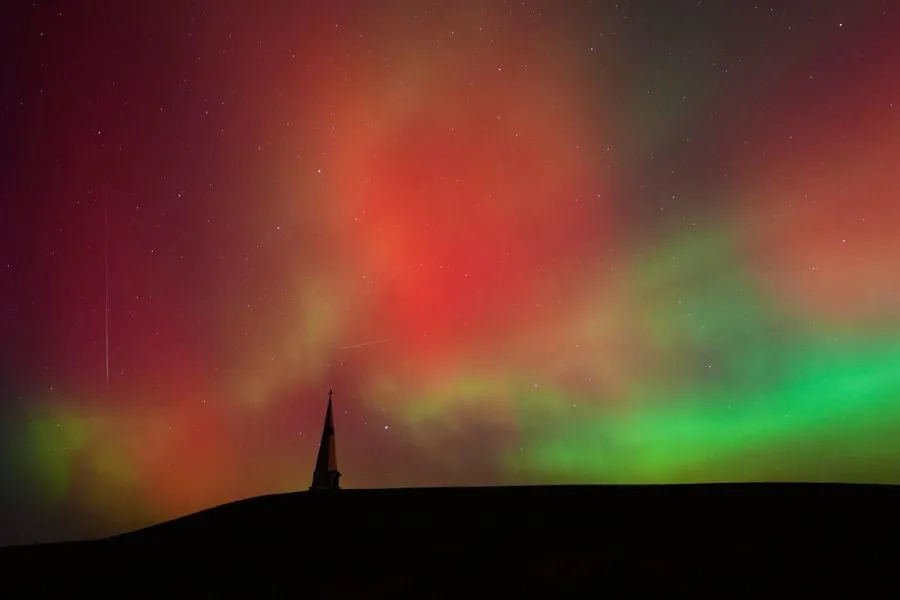
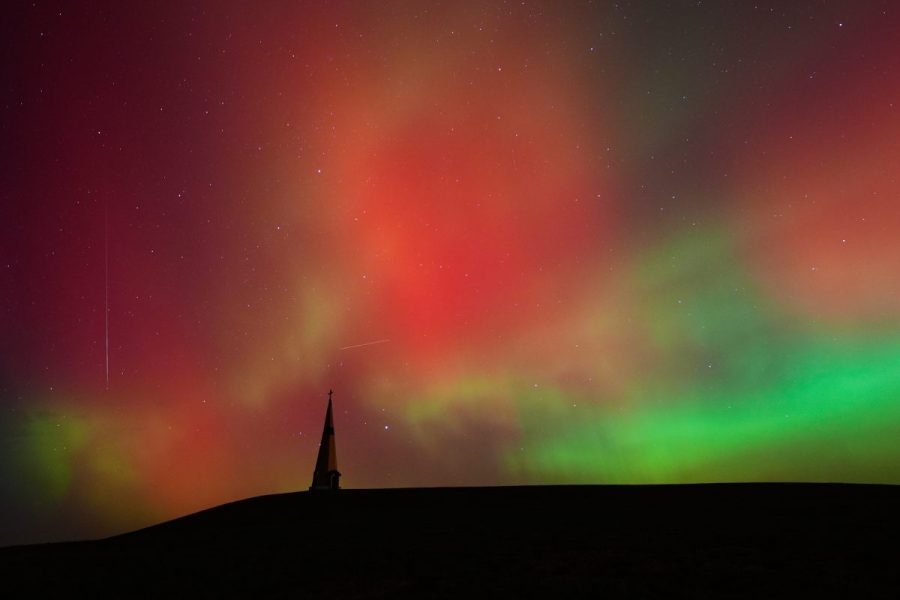
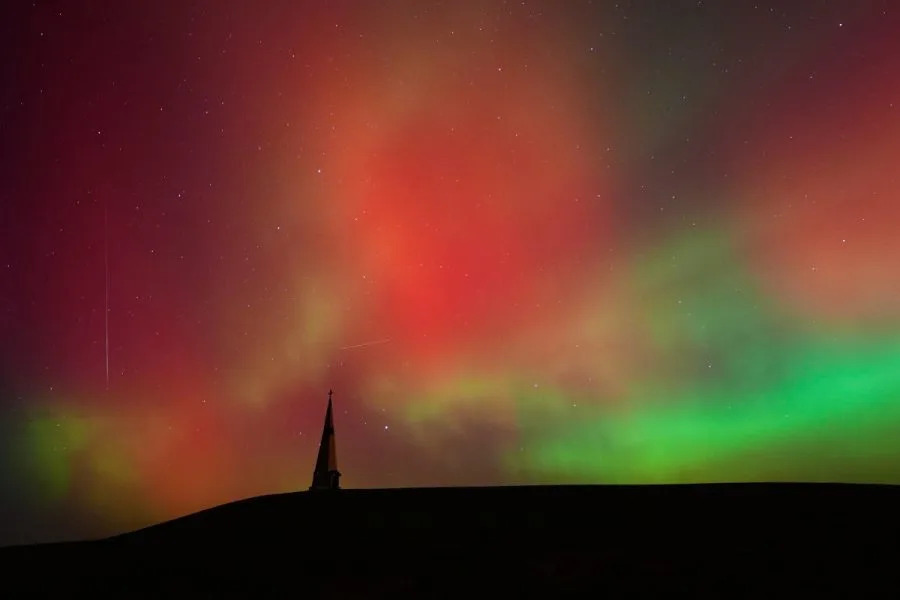
Days after Earth was impacted by several coronal mass ejections – explosions of plasma and magnetic material from the Sun – forecasters say a recent solar flare could be directed at us, potentially sparking another chance at the northern lights.

In anticipation, geomagnetic storm watches have been issued for Monday and Tuesday, NOAA's Space Weather Prediction Center said Saturday.

As alarming as this may sound, this solar activity is relatively common and frequently poses little to no impact on you, outside of a chance at seeing the northern lights (stronger storms can affect infrastructure and other services, but there are means to mitigate those influences).

 Why a pause on printing $2 bills appears underway in the US

For example, the M1.8 solar flare that erupted on Saturday may have sparked "immediate, weak degradation to high frequency (HF) communication bands," but if you don't use high frequency radios, you likely did not notice.

The flare was, however, associated with a subsequent coronal mass ejection, or CME, the SWPC said. When a CME interacts with Earth's atmosphere, we get to see the northern lights.

When CMEs or other material hurled out by the Sun collide with Earth's atmosphere, conditions are described as a geomagnetic storm. That activity is measured on a five-point scale, much like a tornado or hurricane.

The SWPC has issued a G3 geomagnetic storm watch for Monday and a G2 geomagnetic storm watch for Tuesday because of the "anticipated arrival of the CME that left the Sun" on Saturday.

In addition to the possible, "but usually mitigable," impacts to our technological infrastructure, the SWPC said the northern lights could be visible for many northern states.

This will depend on how strong the geomagnetic storm activity is.

The SWPC uses the Kp index to measure the magnitude of geomagnetic storms. Storms of G2 strength have a Kp index of 6, while G3-level storms are associated with a Kp index of 7.

As of Sunday, the SWPC's forecast shows the Kp index could peak at 7 early Monday afternoon. Unfortunately, the northern lights would be blocked out by the sun at that time. However, if conditions remain strong enough beyond sunset – the forecast shows a Kp index of 6.3 starting around 5 p.m. and continuing through 11 p.m. ET – the aurora could shine.

 More SNAP restrictions on the way: What to know before they take effect

If conditions reach G3 strength and the sky is dark enough, the northern lights could be visible as far south as Oregon, Wyoming, Iowa, and New York, according to the SWPC. Those slightly further south could catch a glimpse of the northern lights on the horizon with the help of their phone or a camera.

Forecasting from the University of Alaska Fairbanks shows that the view line – the point at which you may only see the aurora on the northern horizon with the aforementioned technical support – could reach into Kansas, Missouri, Kentucky, West Virginia, and Maryland on Monday. That auroral monitor uses data from NOAA; however, it's often based on long-term predictions, The Associated Press previously reported.

It's also possible that conditions are not strong enough to spark the northern lights for much of the U.S.

Forecasting space weather is difficult. The sun is roughly 93 million miles away, and it can be challenging to predict how material hurled out by our shining star will impact Earth, if at all, until it's much closer to us.

Additional details on the forecasted geomagnetic storm conditions are likely to be available on Monday when the CME is closer to Earth.

Copyright 2026 Nexstar Media, Inc. All rights reserved. This material may not be published, broadcast, rewritten, or redistributed.

 For the latest news, weather, sports, and streaming video, head to The Hill.