foxnews Press
Tiananmen Square tank man taught us to stand up against the worst of China
Images
1 / 20
2 / 20
3 / 20

4 / 20

5 / 20

6 / 20
7 / 20

8 / 20

9 / 20

10 / 20

11 / 20

12 / 20
13 / 20
14 / 20

15 / 20

16 / 20

17 / 20
18 / 20
19 / 20
20 / 20
NASA Administrator Jared Isaacman reiterates bipartisan support and robust resources for the mission before 2028.

This past June 4, we marked the 37th somber anniversary of the Tiananmen Square Massacre, where millions of Chinese citizens peacefully and earnestly asked for political reform and democratic openness. Instead, their hope was met with tanks.

On that awful day, the Chinese Communist Party unleashed the People’s Liberation Army on these peaceful demonstrators. Mothers lost sons. Fathers lost daughters. And China lost an idealistic generation.

Over three decades later, and China has still not accounted for those killed, imprisoned, or disappeared, instead endeavoring to erase a massacre the world must never forget. But, despite the CCP’s best efforts, Tiananmen cannot be erased.

CHINESE SPY INFILTRATION: MAYOR’S BUST ADDS TO GROWING TIMELINE OF FOREIGN INFLUENCE CREEPING INTO US

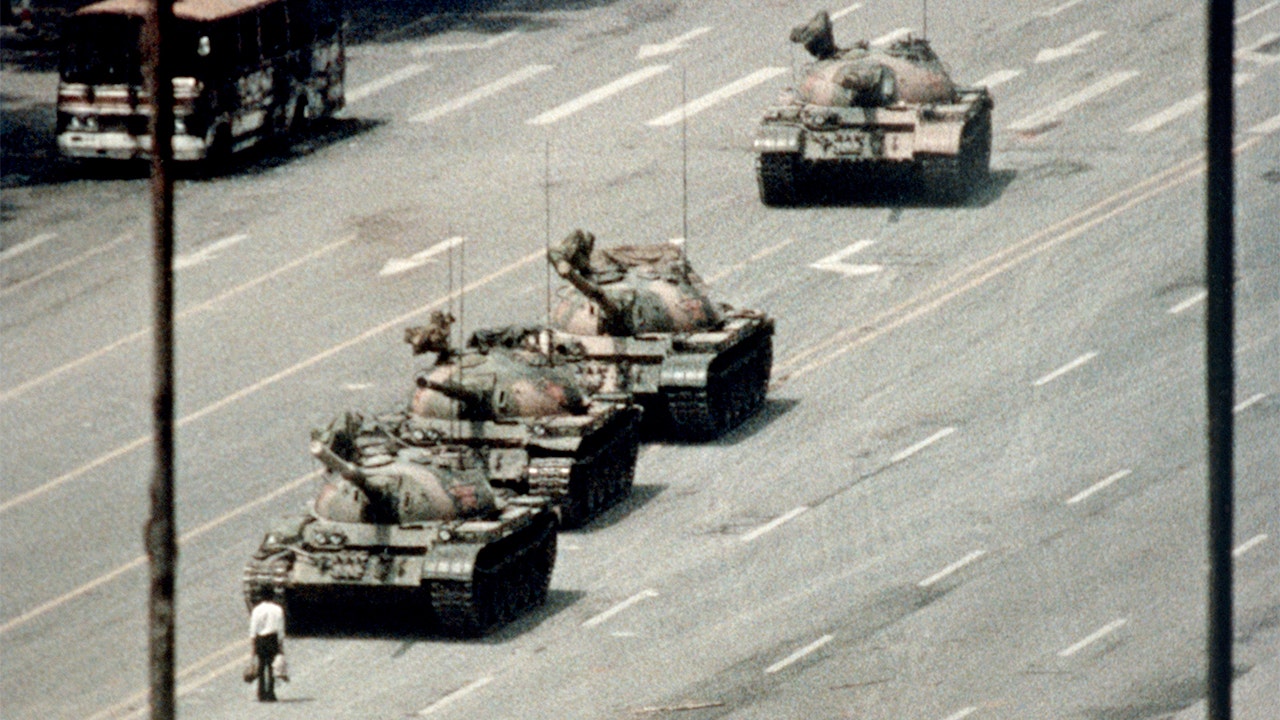
The enduring image of that day is the Tank Man, the solitary figure standing before a column of tanks. His courage reminds us that the desire for freedom is not Western, not foreign, and not imposed from outside — rather, it is universal.

As I have said before, a choice has to be made by us all: you either stand with the Tank Man, or you stand with the tank. There is no middle ground. And there is no middle ground in the issue of transnational repression.

The same Party that tried to crush truth at home now tries to chase and snuff out the truth abroad. The tactics and technology have changed, but the reach has expanded.

Inside China, the CCP uses surveillance, censorship, prison, torture, forced disappearance, and fear to maintain power. Now, what happens in China no longer stays in China. The Party wants to control what is said about China here and control who says it.

As both Chair and Co-Chair of the CECC over the past several years, I have warned about the CCP’s documented and consistent pattern of global abuses stretching outside of China’s borders, beginning with Confucious Institutes in 2014.

Over time, tactics have become more digital and more ruthless: detaining family members in China, doxxing, spyware, deepfakes, Hong Kong bounties, and illegal police stations, right here in the United States. The purpose, however, is the same: to make people afraid to speak the truth — by almost any means necessary.

Transnational repression is part of a broader, interconnected CCP strategy that targets and threatens Americans. It is outrageous and absolutely unacceptable, and it must end.

We see the CCP’s strategy in scam networks that steal from US citizens, fentanyl that poisons our cities, PRC-linked land purchases near military installations, efforts to corrupt our politicians and elections, steal private personnel and biometric data, and intellectual-property theft from businesses and universities.

These may look like separate problems, but they share a common purpose: to exploit our openness, gather leverage, weaken our institutions, spread propaganda, and make Americans pay a price for standing up to Beijing. Transnational repression is the most personal form of that strategy. It brings the pressure campaign to the doorstep of the student, journalist, dissident, artist, and family member. That is why state and local responses matter.

A victim may first call local police, a student may go to a university official, a state attorney general may see the pattern, and a state legislator may realize existing law does not fit the threat. But do local officers recognize this threat, do universities know how to protect students, do states have the tools they need, and does the federal government have a real strategy?

Today, I am working with Chairman Sullivan, Senator Merkley, and Representative McGovern on the Transnational Repression Policy Act. This bipartisan, bicameral legislation would define the abuse, improve coordination, train officials, support targeted communities, and hold perpetrators accountable.

If the CCP threatens people here, there must be investigations and prosecutions. If it reaches across our borders to spread fear, there must be sanctions. If it takes family members hostage to silence a critic, we will demand their release and expose the cruelty of that tactic. And if it tries to censor a free people, we will defend and spread the rights Beijing fears most: freedom of speech, freedom of religion, freedom of assembly, and the right to tell the truth without fear.

CLICK HERE TO DOWNLOAD THE FOX NEWS APP

A regime that fears a student’s question, a refugee’s protest, an artist’s statue, or the simple memory of Tiananmen is not a strong and confident superpower. It is afraid. And fear in the hands of a dictatorship is dangerous. It becomes coercion. It becomes censorship. It becomes repression that crosses borders and reaches into our communities. So, our response must be unmistakable.

Because in the United States of America, unlike in China, no one needs the Party’s permission to speak, to worship, to protest, to remember, or to be free.

Elected in 1980 to the Fourth Congressional District, Congressman Chris Smith, R-N.J., is senior member of the House of Representatives and the House Foreign Affairs Committee, and Co-Chair of the Congressional-Executive Commission on China.

Get the recap of top opinion commentary and original content throughout the week.

By entering your email and clicking the Subscribe button, you agree to the Fox News
        Privacy Policy
       and
        Terms of Use
      , and
      agree to receive content and promotional communications from Fox News. You understand that you can
      opt-out at any time.

Subscribed

You've successfully subscribed to this newsletter!