yahoo Press
Reflecting Pool prosecutor said government wasn't 'forthcoming'
Images

1 / 16

2 / 16

3 / 16

4 / 16
5 / 16
6 / 16
7 / 16
8 / 16
9 / 16
10 / 16
11 / 16
12 / 16

13 / 16
14 / 16

15 / 16

16 / 16
A prosecutor with the Department of Justice said his office never would have tried to indict a former Olympian for vandalizing the Lincoln Memorial Reflecting Pool if the Department of the Interior had been forthcoming with information.

Michael Spence, an assistant U.S. Attorney in the District of Columbia, wrote in a July 31 document that prosecutors in his office attempted to get "everything" from the Department of Interior early in the process of prosecuting David Hearn.

However, Spence, who works for U.S. Attorney Jeanine Pirro, wrote that the department provided "less than fulsome information" when the case began and only "started trickling information" describing installation problems after his office reached out "dozens and dozens of times."

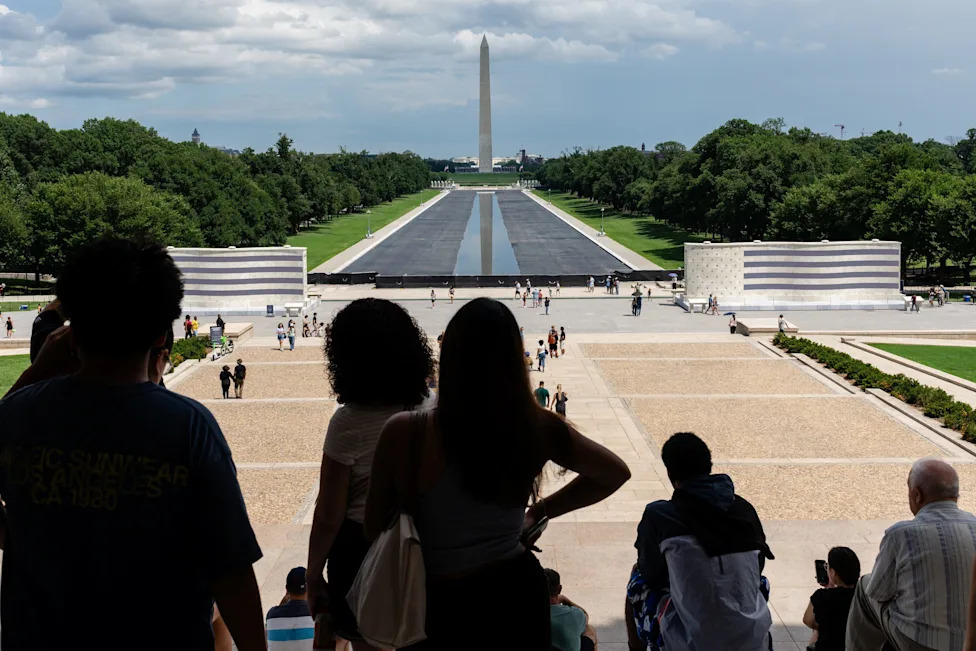
The $16 million renovation of the Lincoln Memorial Reflecting Pool has drawn renewed controversy after President Donald Trump slammed federal prosecutors' decision to dismiss charges against an Olympian accused of felony vandalism to the pool lining. See the current state of the reflecting pool in photos taken Aug. 3, 2026 in Washington, D.C.

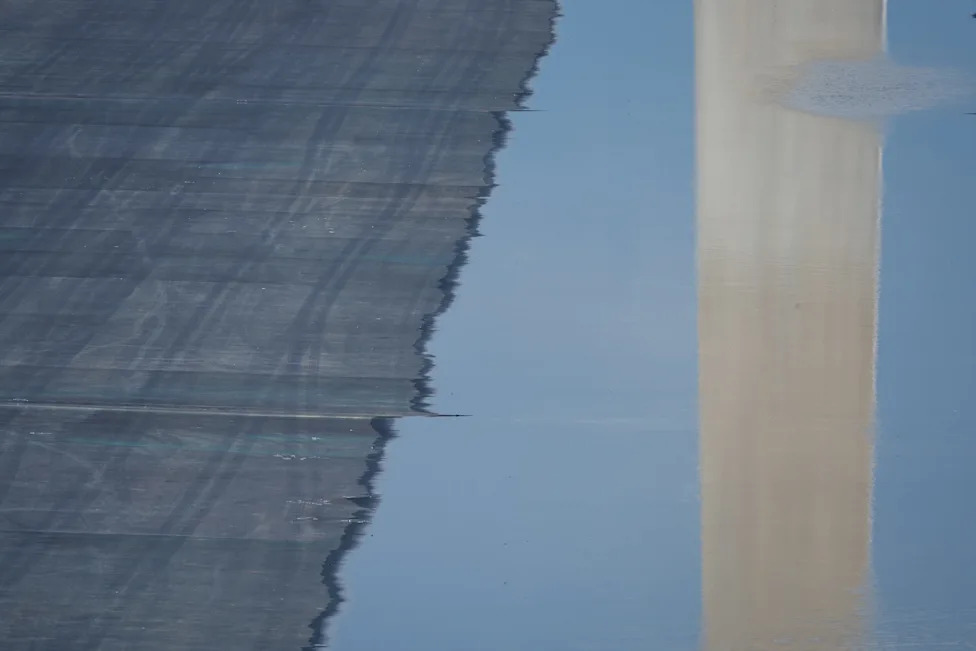
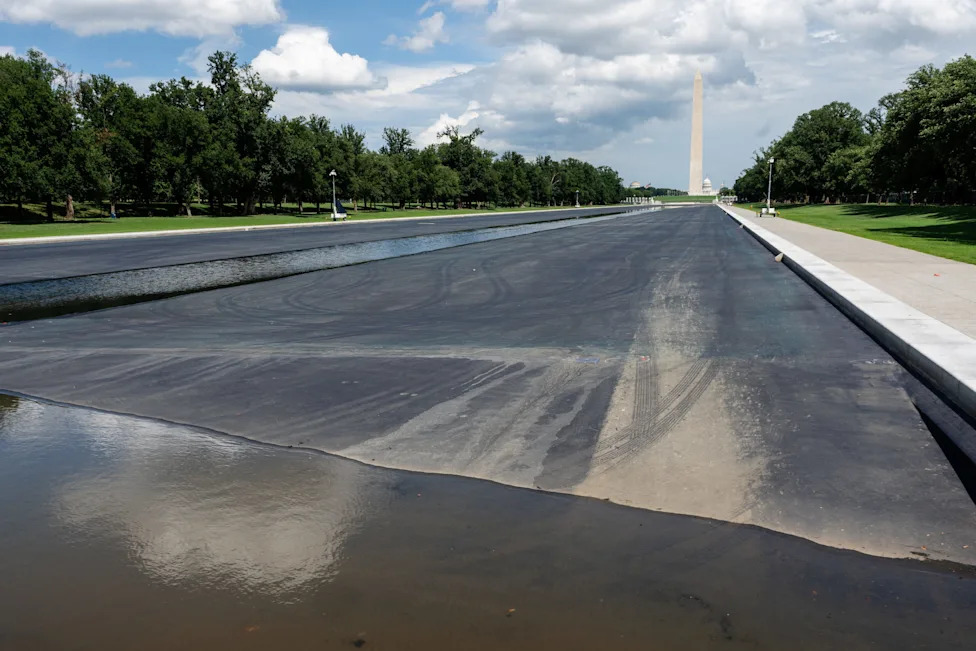
Tire marks are visible near a collection of rainwater at the Lincoln Memorial Reflecting Pool in Washington, D.C., Aug. 3, 2026. The project to renovate and restore the pool and prevent it from leaking was plagued with troubles from its start in April, including rain, green algae blooms, weather delays and more.

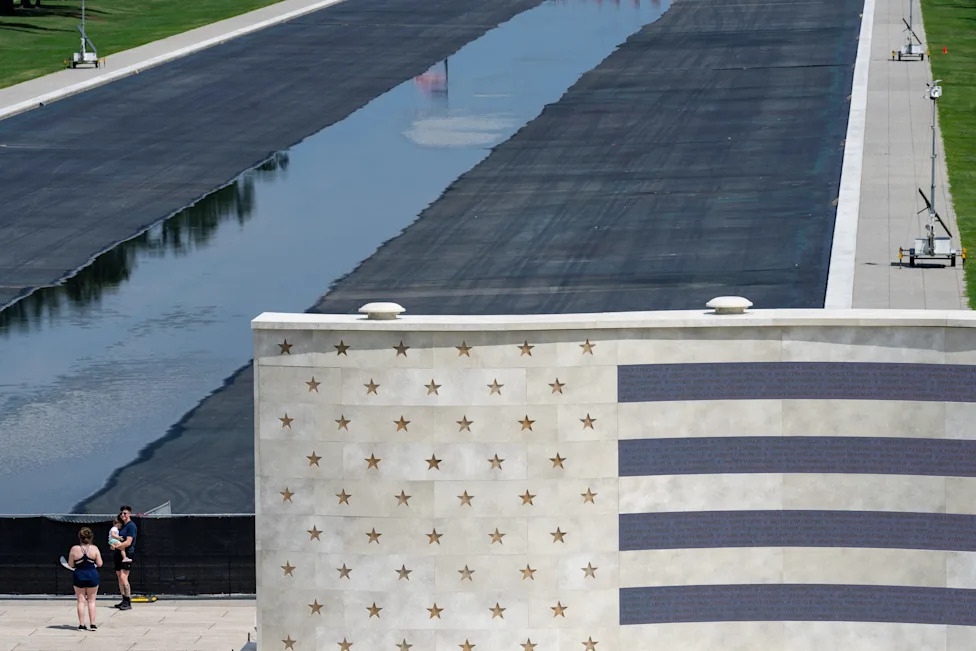
People walk by the United Services Automobile Association (USAA) National Military Monument near the Lincoln Memorial Reflecting Pool in Washington, D.C., U.S., Aug. 3, 2026.

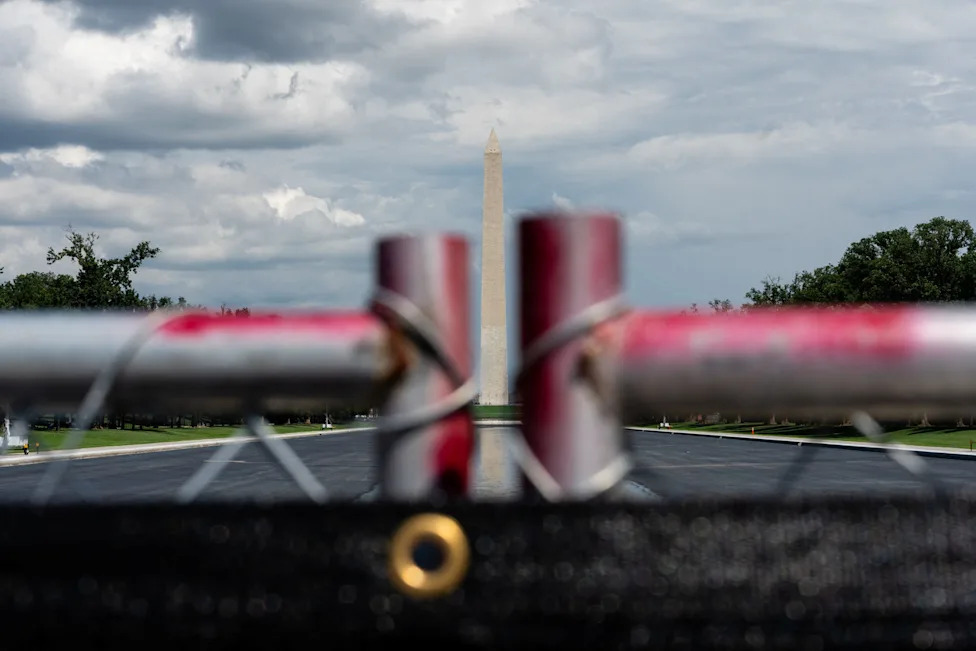
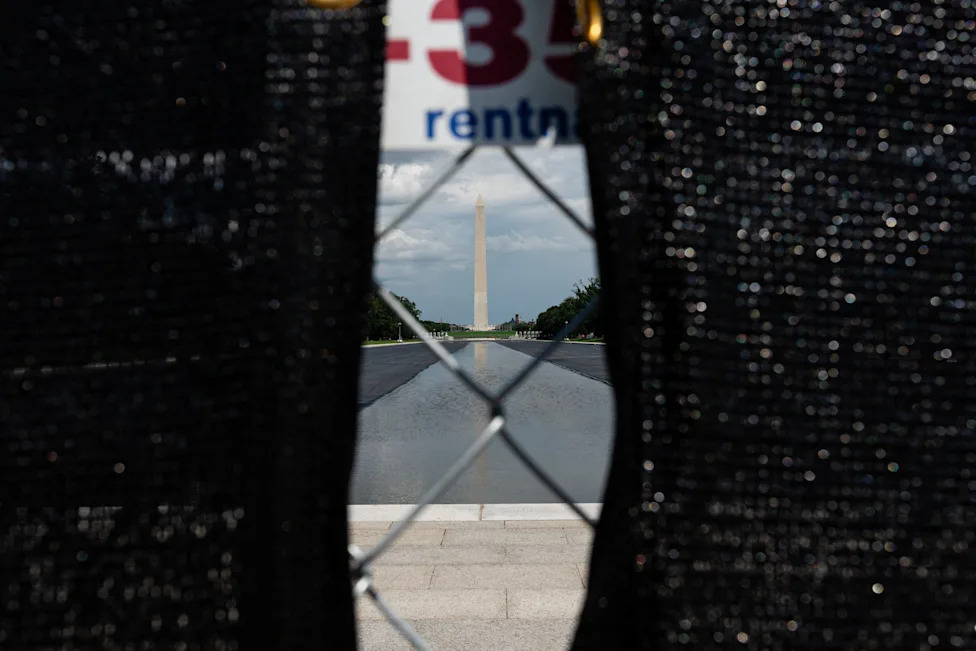
The Lincoln Memorial Reflecting Pool is seen through fencing in Washington, D.C., Aug. 3, 2026.

Tire marks and water are seen in the Lincoln Memorial Reflecting Pool in Washington, D.C., Aug. 3, 2026.

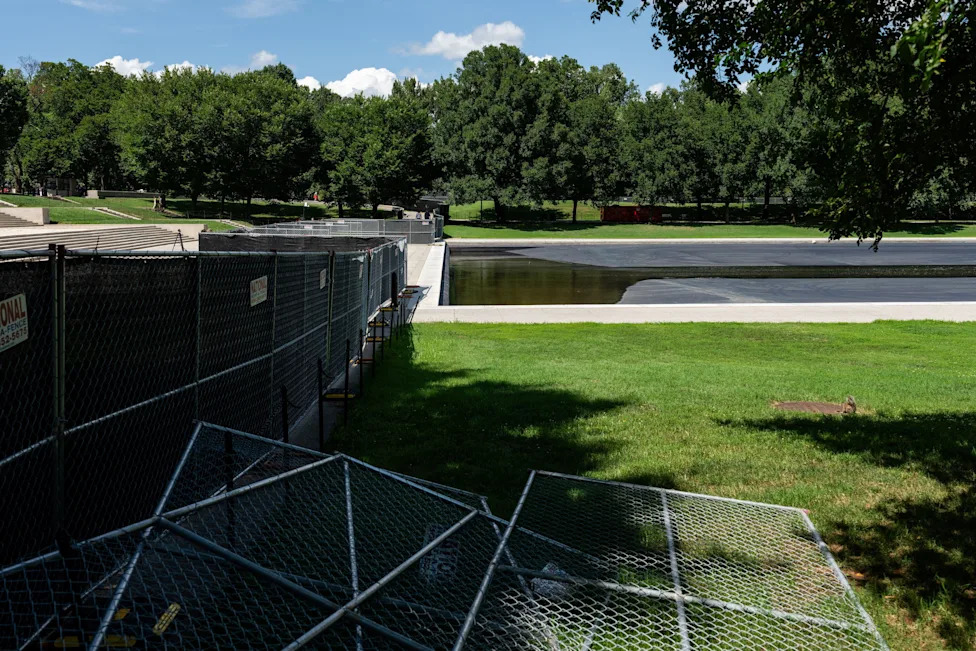
Extra fencing lays near the Lincoln Memorial Reflecting Pool in Washington, D.C., Aug. 3, 2026.

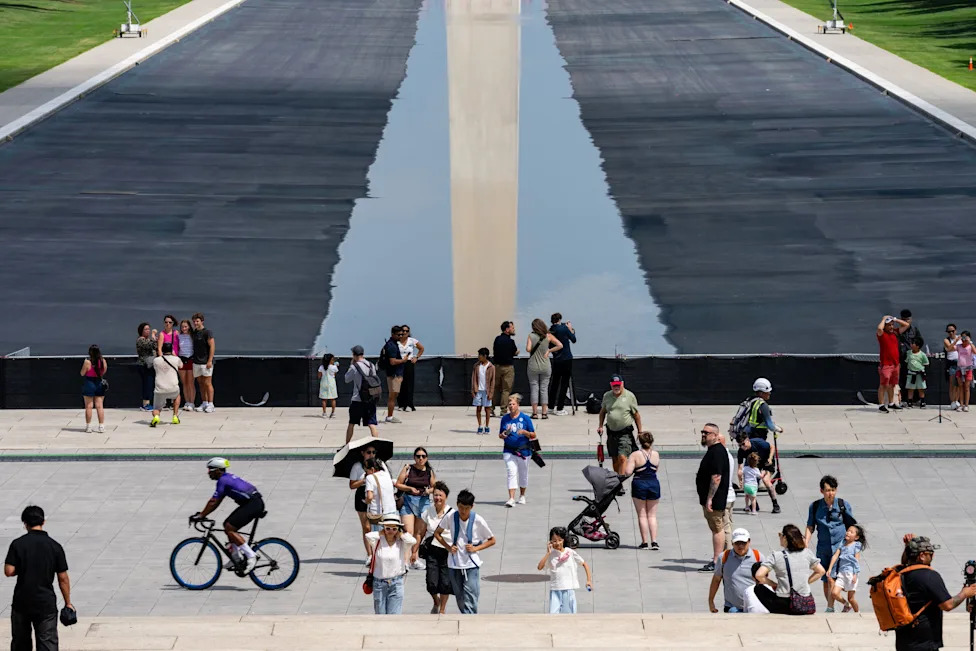
People visit the Lincoln Memorial Reflecting Pool in Washington, D.C., Aug. 3, 2026.

The Lincoln Memorial Reflecting Pool is seen through fencing in Washington, D.C., Aug. 3, 2026.

The $16 million renovation of the Lincoln Memorial Reflecting Pool has drawn renewed controversy after President Donald Trump slammed federal prosecutors' decision to dismiss charges against an Olympian accused of felony vandalism to the pool lining. See the current state of the reflecting pool in photos taken Aug. 3, 2026 in Washington, D.C.

USA TODAY has reached out to the Department of the Interior for comment.

When the office finally received records, they described a rushed installation of the liner, heavy rain that caused installation to stop periodically, and joints in the underlying concrete that complicated the installation, according to his description in the document.

Spence said that neither the prosecutors nor the grand jury who indicted Hearn had access to the information before the grand jury returned the indictment, and, "Had the DOI been forthcoming with the information clearly in its possession, the government would not have brought a grand jury indictment."

Here's what we know based on the court document:

One of the key issues that the document describes is that there are long, narrow joints running underneath and around the perimeter of the reflecting pool. The joints are designed to allow the concrete slabs that make up the bottom of the pool to expand and contract as they get hotter and colder during the day.

Atlantic Industrial Coatings, the company responsible for the work, originally prepared to spray down two coatings on the floor of the pool, similarly to the way a painter would use a sprayer to paint a house, the document says. But the contractor had to do multiple rounds of testing in order to find a third type of coating that would seal the joints.

Just two days after inspectors signed off on the work, an engineer with the National Park Service reported peeling around the perimeter of the pool, where the third type of coating was applied over the joints, the document says. The engineer relayed that the contractor called this "overspray."

"I stated my concern that this 'overspray' along the perimeter of the pool could lead to a (one-foot to two-foot) strip that is vulnerable to peeling," the document says. "The contractor would not confirm in field if this was or wasn't a risk."

The document describes how Atlantic Industrial Coatings attempted to start spraying the Reflecting Pool in the beginning of May, but kept having to pause work due to heavy rainfall, at one point stopping for five days in a row and only moving from 80% to 81% completion in the course of a week.

The document describes a May 7 email in which a subcontractor on the project said the project was "significantly behind schedule." Spence wrote that the email went to several Department of Interior employees and "revealed a sense of urgency and rushing."

A quality control inspector first found blistering in the lining on May 20, while installation was still in progress, and Atlantic Industrial Coatings repaired it, the document says. There was heavy rain that night, and crews had to pump water out of the Reflecting Pool and mechanically dry the liner.

The document says spraying the joints continued through June 6, and by June 7, the "bulk of the work" was complete so the pool was refilled with water. Inspectors completed the final inspection on June 9, in order to prepare for the Ultimate Fighting Championship match on the White House lawn.

More: Trump officials to use same company for Reflecting Pool repairs

Spence wrote that his office brought the case based on representations from the Department of the Interior that Hearn caused over $1,000 worth of damage and that "nearly all of the damage to the Reflecting Pool was due to vandalism."

But Spence wrote that the July 11 report from the engineer contradicted both counts. He said the perimeter damage was exactly what Hearn was accused of vandalizing, and the report specifically said the peeling perimeter "will not impact the strength of the liner."

Prosecutors have an ethical and legal responsibility to tell defendants if they come across evidence that could prove their innocence, and Spence cited the Supreme Court precedent for this, Brady v. Maryland, as a basis for asking the judge to dismiss the charges against Hearn.

Spence also wrote that continuing to prosecute the case after he received the new information would have been a violation of DOJ policy, which says that prosecutions should only continue if the defendant "will more likely than not be found guilty beyond a reasonable doubt."

This article originally appeared on USA TODAY: Reflecting Pool prosecutor said government wasn't 'forthcoming'