yahoo Press
Opinion - Could socialism make America happy again?
Images
1 / 6
2 / 6

3 / 6

4 / 6

5 / 6

6 / 6
The soccer fans who flooded into the U.S. this year gave us a refreshing view of America. They were amazed at a country whose citizens could buy ranch dressing by the gallon. We were reminded that we are privileged and blessed to live here.

Now that the celebration is over, it is time to wrestle with the reality that many Americans are not happy with the country's direction. Most adults (67 percent), including most non-MAGA Republicans (51 percent), feel the U.S. is moving in the wrong direction. The pessimism isn't new; it has dominated public opinion since 2004.

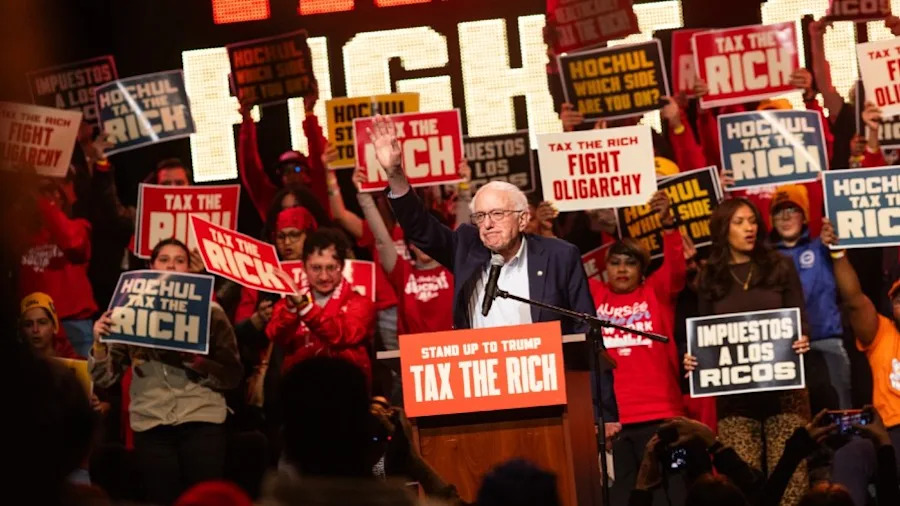
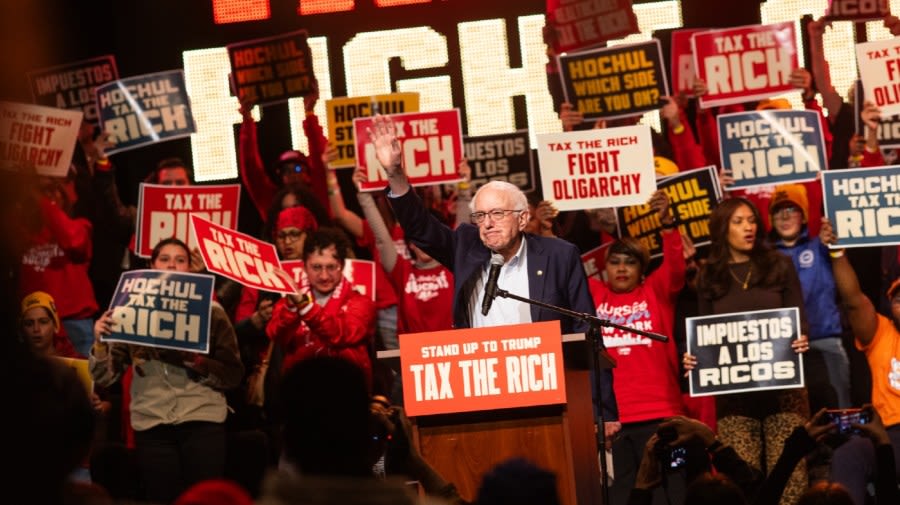
That may be why voters are showing interest this year in candidates associated with socialism. We need a substantial course correction.

Since the Reagan era, Republicans have been hooked on supply-side economics, the theory that everyone benefits when the rich get richer. The idea is that tax cuts for businesses and upper-income earners are supposed to stimulate investment and jobs, benefitting everybody.

Humorist Will Rogers mocked this as the "trickle-down" theory. It has never worked as advertised, but that didn't deter former President George W. Bush and now President Trump from embracing the supply-side. Tax cuts since 2000 have cut federal revenues by trillions of dollars and disproportionately benefit higher-earning households.

One result is a large, persistent wealth gap. Last year, one percent of earners held nearly 30 percent of the country's net worth, while the bottom half hold nearly zero. "Something has gone wrong here in the U.S.," according to Sarah Anderson, director of the Global Economy Project. "We now have a wider wealth gap between rich and poor than in any other major developed nation."

Nearly half of voters (46 percent) today have an unfavorable view of capitalism. Sixty-five percent believe "the system is rigged to favor the wealthy." Far more Americans have a favorable view of socialism than identify with the MAGA movement (32 percent to 19 percent, respectively).

There is little mystery about the appeal of socialism, but there is confusion. Some candidates this year are members of the Democratic Socialists of America, an organization with radical as well as reasonable ideas. Progressives and small-s socialists embrace policies more fully aligned with public opinion. Trump incorrectly brands them all as "communists."

Sizeable majorities of Americans favor policies similar to those in the social democracies of Norway, Sweden, and Denmark. These Nordic countries embrace free-market economies, but with generous government-supported services and safety nets. Most Americans believe that state and federal governments should make higher education more affordable (73 percent and 67 percent, respectively). Most (66 percent) say government should make sure that everyone has adequate health care coverage. Most (73 percent) favor universal childcare.

Nordic nations consistently rank in the world's five best places to live. The U.S. does poorly in comparison, ranking 23rd this year in the World Happiness Report, down from 11th in 2011. The U.S. came in 27th in the Visual Capitalist Quality of Life ranking, last among G7 countries and 10 spots down from 2018.

Trump promised that 70 percent of the benefits from his 2017 tax cuts would go to workers. Instead, one analysis found that  81 percent went to the top one percent of earners. Trump's One Big Beautiful Bill Act is providing $1 trillion in tax cuts to the top 1 percent while cutting more than $1.1 trillion from safety nets important to the poorest Americans.

The Guardian reports that the biggest oil companies raked in more than $90 billion in windfall profits during just three months of the Iran war. The benefits did not trickle down. Low-income families cut their gas consumption the most, but still spent 12 percent more on gasoline.

In the first year of Trump's current term, 96 percent of the cost of his tariffs fell on American consumers and businesses. Families paid $1,745 each, on average. NBC News reported that "households have been tapping savings and saving less to maintain spending, a situation that economists said could not continue indefinitely."

Seemingly oblivious to the affordability issue, Trump has made $2.2 billion in personal profits so far this term, while he spends taxpayer money extravagantly and proposes bonuses for Jan. 6 rioters. It's little wonder that most Americans (55 percent) want major changes in the economy, and some (13 percent) want it reinvented completely.

Could America adopt the Nordic model? It could, with major economic and policy reforms. How would it be done and what would the tradeoffs be? It is worth serious study and discussion before we choose the next president.

William S. Becker is co-editor of and a contributor to "Democracy Unchained: How to Rebuild Government for the People," and a contributor to "Democracy in a Hotter Time." He previously served as a senior official in the Wisconsin Department of Justice. He is currently executive director of the Presidential Climate Action Project.

Copyright 2026 Nexstar Media, Inc. All rights reserved. This material may not be published, broadcast, rewritten, or redistributed.

 For the latest news, weather, sports, and streaming video, head to The Hill.