Press
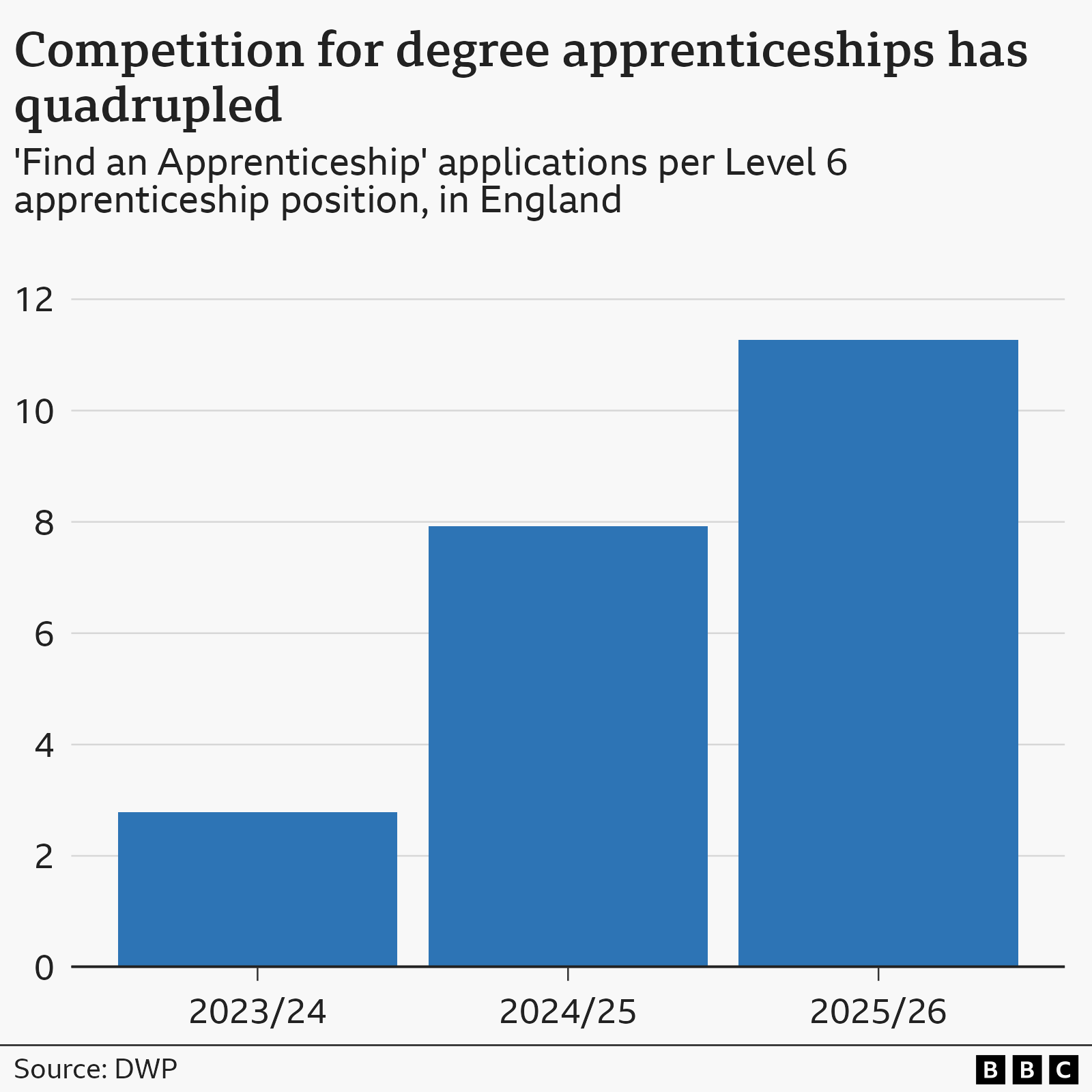
Competition for degree apprenticeships quadruples in three years
Images
1 / 20

2 / 20
3 / 20
4 / 20

5 / 20

6 / 20

7 / 20

8 / 20
9 / 20

10 / 20

11 / 20

12 / 20

13 / 20

14 / 20

15 / 20

16 / 20

17 / 20

18 / 20

19 / 20

20 / 20
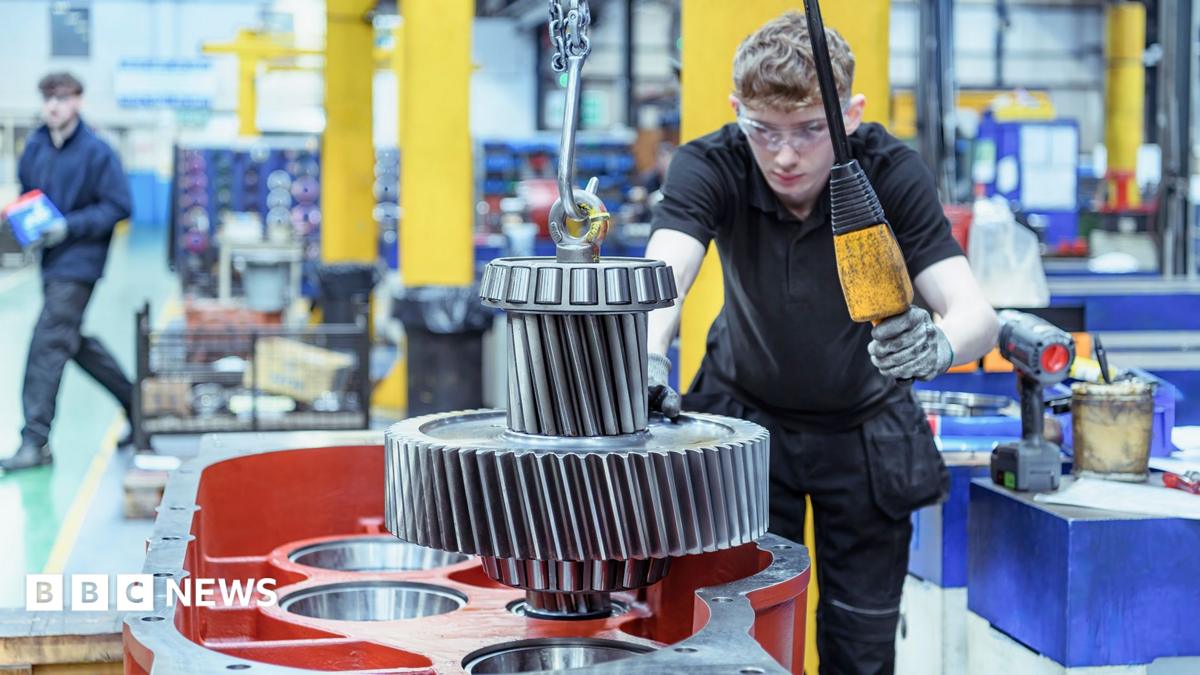
Competition for degree apprenticeships in England has quadrupled over the past three years, the BBC has found.

The popularity of degree apprenticeships - which offer a paid-for university degree along with a salary - has grown as the cost of university has come under increased scrutiny.

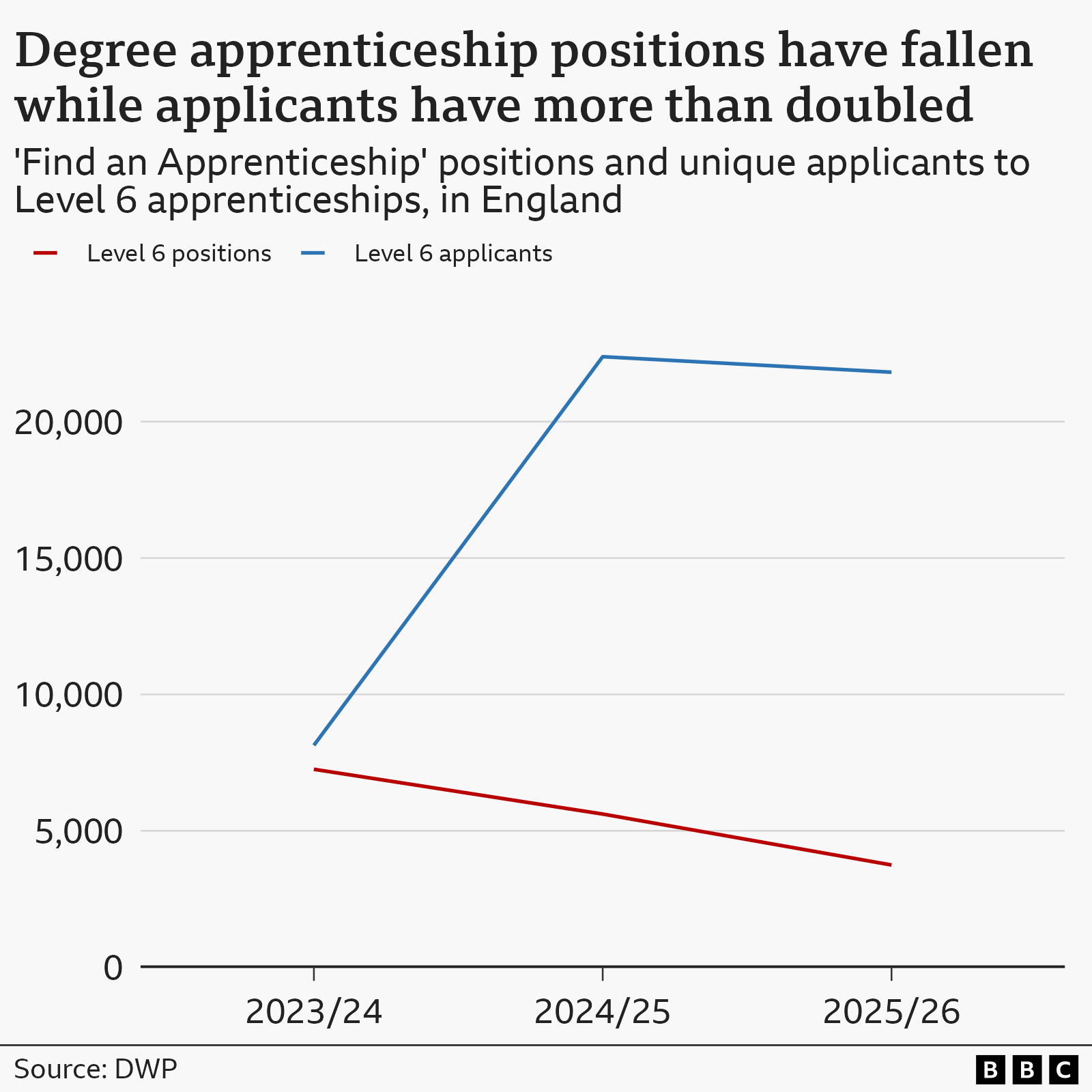
Data seen by the BBC showed the number of applicants through the government's central platform nearly tripled from 8,100 to 21,800 over the past three years, while the number of positions available fell by almost half, from 7,300 to 3,700.

Applicants said they applied to university as a "backup" because competition was so fierce, with employers cutting back on hiring because of high employment costs and economic uncertainty.

The Department for Work and Pensions (DWP) said it was "backing employers who take on young apprentices".

Last month, Prime Minister Andy Burnham said he wanted to ensure teenagers had  technical routes into careers that could rival the path of a university degree.

His comments came as concerns grow about the immediate and long-term costs of university, with more students wanting to commute from home to save money and calls to reform student loan repayments.

Degree apprenticeships might look to some like an attractive alternative, but the Freedom of Information data obtained by the BBC suggests they are hard to come by.

There were 11.3 applications for every Level 6 apprenticeship position in the current academic year, compared to 2.8 in 2023-24.

There are similar trends across all apprenticeships at Levels 4, 5 and 6, where there have been 10.6 applications per position - up from 3.6.

Level 4, 5 and 6 qualifications are equivalent to the first, second and third years of an undergraduate degree.

The data only relates to apprenticeships advertised through the Find An Apprenticeship website in England, which is run by the government and subject to Freedom of Information requests. Employers also advertise positions themselves and through other platforms.

Oliver Sidwell, director of HigherIn, one of those platforms, said searches for degree apprenticeships had risen by more than 80% this year. He said employers were advertising more degree apprenticeships through his service, but demand was growing faster.

Kieran McRae, 22, applied for a degree apprenticeship but was "devastated" to miss out on a place.

Instead, he studied computer science at the University of Birmingham alongside apprentices who secured a place on the same programme he was rejected from.

"We all went to the same lectures and we had the same labs, the same tutorials," he said.

"[There] was, I think, always a bit of jealousy. Not to say that I wasn't happy for them... but I knew that I was not getting that same free degree or the same salary."

Kieran said he is now happy with the route he took, especially since there were opportunities for industry experience during his course - something the University of Birmingham said had become increasingly important to offer when apprenticeships were so competitive.

But he added: "If I was 18 and offered the degree apprenticeship, 100% I would have taken it."

Kieran McRae shared lecture halls with apprentices on the programme he was rejected from

Anna Helder, 18, applied for 35 apprenticeships while studying at Hereford Sixth Form College and was "ecstatic" when she landed a project management role in London.

"I found it overwhelming the amount of stages that you have to go through," she said.

"You could go two months with zero contact from the company and then suddenly just an email saying: 'You've got an assessment centre next week.'"

Anna applied for 35 apprenticeships before landing a project management role in London

Daniel Edwards, 21, applied for 11 apprenticeships before securing an engineering degree apprenticeship.

Like Anna, he applied to university through Ucas as a "backup".

"University was more straightforward. It's one personal statement that you put out to all universities," he said.

"Your degree apprenticeship... you've got a cover letter, a CV. It's like applying for a real job. You've really got to convey your passion for that specific company."

Daniel said the application process for a degree apprenticeship was similar to a "real job"

Vicky Orsmond advises students at Hereford Sixth Form College about careers and said there was "significant concern" around the cost of going to university, which had sparked interest in degree apprenticeships.

But she said it was not easy for her students, who are competing for relatively few positions outside of the South East - often against more experienced candidates.

"We have lessons where we say to them, 'It's more competitive than many, many university degrees,'" she said.

Vicky said students often find themselves up against more experienced candidates

Businesses say a range of factors put them off hiring apprentices.

Hannah Larsen, policy officer at the British Chambers of Commerce, said demand for degree apprenticeship was rising "at a time when businesses' operating margins are under increasing pressure".

"Higher employment costs, alongside wider economic uncertainty, mean recruitment is being paused, with younger and less experienced workers hit hardest," she said.

She added that there was "considerable uncertainty over the future of apprenticeship funding".

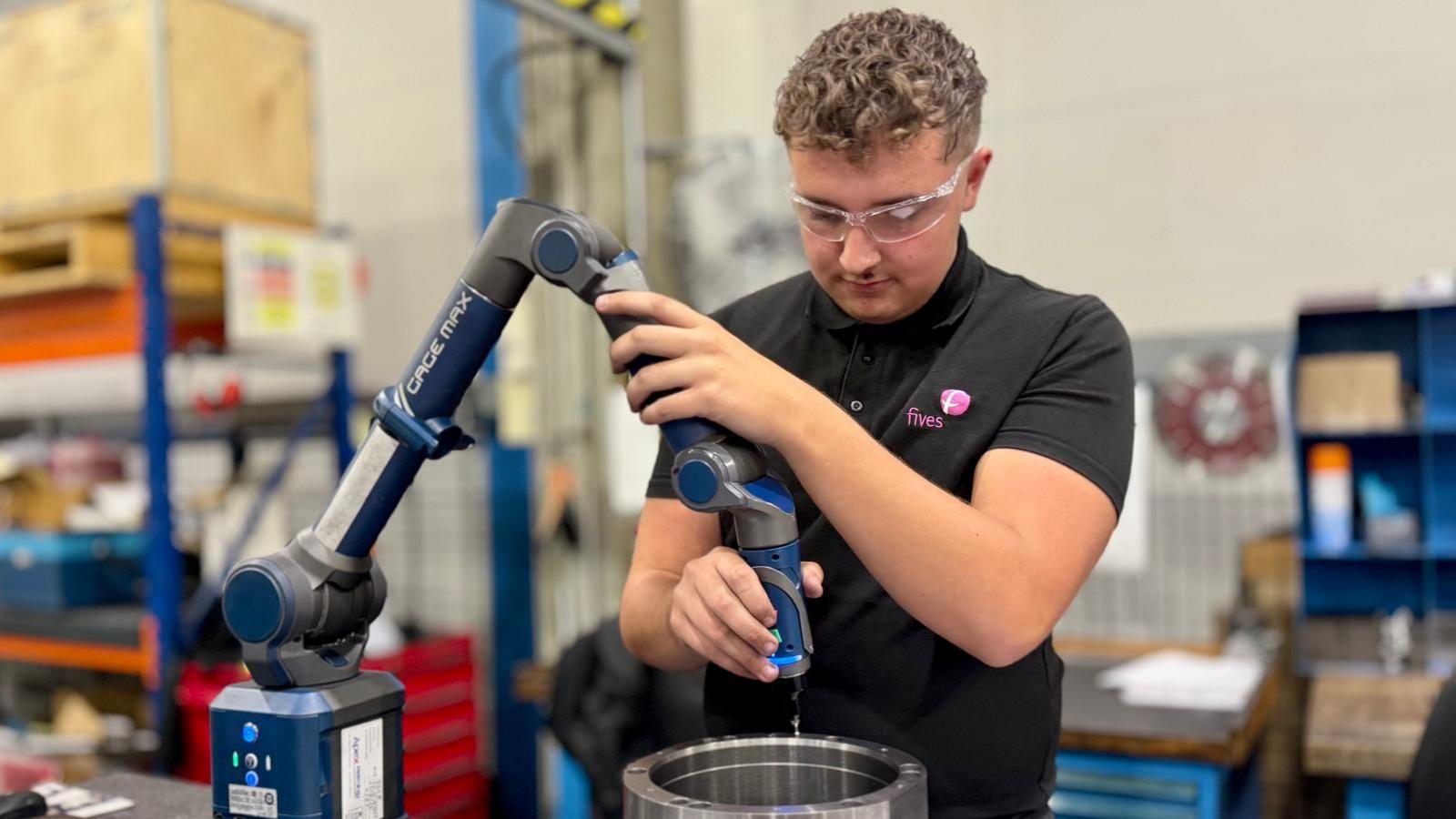
At Yorkshire-based manufacturing company Fives, most apprentices are at lower levels and study at nearby Keighley College, but there is one degree apprentice.

Jo Jackson, head of human resources, said she would like to hire more apprentices but training is expensive and the content apprentices are taught is not always "flexible enough".

"Business needs are changing all the time, but it's very, very difficult to change the syllabus," she said.

"If we think about AI and how it's changing the world of work, the apprenticeships don't cover that.

"They can't change quickly enough to keep up."

Competition for some applicants is steeper than others, according to Stephen Evans, chief executive at Learning and Work Institute, who says you are "less likely to get one if you're from a working-class family".

A DWP spokeswoman said the government was introducing a bursary for apprentices whose families receive Universal Credit.

Commenting on the rise in demand more generally, she added: "We're backing employers who take on young apprentices, including hiring incentives worth up to £8,000, and making apprenticeship training completely free for businesses for eligible young people aged 16 to 24."

Have you been affected by the issues discussed in this story?  Share your experiences.

Get our flagship newsletter with all the headlines you need to start the day. Sign up here.