Press
Ex-defence chief’s call for wartime election raises pressure on Zelenskyy
Images
1 / 8
2 / 8
3 / 8
4 / 8

5 / 8

6 / 8

7 / 8

8 / 8
Fedorov, a popular figure in Ukraine, is challenging Zelenskyy but experts say holding a vote under Russia’s bombs is near impossible.

Save

Share

Ukraine election debate grows as ousted defence minister challenges wartime politics

Kyiv, Ukraine – Ukraine’s sacked defence minister has dumbfounded his wartime nation’s political establishment – again.

Mykhailo Fedorov, a 35-year-old technocrat with no military experience, won praise for his unorthodox, out-of-the-box steps during his short stint that began in January.

He was not in charge of the actual warfare but was responsible for logistics, technological innovations, anticorruption measures and talks to secure aid or loans from Western allies.

Fedorov’s achievements included the orchestration of daring cyberattacks and a months-long campaign of drone and missile strikes that destroyed Russian supply lines, oil refineries and warehouses storing dual-purpose items.

But Volodymyr Zelenskyy, Ukraine’s president and Fedorov’s mentor, dismissed him in July following the defence minister’s deepening falling-out with top general Oleksandr Syrskii.

Since he was fired, Fedorov has repeatedly emphasised his loyalty to Zelenskyy and refused to accept other jobs such as a presidential aide in charge of reforms.

He also claimed to have turned down a project with Palantir Technologies, a controversial, US-based software company that began collaborating with Ukraine’s military during Fedorov’s tenure.

But on Tuesday night, Fedorov urged his former boss Zelenskyy to conduct a presidential election.

“We have to answer a fundamental question – how should a state function, if the war has lasted for years?” Fedorov said in a nine-minute-long YouTube video.

“Can Russia actually be entitled to define when Ukrainians can elect their authorities next time? I’m sure it’s not. Democracy can’t be Russia’s hostage,” he said.

Former foreign minister Dmytro Kuleba reportedly backed Fedorov’s idea, saying on Tuesday that elections “after war will not be more civilised, than during it.”

“We don’t know when [the war] ends. What if it lasts for another three years? We will be living under the political model that was formed in 2019, which has already been emotionally exhausted,” Kuleba, who helmed the Foreign Ministry in 2020-2024, was quoted by the Interfax Ukraine news agency as saying.

Fedorov is Ukraine’s second-most-trusted potential president.

Two-thirds, or 66 percent, of Ukrainians trust Valerii Zaluzhnyi, Ukraine’s former top general who currently serves as an ambassador in London, a poll conducted in late July by the Kyiv International Institute of Sociology indicated.

Fedorov lags slightly behind with 63 percent, while Zelenskyy came fourth with 56 percent, according to the poll.

Some Ukrainians believe Fedorov could become a better president than Zelenskyy, a former comedian and first-time politician who came to power in 2019 on an anticorruption ticket but has since faced corruption scandals involving his key allies.

“Fedorov is clean; he hasn’t been involved in any scandals. He has already changed the way we’re dealing with bureaucracy,” Tetiana Baybachenko, a 35-year-old barista in eastern Kyiv, told Al Jazeera.

She was referring to Diia, an app to handle dozens of bureaucratic procedures from getting registered in an apartment to selling a car, that Fedorov introduced during his 2019-2026 service as Ukraine’s digital transformation minister.

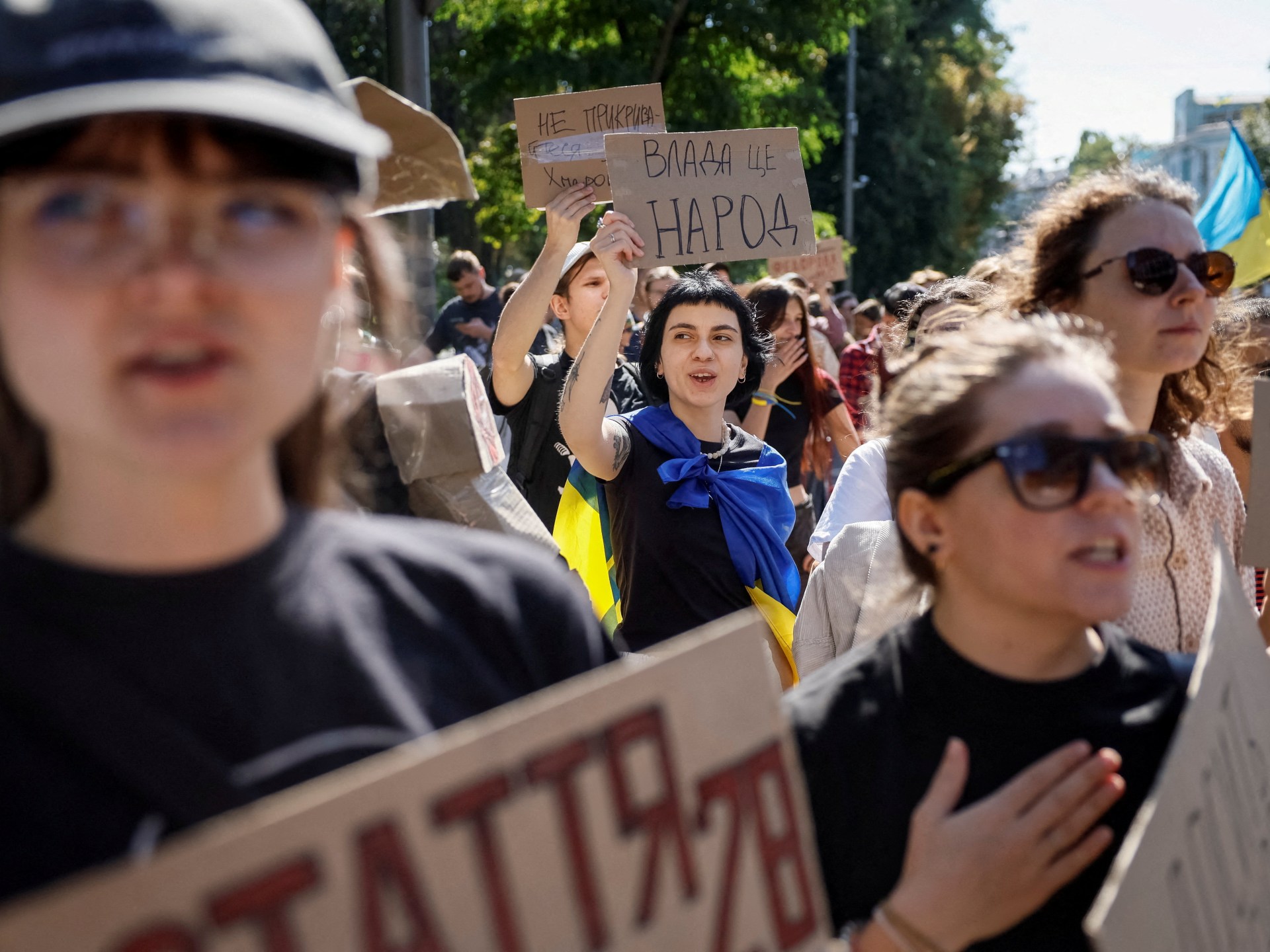
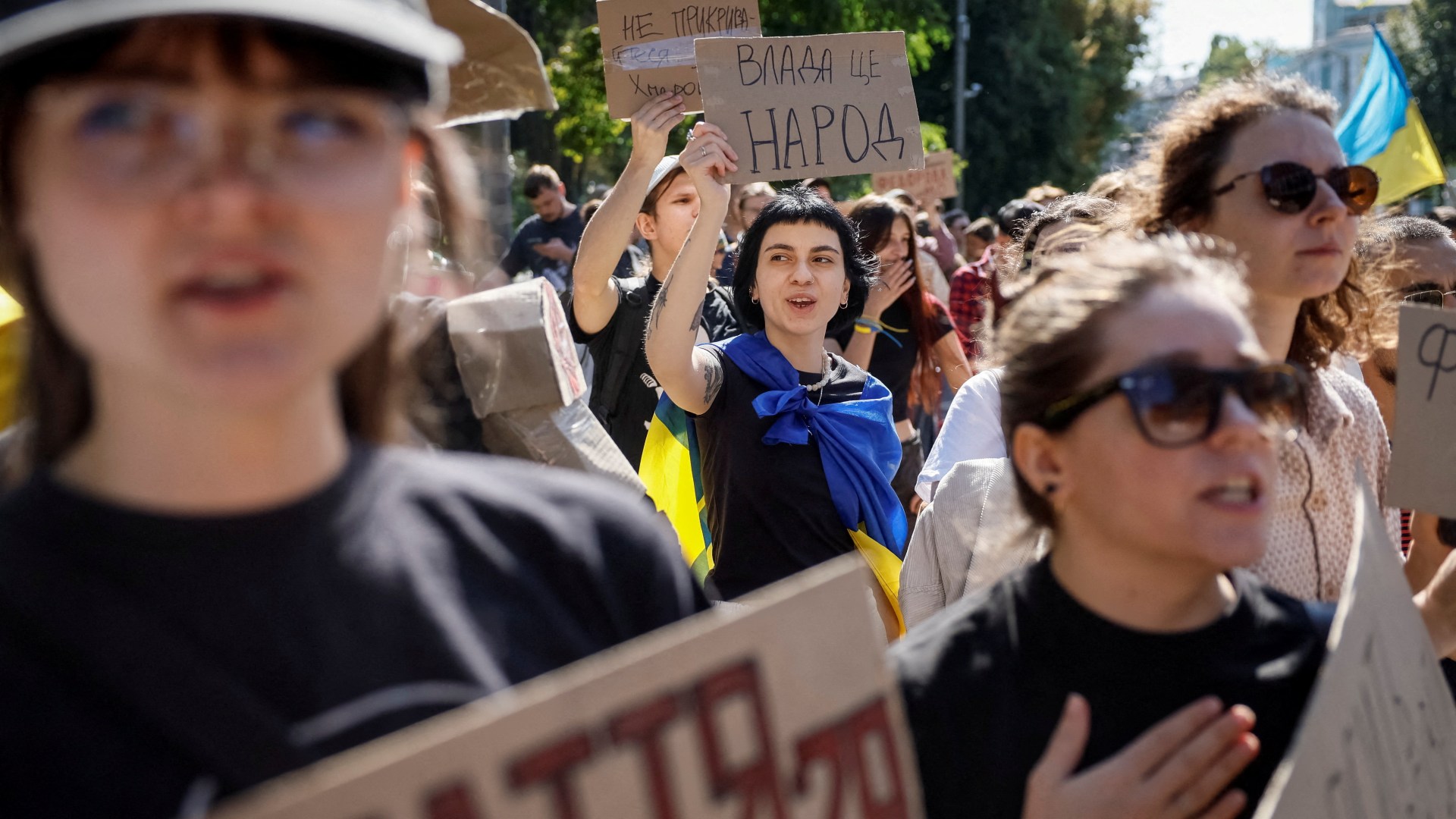
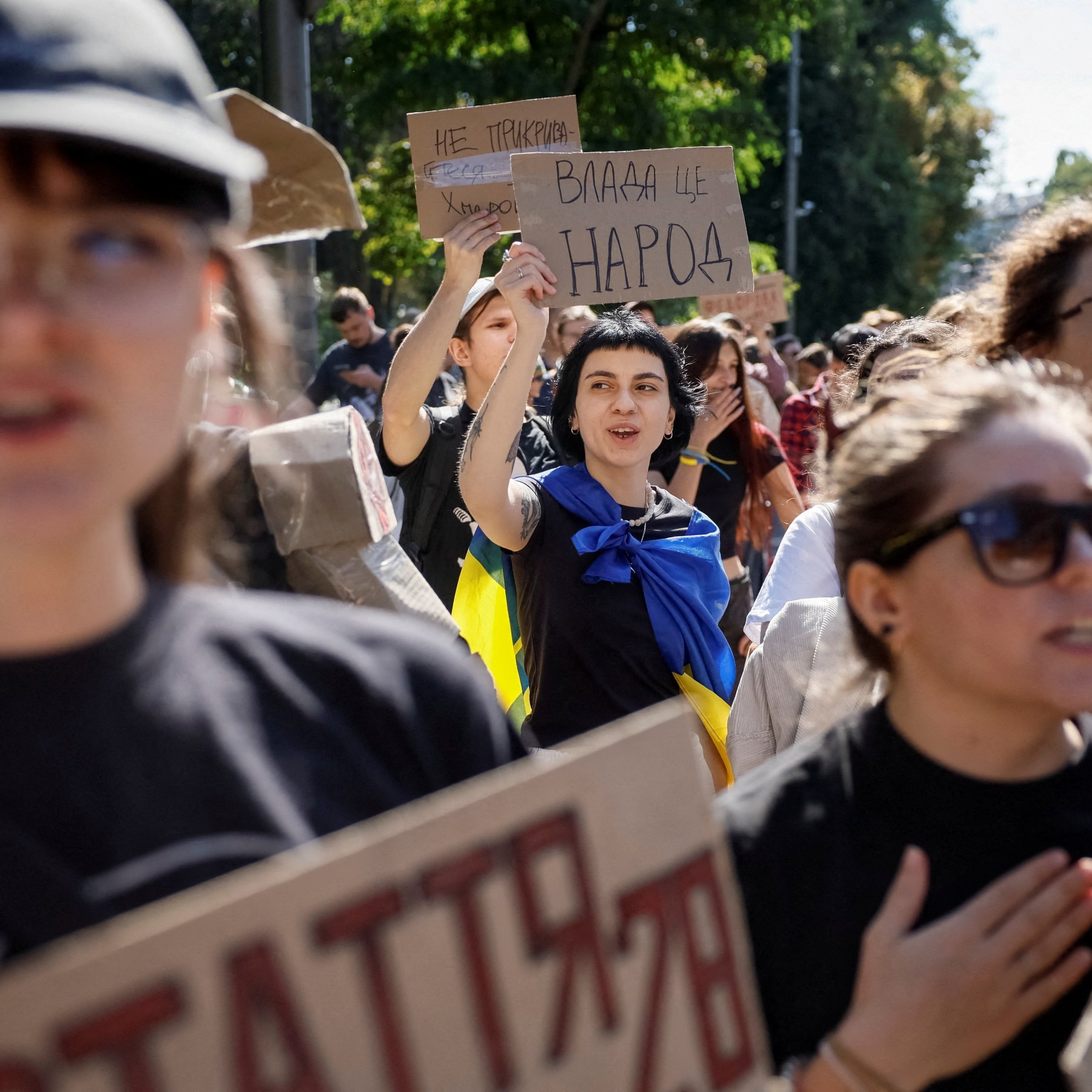
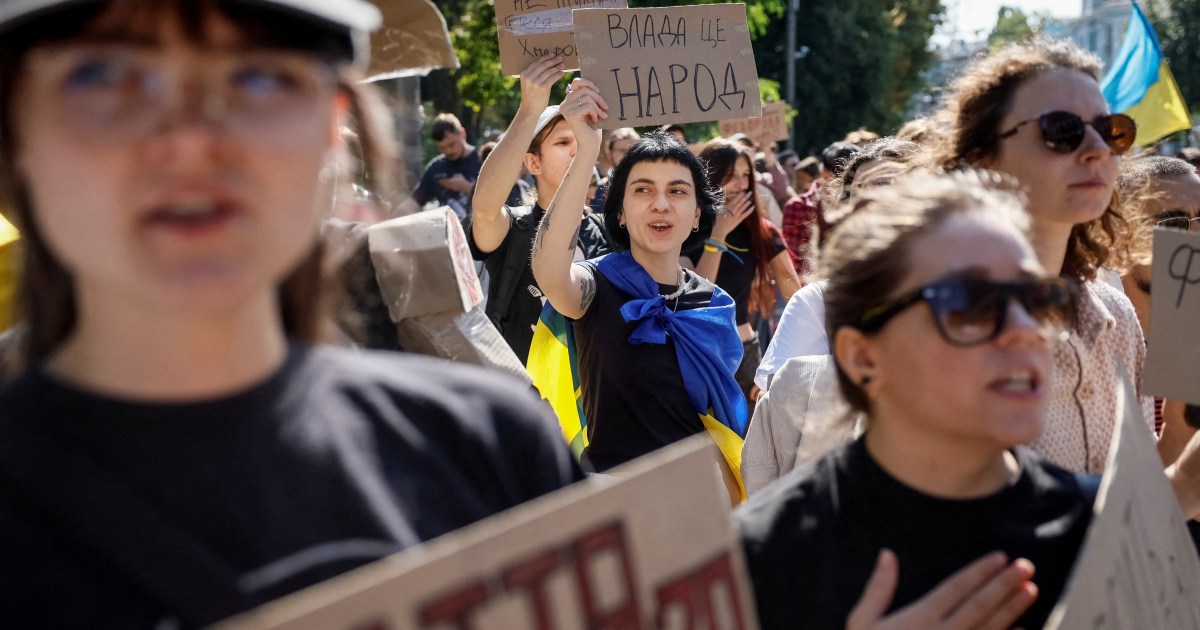
She said she had taken part in several pro-Fedorov protest rallies in Kyiv, holding a cardboard banner that read, “Don’t let Moscow win.”

The rallies drew thousands who urged the president to reinstate him and lambasted top general Syrskii’s alleged corruption schemes and heavy-handed treatment of average servicemen.

But observers say that organising a vote amid almost daily missile and drone attacks is next to impossible.

Even though the majority of Ukrainians would like to “renew the government,” the elections are unfeasible during the war, according to Olexiy Haran, professor at the Kyiv-Mohyla Academy, Ukraine’s oldest university.

Ukraine’s constitution directly bans any vote during the war, which has ground into its fifth year in February and turned 10 million Ukrainians into refugees, while a million more joined the military, he said.

There’s also a matter of security, as election campaigns take months and require things like meetings with voters in public places that could easily be targeted by Russian drones and missiles.

“At any moment, Putin could thwart [the elections], and what are we going to do?” Haran told Al Jazeera.

“What Fedorov said is great, we all want elections, we want to renew the government, but we need a stable truce” of at least six months, he said.

Svetlana Chunikhina, vice president of the Association of Political Psychologists of Ukraine, a group in Kyiv, told Al Jazeera, “Fedorov’s attempts to saddle the awakening of politics [in wartime Ukraine] is a false start” because Ukrainians largely agree that wartime elections are unacceptable.

As a fledgling politician, the step practically “buries” his authenticity, she said.

Kyiv-based analyst Igar Tyshkevych said that Fedorov’s appeal reflects deeper problems with Zelenskyy’s political team.

Zelenskyy’s pre-political popularity relied on the success of his Servant of the People television series, where he played a teacher propelled to the presidency by a YouTube rant about corrupt politicians.

He won the 2019 election with a staggering 73 percent of the vote via his Servant of the People party that recruited hundreds of political rookies and won the parliament vote.

But these days, the party is largely dysfunctional, with Zelenskyy’s closest allies implicated in a string of corruption scandals.

“The president has accumulated enough popularity and trust, but there is growing discreditation of state institutions,” Tyshkevych told Al Jazeera. “This discreditation may cause the danger of losing the war.

“The president sees the problem, but has tried to solve it by the pseudo-reset” of the government by reshuffling the cabinet several times, he said.

As a result, Zelenskyy ran out of effective outsiders to head his ministries and government bodies, as “people outside the system don’t want to enter the old system,” he said.

The president, on the one hand, places his bets on his inner circle that has been discredited by corruption scandals, but on the other hand, his chances are limited, Tyshkevych said.

Another observer noted that Fedorov’s refusal to accept another job in Zelenskyy’s government and his election announcement both stem from his “political immaturity” and failure to distinguish between a personal offence and his nation’s wartime needs.

“A statesman must tell his own defeat from his nation’s defeat, and the loss of his job from the need to immediately change the country’s entire political construction,” Boris Bondarev, a former Russian diplomat who quit his job in protest of Moscow’s 2022 invasion and is now based elsewhere in Europe, told Al Jazeera.