huffpost Press
Trump Puts His Rule-By-Fear Control Of Republican Party On The Line In South Carolina
Images
1 / 5

2 / 5
3 / 5

4 / 5

5 / 5
MYRTLE BEACH, S.C. – President Donald Trump may be risking further erosion of his rule-by-fear control of Republican lawmakers on Tuesday with his insistence that South Carolina voters put the sister of late ally Lindsey Graham in the U.S. Senate for a full six years.

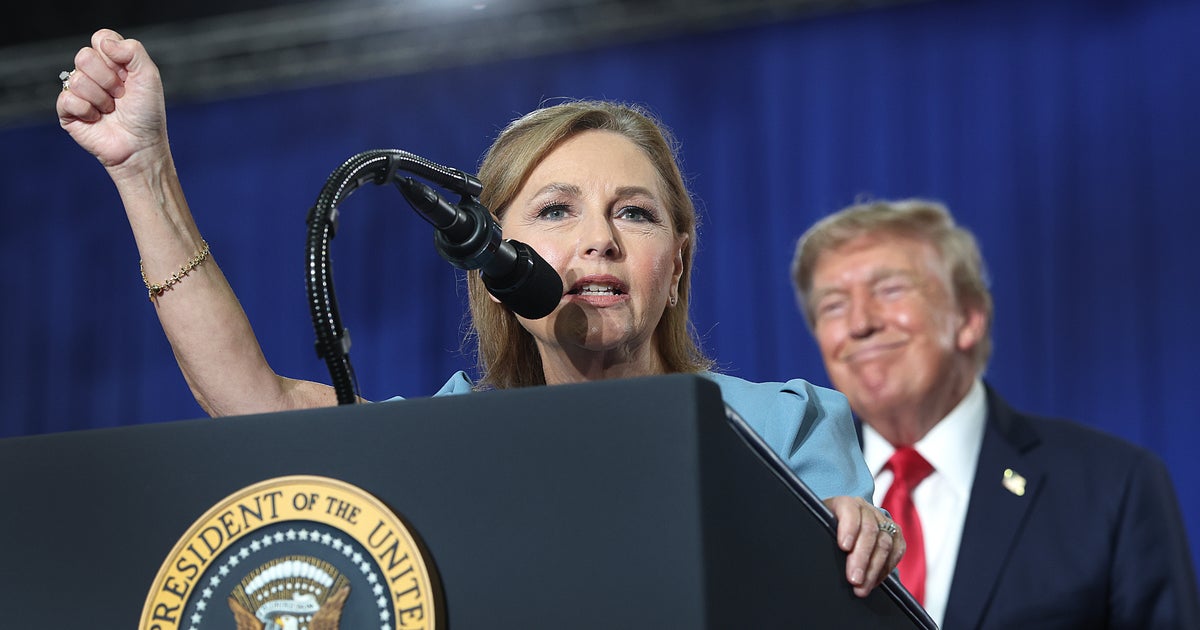
Darline Graham had never run for office before Trump decided that being a sibling to a long-time senator was qualification enough. On Friday, he even staged a rally for her in one of the state’s conservative strongholds to make his wishes clear.

“She will be somebody you’re going to be very proud. You vote for her, you’re going to be very proud of that vote,” he told a few thousand attendees at the Myrtle Beach Convention Center.

In a possible portent of Tuesday’s runoff result, his message was not entirely welcomed by its intended recipients.

“No, no, no, no, no,” said Lannie Clemmer, a 72-year-old three-time Trump voter, outside the Advance Auto Parts store on the town’s main drag where he works part-time. “I love Trump. And she’s a good person. But she don’t need to be doing this.”

Shannon Grady, an officer in the local Horry County Republican Party, said Trump is alienating his core supporters with his demand.

“I and most others in Horry County voted for Trump, but he has lost us with this endorsement,” she said.

Even as Trump stares down lame-duck status, he has multiple avenues to claim influence over the party he took over a decade ago, including a comically well-funded super PAC and a record of ending the careers of intra-party critics in Kentucky, Indiana and Louisiana earlier this year.

His grip on the party, though, has grown ever-shakier as the primary season has gone on, and a victory by Graham’s opponent, Congressman Ralph Norman, could provide a rebuttal with an exclamation point on the notion that he is able to single-handedly dictate GOP primary outcomes.

In reality, Trump’s hold on the party has never been as absolute as he likes to claim. In 2022, the election he spent more money and time trying to influence than any other was the Georgia governor’s race, where he pushed to unseat incumbent Brian Kemp for refusing to go along with his plan to steal the state’s Electoral College votes in 2020 after losing the state to Democrat Joe Biden. Trump’s candidate got crushed in that primary.

You don’t even need to leave the Palmetto State to find a recent example of Trump’s habit of claiming influence regardless of outcome: Trump backed South Carolina Lt. Gov. Pamela Evette in the state’s GOP primary in the governor’s race. When she barely finished ahead of Attorney General Alan Wilson, Trump “co-endorsed” both candidates heading into the runoff and then quickly took credit when Wilson won.

Indeed, a key feature of many of Trump’s “endorsements” is that they are virtual sure things and, in some cases, iron-clad locks. He endorsed Florida congresswoman Anna Paulina Luna and then boasted of her victory. She was running unopposed, and the Republican primary election for her seat had been canceled months earlier.

All of which serves as a contrast to the race to replace Lindsey Graham, where Trump is going all out to make sure the next senator owes the seat exclusively to him.

“One of the reasons Trump wooed her is that she is inexperienced, and she has defined what her tenure will be as: ‘I will do what Trump wants,’” said Scott Huffmon, a political science professor at Winthrop University in Rock Hill.

And that, said Clemmer, is precisely why he intends to vote for Norman and is telling anyone who will listen — including friends driving past in the parking lot — to do the same.

“He wants her to come in: ‘You work for two years, you vote for this, this, this, this.’ That’s all,” he said of Trump’s intention for Graham. “This is wrong.”

A president has no legal role in determining who represents a state in the U.S. Senate, but Trump used his influence with South Carolina Gov. Henry McMaster and got him to appoint Darline Graham to serve out the remaining five months in her brother’s term after his July 11 death. Days later, he persuaded her to run for a full six-year term, despite her never having publicly evinced an interest in elected office.

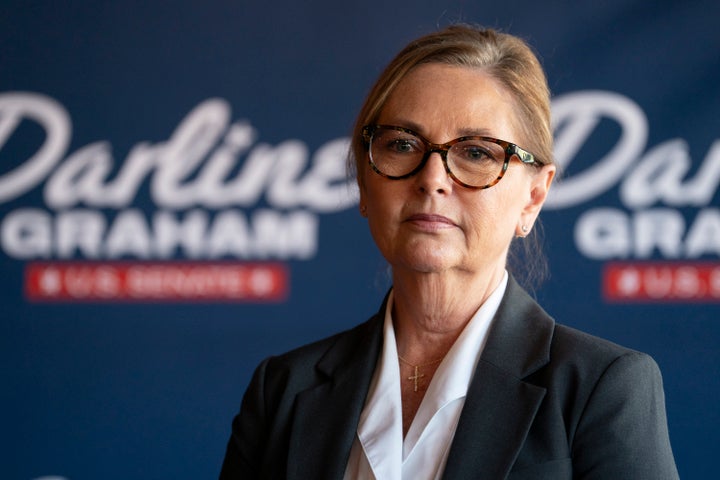
Graham, who is 62, has nearly two decades of experience working in South Carolina state government agencies that help people with disabilities, a resume far more common among Democratic candidates than Republicans. For the past seven years, she ran the state’s Commission for the Blind.

Perhaps for this reason, Trump’s quick endorsement of Darline Graham failed to clear the field in the legally required special primary election to replace her brother as the general election Republican nominee, and she wound up with nine opponents on the Aug. 11 ballot. She finished first but received just under a third of the ballots cast, with four others winning a significant share of the vote.

Her total is perhaps not surprising given that her elder brother, while he did win four Senate terms starting in 2002, was nevertheless disliked by a significant percentage of GOP voters for some of his heterodox positions — he was a one-time supporter of immigration reform, most prominently — and his willingness to compromise with Democrats.

He won his 2026 primary in June for a fifth term with just 57% of the vote despite spending $27 million, and had actually been formally chastised by several county parties through the years. (The Horry County Republican Party in 2022 censured him for supporting President Biden’s gun safety legislation, which included red flag laws to protect victims of domestic violence.)

Norman finished second, with 25%, and Congressman Russell Fry came in third with 20%.

Trump quickly talked Fry into endorsing Graham in the runoff — Fry is still on the ballot for returning to his congressional seat based in Myrtle Beach — putting Graham in a good position to win over enough of his supporters to get the required majority in the Aug. 25 runoff, local elected officials said.

“Norman’s got some room to grow, but I think what he got is closer to his ceiling,” said Josh Kimbrell, a state senator from Spartanburg and a Graham supporter.

And then the one and only one-on-one debate between Graham and Norman took place, exactly one week before the runoff.

While both candidates repeated common right-wing tropes that went unchallenged by moderators —that Trump’s “DOGE” had found hundreds of billions in waste; that Dr. Anthony Fauci should be in prison for his part in the emergence of the COVID virus — the hour-long encounter hosted and broadcast by Newsmax did not seem to be shifting the contours of the race until the moment Graham was asked about China and Taiwan.

“I’m just going to be honest here. I’m not that informed on national security,” she said to gasps. “I’m not a polished politician up here. National security is not my thing, not my area of expertise. But I do support the military.”

The answer created national headlines and instantly confirmed the fears of those who had already been resentful that Trump was pushing his choice on South Carolina voters.

“Dear God, what did we watch last night?” said Grady, from the Horry County Republicans, the next morning. “The mood from voters is frustration that Trump endorsed this woefully inept candidate.”

Trich Schellman, a 75-year-old retired medical technician in Charleston, said she worried that Graham is so unqualified that she might lose to Democratic nominee Annie Andrews in November.

“She is in way over her head,” Schellman said. “Her saying that ‘it’s not her thing?’ It should be her thing!”

The episode put Republicans who want to support Trump but who are not necessarily thrilled with the idea of giving Lindsey Graham’s sister a full six years in a bind. The head of the Florence County Republican women’s club forced a reporter waiting to speak to members about the debate to leave the premises.

One attendee, who spoke on condition of anonymity, said she would still support Graham because of her non-foreign policy positions.

“I feel like she’ll pay attention to the details,” she said as she set out across a blazing hot parking lot to her car.

The guest of honor at the gathering, the state attorney general nominee David Stumbo, declined to discuss the race.

“I like both of them, and I think either one of them would do a fantastic job as our next senator if elected,” he said, adding that he would be unable to attend Trump’s rally because of a family commitment.

Kimbrell, days after the debate, said he did not think Graham’s “not my thing” answer would doom her. “I think the numbers are still where I thought they would be,” he said.

Indeed, Graham supporters said it was refreshing to hear a candidate admit that they did not know the answer rather than spout nonsense in an attempt to filibuster.

“She’s been in politics for a month. She can’t be expected to know everything about everything,” said Jane Litton, 65 and a retired ICU nurse who is active in the Charleston County GOP. “I appreciated her candor. When she didn’t know the answer, she said that.”

Back in Horry County’s Myrtle Beach, 67-year-old retired nuclear plant worker David Capp said he voted for Lindsey Graham and is willing to give his sister the benefit of the doubt.

“I’ll see how she performs,” he said as he unwrapped a Subway footlong tuna sandwich. “And if she doesn’t do right, there’ll be somebody else next time.”

How any of this will play out on Tuesday is anybody’s guess, said Huffmon, who also conducts the Winthrop Poll. Only 335,555 of the state’s 3 million voters eligible to cast ballots in the Aug. 11 primary did so and it is possible that the runoff will draw even fewer.

“Identifying likely voters for a runoff for a special primary with less than a month turnaround is a shot in the dark,” Huffmon said.

And while historically, the number-two finisher in states that require runoff elections would often gain momentum and win, there is little reason to believe that will happen here, said Florence County GOP chair Mike Page.

“Most of the norms that we paid attention to in the past are really thrown out the window,” he said.

If Graham does lose, it would be the most spectacular failure of a Trump endorsement this year, and could lead Republicans to be less fearful of crossing a president well known for his vindictiveness, GOP consultants said. Still, candidates and officeholders will continue to know that Trump’s most loyal followers are willing to go far beyond what most supporters of political leaders would even think of doing, said former GOP strategist and admaker Rick Wilson.

“Layer one in the stack is Trump’s political control over primaries. Layer two in the stack remains the ongoing fear that someday he’ll send the next Jan. 6 mob to kill them,” he said.

Some South Carolina Republicans, meanwhile, said it would have been far better if Trump had simply left it to the state’s own residents to sort out who they wanted to represent them.

“I wish he would have just stayed out and let us in South Carolina pick,” Schellman said.

By entering your email and clicking Sign Up, you're agreeing to let us send you customized marketing messages about us and our advertising partners. You are also agreeing to our Terms of Service and Privacy Policy.